What Can You Get With a 670 Credit Score? (Buy a House)
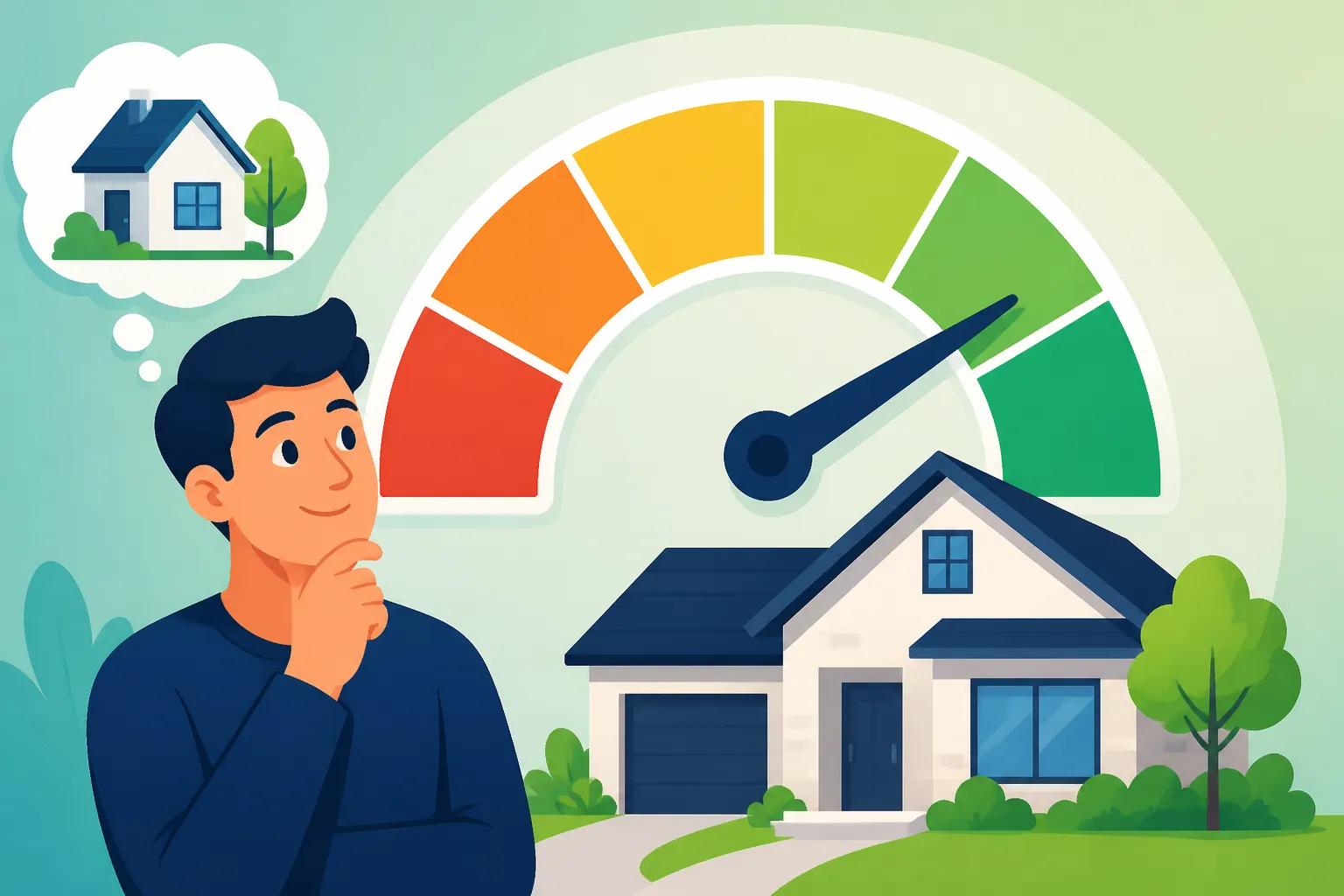
It's incredibly frustrating to stand at the threshold of a major life goal, like buying a home, and feel uncertain if your credit score is going to be the gatekeeper. Many people wonder if a score like 670 is "good enough" or if it will hold them back from securing a mortgage. This guide is here to cut through that anxiety, clearly explaining what homeownership opportunities are available to you with a 670 credit score and what you can expect as you navigate the mortgage landscape.
Understanding What a 670 Credit Score Means for Lenders
When lenders look at your credit score, they're essentially trying to gauge your reliability as a borrower. A 670 FICO Score, for example, generally falls into the "Good" range, which is positive! You're definitely not in the "Poor" or "Fair" categories. However, it's important to understand that "Good" is a wide range, and a 670 sits on the lower end of it. This means you're likely eligible for many financial products, including mortgages, but you might not qualify for the absolute best interest rates or most flexible terms that someone with a score in the 740s or higher might receive.
Where Your 670 Score Sits on the Spectrum
To put it in perspective, credit scores typically range from 300 to 850.
- Poor: 300-579
- Fair: 580-669
- Good: 670-739
- Very Good: 740-799
- Exceptional: 800-850
So, a 670 is right at the cusp of "Good." This is a solid foundation, especially if you're working to improve your financial health. It shows lenders that you've demonstrated responsible credit behavior, even if there might be a few hiccups or a shorter credit history. You can learn more about these ranges in our comprehensive guide, "Credit Score Ranges: Poor to Excellent Explained".
Key Factors Influencing a 670 Score
A 670 credit score is usually the result of a mix of your financial habits. It likely means you're consistently making payments on time, which is fantastic because payment history is the biggest factor in your score. However, other elements might be pulling your score down from the "Very Good" or "Exceptional" tiers. Perhaps your credit utilization is a bit high – meaning you're using a large percentage of your available credit – or your average age of accounts is relatively new. It could also be due to a limited credit history, meaning you haven't had many credit accounts open for very long. To get a full picture, it's always wise to "How to Read Your Credit Report (2026 Guide)" to understand exactly what's reported.
Mortgage Options Available with a 670 Credit Score
The good news is that a 670 credit score opens the door to several mortgage options. While you might not qualify for every single loan product out there, especially those with the most stringent requirements, you have viable paths to homeownership. The key is to understand which loans are most favorable for your score range and what additional steps you can take to strengthen your application.
FHA Loans: A Common Path
For many homebuyers with credit scores in the mid-600s, an FHA loan is a fantastic option. These loans are insured by the Federal Housing Administration (FHA), making them less risky for lenders. Because of this government backing, FHA loans have more flexible credit score requirements compared to conventional loans. Many lenders will accept FHA loan applicants with a credit score as low as 580, provided they can make a 3.5% down payment. With a 670 score, you're well above that threshold, putting you in a strong position for an FHA loan.
The benefits of FHA loans often include lower down payment requirements and sometimes more lenient debt-to-income (DTI) ratios. However, it's important to remember that FHA loans come with mortgage insurance premiums (MIP), both an upfront premium and an annual premium, which can add to your overall housing cost. This is a trade-off for the increased accessibility.
Conventional Loans: Possible, But with Caveats
A conventional loan is not out of reach with a 670 credit score, but it's where lenders will start to look more closely at your overall financial picture. While some lenders might offer conventional loans for scores as low as 620, a 670 score puts you in a slightly better position. However, you should prepare for a few things:
- Higher Interest Rates: Lenders typically reserve their lowest interest rates for borrowers with "Very Good" to "Exceptional" credit scores (740+). With a 670, you'll likely face a slightly higher interest rate, which can significantly impact your monthly payments and the total cost of the loan over its lifetime.
- Larger Down Payment: While conventional loans can allow for down payments as low as 3%, a lender might require a larger down payment (e.g., 5% or 10%) with a 670 score to mitigate their risk. This demonstrates more equity in the home from the start.
- Private Mortgage Insurance (PMI): If your down payment is less than 20% on a conventional loan, you'll almost certainly need to pay for Private Mortgage Insurance (PMI). Unlike FHA's MIP, PMI can often be canceled once you reach 20% equity in your home.
VA Loans: Excellent for Eligible Veterans
If you're a veteran, active-duty service member, or eligible surviving spouse, a VA loan is often the best possible option, regardless of your credit score, as long as it meets the lender's minimum. The Department of Veterans Affairs (VA) doesn't set a minimum credit score requirement, but most lenders offering VA loans typically look for a score of at least 620. With a 670, you're in a very good spot here.
VA loans are incredibly beneficial because they often require no down payment and no private mortgage insurance. While there is a VA funding fee, it can often be financed into the loan, and some veterans are exempt. This is a powerful benefit for those who have served our country.
USDA Loans: Rural Opportunities
For those looking to buy a home in eligible rural areas, a USDA loan is another excellent option. These loans are backed by the U.S. Department of Agriculture and are designed to help low-to-moderate income individuals purchase homes in designated rural areas. Similar to VA loans, USDA loans often require no down payment. Lenders typically look for a credit score of at least 640 for USDA loans, making a 670 score quite strong for this program. You'll also need to meet income eligibility requirements and the property must be in an eligible rural area.
Here's a quick comparison of common mortgage types for a 670 credit score:
| Loan Type | Minimum Credit Score (Lender Avg.) | Typical Down Payment | Mortgage Insurance Implications | Key Considerations |
|---|---|---|---|---|
| FHA Loan | 580 (with 3.5% down) | 3.5% | Required: Upfront MIP (1.75% of loan) and Annual MIP (0.45%-1.05% depending on loan term/LTV) for life of loan or 11 years | More lenient DTI, great for lower scores/down payments. Must meet FHA property standards. |
| Conventional Loan | 620-670+ | 3% – 20%+ | Required: PMI if < 20% down. Can be cancelled. | Higher rates likely with 670. Better rates with higher scores/down payments. |
| VA Loan | 620 (lender specific) | 0% | No PMI. VA Funding Fee applies (can be waived for some veterans) | Exclusively for eligible veterans/service members. No down payment is a major benefit. |
| USDA Loan | 640 | 0% | Required: Upfront Guarantee Fee (1% of loan) and Annual Fee (0.35% of loan) | For eligible rural properties and income-qualified borrowers. |
Note: These are general guidelines. Lender requirements can vary.
Improving Your Chances and Terms with a 670 Score
While a 670 credit score is acceptable for many mortgage programs, your goal shouldn't just be to qualify, but to qualify for the best possible terms. Even a small improvement in your credit score can translate into thousands of dollars saved over the life of a 30-year mortgage due to a lower interest rate. If you have some time before applying for a mortgage, focusing on boosting your score is a smart move.
Pay Down High-Interest Debt
One of the quickest ways to improve your credit score is to reduce your credit utilization. This refers to the amount of credit you're using compared to your total available credit. Lenders prefer to see this ratio below 30%, but ideally below 10%. If you have credit card balances that are close to your limits, paying them down can provide a significant boost to your score. For instance, if you have a card with a $5,000 limit and a $4,000 balance, paying down even half of that balance can positively impact your utilization, and thus your score. You can explore more about this crucial factor in "Credit Utilization: The Complete Guide".
Make All Payments on Time, Every Time
Payment history is the single most important factor in your credit score, accounting for 35% of your FICO score. If you've had a few late payments in the past, diligently making all future payments on time will slowly help rebuild this aspect of your score. Set up automatic payments or calendar reminders if needed. Consistency is key here. Every on-time payment shows lenders that you are a reliable borrower, and over time, this will help counteract the impact of any past missteps.
Keep Old Accounts Open
The length of your credit history also plays a role in your score. Older accounts, especially those with a perfect payment history, demonstrate a long-standing ability to manage credit responsibly. Even if you've paid off an old credit card, resist the urge to close it, as doing so could shorten your average age of accounts and potentially lower your score.
Diversify Your Credit Mix (Carefully)
Having a healthy mix of credit accounts, such as revolving credit (credit cards) and installment loans (car loans, student loans), can positively impact your credit score. However, this is not an invitation to open a bunch of new accounts. Only consider this if you genuinely need a new credit product and can manage it responsibly. Tools like a credit builder loan can also help diversify your credit mix and add a positive payment history. Companies like Credit Strong offer these types of loans, helping you build a stronger credit profile without taking on traditional debt. Learn more about them with "Credit Builder Loans Explained (Self, Kikoff & More)".
Address Any Credit Report Errors
Mistakes happen, and they can unfortunately end up on your credit report, unfairly dragging down your score. It's estimated that a significant percentage of credit reports contain errors. Regularly checking your credit reports from Equifax, Experian, and TransUnion (you can get them for free once a year at AnnualCreditReport.com) is crucial. If you find any inaccuracies, dispute them immediately. Even a small error, like an incorrect balance or an account that isn't yours, can have a negative impact. Our guide "How to Dispute Credit Report Errors (Step-by-Step)" can walk you through the process.
Consider a Credit Builder Product
If your credit history is thin or you're specifically looking to add a positive tradeline to improve your mix, consider a credit builder loan. These products, offered by companies like Credit Strong, are designed to help you build credit by reporting your consistent payments to the credit bureaus. You essentially make payments into a savings account, and once the loan term is complete, you receive the money back. It's a low-risk way to demonstrate responsible borrowing.
Beyond the Score: Other Factors Lenders Consider
While your credit score is undeniably important, it's not the only thing lenders look at when you apply for a mortgage. Think of it as one piece of a larger puzzle. Lenders want to ensure you have the overall financial capacity and stability to comfortably make your mortgage payments. Even with a 670 score, strong performance in these other areas can make your application much more attractive.
Debt-to-Income (DTI) Ratio
Your debt-to-income (DTI) ratio is a critical metric. It's a percentage that compares your total monthly debt payments (including the new mortgage payment) to your gross monthly income. Lenders typically prefer a DTI ratio of 36% or lower, though some might go up to 43-50% for FHA loans or other specific programs, especially with a good payment history. A low DTI shows that you're not overextended with other debts, making you a less risky borrower. If your DTI is high, consider paying off some smaller debts or even reducing recurring expenses before applying for a mortgage.
Stable Income and Employment History
Lenders want to see that you have a steady and reliable source of income. This usually means at least two years of consistent employment in the same field or with the same employer. If you're self-employed, they might require two years of tax returns to verify your income. A stable income history reassures lenders that you have the financial means to keep up with your mortgage payments over the long term.
Down Payment and Reserves
Even if a program allows for a low down payment, having more cash to put down can significantly strengthen your application, especially with a 670 credit score. A larger down payment reduces the amount you need to borrow, which in turn reduces the lender's risk. Furthermore, having cash reserves (money in savings after your down payment and closing costs) is a big plus. Lenders like to see that you have a financial cushion to fall back on in case of unexpected expenses or a temporary disruption in income. This financial preparedness can sometimes offset a slightly lower credit score.
Your Overall Financial Picture
Think of your entire financial narrative. Are you managing your existing credit accounts well? Do you have a history of saving? Are there any significant positive factors that aren't fully captured by your score? For example, if you've recently used a credit builder loan from a company like Credit Strong to improve your credit, that demonstrates proactive financial management. All these elements collectively paint a picture for the lender.
Ultimately, while a 670 credit score is a perfectly viable starting point for buying a house, especially with FHA, VA, or USDA loans, taking the time to strengthen your overall financial application will always lead to better outcomes. This could mean a lower interest rate, more favorable loan terms, or simply a smoother approval process.
Final Thoughts on Your Homeownership Journey
Achieving a 670 credit score is a significant step on your financial journey, and it certainly opens up the door to homeownership. You've proven your ability to manage credit responsibly, and that counts for a lot. While you might not walk into the absolute lowest interest rates right away, you have solid options through FHA, VA, and USDA loans, and even conventional options are possible if you bolster other areas of your financial profile.
Remember, the goal isn't just to get approved, but to secure a mortgage that aligns with your long-term financial health. Don't be afraid to shop around for different lenders; requirements and rates can vary significantly. If you have some flexibility in your timeline, dedicating a few months to further boosting your score by reducing utilization or adding positive payment history, perhaps with the help of a tool like Credit Strong, can truly pay off in the form of lower monthly payments and substantial savings over the life of your loan. Your homeownership dream is within reach!
Disclaimer
This article is for general informational purposes only and does not constitute professional advice. Laws, prices and regulations vary by location and change over time. Consult a qualified professional for guidance on your specific situation.