Can a Debt Collector Sue You in Florida?
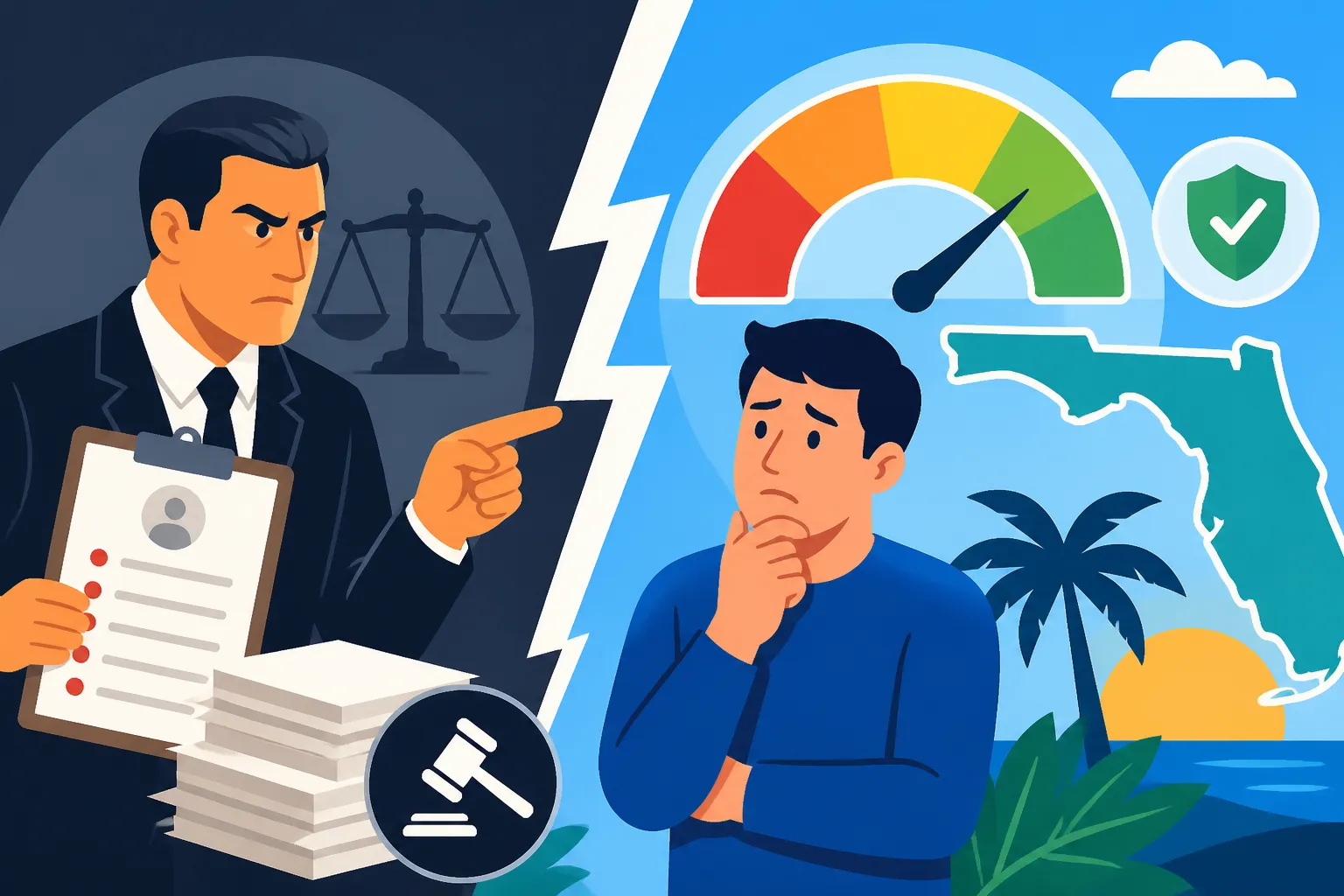
Feeling that knot in your stomach when you get a call or a letter from a debt collector, especially one that mentions legal action, is absolutely terrifying. It’s even worse when you’re not sure if they can actually sue you or if it’s just an empty threat. This guide is here to clear up the confusion, specifically about debt collection lawsuits in the Sunshine State, so you can understand your rights and what steps to take if you find yourself in this stressful situation.
Understanding Debt Collection Lawsuits in Florida
Let's face it, nobody wants to be sued, especially not by a debt collector. The good news is that debt collectors can't just sue you on a whim. There are specific rules and laws they have to follow, both at the federal and state level, and understanding these is your first line of defense. Ignoring the problem won't make it go away; in fact, it often makes things much worse.
The Legal Framework: Florida's Specific Laws
When we talk about debt collection, two main sets of laws come into play: the federal Fair Debt Collection Practices Act (FDCPA) and Florida's own Consumer Collection Practices Act (FCCPA). These laws are designed to protect you from harassment, deceptive practices, and unfair treatment by third-party debt collectors.
The FDCPA, a federal law, is your foundational protection. It dictates what debt collectors can and cannot do. For instance, they can't call you endlessly, use obscene language, or threaten you with violence. They also can't falsely claim to be attorneys or government representatives. What many people don't realize is that the FDCPA generally applies to third-party debt collectors, not necessarily the original creditor who you first owed money to. However, if the original creditor uses a different name to collect their own debt, or if they bought the debt from another company, they can be considered a debt collector under the FDCPA. Knowing about these rules is crucial because if a collector violates them, you might have grounds to sue them, or at the very least, use it as a defense against a lawsuit.
Florida's FCCPA adds another layer of protection, and sometimes it's even stronger than the federal FDCPA. For example, the FCCPA applies to all debt collectors in Florida, including original creditors, which is a significant difference from the FDCPA. This means that if Capital One or your local hospital is aggressively trying to collect a debt themselves, they are still subject to Florida's consumer protection laws. The FCCPA prohibits collectors from pretending to be law enforcement, threatening criminal prosecution when none is warranted, and even threatening to put you on a "shame list." These laws are your shield, and understanding them is vital to knowing when a collector has overstepped their bounds. For more details on your protections, you might want to look into How to Negotiate With Debt Collectors.
When a Debt Collector Can Sue You
So, can they actually take you to court? Yes, they absolutely can. But they have to have a legitimate claim, and they have to follow proper legal procedures. A debt collector can sue you if you owe a legitimate debt, they are the rightful owner or servicer of that debt, and the debt is still within the statute of limitations. This means they can't just pluck a random name out of a hat and file a suit; they need proof that you owe the money and that they have the legal right to collect it.
Typically, lawsuits arise from unpaid credit card balances, medical bills, personal loans, or old utility bills that have gone into default. Often, these debts are sold from the original creditor to a "debt buyer" for pennies on the dollar. These debt buyers then try to collect the full amount, and if unsuccessful through calls and letters, they might escalate to a lawsuit. The crucial thing to remember is that when a debt buyer sues you, they have the burden of proving that they legally own the debt and that the amount is accurate. This is where many debt collection lawsuits fall apart because the debt buyer might not have all the necessary original documentation. If you're concerned about negative items on your report, understanding How to Remove Collections From Your Credit Report can provide valuable insights.
The All-Important Statute of Limitations in Florida
One of the most powerful defenses you might have against a debt collection lawsuit in Florida is the statute of limitations. This is a strict legal deadline that dictates how long a creditor or debt collector has to sue you to collect a debt. If they try to sue you after this period has expired, you can usually get the case dismissed. This doesn't mean the debt disappears or that they can't call you anymore, but it severely limits their legal options to force payment.
Different Types of Debt and Their Time Limits
Florida, like other states, has different statutes of limitations depending on the type of debt. It's not a one-size-fits-all rule, so it's critical to know which one applies to your specific situation.
- Written Contracts: For debts based on a written contract, such as credit card agreements, promissory notes, car loans, and mortgage contracts, the statute of limitations in Florida is generally five years. This five-year clock usually starts from the date of your last payment or the date the account became delinquent, whichever is later. This is often the most common type of debt that leads to collection lawsuits.
- Oral Contracts: If a debt is based on an oral (unwritten) agreement, the statute of limitations in Florida is typically four years. This might apply to some personal loans or service agreements where no formal written contract was signed. These are less common for major debt lawsuits, simply because they are harder for a creditor to prove in court.
- Other Debts: Medical bills, while often originating from a service, usually fall under the "open account" or "written contract" category, making them subject to the five-year limit if there's any underlying paperwork, or sometimes the four-year oral contract if not. A judgment, once obtained by a creditor, has its own statute of limitations for enforcement, which is much longer—typically 20 years in Florida. This is why preventing a default judgment in the first place is so important.
Here's a quick reference table for Florida's Statute of Limitations for common types of debt:
| Debt Type | Statute of Limitations in Florida | Starting Point |
|---|---|---|
| Written Contracts | 5 years | Date of last payment or delinquency |
| Oral Contracts | 4 years | Date of breach or last activity |
| Promissory Notes | 5 years | Date of last payment or delinquency |
| Credit Card Debt | 5 years | Date of last payment or delinquency |
| Medical Debt | 4 or 5 years (depending on terms) | Date of last payment or service |
| Court Judgment | 20 years | Date the judgment was entered |
It's vital to remember that these are general guidelines. The specifics of your agreement can sometimes alter these timeframes, so consulting with a legal professional familiar with Florida debt laws is always a wise move.
What "Tolling" the Statute Means and How to Avoid It
Just because a debt is old doesn't mean the clock always keeps ticking down. Certain actions can "toll" or restart the statute of limitations, giving the debt collector a fresh new timeframe to sue you. This is a common trap, and collectors are often well aware of how to get you to inadvertently restart the clock.
The most common ways to restart the statute of limitations include:
- Making a Payment: Even a tiny payment on an old debt can restart the statute of limitations from the date of that payment. A debt collector might contact you about an old debt and push you to make a "good faith payment" of, say, $5 or $10. If you do, thinking you're being responsible, you could be giving them another five years (for a written contract) to sue you for the full amount.
- Acknowledging the Debt in Writing: If you write a letter to the debt collector acknowledging that you owe the debt, or even just discussing it in a way that implies ownership, this could also reset the clock. Be very careful about what you put in writing, even if it's just an email or text message.
- Entering a Payment Plan: Agreeing to a new payment plan or making a new promise to pay the debt can also restart the statute.
To avoid inadvertently restarting the clock, it's generally best to be extremely cautious when communicating with debt collectors about old debts. Never confirm that a debt is yours, don't make any payments, and avoid discussing specific amounts owed. If a debt collector contacts you about an old debt, it's perfectly acceptable to state, "I do not acknowledge this debt, and I will not be discussing it further." If you are unsure about the legitimacy or age of a debt, you should send a debt validation letter. Knowing What Is Debt Validation and How to Request It can be incredibly helpful here.
What to Do If You're Sued by a Debt Collector in Florida
Receiving a summons and complaint for a debt is a frightening experience, but it’s absolutely critical that you do not ignore it. This is not the time to bury your head in the sand. Ignoring a lawsuit is the quickest way to end up with a judgment against you, which can have severe financial consequences.
Don't Ignore the Summons: Your First Steps
When you get sued, you'll receive a summons (a court order to appear or respond) and a complaint (the debt collector's statement of why they're suing you). These documents will tell you exactly how long you have to respond, which is typically 20 days in Florida circuit and county courts. Mark that deadline immediately on your calendar!
Your first step, without question, should be to seek legal advice. An attorney specializing in consumer debt or civil litigation in Florida can review your case, explain your options, and help you determine the best course of action. Many consumer protection attorneys offer free initial consultations. If you don't respond to the lawsuit within the specified timeframe, the court will likely issue a default judgment against you. This means the debt collector automatically wins the case because you didn't defend yourself. A default judgment gives them the legal right to pursue aggressive collection actions like wage garnishment, bank levies, or placing liens on your property, which can be devastating.
Crafting Your Defense: Common Strategies
Once you have legal counsel, you can start building your defense. There are several common defenses against debt collection lawsuits that a Florida attorney might explore:
- Statute of Limitations: As discussed, if the debt is past Florida's statute of limitations, this is a strong defense. You can file a motion to dismiss the case based on this legal technicality.
- Debt Not Yours / Identity Theft: If you genuinely don't owe the debt or suspect you're a victim of identity theft, you need to prove it. Gather police reports, fraud alerts, and any other documentation that shows the debt isn't yours. This is a serious defense and one that the credit bureaus take seriously. Knowing What to Do If You're a Victim of Identity Theft can guide you.
- Incorrect Amount / Already Paid: If the amount they're suing you for is wrong, or if you've already paid part or all of the debt, you'll need records to prove it. Bank statements, canceled checks, or payment receipts are crucial.
- Lack of Proof / Standing: Debt buyers, in particular, often struggle to provide sufficient documentation to prove they legally own the debt and that the amount is accurate. They might not have the original contract, statements showing the chain of ownership from the original creditor, or detailed transaction history. Your attorney can challenge their "standing" to sue you.
- Violation of Consumer Protection Laws: If the debt collector violated the FDCPA or FCCPA during their collection attempts (e.g., harassment, false statements, calling you at work after being told not to), this can be used as a counterclaim or a defense.
An attorney can help you file an "Answer" to the complaint, which is your formal response to the court, outlining your defenses. This crucial step prevents a default judgment.
Negotiating and Settling Your Debt
Even if the debt is legitimate and within the statute of limitations, a lawsuit doesn't necessarily mean you're doomed to pay the full amount plus legal fees. Debt collectors, especially debt buyers, often buy debts for pennies on the dollar and are willing to settle for less than the full amount to avoid the time and expense of a trial.
Your attorney can help you negotiate with the debt collector's legal team. You might be able to offer a lump-sum payment that is a percentage of the total debt, or negotiate a manageable payment plan. If you go this route, always get the settlement agreement in writing, clearly stating that the debt will be considered "paid in full" or "settled" for the agreed-upon amount and that the lawsuit will be dismissed with prejudice (meaning they can't sue you for the same debt again). If a collection agency agrees to remove the account from your credit report after payment, ensure this is also in writing – this is known as a "pay for delete" agreement. For more on this strategy, read Pay for Delete: Does It Really Work?.
The Potential Consequences of a Debt Collection Lawsuit
If you lose a debt collection lawsuit in Florida, either because you didn't respond or because the court ruled in favor of the debt collector, a judgment will be entered against you. This is a court order that legally confirms you owe the debt collector money. The implications of a judgment can be severe and long-lasting, significantly impacting your financial stability.
What a Default Judgment Means for You
A default judgment, as mentioned, is what happens if you don't respond to the lawsuit. It’s essentially an automatic win for the debt collector. With a judgment in hand, the debt collector becomes a "judgment creditor" and gains powerful legal tools to collect the money you owe.
In Florida, these tools typically include:
- Wage Garnishment: While Florida has strong protections against wage garnishment for "head of household" wages (meaning you provide more than half the support for a child or other dependent), these protections are not absolute. If you are not considered a head of household, or if your income is very high, a portion of your wages could be garnished directly from your paycheck until the debt is satisfied. This is a substantial financial hit that can make it incredibly difficult to manage your daily expenses.
- Bank Account Levy: A judgment creditor can obtain an order to "levy" your bank accounts. This means they can freeze funds in your checking or savings accounts and seize them to satisfy the debt. This can happen without much warning, leaving you unable to access your money for bills or living expenses.
- Property Liens: If you own real estate, the judgment creditor can place a lien on your property. This doesn't mean they can immediately take your home, but it means that if you try to sell or refinance the property, the judgment must typically be paid off from the proceeds before the transaction can be completed.
- Asset Seizure: In some cases, judgment creditors can also pursue the seizure of non-exempt personal property, though this is less common for consumer debts.
These actions are not taken lightly by the courts, but once a judgment is in place, the path for the creditor to take these steps becomes much smoother. The costs of collection, including attorney fees, often get added to the original debt, making the total amount you owe even higher.
Beyond the Lawsuit: Credit Reporting and Other Impacts
The negative impact of a debt collection lawsuit extends beyond just immediate financial seizure. A civil judgment will appear on your credit report and remain there for up to seven years from the date it was filed, even if you eventually pay it off. This public record significantly damages your credit score, making it much harder to:
- Get new credit: Lenders will see the judgment and be very hesitant to extend you credit for credit cards, car loans, or mortgages.
- Rent an apartment: Landlords often run credit checks, and a judgment can make it incredibly difficult to secure housing.
- Obtain certain jobs: Some employers, particularly those in financial or government sectors, may review credit reports as part of their background checks. A judgment could hinder your employment prospects.
Even after the initial seven years, the debt itself could still be reported on your credit report if it was an account that originally appeared there, until it reaches its own reporting limit (typically seven years from the date of default). A judgment simply means the court has validated the debt. This reinforces why being proactive and understanding How Long Does Credit Repair Take? is so important.
Proactive Steps to Protect Yourself from Debt Collection Lawsuits
While a lawsuit can feel overwhelming, there are proactive steps you can take to not only defend yourself but also to prevent future debt collection issues altogether. Knowledge and diligent action are your best allies.
Knowing Your Rights and Documenting Everything
One of the most powerful tools you possess is knowledge of your rights under the FDCPA and Florida's FCCPA. Understand what debt collectors are legally allowed to do and, more importantly, what they are explicitly forbidden from doing. If a debt collector violates these laws, you may have legal recourse against them, which can sometimes even be used to offset the debt they claim you owe.
Documentation is paramount. From the moment you receive any communication from a debt collector, keep meticulous records. This includes:
- Letters: Keep all physical letters, noting the date received.
- Emails and Texts: Save electronic communications.
- Call Logs: For phone calls, note the date, time, collector's name, company, what was discussed, and any promises made or threats implied.
- Payment Records: Maintain proof of any payments you've made, including dates and amounts.
- Debt Validation Requests: If you send one, keep a copy and proof of mailing (certified mail is always best).
This documentation can be invaluable if you need to dispute the debt, negotiate a settlement, or defend yourself in court. It provides concrete evidence against vague claims or aggressive tactics, turning a he-said-she-said situation into one backed by facts. Knowing How to Dispute With Equifax, Experian, and TransUnion is a good first step if you see errors on your report.
Building and Repairing Your Credit Proactively
Preventing debt collection lawsuits often comes down to managing your finances effectively and maintaining a healthy credit profile. A strong credit score and responsible financial habits make you less likely to fall into deep debt and better equipped to handle financial challenges if they arise.
- Pay Your Bills On Time, Every Time: Payment history is the biggest factor in your credit score. Consistently paying all your bills—credit cards, loans, utilities—on or before their due dates is the single best way to maintain good credit and avoid falling behind.
- Manage Credit Utilization: Keep your credit card balances low relative to your credit limits. Experts recommend keeping your credit utilization below 30% of your total available credit. This shows lenders you can manage credit responsibly without relying too heavily on it.
- Establish a Credit Mix: Having a healthy mix of different types of credit (e.g., credit cards, installment loans) can positively impact your score, provided you manage them well.
- Build Credit with Tools: If you have limited credit history or are working to rebuild it, consider tools designed to help. Secured credit cards, for example, require a deposit but report to credit bureaus, helping you establish a positive payment history. Another excellent option is a credit builder loan. Companies like Credit Strong offer structured loans where your payments are reported to the credit bureaus, helping you build a positive credit history without needing an upfront lump sum. As you make consistent payments, you're not just improving your credit score; you're also building savings. This can be a game-changer for those who are starting from scratch or trying to recover from past financial difficulties.
- Monitor Your Credit Report: Regularly checking your credit reports for errors or unauthorized accounts is crucial. You can get free copies from AnnualCreditReport.com. If you find something inaccurate, dispute it immediately. This protects you from fraudulent accounts and ensures your score accurately reflects your financial behavior. Check out How to Read Your Credit Report for guidance.
- Create an Emergency Fund: Having an emergency fund can prevent you from relying on credit cards or high-interest loans when unexpected expenses pop up, reducing the risk of falling into debt that could lead to collection issues.
Remember, building good credit and repairing damaged credit takes time and consistent effort. However, the peace of mind and financial opportunities that come with it are well worth the investment. Services like Credit Strong can provide a structured pathway to improve your credit, helping you move towards a more secure financial future and away from the fear of debt collection lawsuits. They focus on accessible solutions for people looking to improve their credit health. Focusing on positive financial habits and leveraging tools designed to help, such as those offered by Credit Strong, can significantly reduce your vulnerability to debt collectors and legal action.
Disclaimer
The information provided in this guide is for general informational purposes only and does not constitute legal or financial advice. Laws regarding debt collection can be complex and vary by jurisdiction. You should consult with a qualified attorney or financial advisor in Florida for advice tailored to your specific situation.