Do You Have Three Different Credit Scores?
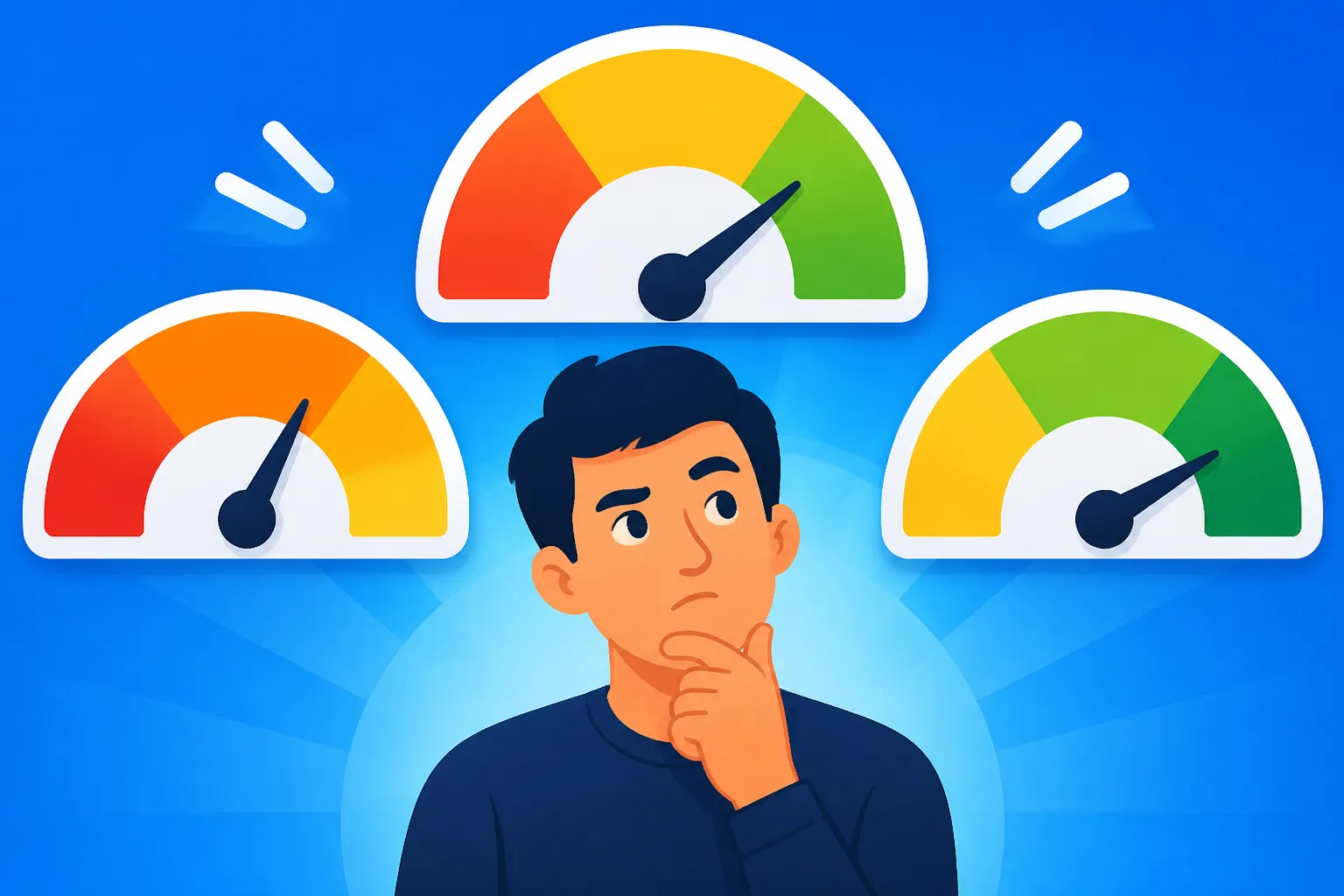
It can be incredibly confusing and even frustrating when you check your credit score and see a different number every time. You might look at your bank's app, then a credit monitoring service, and then get a notification from a credit card company, and suddenly you're staring at three completely different scores. This common experience makes you wonder: do you really have three different credit scores, or is something else going on? This guide will break down the reality of credit scores, explain why these discrepancies exist, and show you how to truly understand and manage your financial reputation.
The Reality of Your Credit Scores: More Than Just One Number
For years, the idea of "your credit score" has been treated almost like a single, fixed number—like your shoe size or your height. People often talk about the score they have, assuming everyone else sees the exact same figure. But the truth is, the financial world is far more complex, and your credit "score" is actually a dynamic range of numbers, influenced by various factors and calculated in different ways. This can be a tough pill to swallow when you're diligently trying to improve your credit and feel like you're chasing a moving target.
Why the Myth of a Single Score Persists
The misconception that there's just one universal credit score is deeply ingrained in our collective understanding of personal finance. It's often fueled by simplified advertisements from credit card companies or loan providers that highlight a single score range, making it seem like a straightforward measure. We've all seen commercials where a person happily checks "their" credit score on an app, implying a definitive number. This creates an expectation that simply isn't aligned with how the credit industry truly operates. When you apply for a new apartment or a car loan, and the lender pulls a score that's significantly different from the one you've been tracking, it can feel like a punch to the gut. You've been working so hard, only to find that the number that matters most to them is not the one you were expecting.
This simplified view can lead to a lot of confusion and even distrust when consumers encounter different scores. It's not that any one score is inherently "wrong," but rather that each score is a snapshot taken with different cameras, using different lenses, and at slightly different times. Understanding this foundational concept is the first step toward effectively managing your credit health and not getting caught off guard by unexpected numbers.
The Big Three: Equifax, Experian, and TransUnion
At the core of the credit scoring system are the three major credit reporting agencies: Equifax, Experian, and TransUnion. These are the giants that collect, maintain, and report your credit information. Think of them as massive data warehouses, each compiling its own comprehensive file on your borrowing and repayment history. When you open a new credit card, take out a loan, or even miss a payment, the lender typically reports that activity to one, two, or all three of these bureaus.
Crucially, each bureau operates independently. They collect data, process it, and update their records based on what lenders report to them. This independent operation is a primary reason why your credit information, and subsequently your scores, can vary from one bureau to another. While they all aim to provide an accurate picture of your creditworthiness, the specific details in each report might not be identical, leading to variations in the scores derived from that data. For instance, a small local credit union might only report your auto loan activity to Experian, leaving Equifax and TransUnion unaware of that specific trade line. This difference in underlying data is a key factor in the score disparities you often see. It's why experts always recommend checking your credit reports from all three bureaus regularly, not just one. You can learn more about these three vital players in our article, The 3 Credit Bureaus: Equifax, Experian & TransUnion.
Understanding the Different Scoring Models and Versions
Beyond the three bureaus, another layer of complexity comes from the various scoring models used to generate those three-digit numbers. It's not just about the data; it's also about the formula applied to that data. There isn't one universal formula, but rather a multitude of proprietary algorithms, each designed to assess credit risk in slightly different ways. This is where most of the confusion really starts to kick in.
FICO Score vs. VantageScore: The Primary Players
When people talk about "their credit score," they are usually referring to either a FICO Score or a VantageScore. These are the two most common credit scoring models in the United States, and while they both aim to predict your likelihood of repaying debt, they do so with different methodologies.
The FICO Score, developed by the Fair Isaac Corporation, has been around since the 1980s and is, by far, the most widely used scoring model among lenders. An estimated 90% of top lenders use some form of FICO Score when making credit decisions. What many people don't realize, however, is that there isn't just one FICO Score. There are dozens of different FICO versions, such as FICO Score 8 (the most commonly used version for general lending), FICO Score 9, and industry-specific scores like FICO Auto Score and FICO Mortgage Score. Each version may weigh certain factors slightly differently, leading to varying scores even when looking at the same underlying credit report. A lender might pull FICO 8, while your credit card app shows FICO 9, contributing to that sense of disconnect.
VantageScore is a newer scoring model, developed jointly by the three major credit bureaus (Equifax, Experian, and TransUnion) in 2006. It was designed to compete with FICO and offer an alternative. VantageScore models, like VantageScore 3.0 and 4.0, are becoming increasingly common, especially with many free credit monitoring services, online lenders, and some smaller financial institutions. While both FICO and VantageScore use similar underlying data points (payment history, credit utilization, length of credit history, etc.), their algorithms assign different weights to these factors. For example, VantageScore 3.0 places more emphasis on recent credit behavior compared to some older FICO models. This means that recent changes in your credit habits might impact your VantageScore more quickly than your FICO Score. Understanding the nuances between these two primary players is essential, and you can dive deeper into their differences by reading our guide on FICO Score vs VantageScore: What's the Difference?.
Industry-Specific Scores and Custom Models
As if FICO and VantageScore weren't enough, the world of credit scoring gets even more specialized. Lenders aren't always looking for a general snapshot of your credit health; they often want a highly tailored assessment specific to the type of loan you're applying for. This is where industry-specific scores come into play. For instance, when you're buying a car, an auto lender might pull a FICO Auto Score, which specifically focuses on your history with car loans and other installment debt. Similarly, mortgage lenders will often use older FICO models, like FICO Score 2, 4, or 5, as these are considered more predictive for long-term housing debt. These specialized scores use different weighting criteria, making them more relevant to the specific risk associated with a particular type of lending.
Beyond these well-known models, some larger lenders or financial institutions might even develop their own proprietary, in-house scoring models. These custom models often combine elements of your credit report data with other information they have about you as a customer, or even public record data. While you won't typically see these scores yourself, they illustrate just how varied the scoring landscape truly is. This fragmentation means that the "good credit score" for one type of loan or lender might be slightly different from another, adding another layer of why your perceived score can vary. It’s a bit like different professors grading the same essay with slightly different rubrics—the core content is the same, but the final mark can shift.
Why Your Scores Vary Across Bureaus and Platforms
Now that we know there are three major bureaus and many different scoring models, it starts to become clearer why your scores might not always align. But let's dig into the specific reasons for these discrepancies, because understanding them empowers you to take action rather than just feeling confused.
Differences in Credit Report Data
One of the most significant reasons your scores differ is because the underlying data in your credit reports themselves are not always identical across Equifax, Experian, and TransUnion. Lenders are not legally required to report to all three bureaus; they can choose to report to one, two, or all three. This means that one bureau might have information about a particular account or payment that the others don't.
Imagine you have a small credit card from a local bank. This bank might only report your payment activity to, say, Experian and Equifax. If you've always paid this card on time, those positive payments will only boost your scores with those two bureaus. TransUnion, lacking that positive data, might calculate a slightly lower score. Conversely, if you had a late payment on an account that only reported to TransUnion, then only your TransUnion score would reflect that negative mark, while your Experian and Equifax scores might remain higher. Medical collections are another common example; they might only appear on one or two of your reports, depending on the collection agency's reporting practices. This uneven distribution of data is a major contributor to seeing different numbers from different sources. It’s precisely why it’s so critical to get your free credit report from each of the three bureaus at least once a year through AnnualCreditReport.com, so you can see exactly what data each one holds. You can read more about this phenomenon in detail in our article, Why Are My 3 Credit Reports Different?.
Timing of Updates and Reporting Cycles
Even if a lender reports to all three credit bureaus, they don't necessarily do so at the exact same time, nor do the bureaus update their files simultaneously. Most lenders report to the credit bureaus once a month, typically shortly after your statement closing date. However, the specific day of the month can vary from lender to lender, and from bureau to bureau.
Let's say you paid off a credit card balance in full on the 10th of the month. One bureau might receive and process that update by the 15th, immediately reflecting a lower credit utilization and potentially boosting your score. Another bureau might not receive the update until the 20th, or even the 25th, meaning their score would still reflect the higher balance for a longer period. This lag in reporting and processing can create temporary, but noticeable, differences in your scores across the bureaus. It's a bit like looking at three different news channels broadcasting live from the same event—one might be a few seconds ahead, or have just gotten a new piece of information that the others haven't yet received. This is particularly relevant if you have a significant event, like a large payment or a new account opening, as the scores will only align once all bureaus have processed the most recent data.
Varying Scoring Model Versions Used by Lenders
We touched on this earlier, but it bears repeating: the specific version of a FICO Score or VantageScore model that a lender uses can dramatically impact the score they see for you. Financial institutions don't all use the same formula. A bank offering you a personal loan might use FICO Score 8, while a car dealership might use a FICO Auto Score 5, and an online credit builder loan like Credit Strong might use VantageScore 3.0 to assess eligibility or report progress. Each of these models assigns different weights to the various factors on your credit report.
For example, FICO Score 8 is known to be more sensitive to high credit utilization on individual cards, while FICO Auto Scores might place more weight on your history of timely car payments. VantageScore 4.0 considers trended data—showing how your balances have changed over time—which FICO 8 doesn't. So, even if the data on your three credit reports were perfectly identical, applying different scoring model algorithms to that identical data would still produce different scores. This is probably the trickiest part for consumers to wrap their heads around, as the exact score a lender sees is often out of your direct view. It means that while you might be tracking a VantageScore 3.0 score through a free service, the mortgage lender might pull three different FICO Mortgage Scores (one from each bureau), each using an older, specific version tailored to housing loans.
How to Navigate and Monitor Your Multiple Scores
Given this complex landscape, what’s a savvy consumer to do? The key is not to get hung up on a single number, but rather to understand the overall picture and focus on healthy credit habits. Monitoring your credit effectively means looking beyond just one score.
Accessing Your Credit Reports From All Three Bureaus
The most foundational step in understanding your credit is to regularly access your actual credit reports. Remember, the scores are derived from the information in these reports. By law, you are entitled to a free credit report from each of the three major bureaus—Equifax, Experian, and TransUnion—once every 12 months. The official website for this is AnnualCreditReport.com. This is NOT a scam site; it's the real deal and the only place authorized to provide these free reports.
A smart strategy is to stagger your requests throughout the year. For example, pull your Experian report in January, your TransUnion report in May, and your Equifax report in September. This allows you to monitor your information more frequently without having to pay for it. When you get your reports, read them thoroughly. Look for any inaccuracies, accounts you don't recognize, or incorrect personal information. Even small errors, like an old address or a misspelled name, can sometimes affect how your credit file is managed. If you find anything amiss, it's crucial to dispute it promptly. Our guide, How to Get Your Free Credit Report, provides a step-by-step walkthrough on how to do this effectively. Catching errors early ensures that the data used to calculate your scores is as accurate as possible, no matter which bureau or scoring model is being used.
Understanding Free Credit Monitoring Services
Many companies and financial institutions offer free credit scores and monitoring services today. Popular examples include Credit Karma, Credit Sesame, Capital One CreditWise, and even Experian's own free score tool. These services are fantastic for keeping a general eye on your credit health and understanding trends. However, it's vital to understand what they typically provide.
Most free services provide a VantageScore, not a FICO Score. For instance, Credit Karma primarily shows you VantageScores from TransUnion and Equifax. Experian offers a free FICO Score 8, which is great, but it's still just one version from one bureau. These scores are excellent for tracking changes over time, spotting potential fraud, and learning which credit factors are impacting you most. They give you a good indication of whether your credit is moving in the right direction. However, because lenders predominantly use FICO Scores (and specific versions at that), the score you see on a free monitoring app might not be the exact score a lender pulls when you apply for a loan. Don't be surprised if your "real" FICO 8 from Experian is 720, but your Credit Karma VantageScore is 750. Both can be accurate representations based on different models. While these services are incredibly useful for general awareness and spotting changes, remember they might not show you the score that a specific lender will use for a big decision like buying a house. Want to learn more about how to check your credit for free? We've got you covered in How to Check Your Credit Score for Free.
Strategic Credit Building for All Scores
The good news amidst all this complexity is that the fundamental principles for improving any credit score remain largely the same. No matter which bureau is reporting, or which scoring model is crunching the numbers, healthy credit habits will almost always lead to better scores across the board. The key factors are:
- Payment History: This is the most important factor, accounting for about 35% of your FICO Score. Pay all your bills on time, every time.
- Credit Utilization: Keep your credit card balances low, ideally below 30% of your available credit limit. Lower is better.
- Length of Credit History: The longer your accounts have been open and active, the better.
- Credit Mix: Having a healthy mix of different types of credit (revolving accounts like credit cards and installment loans like mortgages or car loans) can be beneficial.
- New Credit: Don't open too many new accounts in a short period, as this can signal higher risk.
To address the "credit mix" factor, especially if you have a limited credit history, tools like a credit builder loan can be incredibly helpful. Companies like Credit Strong offer these types of loans designed specifically to help you establish and diversify your credit mix. With Credit Strong, you make regular payments on a loan that's held in a locked savings account, and those payments are reported to all three credit bureaus. This builds positive payment history and adds an installment loan to your credit mix, which can be particularly beneficial for those looking to round out their credit profile. Learning How to Build Credit From Scratch (2026 Guide) is an excellent way to start, and understanding Credit Builder Loans Explained (Self, Kikoff & More) can show you how products like Credit Strong contribute to improving all your credit scores over time.
Common Scenarios and Actionable Steps
Navigating the world of multiple credit scores might seem daunting, but by understanding common scenarios and knowing what steps to take, you can stay in control.
When Your Scores Are Significantly Different
It's common for your credit scores to vary by a few points across the bureaus or between different scoring models. A 10-20 point difference is usually nothing to worry about. However, if you see a significant discrepancy—say, your Experian FICO Score is 720, but your TransUnion VantageScore is 650, or your scores from two different bureaus are wildly apart—that's a red flag.
When this happens, your first and most important step is to obtain and meticulously review all three of your detailed credit reports. Remember, the scores are merely a reflection of the information contained within those reports. A large discrepancy often indicates that there's different information being reported (or not reported) to each bureau, or worse, there might be an error or even fraudulent activity on one of your reports. Look for:
- Missing Accounts: Is a positive account, like a long-standing credit card you always pay on time, missing from one report?
- Extra Accounts: Are there accounts listed on one report that you don't recognize? This could be a sign of identity theft.
- Incorrect Balances or Status: Is a paid-off loan still showing a balance? Is a payment incorrectly marked as late?
- Duplicate Entries: Is the same collection account listed twice, perhaps with slightly different names or account numbers?
If you find errors, you need to dispute them directly with the credit bureau (or bureaus) reporting the inaccurate information, and often with the creditor itself. This process can take some time, but it's essential to ensure your credit reports are accurate. We have comprehensive guides on How to Dispute Credit Report Errors (Step-by-Step) and specific instructions on How to Dispute With Equifax, Experian, and TransUnion to walk you through the process. Cleaning up these inaccuracies is one of the fastest ways to potentially improve your scores across the board.
Preparing for a Major Loan Application
When you're planning a significant financial move, like buying a house, purchasing a car, or taking out a substantial personal loan, it's wise to be proactive about your credit scores. Simply checking your free VantageScore online won't give you the full picture of what lenders will see.
For a mortgage, lenders typically pull FICO Scores using older versions (FICO 2, 4, or 5) from all three bureaus. For an auto loan, they'll likely use FICO Auto Scores. Before you apply, consider using a service like myFICO.com, which allows you to purchase access to various versions of your FICO Scores, including industry-specific ones. This gives you insight into the specific numbers a lender will likely see, helping you identify any areas for improvement. If your credit mix is a bit thin, adding an installment loan through a service like Credit Strong well in advance of a major application can help round out your profile and positively influence those specific scoring models that look for diverse credit experience. Knowing where you stand across multiple relevant scores allows you to address potential weaknesses before a critical application, putting you in a stronger negotiating position for better rates and terms.
Protecting Your Credit Information
With so much data floating around and different scores being generated, protecting your underlying credit information is paramount. Identity theft and fraud can quickly wreak havoc on your credit reports and, consequently, all your scores.
Beyond regularly checking your credit reports for errors, consider implementing proactive measures. A credit freeze is one of the most powerful tools you have. It restricts access to your credit report, making it difficult for identity thieves to open new accounts in your name. You'll need to place a freeze with each of the three major bureaus individually. While a credit freeze effectively locks down new credit applications, it won't impact your existing accounts or credit score. Another option is a fraud alert, which flags your report to lenders, prompting them to take extra steps to verify your identity before extending credit. These measures are especially important after a data breach or if you suspect your personal information has been compromised. Our guide, Credit Freeze vs Credit Lock vs Fraud Alert, can help you understand the differences and decide which protection is right for you.
| Feature | FICO Score | VantageScore | Bureau-Specific Data Differences |
|---|---|---|---|
| Developer | Fair Isaac Corporation | Equifax, Experian, TransUnion (jointly) | Not applicable (this is the source data) |
| Primary Versions | FICO 8 (most common), FICO 9, FICO Auto, etc. | VantageScore 3.0, VantageScore 4.0 | Varies based on reporting behavior of lenders |
| Lender Usage | ~90% of top lenders; industry-specific scores | Growing usage; many free monitoring services | What lenders actually report to each bureau |
| Scoring Range | 300-850 | 300-850 (3.0/4.0), 501-990 (older versions) | Not applicable (data, not a score) |
| Key Differentiator | Multiple, specific versions for different loans | Often more sensitive to recent activity | Not all creditors report to all 3 bureaus |
| Impact on Score | Most widely used for critical lending decisions | Good for general monitoring and trend tracking | Direct impact on the information available for scoring |
The Final Takeaway: It's All Normal
So, do you have three different credit scores? The short answer is yes, and no. You have three different credit reports (one from each major bureau), and each of those reports can be used to generate dozens of different credit scores depending on the scoring model and version applied. It's a complex system, but seeing varying numbers is completely normal.
The most important thing is not to obsess over one specific number, but to focus on the underlying health of your credit. Pay your bills on time, keep your credit utilization low, and regularly review all three of your credit reports for accuracy. By understanding why these scores differ and taking proactive steps to manage your credit, you'll be well-prepared for any financial opportunity that comes your way.
Disclaimer
This article is for general informational purposes only and does not constitute professional advice. Laws, prices and regulations vary by location and change over time. Consult a qualified professional for guidance on your specific situation.