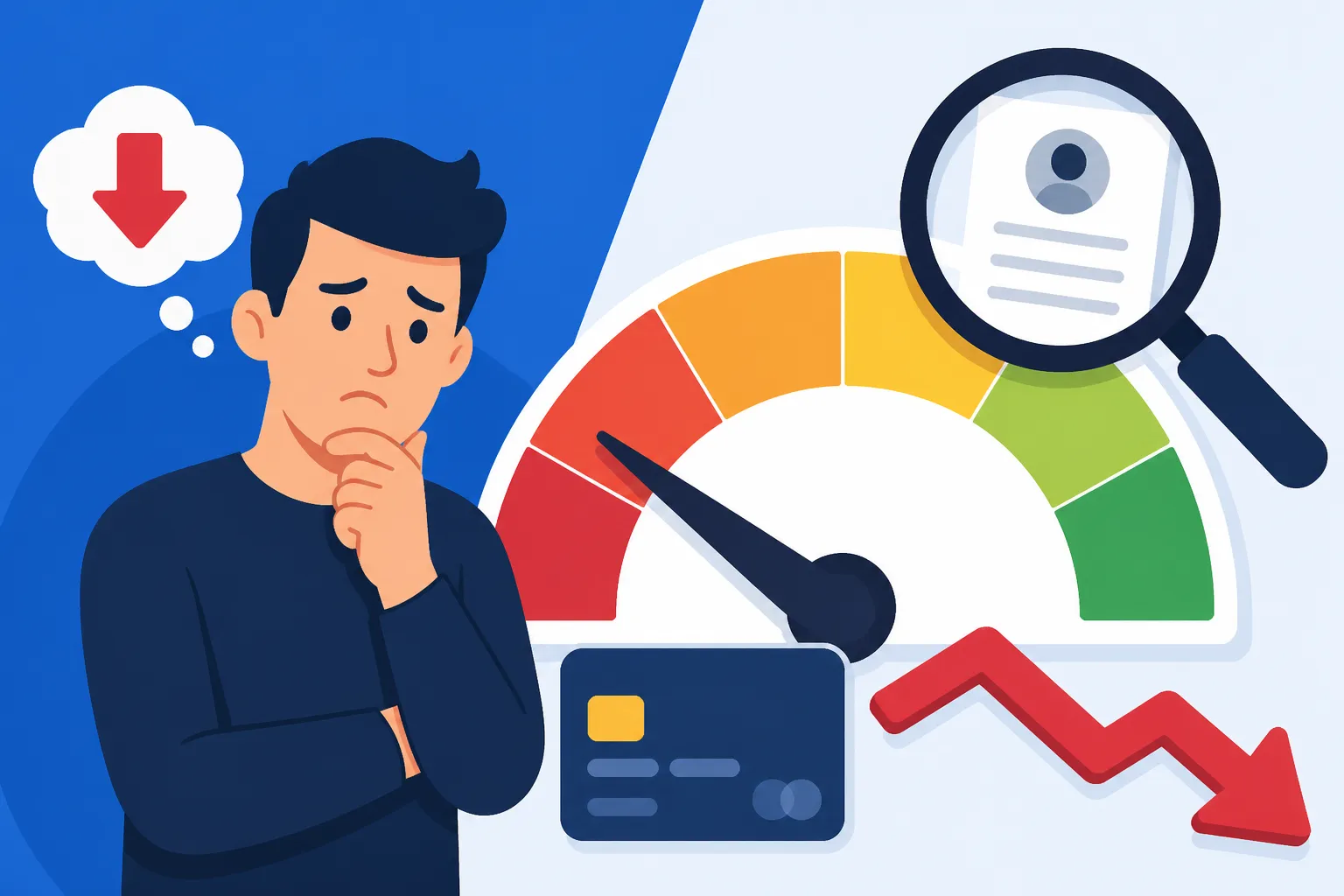
Why Did My Credit Score Drop After a Hard Inquiry?
It's incredibly frustrating, isn't it? You apply for a loan or a new credit card, something you feel you need, only to check your credit score a few days later and see it's actually dropped. It feels counterintuitive, like you're being penalized for trying to improve your financial situation or access necessary funds. This guide is here to demystify why that dip happens after a hard inquiry and equip you with the knowledge to understand and manage its impact.
Understanding Hard Inquiries and Their Impact
When you decide to take on new credit, whether it's a new credit card, a personal loan, an auto loan, or a mortgage, lenders need to assess your creditworthiness. They do this by looking at your credit report and score. The act of a lender formally requesting this detailed look at your credit history is what we call a hard inquiry.
What Exactly is a Hard Inquiry?
A hard inquiry, sometimes called a "hard pull," occurs when a potential lender or creditor requests your full credit report from one or more of the three major credit bureaus—Equifax, Experian, and TransUnion—to make a lending decision. This happens when you explicitly apply for new credit, such as a credit card, a car loan, a mortgage, a student loan, or even some types of apartment rentals or utility services. The key here is that you've initiated the application process, giving them permission to access your full credit file.
It's important to distinguish these from "soft inquiries," which are often just background checks that don't impact your score. Soft inquiries happen when you check your own credit score, when a pre-approved credit card offer lands in your mailbox, or when an employer does a credit check (with your permission). These are invisible to lenders and don't hurt your score. Think of a hard inquiry as the lender's deep dive into your financial past, while a soft inquiry is more like a quick glance.
Why Do Hard Inquiries Affect Your Score?
The reason a hard inquiry can cause your credit score to dip lies in how credit scoring models, like FICO and VantageScore, interpret new credit applications. They view applying for new credit as potentially increasing your overall debt burden and, therefore, your risk profile. Even if you're a responsible borrower, too many credit applications in a short period can signal to lenders that you might be in financial distress or are about to take on a significant amount of new debt, which makes you a riskier prospect.
This impact falls under the "new credit" category, which typically accounts for about 10% of your FICO score. While 10% might not sound like a lot, it can still lead to a noticeable drop, especially if other areas of your credit profile aren't super strong. Lenders want to see stability and a manageable amount of debt, and a flurry of new credit requests can suggest the opposite. It's not a permanent mark of shame, but it's a temporary flag that makes lenders proceed with a bit more caution.
The Immediate Aftermath: The Score Drop
When a hard inquiry hits your credit report, you can usually expect a small, temporary dip in your credit score. For most people with an established credit history, this drop might be just a few points, perhaps 2-5 points. However, if your credit history is shorter or you already have a "thin" credit file (meaning you don't have many accounts reported), that drop could be more significant, potentially 10-15 points or even a bit more.
The reasoning is that someone with a long, robust credit history, a history of on-time payments, and low credit utilization can absorb the impact of a new inquiry much more easily. Their overall file demonstrates a high degree of responsibility. On the other hand, if your credit file is sparse or you're just starting to build credit, each new inquiry represents a larger percentage of your limited history, making the impact feel more pronounced. This initial dip is often the most noticeable effect you'll see from a hard inquiry.
Factors Influencing the Severity of the Drop
The degree to which a hard inquiry affects your credit score isn't a one-size-fits-all situation. Several factors play a significant role in determining how much your score will drop and for how long. Understanding these can help you anticipate the impact and plan your credit applications more strategically.
Your Existing Credit Profile
The strength and depth of your current credit profile are huge determinants of how a hard inquiry will hit. If you have a long history of responsible credit use, including a mix of different account types (like a mortgage, an auto loan, and a few credit cards), a solid track record of on-time payments, and consistently low credit utilization, your score is much more resilient. A single hard inquiry might cause a barely perceptible blip. Your strong foundation acts like a shock absorber, minimizing the impact.
However, if you have a shorter credit history, known as a "thin credit file," or if your report already contains negative items like late payments or collections, a hard inquiry can have a more pronounced effect. For someone just starting their credit journey, every new account and inquiry holds more weight because there's less historical data to balance it out. If you're in the early stages of building credit, using tools like a secured credit card or a credit builder loan from services like Credit Strong can help establish that positive history and make your score more robust for future inquiries. These products are specifically designed to help people demonstrate creditworthiness and build a solid foundation.
Number and Frequency of Inquiries
This is where the impact can really compound. While one hard inquiry might cause a minor dip, multiple inquiries in a short period can signal higher risk to lenders. Credit scoring models are designed to identify patterns. If they see several new applications for different types of credit within a few weeks or months, it can look like you're desperate for credit, potentially facing financial hardship, or preparing to take on more debt than you can handle. This type of behavior is often viewed negatively and can lead to a more significant score drop.
There's a notable exception to this rule, however. For certain types of loans, like mortgages, auto loans, or student loans, credit scoring models understand that consumers "shop around" for the best rates. To accommodate this, inquiries for the same type of loan within a specific timeframe (often 14 to 45 days, depending on the scoring model and bureau) are typically treated as a single inquiry. This "rate shopping window" allows you to compare offers without being penalized for each separate inquiry. But beware: this only applies to similar types of loans. Applying for an auto loan and a new credit card in the same week won't fall under this grace period.
Age of Your Credit History
Another key factor influencing the impact of a hard inquiry is the overall age of your credit history and the average age of your accounts. This metric accounts for about 15% of your FICO score. Lenders and scoring models generally prefer to see a long, established history of responsible credit use. A longer history provides more data points for assessing your reliability.
If you have a very short credit history, say only a couple of years, adding a new account through a hard inquiry will significantly lower your average age of accounts. This can be more detrimental than for someone who has a credit history stretching back 10 or 20 years. For example, if your only credit account is 3 years old, and you open a new one today, your average age of accounts immediately drops to 1.5 years. For someone with 10 accounts averaging 10 years, adding one new account barely moves the needle. This is why when you're working to How to Build Credit From Scratch (2026 Guide) or considering options like Credit Builder Loans Explained (Self, Kikoff & More), it's a good idea to understand how these new accounts will interact with your existing, possibly sparse, credit history.
The Lifespan and Fading Impact of Hard Inquiries
It's easy to panic when you see your credit score drop after a hard inquiry, but it's important to remember that the impact isn't permanent. Hard inquiries have a specific lifespan on your credit report, and their influence on your score diminishes over time.
How Long Hard Inquiries Stay on Your Report
A hard inquiry will remain visible on your credit reports from Equifax, Experian, and TransUnion for a period of 24 months, or two years. This means that if you check your detailed credit report, you'll see a record of that inquiry for that entire duration.
However, and this is a crucial distinction, most modern credit scoring models, especially the widely used FICO scores, only factor hard inquiries into their calculations for the most recent 12 months. After that first year, while the inquiry is still listed on your report, it generally stops impacting your actual FICO score. VantageScore models might consider them for slightly longer, but the impact significantly lessens after 12 months. So, while you'll see the entry for two years, the real "damage" to your score is typically limited to the first year, with the most significant impact happening in the first few months.
When Does the Score Start to Recover?
The good news is that your credit score typically starts to recover relatively quickly after a hard inquiry, assuming you maintain good credit habits. The initial dip is often the most significant part of the impact. Over the subsequent months, as you continue to make on-time payments, keep your credit utilization low, and avoid applying for more new credit, your score will gradually rebound.
Most of the negative impact from a hard inquiry lessens within 3 to 6 months. By the time 12 months have passed, the inquiry's influence on your score is usually minimal or non-existent, even though it still appears on your report. The key to a swift recovery is demonstrating responsible credit behavior with any new accounts you've opened and with all your existing accounts. For example, if you obtained a new credit card that resulted in a hard inquiry, actively using it responsibly and paying off the balance in full each month will quickly help offset the initial score drop. Consistency in managing all your credit obligations is vital for improving How to Raise Your Credit Score (Step-by-Step).
The Difference Between Hard and Soft Inquiries
To further clarify, let's break down the key differences between hard and soft inquiries. This is a common area of confusion, but understanding it can prevent unnecessary anxiety about checking your credit.
| Feature | Hard Inquiry | Soft Inquiry |
|---|---|---|
| Impact on Credit Score | Yes, can cause a small, temporary dip | No, never affects your credit score |
| When It Occurs | When applying for new credit (loan, credit card, mortgage) | When you check your own credit, pre-approved offers, tenant screenings, employment background checks |
| Requires Permission | Yes, you initiate the application | Often, but can be done without explicit permission (e.g., pre-screening offers) |
| Visibility to Lenders | Visible to all lenders for 2 years | Only visible to you; not visible to other lenders |
| Purpose | To make a lending decision; assess risk | For informational purposes or pre-screening |
Knowing this table can alleviate a lot of stress. Don't shy away from checking How to Check Your Credit Score for Free or reviewing How to Read Your Credit Report (2026 Guide) because these are soft inquiries and won't hurt your score. They're essential tools for financial literacy and vigilance.
Strategies to Mitigate Hard Inquiry Impact and Protect Your Score
While hard inquiries are a natural part of applying for credit, there are definite strategies you can employ to minimize their negative impact and keep your credit score in good shape. It's all about being mindful and proactive.
Be Strategic About Credit Applications
One of the most effective ways to manage hard inquiries is simply to be strategic about when and how often you apply for new credit. Resist the urge to apply for every credit card offer that comes your way or to open multiple store credit cards just for a small discount. Each application generates a hard inquiry, and if you have too many in a short period, it signals a higher risk to lenders, potentially leading to a more significant score drop.
Before you apply for any new credit, ask yourself if you genuinely need it. Is it a significant purchase like a car or a home, or is it a "nice to have" like another rewards credit card? If it's something you need, do your research first. Many lenders offer a "pre-qualification" option that uses a soft inquiry, allowing you to see your approval odds without impacting your score. This can save you from a hard inquiry for an application you might not even be approved for. If you're building credit from scratch, starting with one or two secured cards or a credit builder loan from a service like Credit Strong can be a controlled way to establish positive history without excessive inquiries all at once.
Monitor Your Credit Report Regularly
Being proactive also means keeping a close eye on your credit reports. You are entitled to a free credit report from each of the three major bureaus (Equifax, Experian, and TransUnion) once every 12 months through AnnualCreditReport.com. Make it a habit to pull them, perhaps staggering them throughout the year, to check for accuracy.
Why is this so important for hard inquiries? Because sometimes, unauthorized hard inquiries appear on your report. This could be due to identity theft, or simply a mistake by a lender. If you find an inquiry you don't recognize or didn't authorize, you absolutely should dispute it. Removing unauthorized inquiries can help your score recover faster. For more detailed steps on this process, you can refer to our guide on How to Remove Hard Inquiries From Your Credit Report. Staying vigilant helps protect What Affects Your Credit Score? The 5 Factors and ensures no fraudulent activity impacts your financial standing.
Focus on Overall Credit Health
While hard inquiries are a small piece of the credit score puzzle, the biggest factors are always consistent, responsible credit management. Prioritize these areas, and the minor impact of a hard inquiry will be easily absorbed:
- Payment History (35% of FICO score): Always pay your bills on time, every time. Late payments are one of the most damaging things for your credit score. This is the single most important factor, as highlighted in Payment History: Why It's 35% of Your Score.
- Credit Utilization (30% of FICO score): Keep your credit card balances low compared to your available credit limits. Aim to keep your utilization below 30%, and ideally even lower, around 10%. High utilization is a red flag for lenders. Our guide on Credit Utilization: The Complete Guide provides an in-depth look at this critical factor.
- Length of Credit History (15% of FICO score): The longer your credit accounts have been open and in good standing, the better. Avoid closing old, unused accounts, especially if they are your oldest ones. Learn more about this in Credit Age: How Length of History Affects Your Score.
- Credit Mix (10% of FICO score): Having a healthy mix of different types of credit (e.g., installment loans like mortgages/car loans and revolving credit like credit cards) can be beneficial. However, only take on credit you truly need and can manage.
- New Credit (10% of FICO score): This is where hard inquiries fit in. By managing this aspect responsibly, as discussed above, you prevent unnecessary drops.
By focusing on these core principles, you build a strong credit foundation that can easily withstand the temporary dip from a necessary hard inquiry. Products like Credit Strong can assist by adding a positive tradeline to your credit mix, contributing to a diverse and healthy profile that helps How to Use a Credit Card to Build and Keep Good Credit.
Understanding Rate Shopping Windows
As mentioned earlier, credit scoring models are smart enough to recognize that you won't typically apply for just one mortgage or one car loan. You'll likely apply to several lenders to compare rates and terms. To avoid unfairly penalizing you, the models have "rate shopping windows."
For auto loans and mortgages, multiple inquiries made within a specific timeframe are usually counted as a single hard inquiry for scoring purposes. This window can range from 14 to 45 days, depending on the credit scoring model (FICO, VantageScore) and which version is being used. This means if you're serious about buying a car or a house, you can apply to a few different lenders within that window, and your score will only take a single hit. This allows you to secure the best possible interest rate without being penalized for due diligence. Just ensure all applications are for the same type of loan to qualify for this special treatment.
Common Misconceptions About Hard Inquiries
There's a lot of misinformation swirling around about credit, and hard inquiries are no exception. Let's clear up a couple of common myths that can lead to unnecessary fear or poor financial decisions.
Myth: All Inquiries Hurt Equally
This simply isn't true. As we've thoroughly discussed, the impact of a hard inquiry is highly dependent on several factors: your existing credit profile, the number of recent inquiries, and the type of credit being applied for (especially with rate shopping for mortgages and auto loans).
Someone with an excellent credit score, a long credit history, and low credit utilization will likely see a minimal dip of a few points, if any, from a single hard inquiry. Their credit file is robust enough to absorb it. Conversely, someone with a fair or poor credit score, a thin credit file, or a history of missed payments might see a more noticeable drop from the same inquiry. The scoring models weigh the inquiry differently based on the entire context of your credit health. It's not a fixed penalty; it's a dynamic assessment. If you're wondering how to fix damage from previous financial missteps, our article on How to Pay Off Credit Card Debt Fast can help guide you towards improving your overall credit health.
Myth: You Can Never Apply for Credit
This is perhaps the most damaging misconception. The idea that applying for credit is always bad and should be avoided at all costs is fundamentally flawed. While applying for too much credit too often can be detrimental, applying for new credit strategically and responsibly is a vital part of building a strong credit history and accessing important financial opportunities.
How else would you get a mortgage to buy a home, an auto loan for a car, or even a credit card to establish credit history in the first place? New credit helps diversify your credit mix and, when managed well, demonstrates your ability to handle various types of debt responsibly. For those without much credit history, starting with a credit builder loan from a reputable provider like Credit Strong or a secured credit card is an excellent way to cautiously engage with new credit and start building that positive foundation without overextending yourself. The goal isn't to never apply for credit; it's to apply for credit intelligently and with a clear purpose.
Disclaimer
This article is for general informational purposes only and does not constitute professional advice. Laws, prices and regulations vary by location and change over time. Consult a qualified professional for guidance on your specific situation.