What Can You Get With a 800 Credit Score? (Buy a House)
It's a common aspiration to reach that elusive 800 credit score, a number whispered about like a financial legend. But once you actually get there, a new question often arises: what exactly does this golden ticket unlock, especially when it comes to major life milestones like buying a house? Many people work tirelessly to boost their credit, only to find themselves unsure how to fully leverage their hard-earned excellent score. This guide will meticulously break down the incredible advantages an 800 credit score provides, specifically focusing on how it transforms your homeownership journey and beyond.
The Golden Ticket: Understanding an 800 Credit Score
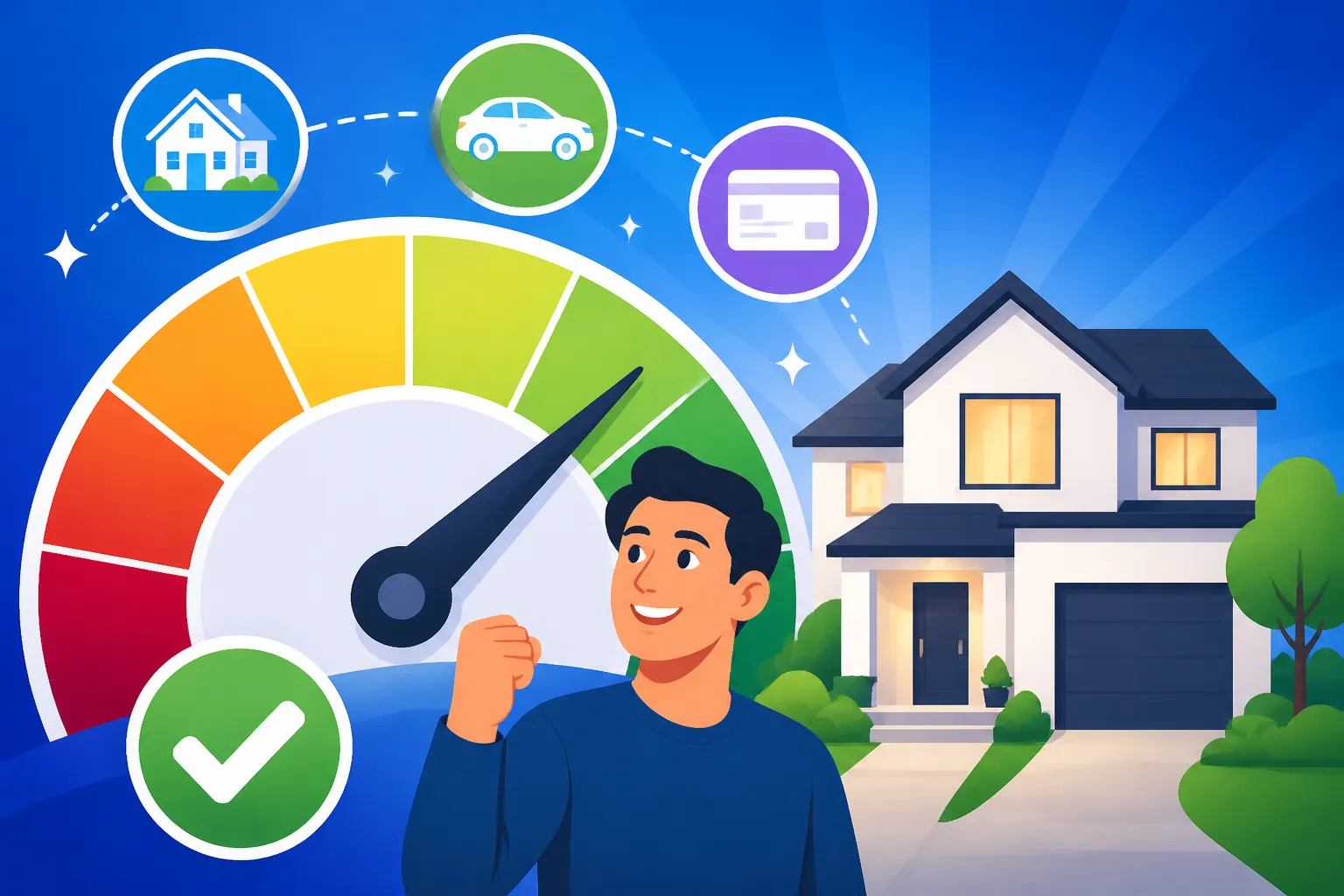
Achieving an 800 credit score is a significant financial accomplishment, placing you among a select group of consumers. It’s more than just a number; it’s a powerful indicator to lenders that you are an exceptionally reliable borrower, someone with a proven track record of managing debt responsibly. This top-tier status opens doors that remain closed to others, granting you access to the most favorable financial products and terms available.
What "Excellent" Really Means
When we talk about an 800 credit score, we're typically referring to FICO Scores, which are the most widely used by lenders (about 90% of them, in fact). On the FICO scale, scores range from 300 to 850. An 800 score falls squarely into the "Exceptional" category (800-850), which is the highest tier possible. VantageScore, another popular credit scoring model, also uses a range of 300-850, and an 800 score would similarly be considered "Excellent."
What does this exceptional rating really signify? It means your credit report likely showcases a near-perfect payment history, minimal credit utilization, a long average age of accounts, a healthy mix of credit types (like credit cards, auto loans, and mortgages), and very few, if any, recent hard inquiries. These are the five core factors that influence your credit score, and an 800 score indicates you've mastered them all. If you're wondering how to get started on this path, understanding How Credit Scores Work: The Complete Guide is a fantastic first step.
Why Lenders Love an 800 Score
From a lender's perspective, an 800 credit score screams "low risk." When you apply for a loan, particularly something as substantial as a mortgage, lenders are primarily assessing the likelihood that you will repay the debt as agreed. An 800 score tells them that you've demonstrated this reliability consistently over many years.
This perception of low risk directly translates into tangible benefits for you. Lenders compete for borrowers with excellent credit because they are the least likely to default. This competition empowers you, the borrower, to command the best possible terms. You're not just getting approved; you're getting preferential treatment. They trust you with their money, and that trust is reflected in the financial advantages they extend your way. It’s a powerful position to be in when you're making major financial decisions, such as securing a mortgage.
Unlocking Homeownership Dreams with an 800 Credit Score
Buying a home is one of the most significant financial undertakings for most people. An 800 credit score doesn't just make it possible; it makes it dramatically easier and more affordable. The difference in terms and costs between a borrower with an 800 score and one with a "good" or "fair" score can amount to tens, if not hundreds, of thousands of dollars over the life of a mortgage.
Mortgage Interest Rates: The Biggest Savings
This is where your 800 credit score truly shines. The interest rate on your mortgage is arguably the single most impactful factor in the total cost of your home. Even a fraction of a percentage point difference can translate into massive savings over a 15-year or 30-year loan term. With an 800 credit score, you are practically guaranteed to be offered the lowest interest rates available from lenders.
Let's put this into perspective with a hypothetical example. Imagine you're looking to purchase a $400,000 home and need a $320,000 mortgage (assuming a 20% down payment).
- Scenario 1: 800 Credit Score. You might qualify for a 30-year fixed-rate mortgage at, say, 6.8%. Your monthly principal and interest payment would be approximately $2,090. Over 30 years, you'd pay around $352,400 in interest.
- Scenario 2: 700 Credit Score (Good). With a 700 score, you might get a rate of 7.3%. Your monthly payment would jump to about $2,200. Over 30 years, you'd pay roughly $388,000 in interest.
- Scenario 3: 650 Credit Score (Fair). A 650 score could land you a rate of 7.8%. Your monthly payment climbs to approximately $2,315. Over 30 years, you'd pay around $413,400 in interest.
Just comparing the 800 score to the 700 score, you're saving about $110 per month and over $35,000 in total interest over the life of the loan. When you look at the difference between 800 and 650, your savings explode to over $225 per month and more than $61,000 in total interest! This isn't pocket change; it's a significant portion of your home's value that stays in your bank account, thanks to your exceptional credit.
For those aiming for such significant savings, understanding What Affects Your Credit Score? The 5 Factors is crucial for maintaining a high score or working towards one. Building excellent credit doesn't happen overnight, but tools and strategies like those discussed in Credit Builder Loans Explained (Self, Kikoff & More) can be instrumental in laying the groundwork.
Favorable Loan Terms and Options
Beyond just the interest rate, an 800 credit score empowers you with a wider array of flexible loan terms and options. Lenders are more willing to bend over backward for top-tier borrowers. This can manifest in several ways:
- Lower Down Payment Requirements: While 20% down is often recommended to avoid private mortgage insurance (PMI), an 800 score might allow you to qualify for conventional loans with lower down payments (e.g., 3-5%) even with excellent terms, though PMI would still apply. However, for specific niche programs or portfolio loans offered by individual banks, that stellar score might open doors to even more flexible down payment structures.
- Reduced Closing Costs: While many closing costs are fixed, some fees, like lender origination fees, might be negotiable or lower for highly qualified borrowers. An 800 score gives you the leverage to ask for these concessions.
- Wider Range of Mortgage Products: You'll have access to every type of mortgage product on the market, from standard conventional loans to jumbo loans for high-value properties, and specialized programs with unique benefits. FHA and VA loans, while not strictly requiring high scores, often come with even better rates and less scrutiny for borrowers with excellent credit. This means you can choose the loan that best fits your financial situation, rather than being limited to subprime or less competitive options.
- Quicker Approval Process: Lenders can often fast-track applications for 800-score borrowers because the risk assessment is straightforward. Less documentation might be required, and your application is less likely to be bogged down by additional scrutiny, leading to a smoother and faster path to closing on your new home. This peace of mind during a typically stressful process is invaluable.
Reduced Mortgage Insurance Costs
Mortgage insurance is an additional cost that many homeowners face, especially if they put less than 20% down on a conventional loan (Private Mortgage Insurance, or PMI) or if they obtain an FHA loan (Mortgage Insurance Premium, or MIP/UFMIP). While an 800 score doesn't automatically waive all mortgage insurance, it can significantly mitigate its impact.
- Conventional Loans and PMI: With an 800 score, you're more likely to secure favorable loan terms that either allow you to put down a full 20% or secure a loan where the PMI premiums are lower due to your excellent credit profile. Some lenders may even offer "lender-paid PMI" options, where they cover the PMI in exchange for a slightly higher interest rate, but this would still be at the best possible "slightly higher" rate due to your score. The ultimate goal is often to avoid PMI altogether, and excellent credit can help you achieve the overall financial health to save for that 20% down payment more effectively.
- FHA Loans and MIP: FHA loans come with mandatory mortgage insurance premiums, both an upfront premium (UFMIP) and an annual premium (MIP). While these are generally fixed regardless of credit score, an 800 score means you're more likely to have other financial assets, such as a robust savings account, that could allow you to make a larger down payment, reducing the loan amount and thus the total cost of insurance, or to avoid an FHA loan altogether if a conventional loan with better terms becomes available. While Credit Strong focuses on building credit, having utilized such a service to reach an 800 score puts you in a prime position to minimize these extra costs.
The table below illustrates how different credit scores can impact your mortgage situation for a hypothetical $320,000, 30-year fixed mortgage, assuming a 20% down payment on a $400,000 home (PMI might still apply for lower down payments, which is why a higher score is so valuable).
| Credit Score Range | Representative APR (Estimate) | Monthly P&I Payment (Estimate) | Total Interest Paid Over 30 Yrs (Estimate) | Key Benefits |
|---|---|---|---|---|
| 800-850 (Exceptional) | 6.80% | ~$2,090 | ~$352,400 | Lowest rates, easiest approval, most flexible terms, minimal closing costs. |
| 740-799 (Very Good) | 7.10% | ~$2,150 | ~$380,000 | Excellent rates, strong approval odds, good term flexibility. |
| 670-739 (Good) | 7.50% | ~$2,240 | ~$406,400 | Favorable rates, generally approved, some term limitations. |
| 580-669 (Fair) | 8.00% | ~$2,370 | ~$437,200 | Higher rates, more scrutiny, limited loan options. |
Note: Interest rates are estimates and can vary based on market conditions, lender, loan type, and other factors. This table is for illustrative purposes only.
Beyond Mortgages: Other Perks of an 800 Score
While the homeownership benefits are substantial, an 800 credit score extends its golden touch across many other aspects of your financial life. It’s a universal symbol of financial health that simplifies and improves countless transactions.
Better Rates on Other Loans and Insurance
Your exceptional credit score isn't just for mortgages. It impacts virtually any financial product that requires a credit check.
- Auto Loans: When it's time to buy a new car, an 800 credit score will secure you the lowest available interest rates on auto loans, saving you thousands of dollars over the typical 5-7 year loan term. This means a lower monthly payment and less money wasted on interest.
- Personal Loans: Need a personal loan for a home renovation, debt consolidation, or an unexpected expense? With an 800 score, you'll qualify for the most competitive interest rates and flexible repayment schedules, making these loans much more affordable. For those who are still working their way up, credit builder products like those offered by Credit Strong can help improve your credit mix and history, contributing to a higher score over time, which will eventually lead to these better loan rates.
- Student Loan Refinancing: If you have student loan debt, an 800 credit score can make you an ideal candidate for refinancing at a much lower interest rate, potentially saving you a substantial amount of money and reducing your monthly payments.
- Insurance Premiums: This is one benefit many people overlook. In many states, insurance companies (for auto, home, and even life insurance) use credit-based insurance scores to help determine your premiums. An 800 credit score almost always translates to lower insurance rates, as it suggests you are a more responsible and less risky policyholder. This is a recurring saving that adds up year after year.
Maintaining such a high score is key, and understanding factors like Credit Utilization: The Complete Guide is essential, as keeping your balances low directly impacts your score.
Increased Negotiating Power and Financial Flexibility
An 800 credit score provides an incredible sense of financial freedom and negotiating power. You're not just accepted; you're sought after.
- Top-Tier Credit Cards: You'll easily qualify for the most premium credit cards on the market, offering exceptional rewards programs (cash back, travel points, airline miles), lucrative sign-up bonuses, and exclusive perks like airport lounge access, travel insurance, and concierge services. These cards often come with higher credit limits, further improving your overall Credit Utilization: The Complete Guide and potentially boosting your score even more.
- Easier Approval for Anything: Whether you're trying to rent a high-demand apartment, get approved for a business loan, or even set up utilities without a deposit, your 800 score acts as a powerful financial credential, often simplifying the approval process and eliminating obstacles. If you're just starting out on your credit journey, learning How to Build Credit From Scratch (2026 Guide) is a great resource.
- Peace of Mind: Perhaps one of the most underrated benefits is the peace of mind. You know that when a financial opportunity arises, your credit won't be a barrier. This freedom from financial worry allows you to focus on your goals, whether it's career advancement, family planning, or pursuing personal passions, without the constant stress of credit-related hurdles. For those aspiring to reach this level, resources like How to Raise Your Credit Score (Step-by-Step) can provide a clear roadmap.
- Leverage in Negotiations: When you have an 800 credit score, you can walk into any negotiation (for a loan, a new car, or even a service contract) with immense leverage. You are the ideal customer, and businesses will often be more willing to offer discounts, waive fees, or provide better terms to earn your business. This isn't just about saving money; it's about being in control of your financial destiny.
The path to an 800 score might seem long for some, but remember that every positive step counts. For an in-depth look at what defines different credit tiers, consider reading What Is a Good Credit Score? (2026 Ranges Explained). If you're specifically aiming for the top, our guide on How to Get an 800 Credit Score provides actionable strategies to reach that exceptional level.
Disclaimer
This article is for general informational purposes only and does not constitute professional advice. Laws, prices and regulations vary by location and change over time. Consult a qualified professional for guidance on your specific situation.