What Can You Get With a 670 Credit Score? (Buy a Car)
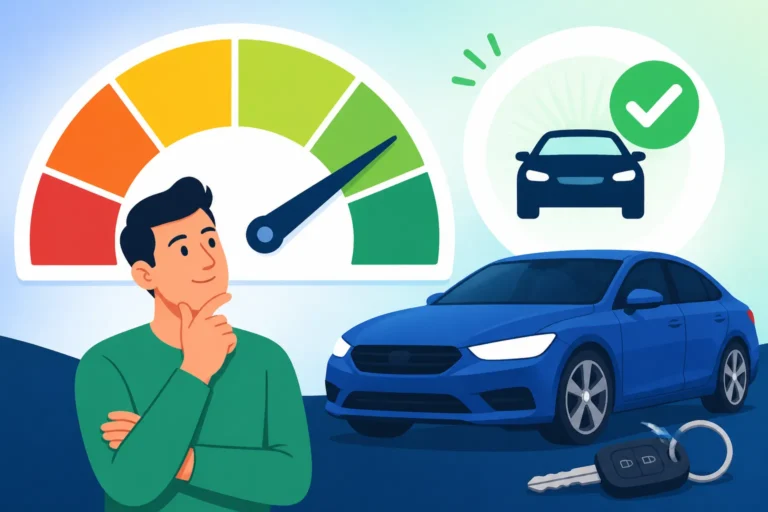
It's incredibly common to feel a mix of excitement and anxiety when you're dreaming of a new (or new-to-you) car. One of the biggest questions that usually pops up, and often causes the most stress, is "What kind of car can I actually get with my credit score?" If your credit score is hovering around 670, you're in a perfectly good position, but understanding exactly what that means for car financing can make all the difference. This guide will walk you through what to realistically expect when buying a car with a 670 credit score, from interest rates to loan terms, and even how to make your purchasing journey smoother.
Understanding Your 670 Credit Score for Car Loans
Navigating the world of credit scores can sometimes feel like trying to read a secret code. You know the number is important, but what does it really signify, especially when a big purchase like a car is on the line? A 670 credit score puts you in a specific bracket, and understanding that bracket is key to setting realistic expectations and strategizing your car-buying approach.
Where 670 Falls on the Credit Score Spectrum
When we talk about credit scores, we're usually referring to FICO Scores or VantageScores, which are the two dominant models. Both models generally place a 670 score in the "Good" or "Fair" category, though the exact cut-offs can vary slightly.
For FICO Scores, which range from 300 to 850:
- Exceptional: 800-850
- Very Good: 740-799
- Good: 670-739
- Fair: 580-669
- Poor: 300-579
As you can see, a 670 technically sits right at the bottom end of the "Good" range for FICO. This means you're past the "Fair" category, which is great! It signals to lenders that you're generally a reliable borrower who manages credit responsibly, even if you might have a few minor blemishes or a shorter credit history than someone with a "Very Good" score. You're not quite in the prime lending tier where the absolute best rates are found, but you're certainly not in subprime territory, either.
The VantageScore model, which also ranges from 300 to 850, has similar categories:
- Excellent: 781-850
- Good: 661-780
- Fair: 601-660
- Subprime: 500-600
- Very Poor: 300-499
Under VantageScore, a 670 places you firmly in the "Good" category. So, no matter which scoring model a lender uses, your 670 score is generally seen as a positive sign. It indicates that while you might not have a flawless credit history, you're likely to make your payments on time and manage new debt responsibly. This position is a solid foundation for securing an auto loan, though there might be opportunities to improve your terms further.
The Lender's Perspective on a 670 Score
From a lender's point of view, your credit score is essentially a snapshot of your financial reliability and an assessment of the risk they take on by lending you money. A 670 credit score generally indicates a moderate risk level. This isn't necessarily a bad thing; it just means they'll approach your application with a balanced view.
Lenders use your credit score, alongside other factors like your debt-to-income ratio, employment history, and the loan-to-value of the car, to decide if they'll approve you and what interest rate they'll offer. With a 670, you're very likely to get approved for an auto loan. You won't typically be denied outright unless there are other significant red flags in your financial profile, like a very high debt load compared to your income, or very recent delinquencies not fully reflected in your score yet.
What you'll find is that most mainstream banks, credit unions, and even dealership financing departments will be willing to work with you. You're past the point where only subprime lenders would consider your application, which often come with sky-high interest rates. Instead, you'll be looking at more competitive rates, although perhaps not the absolute lowest ones reserved for those with "Very Good" or "Exceptional" credit scores (usually 740+). This distinction means you'll have access to a broader range of lending options and won't be limited to only the highest-cost loans. Knowing this puts you in a much stronger negotiating position because you can shop around for the best deal. If you want to dive deeper into how these numbers are crunched, you can read our comprehensive guide on How Credit Scores Work: The Complete Guide.
What Kind of Car Loan Can You Expect with a 670 Score?
With a 670 credit score, you're in a good spot to secure an auto loan, but it’s crucial to understand the specifics of what that means for your wallet. This isn't just about getting approved; it's about the financial terms that will dictate how much you pay over the life of the loan.
Interest Rates and Loan Terms
This is where the rubber meets the road, so to speak. While a 670 score makes you a desirable borrower for many lenders, you'll likely encounter interest rates that are good, but not necessarily "prime." What does that mean in real numbers?
According to industry data from sources like Experian, for Q4 2023, the average interest rate for a new car loan for borrowers with "Good" credit (661-780 FICO) was around 7.00% to 8.50%. For used cars, which typically carry higher rates due to greater perceived risk, that range was closer to 9.50% to 11.00%. Keep in mind that these are averages, and your specific rate will depend on the lender, the car, the loan term, and current market conditions. Someone with an "Exceptional" score (800+) might see rates several percentage points lower, possibly in the 5% to 7% range for a new car, while someone in the "Fair" category (580-669) might be looking at rates between 10% and 15% or even higher.
The loan term, or how long you have to pay back the loan, also plays a huge role. Common terms are 60, 72, or even 84 months. Longer terms mean lower monthly payments, which can be tempting, but they also mean you'll pay significantly more in total interest over time. For example, a $30,000 loan at 8% over 60 months results in total interest of about $6,500. Stretch that to 84 months, and your total interest jumps to over $9,000, even if your monthly payment feels more manageable. It's a delicate balance, and it's essential to consider the total cost, not just the monthly figure.
Down Payments and Co-signers
Even with a 670 credit score, making a decent down payment can dramatically improve your loan terms. Think of a down payment as reducing the risk for the lender. If you're putting a significant amount down, the lender has less to lose if you default, and you immediately have equity in the vehicle.
A down payment of 10-20% of the car's purchase price is often recommended. For a $25,000 car, that would be $2,500 to $5,000. This not only reduces the amount you need to borrow, which directly lowers your monthly payments and total interest, but it can also make lenders more willing to offer you a slightly better interest rate. It signals a stronger commitment on your part and improves your loan-to-value (LTV) ratio, which lenders love to see.
If you're finding that the interest rates are still a bit higher than you'd like, or if you're looking for an extra edge, a co-signer might be an option. A co-signer, ideally someone with an excellent credit score, essentially promises to pay the loan if you can't. This significantly reduces the risk for the lender and can help you qualify for lower interest rates or better terms than you might get on your own. Just remember, a co-signing arrangement is a serious commitment for both parties, as it directly impacts the co-signer's credit as well. If your score isn't quite where you want it to be before buying a car, tools like Credit Strong can help you build your credit history through a credit builder loan, which reports payments to the credit bureaus, gradually improving your score over time for future large purchases.
Vehicle Choice and Loan Amount
With a 670 credit score, you have a pretty wide range of vehicle choices available to you. You're not restricted to only the oldest, highest-mileage cars, but you also might not get the absolute best financing deals on a brand-new luxury vehicle.
Lenders also look at the vehicle itself, especially its age and mileage, when determining loan terms. Used cars, as mentioned, often have slightly higher interest rates than new cars because they depreciate faster and carry more inherent risk. However, choosing a reliable, moderately priced new or used vehicle that doesn't stretch your budget too thin is a smart move. Aim for a car that makes sense for your needs and your financial situation, rather than pushing the limits of what you can just barely afford. Remember, the goal is to get a car and maintain good financial health. Over-extending yourself can lead to high credit utilization, which can negatively impact your score. Credit Utilization: The Complete Guide explains this in detail.
For instance, if you're looking at a $40,000 high-end SUV, a 670 score might get you approved, but the interest rate could make the monthly payments quite hefty over a typical 60-month term. However, for a $25,000 compact sedan or a reliable used truck, your 670 score puts you in a very solid position for competitive financing. It’s all about finding that sweet spot where the car you want aligns with the financing terms you can comfortably manage without straining your budget.
Here’s a snapshot of typical auto loan interest rates by credit score range, to help you visualize where a 670 score stands:
| Credit Score Range (FICO) | Credit Tier | Average New Car APR (Approx.) | Average Used Car APR (Approx.) |
|---|---|---|---|
| 780-850 | Super Prime | 5.0% – 7.0% | 6.5% – 8.5% |
| 660-779 | Prime | 7.0% – 9.0% | 9.0% – 11.0% |
| 600-659 | Non-Prime | 9.0% – 12.0% | 12.0% – 15.0% |
| 500-599 | Subprime | 12.0% – 16.0%+ | 15.0% – 20.0%+ |
| 300-499 | Deep Subprime | 15.0% – 20.0%+ | 18.0% – 25.0%+ |
Note: These are illustrative averages and actual rates can vary based on market conditions, lender, loan term, and specific applicant profile.
As you can see, your 670 score lands you squarely in the Prime tier, giving you access to much better rates than those in the Non-Prime or Subprime categories.
Steps to Maximize Your Car Buying Power with a 670 Score
Having a 670 credit score is a great starting point for buying a car, but you don't want to just walk into a dealership unprepared. Taking a few proactive steps can significantly improve your chances of getting the best possible terms and save you a lot of money and stress in the long run.
Get Pre-Approved First
This is perhaps the single most important step you can take. Getting pre-approved for an auto loan before you even set foot on a dealership lot puts you in a powerful negotiating position. Instead of relying solely on the dealer's financing options, you walk in with your own financing already secured.
Here's why pre-approval is a game-changer:
- You know your budget: With a pre-approval in hand, you know exactly how much you can borrow and at what interest rate. This allows you to focus on cars within your budget, rather than falling in love with a vehicle you can't truly afford.
- Leverage for negotiation: When a dealership knows you have outside financing, they're more likely to offer you a competitive rate or even try to beat your pre-approved offer. It shifts the power dynamic from the dealer to you.
- Focus on the car price: By separating the financing from the vehicle itself, you can negotiate the car's price more effectively. You won't be distracted by "What's my monthly payment?" games.
- No surprises: Pre-approval usually involves a soft credit inquiry, which doesn't impact your score. Once you formally apply with a chosen lender, a hard inquiry will occur, but by then you'll have a good idea of what to expect. Knowing How Many Points Is a Hard Inquiry Worth? and How Long Does a Hard Inquiry Stay on Your Credit Report? can help ease any worries about multiple inquiries during this shopping period.
You can get pre-approved through your bank, credit union, or various online lenders like Capital One Auto Navigator or LightStream. It's smart to compare offers from several lenders to find the best rate and terms for your 670 score.
Improving Your Score Before You Buy (If Possible)
While a 670 is good, nudging it up even a few points can sometimes open the door to even better interest rates. If you're not in a desperate rush to buy a car, taking a few months to boost your credit score could save you hundreds or thousands of dollars over the life of the loan.
Key areas to focus on include:
- Reduce credit utilization: This is one of the fastest ways to improve your score. Aim to keep your credit card balances below 30% of your credit limit – ideally even lower, like 10%. Paying down balances reports to the credit bureaus quickly and can give your score a nice bump. For a deeper dive, check out our article on How to Raise Your Credit Score.
- Make all payments on time: Payment history is the most significant factor in your credit score. Even one late payment can cause a noticeable drop. Set up automatic payments to ensure you never miss a due date.
- Address negative items: If there are any inaccuracies on your credit report, dispute them immediately. You can find out more about how to do this in How to Remove Negative Items From Your Credit Report. For those with a thin credit file or looking to actively build their credit, platforms like Credit Strong offer credit builder loans. These loans help you establish a positive payment history, reporting to all three major credit bureaus and demonstrating responsible financial behavior, which can gradually push your score higher.
Even a modest increase, say from 670 to 700, could potentially move you into a slightly better interest rate tier, making a real difference in your total loan cost. Understanding What Affects Your Credit Score? The 5 Factors will give you a complete picture of where to focus your efforts.
Smart Dealership Strategies
Once you have your pre-approval and an understanding of your budget, it's time to head to the dealership. But don't drop your guard just yet! Dealerships are in the business of selling cars and maximizing profit, so you need to be prepared.
- Know the car's true value: Research the market value of the car you're interested in using sites like Kelley Blue Book (KBB) or Edmunds. This prevents you from overpaying.
- Focus on the purchase price, not just the monthly payment: Dealers often try to distract you with attractive monthly payment figures. Always negotiate the total price of the car first, and then discuss financing separately. If you have a pre-approval, you already know your financing terms.
- Be wary of add-ons: Extended warranties, paint protection, and other dealer add-ons can significantly inflate the total cost of your car. Carefully evaluate if you truly need them and if they offer good value. Often, you can purchase better warranties from third parties at a lower cost.
- Handle trade-ins separately: If you have a trade-in, negotiate its value as a separate transaction from the new car purchase. Otherwise, dealers can manipulate both figures to make it seem like you're getting a better deal than you are. A trade-in is essentially a down payment, so it can boost your position.
- Be prepared to walk away: This is your strongest negotiation tool. If you're not getting the deal you want, or if you feel pressured, be ready to leave. There are plenty of other cars and dealerships out there.
By approaching the car buying process strategically, armed with your 670 credit score and pre-approved financing, you can secure a great vehicle at a favorable rate. Don't forget to regularly How to Get Your Free Credit Report and monitor your score so you're always on top of your financial health.
Disclaimer
The information provided in this guide is for general informational purposes only and does not constitute financial or legal advice. Credit scores and interest rates are subject to change, and individual financial situations vary. Always consult with a qualified financial advisor or lending professional for advice tailored to your specific circumstances.