How to Remove Closed Accounts From Your Credit Report Fast
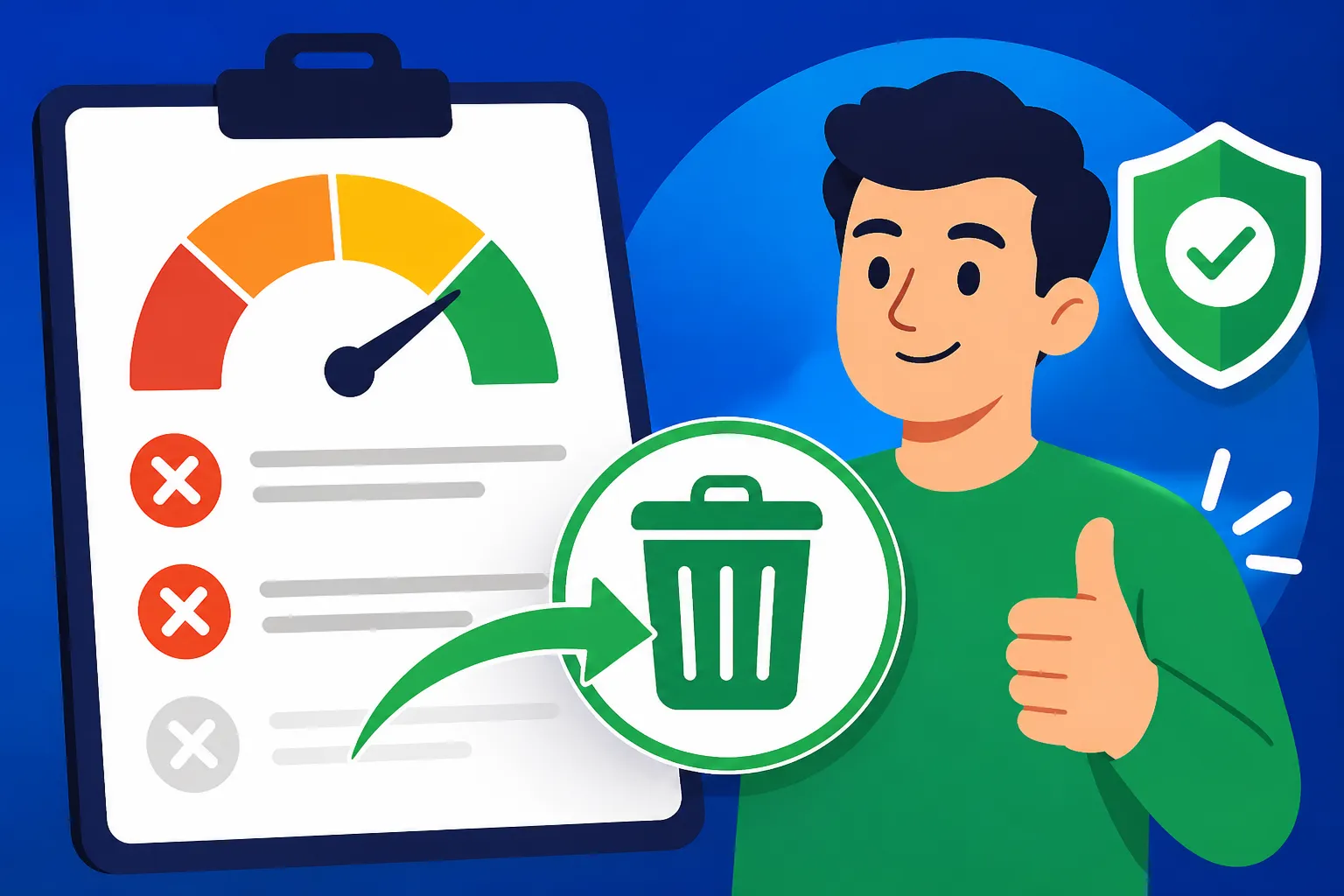
It's incredibly frustrating when you're trying to clean up your credit, and you stumble upon old, closed accounts that just seem to be sitting there, mocking your efforts. You probably wonder, "Can I just get rid of these things and move on?" The desire to remove closed accounts from your credit report, especially quickly, is a common one, driven by the hope that doing so will instantly boost your score. This guide is here to cut through the confusion and give you a realistic, step-by-step understanding of how closed accounts impact your credit and what you can actually do to manage them, including strategies for removal when appropriate.
Understanding Closed Accounts and Your Credit Report
First things first, let's demystify what a "closed account" really means in the credit world and how it even gets on your report in the first place. It's not always as simple as it sounds, and understanding the nuances is key to knowing what steps you can take.
What Exactly Is a Closed Account?
When we talk about a closed account, we're referring to any credit account—be it a credit card, a loan, or a line of credit—that is no longer active. But here's the kicker: the reason it's closed makes a huge difference.
- Closed by You: Maybe you paid off a credit card and decided you didn't need it anymore, so you called the issuer and asked them to close it. Or perhaps you settled a loan and the account was naturally closed upon completion. These are often accounts in good standing, meaning you made all your payments on time.
- Closed by the Creditor: This can happen for a few reasons. Sometimes, a creditor might close an inactive account (one you haven't used in a long time) to reduce their risk exposure. Other times, it's a direct result of late payments, high utilization, or other negative activity on your part, signaling to the creditor that you might be a higher risk.
- Good Standing vs. Negative Standing: A closed account that was always in good standing, with a perfect payment history, can actually be a positive mark on your report, contributing to your credit age and showing responsible borrowing. On the flip side, an account closed due to a history of missed payments, collections, or charge-offs will definitely hurt your score. It’s important to understand the details of each closed account on your report.
How Closed Accounts Appear on Your Credit Report
Your credit report is essentially a detailed history book of your financial behavior. When an account is closed, it doesn't just vanish; it remains part of that history. Typically, both positive and negative closed accounts can stay on your report for several years.
For instance, a closed credit card with a spotless payment history might remain on your report for up to 10 years from the date it was closed. This can actually be beneficial, as it contributes to the length of your credit history, which is a significant factor in your credit score. Lenders like to see a long history of responsible credit use.
However, negative closed accounts, like those with late payments, collections, or charge-offs, are generally reported for about seven years from the date of the first missed payment that led to the negative status. This is dictated by federal law, specifically the Fair Credit Reporting Act (FCRA). Even if the account is paid off or settled, the negative mark usually remains for this duration. So, when you're looking at your report and seeing those old closed accounts, remember they're part of your credit story, for better or worse. You can learn more by understanding How to Read Your Credit Report (2026 Guide).
The Reality of "Removing" Closed Accounts
Now, let's tackle that burning question: can you really remove closed accounts from your credit report, especially "fast"? The straightforward answer for most legitimate, accurate closed accounts is no, not usually. And honestly, trying to remove a positive closed account might even be detrimental to your credit journey.
Why Most Legitimate Closed Accounts Can't Be "Removed"
The credit reporting system is designed to provide a comprehensive and accurate picture of your borrowing history. This means that if an account was legitimately opened, used, and then closed—regardless of whether it was in good or bad standing—it's generally considered accurate information that belongs on your report for a specific period. The credit bureaus (Equifax, Experian, and TransUnion) are legally obligated to report accurate information.
Think of it this way: your credit report isn't a selective scrapbook where you can just pull out pages you don't like. It's a factual ledger. Attempting to remove accurate information, even if it's a closed account you'd rather forget, is usually an uphill battle that won't succeed. It's a common misconception that all old accounts, especially closed ones, can or should be removed. In fact, an old, positively closed account can actually bolster your credit age and history, which are key components of a healthy credit score.
The Difference Between Removing and Improving the Impact
Since outright "removal" isn't often an option for accurate closed accounts, a more realistic and effective strategy is to focus on improving their impact or working to remove them only if they are inaccurate or outdated. This shift in perspective is crucial for effective credit repair.
Instead of trying to erase history, you should concentrate on building a strong, positive current credit history that gradually overshadows the older, less favorable entries. This means focusing on on-time payments, managing your credit utilization on open accounts, and cultivating a diverse credit mix. For negative closed accounts, the goal is often to ensure their accuracy and that they fall off your report once their reporting period expires, rather than actively trying to erase them before their time. If you have several negative items, a comprehensive approach like described in How to Remove Negative Items From Your Credit Report might be useful.
When You Can Dispute a Closed Account
While removing legitimate, accurate closed accounts is tough, there are definite scenarios where you absolutely can and should try to get a closed account removed. These usually revolve around errors, inaccuracies, or information that has overstayed its welcome.
Errors and Inaccuracies
This is your strongest ground for removing any account, closed or open, from your credit report. If a closed account has incorrect information, it's a violation of your rights under the FCRA. Common errors include:
- Wrong Account Status: Perhaps it says the account was closed due to non-payment, but you closed it in good standing.
- Incorrect Balance: The report might show an outstanding balance when you know it was paid off or settled to zero.
- Duplicate Accounts: Sometimes, an account might be reported twice by mistake.
- Identity Theft: If a closed account isn't yours at all, or was opened fraudulently and then closed, you must dispute it immediately.
Step-by-Step Dispute Process:
- Get Your Credit Reports: Obtain your free credit reports from AnnualCreditReport.com from all three major bureaus (Equifax, Experian, and TransUnion). This is vital because errors might appear on one report but not another.
- Identify the Error: Highlight every piece of inaccurate information related to the closed account. Be specific.
- Gather Documentation: Collect any proof you have, such as payment confirmations, settlement letters, police reports (for identity theft), or account statements showing the correct status or balance.
- Write a Dispute Letter: Draft a clear, concise letter to the credit bureau(s) reporting the error. State what information is incorrect, why it's incorrect, and what you want them to do (e.g., update or remove the entry). Include copies (never originals!) of your supporting documents. A template from How to Write a Credit Dispute Letter (Template) could be very helpful here.
- Send by Certified Mail: Send your dispute letter via certified mail with a return receipt requested. This provides proof that the bureau received your dispute.
- Follow Up: The credit bureaus generally have 30 days (sometimes 45 days if you send additional information during the dispute period) to investigate and respond. Keep meticulous records of all correspondence. If the error is confirmed, they must remove or correct it. For more detailed instructions, see How to Dispute Credit Report Errors (Step-by-Step).
Outdated Negative Information
Another strong case for removal is when negative information has simply aged off your report. Most negative items, including late payments, collections, charge-offs, and even bankruptcies, have a limited lifespan on your credit report, typically seven years from the date of the first delinquency.
- The 7-Year Rule: For most negative accounts, the Fair Credit Reporting Act (FCRA) dictates that they should be removed after seven years. Bankruptcies can stay on for up to 10 years.
- Checking the Date: When reviewing your credit report, pay close attention to the "date of first delinquency" (DOFD) for any negative closed accounts. This is the starting point for the seven-year clock. If an account is still appearing past its legal reporting period, you can and should dispute it.
- Disputing Outdated Items: The process is similar to disputing errors. Write a letter to the credit bureau, explaining that the item is beyond its legal reporting period and requesting its removal. Provide the DOFD if you have it. You can reference topics like How Long Does a Late Payment Stay on Your Credit Report? or How Long Does a Collection Stay on Your Credit Report? for specific timelines.
Special Circumstances: Goodwill Letters
This strategy is a bit more of a long shot, but it can sometimes work for closed accounts that had one or two late payments but were otherwise in good standing. A goodwill letter is essentially a polite request to the creditor asking them to remove a negative mark (like a late payment) from your credit report as an act of goodwill.
-
When It Works Best:
- Isolated Incident: You had a great payment history with the creditor, and the late payment was a one-time mistake (e.g., you forgot due to an emergency, moved, or had a technical glitch).
- Account Paid Off/Closed in Good Standing: You've since paid off the account or closed it after resolving the issue. Creditors are less likely to extend goodwill if you still owe them money or if the account is a chronic problem.
- Long-Term Customer: You have a long-standing relationship with the creditor.
-
How to Write a Goodwill Letter:
- Be Polite and Apologetic: Acknowledge your mistake and take responsibility.
- Explain Briefly: Provide a brief, legitimate reason for the late payment (without making excuses).
- Highlight Your Good History: Remind them of your otherwise excellent payment history and loyalty.
- Request Removal: Politely ask if they would consider removing the late payment from your credit report as a gesture of goodwill.
- Send to the Right Department: Often, customer service or the credit reporting department is the best place to send this.
While there's no guarantee, a well-written goodwill letter can occasionally persuade a creditor to remove a negative mark, especially if it was an aberration. Remember, they are not obligated to do so, but it doesn't hurt to try!
Strategies to Mitigate the Impact of Closed Accounts
Since "fast removal" isn't always possible for legitimate closed accounts, shifting your focus to mitigating their impact and building a stronger overall credit profile is the most effective approach. This means concentrating on what you can control.
Focusing on Positive Accounts
The most powerful way to lessen the sting of any negative or old closed accounts is to drown them out with a flood of positive activity. This involves consistently managing your active credit lines responsibly.
- Make All Payments On Time: This is the single most important factor in your credit score, accounting for 35% of your FICO score. Every on-time payment on your open accounts builds positive history that helps to dilute the impact of past issues. Set up automatic payments or reminders to ensure you never miss a due date.
- Maintain Low Credit Utilization: Keep the balances on your credit cards low relative to your credit limits. Experts often recommend keeping utilization below 30%, but aiming for under 10% is even better. High utilization can significantly drag down your score, even if you pay on time.
- Diversify Your Credit Mix (Carefully): Having a mix of different types of credit (like credit cards, installment loans, and mortgages) can be a positive, but don't open new accounts just for this reason if you don't need them. The key is responsible management of all credit types. If you're trying to improve your overall credit health, our guide on How to Repair Your Credit: The Complete Guide (2026) offers a wealth of information.
Managing Credit Utilization
Even with closed accounts on your report, how you manage your open credit accounts has a massive, immediate impact on your credit score.
- Credit Utilization Ratio: This is the amount of credit you're using compared to your total available credit. If you have a credit card with a $5,000 limit and you owe $2,000, your utilization is 40% ($2,000/$5,000). A closed account, especially a credit card, can sometimes lower your total available credit, which in turn could potentially make your utilization ratio on your remaining open cards appear higher if your balances don't change.
- Strategic Payments: Make multiple payments throughout the month, especially before your statement closing date, to ensure that a low balance is reported to the credit bureaus. This can give your score a quick boost. Even if you pay off your card in full each month, a high balance reported mid-cycle can still temporarily ding your score.
- Consider a Credit Limit Increase (Carefully): If you have a good payment history and responsible spending habits, requesting a credit limit increase on an existing card can lower your utilization ratio without adding new debt. However, only do this if you trust yourself not to spend the extra available credit!
Long-Term Credit Building
True credit health is built over time, focusing on consistent positive actions rather than quick fixes. This long-game approach is essential, especially when dealing with persistent closed accounts.
- Secured Credit Cards: If you're struggling with bad credit due to past closed accounts, a secured credit card can be a fantastic tool. You put down a deposit, which becomes your credit limit, and you use it just like a regular credit card. This is an excellent way to demonstrate responsible usage. You can learn more about How to Build Credit From Scratch (2026 Guide) if you're starting fresh.
- Credit Builder Loans: These unique loans are designed specifically to help you build credit. You make payments into a locked savings account, and once the loan is paid off, you receive the money. The payments are reported to the credit bureaus, building a positive history. Companies like Credit Strong offer these types of loans, providing a structured way to show payment reliability. It's a great option for those who want to establish a positive payment history without taking on traditional debt. Our article, Credit Builder Loans Explained (Self, Kikoff & More) delves into how these work and their benefits.
- Authorized User Status: Becoming an authorized user on a trusted family member's credit card can allow you to benefit from their good payment history and long credit age, provided they use the card responsibly.
- Regular Credit Monitoring: Keep an eye on your credit reports and scores regularly. This allows you to spot new errors or outdated information quickly and take action. Understanding What Affects Your Credit Score? The 5 Factors will give you insight into what you should be monitoring.
Here's a quick summary of when you might be able to remove a closed account versus when you should focus on mitigating its impact:
| Situation | Likelihood of Removal | Action to Take |
|---|---|---|
| Inaccurate Information (e.g., wrong balance, duplicate) | High | Dispute with credit bureaus, provide evidence. |
| Identity Theft | Very High | File police report, dispute with credit bureaus, provide documentation. |
| Outdated Negative Item (past 7-10 years) | High | Dispute with credit bureaus, citing legal reporting period. |
| Closed Account, One Late Payment (otherwise good history) | Moderate (Goodwill) | Send a goodwill letter to the original creditor, explaining the circumstance and asking for removal. |
| Closed Account, Perfect Payment History | Very Low | Do not attempt to remove; it's a positive factor contributing to credit age. |
| Closed Account, Accurate Negative History (within reporting period) | Very Low | Focus on building new positive credit history to offset its impact. |
Remember, improving your credit score and managing your credit health is a marathon, not a sprint. While the desire to remove negative closed accounts "fast" is understandable, a realistic and consistent approach focused on accuracy and building new positive history will yield the best long-term results.
Disclaimer
This article is for general informational purposes only and does not constitute professional advice. Laws, prices and regulations vary by location and change over time. Consult a qualified professional for guidance on your specific situation.