How to Freeze Your Credit With TransUnion
It's incredibly frustrating, isn't it? The constant worry about your personal information floating around after yet another data breach can keep anyone up at night. You try your best to protect yourself, but the digital world feels like a minefield. One of the most powerful tools you have in your arsenal against identity theft is a credit freeze, and understanding how to implement it with each of the major credit bureaus, like TransUnion, is absolutely essential. This guide is here to walk you through the process, step by painstaking step, for freezing your credit with TransUnion, offering you a significant layer of peace of mind in an uncertain financial landscape.
Understanding What a Credit Freeze Is and Why You Need It
In today's connected world, it often feels like our personal information is constantly at risk. Every headline about a major company experiencing a data breach is another reminder that our Social Security numbers, addresses, and dates of birth could be exposed, making us vulnerable to identity theft. This isn't just a hypothetical scenario; it's a very real threat that can lead to significant financial headaches if not properly addressed. That's where a credit freeze comes into play, offering a robust defense for your financial future.
The Growing Threat of Identity Theft and Data Breaches
Think about all the places your personal data resides: your bank, your doctor's office, online retailers, even your old utility companies. Each one represents a potential weak link. We've seen massive breaches from companies like Equifax, Target, and countless others, where millions of consumer records were compromised. When this sensitive information falls into the wrong hands, identity thieves can use it to open new credit card accounts, take out loans, or even apply for jobs in your name. They might max out credit cards, never intending to pay them back, leaving you with a ruined credit score and a mountain of debt that isn't even yours. The fallout can take years to unravel and can be incredibly stressful, costing you time, money, and emotional well-being.
The insidious nature of identity theft is that you often don't know it's happening until it's too late – when you apply for something legitimate and get denied because your credit report is riddled with fraudulent accounts. This is a critical pain point that many people experience, feeling powerless against something that happened completely outside of their control.
How a Credit Freeze Protects Your Financial Future
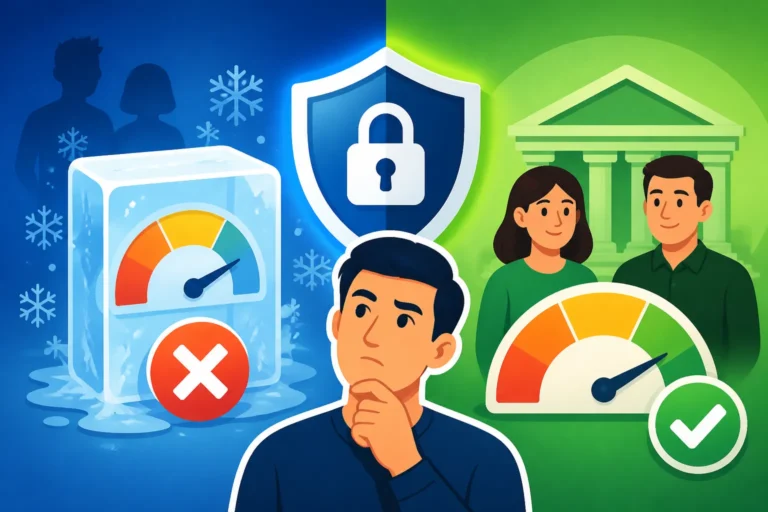
A credit freeze, also known as a security freeze, is like putting a lock on your credit report. When your credit report is frozen, it prevents new creditors from accessing it. Since most lenders require pulling your credit report before approving new credit (like a credit card, a mortgage, or even some rental applications), a freeze essentially blocks them from doing so. If a thief tries to open an account in your name, the lender won't be able to pull your credit report, and the application will likely be denied. This is the most effective way to prevent new fraudulent accounts from being opened.
It's important to understand what a credit freeze doesn't do. It won't affect your existing credit accounts, your credit score, or your ability to get pre-screened credit offers. You can still use your current credit cards, pay your bills, and access your own credit report (usually through services that verify your identity in other ways). The freeze is specifically designed to stop new credit from being issued in your name. It's a proactive measure that empowers you to control who can see your sensitive credit information. While it doesn't prevent all types of identity theft (like someone using your existing credit card number), it's a formidable barrier against new account fraud, giving you peace of mind that your financial future is far more secure. You can learn more about How to Freeze Your Credit (All 3 Bureaus) to ensure comprehensive protection.
Step-by-Step Guide to Freezing Your Credit with TransUnion
Freezing your credit with TransUnion might sound like a daunting task, but I promise you, it's a straightforward process once you know the steps. You don't need a special reason or proof of identity theft to do it; anyone can place a credit freeze at any time, and by federal law, it's completely free. Taking this step is a powerful way to secure your financial information.
Gathering Your Essential Information
Before you dive in, gather all the necessary personal information. This will make the process much smoother and prevent any frustrating back-and-forths trying to verify your identity. TransUnion needs to be absolutely sure that it's you requesting the freeze, not an imposter.
Here's what you'll typically need:
- Your full legal name: Make sure it matches what's on your official documents.
- Your current address: And any addresses you've lived at in the past two years, if applicable. This helps them cross-reference your records.
- Your Social Security Number (SSN): This is the primary identifier for your credit report.
- Your date of birth: Another crucial piece of identification.
Having these details handy will ensure a quick and seamless experience, whether you're doing it online, over the phone, or via mail.
Initiating the Freeze Online
For most people, freezing their credit online is the fastest and most convenient method. TransUnion, like the other major bureaus, has a dedicated portal for this.
- Visit the Official TransUnion Website: Head directly to TransUnion's security freeze page. Be sure you're on the official site (transunion.com) and not a look-alike. You can usually find a direct link by searching "TransUnion credit freeze."
- Locate the "Place a Security Freeze" Option: Once on the page, look for a clear button or link to "Place a Security Freeze" or "Freeze Your Credit."
- Create or Log In to Your Account: If you already have an account with TransUnion (perhaps from checking your credit score or report), you'll log in. If not, you'll need to create one. This usually involves providing your name, address, SSN, and date of birth, and setting up security questions.
- Verify Your Identity: TransUnion will likely ask you several knowledge-based authentication questions. These are questions only you should know, based on information in your credit report or public records (e.g., "Which of these streets have you lived on?" or "Which of these vehicles have you owned?"). Answer carefully; getting too many wrong might lock you out temporarily, requiring a phone call to customer service.
- Confirm and Submit: Once your identity is verified, you'll confirm your request to place a security freeze. You'll typically receive a confirmation number or a Personal Identification Number (PIN). This PIN is extremely important. We'll talk more about it shortly, but for now, save it in a secure place. The freeze usually takes effect immediately or within a few business days.
Freezing by Phone or Mail Alternative Methods
While online is usually easiest, some people prefer to freeze their credit by phone or mail, or it might be necessary if online verification fails.
Freezing by Phone:
You can call TransUnion's dedicated security freeze line. The number is typically 1-888-909-8872.
- Call the Number: Be prepared for automated prompts.
- Follow the Instructions: You'll be guided through an identity verification process, similar to the online method, where you'll answer security questions.
- Confirm the Freeze: Once your identity is verified, the agent or automated system will confirm the freeze has been placed. You'll likely be provided with a confirmation number or PIN over the phone, so have a pen and paper ready.
Freezing by Mail:
This method takes the longest, but it's a solid option if you prefer written communication or cannot complete the process online or by phone.
- Draft a Letter: Clearly state your request to place a security freeze on your credit report. Include your full name, current address, previous addresses (if any in the last two years), date of birth, and Social Security Number.
- Provide Proof of Identity and Address: You'll need to send copies (do NOT send originals) of documents to prove your identity and current address. Examples include:
- Proof of Identity: Driver's license, state ID card, passport.
- Proof of Address: Utility bill, bank statement, insurance statement (all showing your current address).
- Mail Your Request: Send your letter and documentation via certified mail with a return receipt requested. This provides proof that TransUnion received your request. The mailing address for TransUnion security freeze requests is:
TransUnion
P.O. Box 2000
Chester, PA 19016 - Wait for Confirmation: TransUnion will process your request and typically mail you a confirmation and your PIN. This process can take several business days to a few weeks.
If you're unsure about the process, remember you can always review How to Dispute With Equifax, Experian, and TransUnion for similar communication processes.
Managing Your TransUnion Credit Freeze: Thawing and Lifting
Once your credit is frozen, you might wonder what happens when you actually need to apply for new credit, like a car loan or a new credit card. This is where "thawing" or "lifting" your freeze comes in. You have complete control over when and how your credit report is accessible.
Temporarily Thawing Your Credit for Applications
There will be times when you legitimately need your credit report to be accessible. For instance, if you're applying for a new credit card, a mortgage, or even some jobs that require a background check, the lender or employer will need to pull your credit report. In these cases, you'll need to temporarily "thaw" your credit.
- Log In to Your TransUnion Account: Go back to TransUnion's security freeze page and log in using your credentials.
- Select the Option to Lift or Thaw the Freeze: You'll usually see an option to "Temporarily Lift Freeze" or "Thaw My Credit."
- Choose Your Thaw Duration: You can typically select a specific date range (e.g., from today until two weeks from now) or provide a specific one-time access code to a particular creditor. If you know which bureau the lender will pull from (e.g., they explicitly say they use TransUnion), you only need to thaw that specific bureau. However, many lenders pull from more than one, so it's often safer to thaw for a set period.
- Confirm the Thaw: Review your selection and confirm. The thaw usually takes effect immediately, allowing the lender to access your report.
Remember, it's important to only thaw your credit for the shortest necessary period and for specific, trusted entities. This minimizes the window of vulnerability.
Permanently Unfreezing Your Credit
While a credit freeze offers excellent protection, some people decide they want to permanently lift it. Perhaps you've moved past a period of high fraud risk, or you simply prefer not to deal with thawing it every time you need credit.
The process for permanently unfreezing is very similar to a temporary thaw:
- Log In to Your TransUnion Account: Access your account online.
- Select the "Permanently Remove Security Freeze" Option: This will completely lift the freeze from your TransUnion report.
- Confirm the Action: You'll typically be asked to confirm your decision, often requiring your PIN for verification.
Once removed, your credit report will be accessible to any legitimate entity that requests it. While this might be convenient, it also removes the primary shield against new account fraud, so consider your circumstances carefully before opting for a permanent lift.
Understanding Your PIN and How to Keep It Safe
When you initially place your credit freeze with TransUnion, you'll be assigned a Personal Identification Number (PIN). This PIN is your key to managing your freeze – you'll need it to thaw, extend, or permanently lift the freeze. It's like the password to your credit report's vault, and its importance cannot be overstated.
Why Your PIN is Crucial: Without your PIN, managing your freeze becomes significantly more complicated. If you lose it, you'll have to go through a more rigorous identity verification process with TransUnion, which can involve mailing in documents and waiting for manual review. This can delay any credit applications you need to make.
How to Keep Your PIN Safe:
- Don't Store it with Your SSN: Avoid keeping your PIN and Social Security Number in the same easily accessible place.
- Memorize it if Possible: For maximum security, try to memorize your PIN.
- Store it Securely: If you can't memorize it, write it down and store it in a secure, private location, like a locked safe, a secure digital password manager, or a safety deposit box. Do not keep it in your wallet or purse.
- Don't Share It: Never share your PIN with anyone, even if they claim to be from TransUnion or another credit bureau. Legitimate organizations won't ask for your full PIN over the phone or via email.
Treat your credit freeze PIN with the same care you would your debit card PIN or online banking password. It's a vital piece of your financial security.
Important Considerations and What Else You Should Do
Freezing your credit with TransUnion is a fantastic first step, but it's part of a larger, ongoing commitment to protecting your financial identity. There are other crucial actions you should take to ensure comprehensive security and maintain a healthy credit profile.
Freezing with All Three Major Credit Bureaus
This is perhaps the most critical takeaway: freezing your credit with TransUnion alone is not enough. The credit reporting system in the United States relies on three main credit bureaus: Equifax, Experian, and TransUnion. Lenders may pull your credit report from any one of these bureaus, or sometimes even two or all three. If you only freeze your credit with TransUnion, a fraudster could still successfully open an account using your information if the lender pulls from Equifax or Experian.
Therefore, to truly secure your credit, you must place a security freeze with all three major bureaus individually. The process for each is similar, but you'll need to visit their respective websites or call their dedicated lines.
- Equifax: Visit equifax.com or call 1-888-298-0045.
- Experian: Visit experian.com or call 1-888-397-3742.
Each bureau will issue you a separate PIN (or similar access code), so make sure to keep track of all three securely. This might seem like a bit of extra effort, but it's absolutely necessary for comprehensive protection against new account fraud. For a full breakdown, check out our guide on The 3 Credit Bureaus: Equifax, Experian & TransUnion.
The Difference Between a Credit Freeze and a Fraud Alert
It's easy to confuse a credit freeze with a fraud alert, but they serve different purposes, though both are designed to protect you from identity theft. Understanding the distinction helps you choose the right tool for your situation.
A credit freeze (as we've discussed) stops access to your credit report, preventing new credit accounts from being opened in your name. It's a hard stop.
A fraud alert, on the other hand, warns potential creditors that you might be a victim of identity theft. When a fraud alert is on your file, lenders are required to take extra steps to verify your identity before extending new credit. This might mean calling you at a phone number you've provided or asking more verification questions. It doesn't block access entirely, but it adds a layer of scrutiny.
Here's a quick comparison:
| Feature | Credit Freeze | Fraud Alert |
|---|---|---|
| Purpose | Prevents new credit accounts from being opened | Warns lenders of potential fraud |
| Effect on Credit | Blocks access to your credit report | Requires lenders to verify identity before new credit |
| Cost | Free | Free |
| Duration | Indefinite, until you lift it | 1 year (initial) or 7 years (extended) |
| Control | You control when it's lifted/thawed | Lenders required to take extra steps |
| Bureau Scope | Must be placed with each bureau separately | Placing with one bureau notifies all three |
| Existing Accounts | Does not affect existing accounts or score | Does not affect existing accounts or score |
You can place an initial fraud alert with just one credit bureau, and that bureau is then legally required to notify the other two. An initial fraud alert lasts for one year and can be renewed. If you've been a victim of identity theft and file an Identity Theft Report with the FTC, you can request an extended fraud alert, which lasts seven years. For more details on this, you can read our guide on How to Place a Fraud Alert on Your Credit.
Many people choose to implement both a credit freeze (with all three bureaus) and a fraud alert for maximum protection, especially after a significant data breach or if they suspect identity theft.
Monitoring Your Credit Proactively
Even with a credit freeze in place, you should still actively monitor your credit. A freeze primarily prevents new accounts. It won't necessarily alert you to fraudulent activity on existing accounts or other types of identity theft.
Here's how to monitor your credit effectively:
- Check Your Credit Reports Regularly: You are entitled to a free credit report from each of the three major bureaus once every 12 months through AnnualCreditReport.com. Make it a habit to pull one report every four months (e.g., Experian in January, Equifax in May, TransUnion in September). This way, you're reviewing a report every third of the year. Carefully review each report for accounts you don't recognize, incorrect personal information, or suspicious inquiries. Our article on How to Read Your Credit Report (2026 Guide) can guide you through this process. If you find errors, you'll want to know How to Dispute Credit Report Errors (Step-by-Step).
- Utilize Credit Monitoring Services: Many banks and credit card companies offer free credit monitoring that can alert you to significant changes on your credit report, such as new accounts being opened, hard inquiries, or changes to your personal information. There are also paid services that offer more in-depth monitoring across all three bureaus, identity theft insurance, and resolution services. You can consider whether Credit Monitoring: Is It Worth It? for your situation.
- Review Account Statements: Always check your bank and credit card statements thoroughly for any unauthorized transactions.
- Keep an Eye on Your Mail: Watch for unexpected bills, collection notices for debts you don't owe, or mail addressed to you at unfamiliar addresses. These can all be red flags for identity theft.
Beyond just protecting your credit, you'll also want to cultivate healthy credit habits for your overall financial well-being. For instance, if you're looking to build or strengthen your credit profile alongside protecting it from fraud, products like Credit Strong offer credit builder loans, which can be an excellent way to add positive payment history to your reports over time. This kind of proactive step is essential whether you're recovering from identity theft or just aiming for a stronger credit profile. While freezing your credit with TransUnion and the other bureaus is a vital shield against fraud, it's just one piece of the puzzle. The journey to a robust financial standing often involves active credit building, where services like Credit Strong can play a role in demonstrating responsible financial behavior through consistent, on-time payments. Many people find that after navigating a period of credit uncertainty, they want to take control and build their scores. Tools such as Credit Strong provide structured ways to do this, helping consumers establish or re-establish a solid credit history.
By taking these steps – freezing your credit with all three bureaus, understanding fraud alerts, and consistently monitoring your financial accounts – you're building a strong fortress around your financial identity. It's an ongoing effort, but the peace of mind and protection it offers are invaluable.
Disclaimer
Please note that this article provides general information and guidance regarding credit freezes with TransUnion. While we strive to provide accurate and up-to-date information, credit reporting agency policies and federal regulations can change. Always consult the official TransUnion website or contact them directly for the most current procedures and requirements. This content is for informational purposes only and does not constitute financial or legal advice.