Debt Snowball vs Debt Avalanche: Which Is Better?
Many of us have woken up in a cold sweat, staring at a mountain of bills, wondering how we'll ever dig ourselves out. The sheer weight of multiple debts, each with its own interest rate and due date, can feel utterly paralyzing. It's a common struggle, and the good news is that you're not alone, and there are proven strategies to help you tackle it head-on. This guide is dedicated to breaking down two of the most popular and effective debt repayment methods: the debt snowball and the debt avalanche, helping you understand which approach might be your best ally in your journey to financial freedom.
Understanding the Debt Dilemma Why Debt Feels So Overwhelming
It's easy to feel defeated when debt piles up. One minute you're managing fine, and the next, a medical bill, an unexpected car repair, or a period of unemployment throws your finances into disarray. Suddenly, you're juggling credit card payments, personal loan installments, and maybe even a student loan or two. Each payment feels like a tiny drop in a very large bucket, and the high interest rates seem to mock your efforts, making the principal balance barely budge. This feeling of being trapped, of constantly swimming against a strong current, is a legitimate and incredibly frustrating experience that many people face. It's not just about the numbers; it's about the mental load, the constant worry, and the sense that you're never quite getting ahead.
The reality is that consumer debt in America is a significant challenge for millions. We're talking about everything from high-interest credit card balances, which can quickly spiral out of control, to personal loans and car payments that stretch out for years. It's not just about the money; it's about the mental and emotional toll it takes. The stress of debt can affect your sleep, your relationships, and your overall well-being. It can feel like a constant cloud hanging over your head, dimming your financial outlook and making future goals, like buying a home or saving for retirement, seem utterly out of reach. That's why finding a structured, manageable way to pay it down is not just about numbers; it's about reclaiming your peace of mind and building a healthier financial future. Ignoring debt won't make it disappear; confronting it with a plan is the first, brave step. If you're looking for an overarching strategy to tackle this, our comprehensive guide on How to Get Out of Credit Card Debt Step-by-Step offers more detailed insights.
The Debt Snowball Method Explained Building Momentum
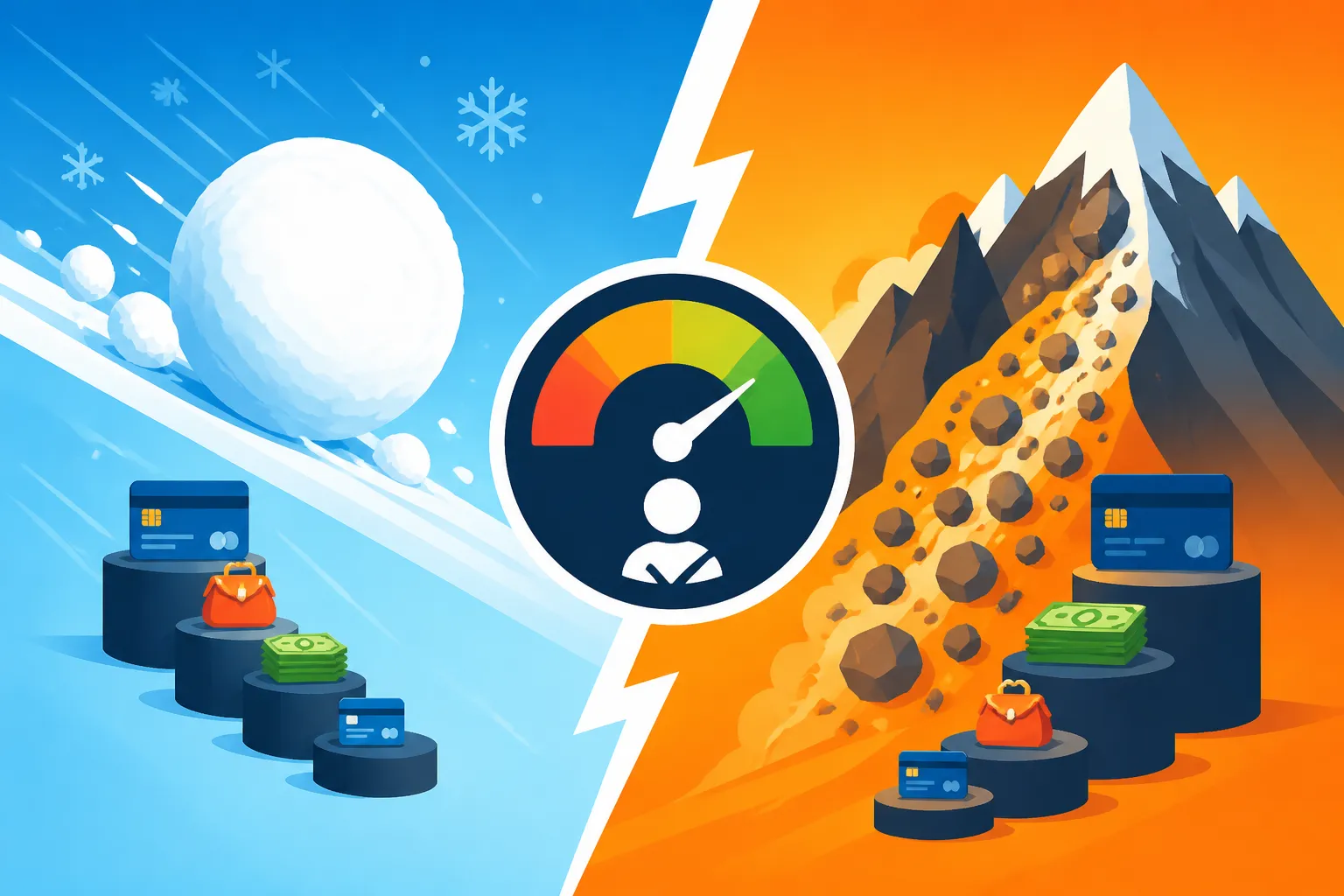
The debt snowball method is a powerful psychological strategy designed to keep you motivated by providing quick wins. Imagine rolling a small snowball down a hill; it starts tiny, but as it picks up more snow, it grows larger and faster. That's exactly how this method works with your debts. Instead of focusing on interest rates, you prioritize the smallest debt first, celebrating each successful payoff as you move on to the next. The beauty of this approach lies in its ability to transform an overwhelming financial burden into a series of achievable milestones, making the seemingly impossible task of becoming debt-free feel genuinely within reach.
This approach was popularized by financial experts and has resonated with countless individuals because it taps into our innate need for progress and positive reinforcement. When you're staring down multiple debts, it can feel like you'll never get anywhere. The snowball method offers a clear, achievable path, breaking down an overwhelming task into smaller, more manageable steps. It's about building a habit of paying more than the minimum and experiencing the joy of seeing an account hit zero, which then fuels your resolve to tackle the next one. This psychological boost can be the difference between giving up and staying committed to your debt-free journey. It's a method that acknowledges the emotional weight of debt and leverages human psychology to sustain momentum.
How the Snowball Method Works Step-by-Step
Implementing the debt snowball method is quite straightforward, which is part of its appeal for many. The first step involves listing all your debts from the smallest balance to the largest, completely ignoring the interest rates for a moment. This list might include a small credit card balance, a personal loan, a medical bill, and then perhaps a larger credit card debt. Don't worry about the APRs at this stage; just get them ordered by the outstanding amount. This clear visual hierarchy helps you identify your immediate target and sets the stage for those early, crucial wins.
Once you have your ordered list, you commit to making minimum payments on all debts except for the very smallest one. For that smallest debt, you throw every extra dollar you can find at it. This means any money saved from cutting back on discretionary spending, a bonus from work, or even extra income from a side hustle like driving for a ride-share service or selling items online. The goal is to obliterate that smallest debt as quickly as possible. Every extra penny goes towards making that balance disappear faster, creating a strong sense of urgency and focus.
Once that first debt is paid off, you take the money you were paying on it (the minimum payment plus any extra you were applying) and add it to the minimum payment of the next smallest debt. This larger payment creates a "snowball" effect, as your payments grow with each debt you conquer, helping you pay off subsequent debts faster and faster. For example, if you were paying $50 minimum on your smallest debt and an extra $100, that total $150 now gets added to the minimum payment of the next debt. This consistent increase in payment power is what truly builds momentum and accelerates your journey towards being debt-free.
Psychological Benefits and Drawbacks
The primary benefit of the debt snowball method is undeniably its psychological power. When you're in debt, especially significant debt, it's incredibly easy to feel defeated. You might look at your total balance and feel like it's an impossible mountain to climb. The snowball method provides rapid victories. Paying off that first $500 credit card can feel like a monumental achievement, giving you the motivation to keep going. These small wins build confidence and momentum, making the daunting task of debt repayment feel achievable. It’s about feeling successful sooner, which helps combat debt fatigue and discouragement. This emotional uplift can be crucial for individuals who struggle with consistent motivation or who have tried other methods and felt overwhelmed.
However, the debt snowball method isn't without its drawbacks. From a purely mathematical perspective, it's often the more expensive option because you might be ignoring debts with higher interest rates. By prioritizing a small balance with a 5% interest rate over a larger one with a 25% interest rate, you're potentially paying more in interest over the long run. This trade-off between psychological motivation and financial efficiency is the core consideration. For some, the cost of extra interest is a small price to pay for the sustained motivation that leads them to actually finish paying off their debts. But for others, especially those with very disciplined financial habits, this inefficiency can be a significant deterrent. It's important to be aware of this potential extra cost, even if you decide the motivational benefits are worth it for your personal situation.
When the Debt Snowball Method Shines Brightest
The debt snowball method truly shines for individuals who need that emotional push and tangible progress to stay engaged. If you've found yourself struggling with debt repayment in the past, or if the sheer volume of your debt feels utterly overwhelming, this method can be a game-changer. It’s particularly effective for people who are just starting their debt repayment journey and need to build confidence and a sense of accomplishment. Seeing those debt accounts disappear one by one provides a powerful, tangible reward that traditional, purely interest-focused methods often lack in the early stages. This isn't just about financial numbers; it's about proving to yourself that you can do it, that you have the power to overcome your debt.
Consider Maria, who had three credit cards: $500 at 22% APR, $2,000 at 18% APR, and $5,000 at 15% APR. She also had a small personal loan of $750 at 10% APR. Using the debt snowball, she'd tackle the $500 credit card first, then the $750 personal loan, then the $2,000 credit card, and finally the $5,000 credit card. The quick payoff of the first two smaller debts would give her the drive to keep going, even if it meant she paid a bit more interest on the $5,000 credit card in the long run. For her, getting rid of those smaller payments and seeing her debt list shrink was the most important factor in staying committed. This method is ideal if you value motivational wins over purely mathematical optimization, understanding that consistency born from motivation is often more effective than theoretical efficiency.
The Debt Avalanche Method Explained Maximizing Savings
In contrast to the debt snowball, the debt avalanche method takes a purely mathematical approach to debt repayment. This strategy is all about saving money by minimizing the total interest you pay over the life of your debts. If the snowball is about psychological wins, the avalanche is about financial efficiency. It's designed for those who can maintain strict discipline and are driven by seeing their overall debt shrink at the fastest possible rate, financially speaking. This method appeals to the logical mind, focusing on the cold, hard numbers and the ultimate goal of keeping more money in your pocket rather than giving it to creditors.
This method appeals to individuals who prioritize the numbers and want to keep as much of their hard-earned money as possible from going to interest charges. It's a strategy that requires a bit more upfront analysis and the ability to delay gratification, as the first few debts you tackle might be larger and take longer to pay off. However, the reward is a significant reduction in the total cost of your debt. By strategically attacking the most expensive debts first, you essentially stop the bleeding of high interest, allowing your payments to make a greater impact on the principal balance over time. For many, the satisfaction of knowing they've optimized their repayment plan is a powerful motivator in itself, even if the immediate wins aren't as frequent.
How the Avalanche Method Works Step-by-Step
To implement the debt avalanche method, you'll start by listing all your debts, but this time, you'll order them from the highest interest rate to the lowest, regardless of the balance size. This might mean a smaller balance with a sky-high APR comes first, even if you have a much larger loan with a modest interest rate. For example, a credit card with 25% APR would be prioritized over a student loan with 6% APR, even if the student loan balance is significantly higher. This ranking ensures you're always tackling the most financially burdensome debt first, maximizing your savings.
Once your debts are ranked by interest rate, you commit to making only the minimum payments on all debts except the one with the highest interest rate. You then take every extra dollar you have available for debt repayment and apply it to that highest-interest debt. The goal is to eliminate this "costliest" debt as quickly as possible. This concentrated effort aims to reduce the principal on your most expensive debt rapidly, minimizing the amount of interest that accrues over time.
When that debt is completely paid off, you then take the money you were allocating to it (the minimum payment plus all the extra payments) and roll it into the minimum payment of the next debt on your list, which will be the one with the next highest interest rate. This powerful transfer of funds allows you to pay off subsequent debts faster and save a substantial amount on interest over the entire repayment period. Each successful payoff increases the "avalanche" of money directed at the next debt, building financial momentum rather than psychological.
Financial Advantages and Potential Challenges
The most significant advantage of the debt avalanche method is the substantial financial savings it offers. By attacking the debts that are costing you the most in interest first, you reduce the overall amount of money you'll pay back to lenders. Over time, this can translate into hundreds, or even thousands, of dollars saved, depending on the size and interest rates of your debts. This method ensures that your money is working as efficiently as possible, maximizing the impact of every extra payment you make. It’s the mathematically superior method for debt repayment, a fact that appeals greatly to those with a logical, numbers-oriented mindset.
However, the primary challenge of the debt avalanche method is maintaining motivation, especially in the early stages. If your highest-interest debt also happens to be one of your largest, it might take a considerable amount of time before you see that first debt completely disappear. This lack of immediate "wins" can be discouraging for some, making it feel like you're not making much progress. It requires a strong degree of financial discipline and patience to stick with the plan, even when the finish line for that first big debt feels far away. It might not provide the psychological boost of the snowball, but for those focused on long-term financial gain, it's often the clear choice. The key is to find motivation in the long-term savings rather than short-term victories.
When the Debt Avalanche Method is Your Best Bet
The debt avalanche method is undeniably your best bet if your primary goal is to save the maximum amount of money on interest and you possess a strong sense of financial discipline. If you can look at a spreadsheet of your debts and be motivated purely by the numbers, knowing that you're making the most efficient financial decision, then this method is for you. It's ideal for those who have a clear understanding of how interest accrues and are determined to minimize its impact on their financial future. This person thrives on optimization and isn't easily swayed by immediate gratification, prioritizing the ultimate financial outcome.
Consider David, who has a student loan of $15,000 at 6% APR, a car loan of $10,000 at 8% APR, and a credit card balance of $4,000 at 24% APR. Using the debt avalanche, David would focus intensely on the $4,000 credit card first because it has the highest interest rate. Even though it's not his smallest debt, eliminating that 24% interest as quickly as possible saves him the most money in the long run. Once that credit card is gone, he'd then roll those payments into the car loan, then the student loan. David is driven by logic and numbers, and the thought of saving thousands in interest keeps him motivated, even if the credit card takes a few months to pay off entirely. For individuals like David, the financial benefit outweighs the need for immediate psychological gratification, making the avalanche method the most effective and satisfying choice.
Debt Snowball vs Debt Avalanche A Head-to-Head Comparison
When it comes down to choosing between the debt snowball and the debt avalanche, it’s not about one being universally "better" than the other. Instead, it's about finding the strategy that aligns best with your personal financial behavior and motivational triggers. Both methods provide a structured path out of debt, which is crucial, as aimless repayment often leads to stagnation or even increased debt. The real question is: are you more motivated by quick, small victories, or by the mathematical efficiency of saving the most money possible? Your personal psychology plays a significant role in which method will ultimately lead you to success.
Many people often ask, "Which method will get me out of debt faster?" The answer, mathematically, is almost always the debt avalanche because it attacks the most expensive debts first, reducing the overall time interest accrues. However, "faster" isn't always about math. If the debt avalanche method leaves you feeling discouraged and you abandon the plan, then it's not truly faster for you. Conversely, if the snowball method keeps you engaged and committed, you might pay a bit more in interest, but you'll actually reach debt freedom, which is the ultimate goal. Understanding these nuances is key to making an informed decision for your unique situation. The goal is to become debt-free, and the method that helps you achieve that is the superior one for your individual circumstances.
Key Differences in Strategy and Impact
The fundamental difference between the debt snowball and debt avalanche methods lies in their prioritization criteria. The debt snowball prioritizes debts by their balance size, starting with the smallest, while the debt avalanche prioritizes debts by their interest rate, starting with the highest. This core difference leads to distinct psychological and financial impacts that can significantly influence your debt repayment journey. Understanding this distinction is paramount when deciding which path to take.
From a psychological standpoint, the snowball method offers quicker wins and boosts motivation. Imagine wiping out a $300 medical bill in a month or two. That feeling of accomplishment is powerful and can propel you forward. The avalanche method, on the other hand, might have you grinding away at a large credit card balance for many months before you see it disappear, which can be tough on morale. Financially, the avalanche method is superior for saving money. By eliminating high-interest debt first, you prevent more interest from accruing, meaning more of your payment goes towards the principal. Over the life of your debt, this can result in significant savings compared to the snowball method. It's a classic battle between emotional fulfillment and mathematical optimization, and your personal disposition will guide you to the victor.
Here's a quick comparison table to help visualize these differences:
| Feature | Debt Snowball Method | Debt Avalanche Method |
|---|---|---|
| Prioritization | Smallest balance first, regardless of interest rate. | Highest interest rate first, regardless of balance size. |
| Primary Benefit | Psychological motivation, quick wins, builds momentum. | Maximizes interest savings, financially efficient. |
| Primary Drawback | May pay more in total interest over time. | Can be less motivating in early stages (larger debts). |
| Ideal User | Needs frequent wins to stay motivated, struggles with discipline. | Highly disciplined, motivated by numbers and savings. |
| Perceived Speed to Debt-Free | Can feel faster due to quick wins, but often takes longer mathematically. | Mathematically fastest due to interest reduction. |
| Total Cost | Potentially higher total cost due to more accrued interest. | Lowest total cost due to minimized interest payments. |
| Focus | Behavior and habit formation. | Financial optimization and cost reduction. |
Calculating the Real-World Savings and Time
To truly understand the impact of each method, it's helpful to run some numbers. Let's imagine a hypothetical scenario with three debts:
- Credit Card A: $2,000 balance, 20% APR, $50 minimum payment
- Personal Loan: $5,000 balance, 10% APR, $100 minimum payment
- Credit Card B: $3,000 balance, 25% APR, $75 minimum payment
And let's say you have an extra $150 each month to put towards debt, making your total monthly payment capacity $375 ($50+$100+$75+$150). This extra amount is the critical component that accelerates debt repayment, regardless of the method chosen.
Debt Snowball Scenario:
You'd list them as: Credit Card A ($2,000), Credit Card B ($3,000), Personal Loan ($5,000).
- Step 1: Pay minimums on Personal Loan ($100) and Credit Card B ($75). Throw $225 ($50 min + $150 extra) at Credit Card A. This debt would be paid off first, providing a rapid sense of achievement.
- Step 2 (After Credit Card A is paid): Roll the $225 into Credit Card B. Now you pay $300 ($75 min + $225) on Credit Card B, and $100 min on Personal Loan. The payment on Credit Card B significantly increases, accelerating its payoff.
- Step 3 (After Credit Card B is paid): Roll the $300 into Personal Loan. Now you pay $400 ($100 min + $300) on Personal Loan. This final, large payment quickly dispatches the remaining debt.
This method would likely get Credit Card A paid off relatively quickly, giving you that morale boost. However, Credit Card B, with its 25% APR, would continue to accrue significant interest while you tackled Credit Card A, potentially adding to your total cost over the long haul.
Debt Avalanche Scenario:
You'd list them as: Credit Card B (25% APR), Credit Card A (20% APR), Personal Loan (10% APR).
- Step 1: Pay minimums on Credit Card A ($50) and Personal Loan ($100). Throw $225 ($75 min + $150 extra) at Credit Card B. This high-interest debt becomes your immediate and aggressive focus, even if it takes a bit longer to disappear.
- Step 2 (After Credit Card B is paid): Roll the $225 into Credit Card A. Now you pay $275 ($50 min + $225) on Credit Card A, and $100 min on Personal Loan. The eradication of the highest interest rate frees up a substantial amount of payment power for the next debt.
- Step 3 (After Credit Card A is paid): Roll the $275 into Personal Loan. Now you pay $375 ($100 min + $275) on Personal Loan. The final debt is attacked with the full force of combined payments, ensuring minimal interest paid.
While Credit Card B might take longer to pay off than Credit Card A did in the snowball scenario, the sheer amount of interest saved by eliminating that 25% APR debt first would typically lead to a shorter overall repayment timeline and lower total cost. Running these calculations with a simple online debt payoff calculator for your actual debts can be incredibly eye-opening and help you decide which approach aligns with your financial temperament. You might find that even a small difference in total interest saved can motivate you towards the avalanche, or the faster initial payoffs of the snowball are worth the slight extra cost for your peace of mind.
Choosing the Right Method for Your Personality and Situation
Ultimately, the "better" method is the one you stick with. If you're someone who easily gets discouraged and needs visible progress to stay motivated, the debt snowball might be your winning strategy. The psychological boost of quickly eliminating smaller debts can be invaluable, preventing you from giving up on your debt-free journey altogether. It's about building a positive feedback loop that reinforces your efforts and makes the daunting process of debt repayment feel less like a punishment and more like a series of achievable goals. This approach validates the emotional struggle of debt and offers a direct pathway to overcoming it, one small win at a time.
However, if you're a numbers person, highly disciplined, and the idea of paying even one extra dollar in interest truly bothers you, then the debt avalanche is likely your best bet. You'll be saving the most money in the long run, and that financial efficiency will be your primary motivator. You can look at your amortization schedules and see the tangible impact of your choices, which can be incredibly empowering. It's about maximizing your financial resources and ensuring that you get out of debt as cost-effectively as possible, a logical and satisfying approach for those who prioritize financial optimization. Think about past financial endeavors: what kept you going? Was it seeing quick results, or was it a deep understanding of the long-term benefit? Your answer to this question is a strong indicator of which method will serve you best in your journey toward debt freedom.
Getting Started Practical Steps for Both Strategies
Regardless of whether you choose the debt snowball or the debt avalanche, the first steps to getting started are surprisingly similar and absolutely crucial. You can't tackle a problem effectively until you understand its full scope. Many people avoid looking at their total debt picture because it feels too overwhelming, but this is exactly where you need to start. Think of it like mapping out a journey; you need to know your starting point and your destination before you can plot the most efficient route. Taking these initial practical steps will lay a solid foundation for your entire debt repayment journey, giving you clarity and a sense of control over your financial future.
It’s not just about picking a method; it’s about creating a sustainable system that integrates into your daily financial life. This involves more than just making payments; it means understanding your spending habits, identifying areas for improvement, and committing to a long-term vision of financial freedom. The more thoroughly you prepare in these early stages, the smoother your journey will be, and the more likely you are to achieve your debt repayment goals. This foundational work ensures you're not just reacting to debt but proactively conquering it.
Gathering Your Debt Information
The very first practical step is to create a comprehensive list of all your debts. Don't leave anything out. This includes credit cards, personal loans, car loans, student loans, medical bills, and any other outstanding balances you might have. Getting everything down on paper or in a spreadsheet can feel daunting at first, but it's an essential act of reclaiming control. You need a complete picture to make informed decisions.
For each debt, you need to collect specific information:
- Creditor Name: Who do you owe? (e.g., Chase, Capital One, Sallie Mae, a local hospital) Knowing exactly who you're dealing with is important for communication and account management.
- Current Balance: How much do you currently owe? This figure is critical for ordering your debts in the snowball method.
- Interest Rate (APR): What is the annual percentage rate for this debt? This is critical for the avalanche method and understanding the true cost of your debt.
- Minimum Monthly Payment: What is the smallest amount you must pay each month to avoid late fees and negative marks on your credit report? This is your baseline commitment.
- Due Date: When is each payment due? Organizing by due date helps prevent missed payments and protects your credit score.
You can usually find this information on your monthly statements, by logging into your online accounts, or by calling the creditor directly. Don't be shy about digging into the details; this clarity is your superpower. Once you have all this information, you can then organize your debts according to either the smallest balance (for snowball) or highest interest rate (for avalanche). Seeing everything laid out in one place, even if daunting at first, is incredibly empowering because it gives you a clear picture of what you're up against. This step is a non-negotiable part of effective debt management, helping you to truly take control of your financial situation. Many people find that simply putting it all down on paper or in a spreadsheet makes the problem feel more manageable, transforming abstract worry into concrete action items.
Creating Your Debt Repayment Plan
Once you've gathered all your debt information, it's time to create your detailed repayment plan. This involves a few key components. First, you need to establish a realistic budget if you don't already have one. A budget helps you understand where your money is going and identify areas where you can cut back to free up extra funds for debt repayment. Even small changes, like packing your lunch instead of buying it daily or canceling unused subscriptions, can add up quickly. Tools like YNAB (You Need A Budget) or Mint can be incredibly helpful here, providing a clear visual of your income and expenditures.
Next, determine how much extra money you can consistently allocate to your chosen debt repayment method each month. Be honest with yourself about this amount; it's better to start with a smaller, sustainable extra payment than to overcommit and get discouraged. This extra payment is the fuel for your snowball or avalanche. You'll then apply this extra amount to either your smallest debt (snowball) or your highest-interest debt (avalanche), making minimum payments on all other debts. For instance, if you decide on the snowball method, you'll target that lowest balance with everything you've got.
Finally, set up automatic payments for at least the minimums on all debts to avoid missing due dates and incurring late fees, which can further damage your credit score. Missed payments are incredibly detrimental to your financial health and can set you back significantly. Remember, consistency is far more important than intensity when it comes to long-term financial success. A clear, actionable plan is your roadmap to getting out of debt, providing a structured approach to what often feels like an unstructured problem.
Staying Motivated and Tracking Progress
Sticking to a debt repayment plan, especially when it feels like a long road, requires consistent motivation and a clear way to track your progress. One of the most effective ways to stay motivated is to visualize your success. Create a physical chart or use a digital app that allows you to see your debt balances decrease over time. Crossing off a debt when it's fully paid, or watching a progress bar fill up, can provide that much-needed sense of accomplishment. Sharing your journey with a trusted friend or family member, or joining an online community, can also provide accountability and encouragement, reminding you that you're not alone in this fight.
Regularly review your progress. Maybe once a month, sit down and update your debt list. See how much closer you are to paying off that next debt. Celebrate milestones, no matter how small. Paid off that first small credit card? Treat yourself to a modest, budget-friendly reward, like a special coffee or a movie night at home, rather than something that adds to your debt. This reinforcement is especially critical for those using the debt avalanche method, where initial progress might not feel as rapid. For individuals who are trying to manage their finances and build credit concurrently, tools like Credit Strong can be considered as they report payments to credit bureaus, adding a positive payment history alongside your debt repayment efforts. Seeing your credit score slowly improve as you pay down debt can also be a powerful motivator. Understanding How to Read Your Credit Report and What Affects Your Credit Score? The 5 Factors are excellent resources to help you understand this connection and track your progress, including how reducing your Credit Utilization: The Complete Guide can boost your score. If you're looking to specifically improve your score, our article on How to Raise Your Credit Score provides actionable steps.
Beyond Snowball and Avalanche Other Debt Repayment Tools
While the debt snowball and debt avalanche methods are fantastic strategies for structured repayment, they're not the only tools in your financial toolkit. Sometimes, these methods can be enhanced or even replaced by other strategies, especially if you're dealing with very high interest rates or an overwhelming number of accounts. It's crucial to understand that debt repayment isn't a one-size-fits-all journey, and combining approaches or exploring alternative options can accelerate your path to freedom. These other tools often address specific pain points that the snowball and avalanche methods don't directly solve, such as extremely high interest or scattered debts that feel impossible to manage.
Being proactive and exploring all your options is a sign of true financial responsibility. Don't feel limited to just one approach. The best strategy is often a hybrid one, or one that evolves as your financial situation changes. Understanding these additional tools gives you more flexibility and power in your fight against debt. You might find that a combination of methods allows you to pay off debt faster, save more money, or simply make the process less stressful, which is a valuable outcome in itself. The more strategies you know, the better equipped you are for any financial challenge.
Exploring Debt Consolidation and Balance Transfers
If you're burdened by multiple high-interest credit card debts, debt consolidation or a balance transfer could be powerful options to consider. A debt consolidation loan involves taking out a new loan, usually with a lower interest rate, to pay off all your existing smaller debts. This leaves you with just one monthly payment to a single lender, which can simplify your finances and potentially save you a lot of money in interest. The key is to secure a lower interest rate than what you're currently paying, and to avoid accumulating new debt once your old accounts are paid off. Our guide on Debt Consolidation vs Balance Transfer offers a deeper dive into these options.
Similarly, a balance transfer credit card allows you to move existing high-interest credit card balances onto a new card, often with a promotional 0% or low APR for an introductory period (e.g., 12-18 months). This can give you a crucial window to pay down a significant portion of your principal without accruing additional interest. This is a powerful strategy, but it requires discipline. Be mindful of balance transfer fees, which typically range from 3-5% of the transferred amount, and make sure you can pay off the transferred balance before the promotional period ends and regular (often high) APR kicks in. Failing to do so can leave you in a worse position. You can learn more about how these cards work in our article Balance Transfer Cards: How They Work. Both of these options aim to lower your effective interest rate, thereby reducing the total cost of your debt and potentially shortening your repayment timeline.
The Role of Budgeting and Expense Reduction
No matter which debt repayment method you choose, a solid budget and commitment to expense reduction are the engine that drives your progress. Without freeing up extra cash, your debt snowball or avalanche will remain a tiny pebble, barely moving. Creating a detailed budget helps you understand exactly where your money is going each month. Tools and apps can simplify this process, allowing you to track your spending, categorize expenses, and identify areas where you can trim. Look for "leakage" – those small, recurring expenses that add up, like daily coffees, unused subscriptions, or excessive takeout orders that drain your bank account without much thought.
Beyond cutting discretionary spending, consider bigger changes. Could you temporarily reduce your housing costs, even by getting a roommate or downsizing? Can you negotiate lower rates on your insurance, internet, or cell phone bills? Many providers are willing to work with long-term customers, especially if you mention competitive offers. Even things like meal planning and cooking at home more often can save hundreds of dollars a month. Every dollar you free up from your regular expenses is a dollar you can add to your debt payment, accelerating your journey towards financial freedom. Remember, this isn't about deprivation forever, but about strategic, temporary sacrifices to achieve a much larger financial goal: debt freedom. Your budget is not a restrictive cage; it's an empowering tool that shows you where your money is going and how you can redirect it to serve your goals.
Considering Professional Help and Credit Repair
Sometimes, despite your best efforts, debt can feel too overwhelming to tackle alone. In such cases, seeking professional help can be a wise decision. Non-profit credit counseling agencies can offer personalized advice, help you create a budget, and even negotiate with creditors on your behalf through a Debt Management Plan (DMP). A DMP consolidates your payments, potentially lowers interest rates, and can simplify your repayment, although it does require closing credit accounts involved in the plan. Organizations like the National Foundation for Credit Counseling (NFCC) offer resources to find reputable counselors who can provide objective, expert guidance.
For more complex situations, especially if you have significant unsecured debt and can't make minimum payments, you might explore debt settlement or even bankruptcy. These are serious options with significant impacts on your credit score and future financial capabilities, so they should be considered only after careful consultation with a financial expert or attorney. For those looking to proactively manage and improve their credit health, even while paying down debt, considering services that help build a positive credit history, such as a credit builder loan from a company like Credit Strong, can be a complementary strategy. This can help you demonstrate responsible financial behavior to the credit bureaus while you're systematically dismantling your existing debt. It’s important to understand the full picture, including How to Repair Your Credit: The Complete Guide 2026 and Should You Pay Off Old Collections? if you have distressed accounts. You can also learn more about specific types of credit-building tools in our article Credit Builder Loans Explained Self, Kikoff & More.
Real-Life Scenarios Who Benefits Most?
To really drive home the practical differences between the debt snowball and debt avalanche methods, let's look at a couple of hypothetical individuals. These scenarios illustrate how personal temperament and existing debt profiles can strongly influence which strategy will be more effective. It's easy to get lost in the numbers, but understanding the human element behind these financial choices is often the most important factor in long-term success. After all, a plan that sounds good on paper but isn't sustainable for you won't lead to debt freedom.
These examples highlight that there's no single "right" answer. The best method is the one you can stick with consistently until all your debts are gone. Your financial journey is personal, and choosing a strategy that resonates with your values and psychology is key to achieving your goals. The goal isn't just to pick a method; it's to find one that aligns with your internal motivations and external circumstances, ensuring you stay on track through thick and thin.
Maria's Emotional Journey with Debt Snowball
Maria found herself with five different credit card balances totaling about $10,000, ranging from a small $300 balance on an old store card to a $4,500 balance on her primary card. Her interest rates varied, but the smallest balance didn't necessarily have the highest interest rate. When she tried to tackle the highest-interest card first (which was a $3,800 balance), it felt like she was just making payments into a black hole. After three months, the balance had barely budged, and she felt utterly defeated, nearly giving up on her repayment plan. The lack of visible progress was truly discouraging for her.
A friend suggested she try the debt snowball. She listed her debts from smallest to largest: $300, $750, $1,500, $2,950, $4,500. She decided to throw every extra dollar she could find, about $100 per month, at that tiny $300 store card. Within two months, it was gone! That first "zero" balance was an incredible morale booster, a tangible win that she could celebrate. She took the money she was paying on that card and added it to the next smallest, the $750 card. Seeing that balance vanish just a few months later gave her a renewed sense of confidence and a strong belief that she could actually achieve her goal. For Maria, those quick wins were essential. Even though she might pay a bit more interest over the total repayment period, the psychological momentum kept her engaged and motivated, allowing her to systematically eliminate each debt. For her, the emotional wins outweighed the mathematical cost, leading to sustained effort and eventual debt freedom.
David's Analytical Approach with Debt Avalanche
David, on the other hand, had a different set of debts: a $12,000 personal loan at 9% APR, a $7,000 credit card at 28% APR, and a $2,500 medical bill at 0% APR (but with a short payment deadline). David is a very analytical person; he loves spreadsheets and optimizing for efficiency. The idea of paying even one extra dollar in interest when he didn't have to was completely unappealing to him. He knew that the medical bill was his smallest debt, but it wasn't costing him any interest. His highest-interest debt was clearly the $7,000 credit card at 28% APR. For David, the numbers spoke loudest.
David organized his debts by interest rate: 28% APR credit card, 9% APR personal loan, 0% APR medical bill. He made minimum payments on the personal loan and the medical bill and aggressively attacked the $7,000 credit card with all his extra funds, about $300 a month. It took several months to pay off that credit card, and at times it felt like a grind. But David constantly reminded himself of the thousands of dollars in interest he was saving by killing that high-rate debt first. He tracked his progress meticulously, calculating exactly how much less he would pay overall. Once the credit card was gone, he rolled those massive payments into the personal loan, which quickly vanished, and then the medical bill (which he paid off before the 0% intro period expired). For David, the tangible financial savings were his primary motivator, proving that the debt avalanche was the most logical and rewarding path for his personality. He was driven by the long-term financial gain, not the short-term emotional boost.
Making the Final Decision Your Path to Freedom
The journey to becoming debt-free is deeply personal, and the "best" method is truly the one that resonates with you and keeps you committed to the goal. There's no shame in admitting you need quick wins to stay motivated, just as there's no shame in being a numbers-driven individual who prioritizes financial efficiency above all else. Both the debt snowball and debt avalanche are proven paths; they simply tap into different human motivators. The key takeaway is that having a structured plan, any structured plan, is infinitely better than having no plan at all. Without a clear strategy, debt can feel like an insurmountable obstacle, leading to stress, missed payments, and further financial damage.
Before you fully commit to one method, take some time to assess your own financial psychology. Have you struggled with financial discipline in the past? Do you get easily discouraged if results aren't immediately visible? If so, the debt snowball might be your secret weapon, offering those crucial morale boosts along the way. If, however, you thrive on logic, can delay gratification, and are laser-focused on minimizing costs, the debt avalanche will likely be more satisfying and financially rewarding. Remember that your goal is not just to pay off debt, but to gain financial literacy and build sustainable habits for the future. You might even consider complementary strategies, like setting up a credit builder loan from Credit Strong, once your high-interest debts are under control, to help diversify your credit mix and establish a strong payment history for future financial goals, like applying for a mortgage after debt. Regardless of your choice, celebrating milestones and regularly reviewing your progress will be essential for staying on track toward your debt-free future. This is your journey, and you have the power to choose the path that works best for you, ultimately leading to greater financial peace and security. You can also explore options like How to Build Credit From Scratch 2026 Guide for broader financial planning.
Disclaimer
Please note that this content is for informational purposes only and is not financial advice. Always consult with a qualified financial advisor or credit counseling agency to discuss your specific financial situation and before making any financial decisions.