How to Remove a Repossession From Your Credit Report Fast
Dealing with a repossession on your credit report can feel like a heavy weight, casting a long shadow over your financial future and making it incredibly tough to get approved for loans, credit cards, or even housing. It's a frustrating situation that many people experience, and finding a clear path to getting it removed, especially quickly, often feels impossible. This guide is here to walk you through the realistic steps and strategies for addressing a repossession on your credit report, aiming to either remove it or significantly lessen its negative impact.
Understanding Repossessions and Their Credit Impact
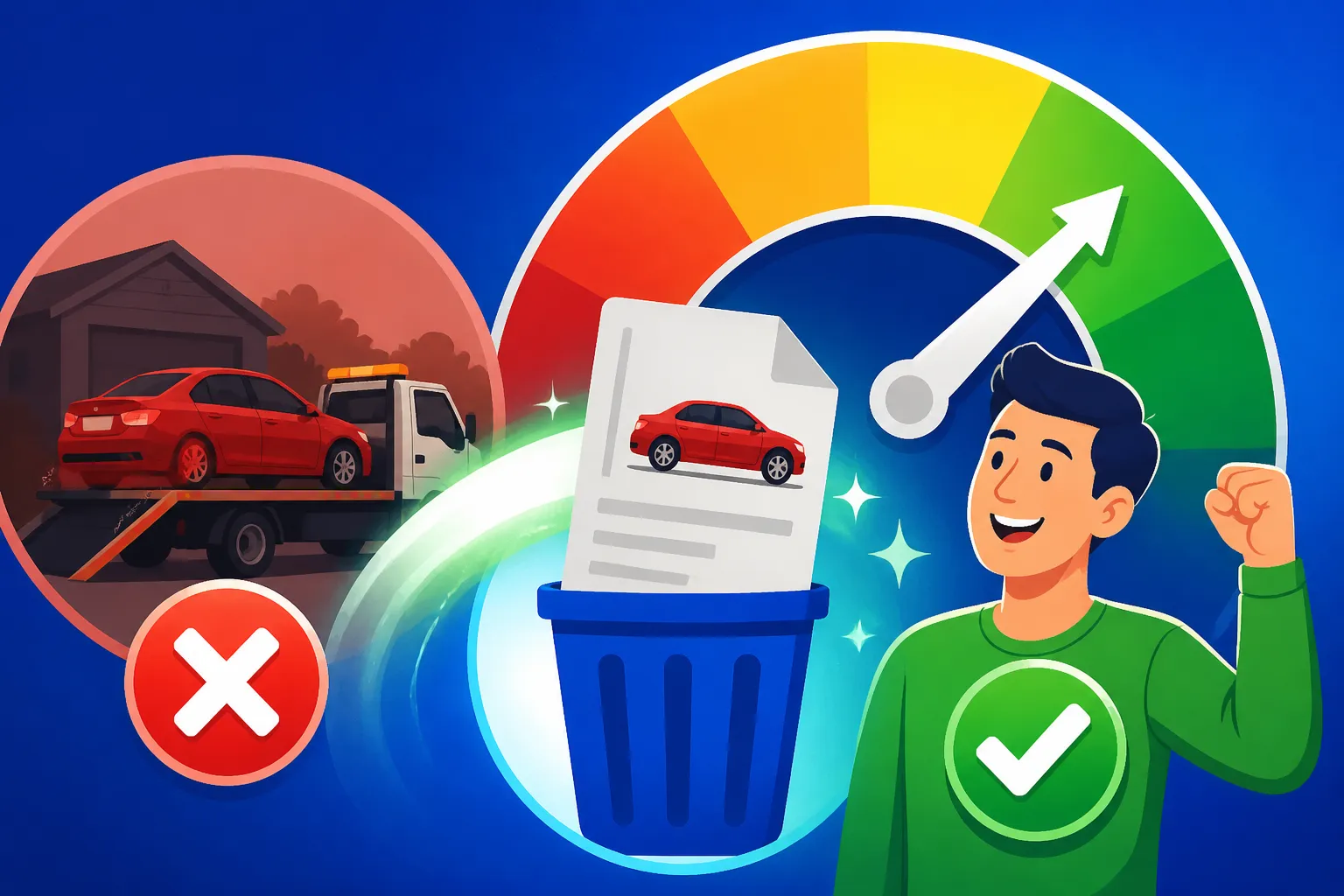
When you fall behind on payments for an item you financed, like a car or a boat, the lender has the legal right to take it back. This action, known as a repossession, isn't just an inconvenience; it leaves a serious blemish on your credit report that can linger for years, affecting almost every aspect of your financial life.
What Exactly is a Repossession?
At its core, a repossession occurs when a lender takes back property you used as collateral for a loan because you've failed to make your agreed-upon payments. While most commonly associated with vehicles, it can apply to anything from RVs to furniture, depending on the loan agreement. Once the lender repossesses the asset, they typically sell it at auction to recoup their losses. If the sale price doesn't cover the remaining loan balance, plus any associated fees like towing, storage, and auction costs, you'll be left with what's called a "deficiency balance." This deficiency balance is essentially the leftover debt you still owe after the sale, and it can also end up on your credit report, often as a collection account. It's a double whammy: the repossession itself and a potential collection for the remaining debt.
Imagine you financed a car for $20,000. You still owe $15,000 when you lose your job and can't make payments. The lender repossesses the car and sells it for $10,000. On top of that, they incurred $2,000 in repossession and auction fees. This means you still owe them $15,000 (original balance) – $10,000 (sale price) + $2,000 (fees) = $7,000. That $7,000 deficiency balance might then be sold to a debt collector, adding another negative mark to your credit profile. This is why understanding How to Remove Collections From Your Credit Report can be just as important as dealing with the repossession itself.
How a Repossession Harms Your Credit Score
A repossession is one of the most damaging negative items you can have on your credit report, second perhaps only to bankruptcy. It signals to future lenders that you failed to uphold your end of a financial agreement, making you a high-risk borrower. This severe negative mark can cause your credit score to plummet by a significant number of points – sometimes over 100 points, depending on your credit history before the repossession.
The impact stems primarily from the "payment history" factor, which accounts for 35% of your FICO score, the largest single component. A repossession indicates a severe delinquency. It also negatively impacts your "amounts owed" category if a deficiency balance leads to a collection account, and it can shorten your "length of credit history" if the repossessed account was one of your older ones. Furthermore, the presence of a repossession makes it incredibly difficult to secure new credit, whether it's for a new car, a home, or even just a new credit card. Lenders see that risk and often either deny applications outright or offer less favorable terms like higher interest rates and lower credit limits. You might find yourself asking, What Affects Your Credit Score? The 5 Factors, and a repossession hits several of them hard.
The Reality of "Fast" Removal: Expectations vs. Reality
When you see a repossession on your credit report, your natural instinct is to want it gone now. Who wouldn't? But it's important to set realistic expectations about how quickly a repossession can be removed. The truth is, "fast" is rarely an option when dealing with such a severe and typically accurate negative item.
Why Immediate Removal is Unlikely
Unlike a simple incorrect address or a misspelled name, a repossession is usually a significant, verifiable event. The credit bureaus (Equifax, Experian, and TransUnion) consider it highly important information for lenders. Because repossessions are almost always accurate records of a financial default, the bureaus are less likely to remove them simply because you ask nicely or send a standard dispute letter without concrete evidence of an error.
Many online "quick fix" schemes promise instant removal, but these are almost always scams. They prey on the desperation of individuals facing severe credit issues. The legal framework governing credit reporting, primarily the Fair Credit Reporting Act (FCRA), is designed for accuracy. If an item is accurate, removing it solely because it's negative is not something the credit bureaus are legally obligated to do. They are obligated to investigate disputes and remove inaccurate information, but the burden of proof often falls on you to show the inaccuracy.
The Legal Timeline for Repossessions
A repossession typically remains on your credit report for up to seven years from the date of the original delinquency that led to the repossession. This isn't just a guideline; it's a legal limit established by the FCRA. This means even if you pay off the deficiency balance, the original repossession entry can still remain on your report for the full seven-year period.
For example, if you missed your first payment on July 1, 2023, and the car was repossessed in September 2023, the repossession would generally stay on your report until July 2030, seven years from the initial delinquency date. While paying off any remaining deficiency balance is crucial for improving your overall financial standing and potentially preventing further collections, it doesn't automatically erase the repossession itself from your credit history. Understanding How Long Does a Repossession Stay on Your Credit Report? is vital for managing your expectations.
Strategies for Addressing a Repossession (or Minimizing its Impact)
While outright "fast" removal of an accurate repossession is improbable, there are definite strategies you can employ to challenge inaccuracies, negotiate, and build positive credit to minimize its long-term damage.
Step-by-Step Guide to Disputing Errors
The most legitimate and effective way to potentially remove a repossession, or any other negative item, is to find an inaccuracy and dispute it. The FCRA grants you the right to dispute any information on your credit report that you believe is inaccurate, incomplete, or unverifiable.
Here's how to approach it:
- Obtain Your Credit Reports: First, get a copy of your credit reports from all three major bureaus: Equifax, Experian, and TransUnion. You can do this for free once a year at AnnualCreditReport.com.
- Scrutinize Every Detail: Don't just glance at the repossession entry. Look for any and every potential error:
- Incorrect dates (date of delinquency, date of repossession, date opened/closed).
- Wrong account number or balance owed.
- Misspelled names or incorrect personal information.
- If the car was sold, ensure the deficiency balance is reported accurately, or if it's been paid, ensure it shows as "paid in full" or "zero balance."
- Is the creditor listed correctly?
- Gather Evidence: If you find an error, collect any documentation you have to support your claim. This could include payment records, correspondence with the lender, original loan agreements, or even court documents.
- Draft Your Dispute Letter: Write a clear, concise dispute letter. Clearly identify the specific account, the specific error, and why you believe it's incorrect. Include copies (never originals) of your supporting documentation. You can find detailed guidance on How to Write a Credit Dispute Letter (Template).
- Send to All Three Bureaus (and Creditor): Mail your dispute letter via certified mail with a return receipt requested to each credit bureau reporting the error. It's also a good idea to send a copy directly to the original creditor. This forces both parties to investigate. You can learn more about how to dispute with each bureau in How to Dispute With Equifax, Experian, and TransUnion.
- Follow Up: The bureaus typically have 30 days (sometimes 45) to investigate your dispute. If they can't verify the information or confirm the error, they must remove it. Be persistent and follow up if you don't hear back within the timeframe.
Remember, if the information is accurate, the bureaus are unlikely to remove it. Your best bet here is a factual error.
Negotiating with the Lender
Even if the repossession itself is accurate, you might be able to negotiate with the original lender or the collection agency holding the deficiency balance.
- Pay for Delete (for Deficiency Balance): If there's a deficiency balance showing as a collection, you can try to negotiate a "pay-for-delete" agreement. This is where you offer to pay a portion or the full amount of the debt in exchange for the creditor agreeing to remove the collection account from your credit report. This strategy is more often successful with collection agencies than original creditors and primarily applies to the collection account, not necessarily the repossession itself. It's a tricky area, and it's essential to get any such agreement in writing before making any payment. For more insights, look into Pay for Delete: Does It Really Work?.
- Negotiate a Settlement: If a pay-for-delete isn't possible, or if you're dealing with the original lender, you can still try to negotiate a settlement for the deficiency balance. While it won't remove the repossession, resolving the debt prevents further collection activity and stops new negative reporting. A "settled for less than full amount" notation is better than an unpaid collection on your report. This can be a complex process, so understanding How to Negotiate With Debt Collectors is extremely beneficial.
The Power of Goodwill Letters (and When They Work)
A goodwill letter is a formal request to a creditor to remove a negative item from your credit report, often a late payment, as an act of "goodwill." This strategy usually works best for isolated late payments, not for severe events like repossessions. However, if your repossession was due to truly extraordinary circumstances beyond your control (e.g., a serious medical emergency, natural disaster, or verifiable administrative error by the lender), and you otherwise have an excellent payment history with that specific lender, you might try a goodwill letter.
In your letter, explain the extenuating circumstances concisely, acknowledge your responsibility, and emphasize your otherwise stellar payment history with them. Be polite and humble, and request that they consider removing the repossession as an act of goodwill. Frankly, the chances of success for a repossession are low compared to a single late payment, but it doesn't hurt to try if you have a compelling story and an otherwise perfect record with that creditor. Learn more about What Is a Goodwill Letter and Does It Work?.
Building New Positive Credit History
Perhaps the most crucial long-term strategy, regardless of whether you can remove the repossession, is to actively build new, positive credit history. This doesn't erase the past, but it demonstrates to future lenders that you are capable of managing credit responsibly now.
Here are a few ways to start:
- Secured Credit Cards: These cards require a cash deposit, which typically becomes your credit limit. They are designed for people with no credit or bad credit to establish a positive payment history. Using one responsibly by making small purchases and paying the balance in full each month can significantly help.
- Credit Builder Loans: These are small loans where the money is held in a savings account or CD while you make payments. Once the loan is paid off, you get access to the money. This reports positive payment history to the credit bureaus. Companies like Credit Strong specialize in these types of loans, helping individuals rebuild their credit scores through consistent, on-time payments. It’s an effective way to show financial responsibility.
- Authorized User Status: Ask a trusted friend or family member with excellent credit to add you as an authorized user on one of their credit cards. Their positive payment history might then appear on your report, boosting your score. However, ensure they are highly responsible, as their missteps could also impact you.
- Experian Boost/Rent Reporting: Services like Experian Boost can factor in utility and phone payments into your Experian score. Similarly, rent reporting services can add your on-time rent payments to your credit report. While not all lenders consider these "alternative" data points, they can certainly help build a positive payment history.
- Small Installment Loans: If you need a small loan for something essential, like a minor home repair, look for lenders that report to all three credit bureaus. Making consistent, on-time payments on these can also build positive history.
The key is consistency. Every on-time payment you make after a repossession helps to dilute its negative impact over time. This process is how you genuinely How to Raise Your Credit Score (Step-by-Step) and start fresh. Building a solid foundation of new credit is paramount to recovering from a repossession. Credit Strong, for instance, offers credit builder loans that report your payments to all three major credit bureaus, making it easier to show lenders you’re back on track.
Comparison of Repossession Remediation Strategies
| Strategy | Goal | Effectiveness for Repossession | Timeframe (General) | Key Considerations |
|---|---|---|---|---|
| Disputing Inaccuracies | Remove inaccurate repossession entry | High, if errors exist | 30-45 days | Requires concrete evidence of factual errors. Doesn't work for accurate items. Sending a copy of How to Dispute Credit Report Errors (Step-by-Step) can guide you. |
| Goodwill Letter | Request removal as an act of grace | Very Low | Varies | Best for isolated late payments, almost never for repossessions. Only try if you have an otherwise perfect history with that specific lender and truly extenuating circumstances. |
| Negotiate Pay-for-Delete | Remove deficiency balance collection | Medium (for collections) | Varies | Primarily for the collection account, not the repossession itself. Get everything in writing before paying. |
| Negotiate Settlement | Resolve deficiency balance | High (for debt resolution) | Varies | Stops further collection efforts, prevents new negative reporting. Still shows as "settled" or "paid" but original repossession remains. |
| Build New Credit | Improve credit score and history | High (long-term) | 6 months – 2+ years | Essential for long-term recovery. This is where options like secured cards and a Credit Strong credit builder loan come into play to establish a new track record of reliability. |
When to Consider Professional Help
Sometimes, the complexities of credit repair, especially after a repossession, are too much to tackle on your own. This is where professional help can be invaluable.
Credit Repair Companies
Credit repair companies specialize in assisting consumers with identifying and disputing inaccurate information on their credit reports. They understand the intricacies of credit law and the dispute process. If you've tried disputing errors yourself without success, or if you simply don't have the time or expertise, a reputable credit repair company might be a good option.
They can help analyze your credit reports from all three bureaus, identify potential inaccuracies related to your repossession or its associated deficiency balance, and send dispute letters on your behalf. They also often provide guidance on building new credit and managing your overall financial health. However, it's crucial to choose a legitimate company and be aware of the costs involved. Be cautious of any company that guarantees fast removal of accurate items, as this is a major red flag for scams. Researching Credit Repair Companies vs DIY: Which Is Better? can help you make an informed decision.
Legal Counsel
In rare cases, especially if you believe the repossession was unlawful (e.g., they repossessed your vehicle without proper notice, or you were not actually in default), consulting with a consumer law attorney might be necessary. An attorney can review your specific situation, advise you on your legal rights, and potentially pursue legal action against the lender or collection agency if consumer protection laws were violated. This is usually a last resort for situations involving clear legal wrongdoing, but it can be the most powerful route if you have a strong case.
Ultimately, while there's no magic wand to make an accurate repossession disappear "fast" from your credit report, you have several powerful tools at your disposal to challenge inaccuracies, negotiate favorable terms for any outstanding debt, and, most importantly, proactively build a strong, positive credit history moving forward. This combination of strategies is the most realistic path to recovering your financial footing.
Disclaimer
Please note that the information provided in this guide is for educational and informational purposes only and does not constitute financial or legal advice. Credit laws and regulations can be complex and may vary by state. It is always recommended to consult with a qualified financial advisor or legal professional for advice tailored to your specific situation.