How to Pay Off $15,000 in Credit Card Debt in 6 Months
The weight of $15,000 in credit card debt can feel like a heavy anchor, dragging down your financial hopes and dreams. It’s an overwhelming number, especially when you’re looking at it and thinking, "How on earth do I make this disappear in just six months?" The thought alone can cause stress and despair, making you feel trapped by high interest rates and seemingly endless minimum payments. But I'm here to tell you it's not impossible, though it will require significant dedication and some real strategic moves. This guide will walk you through the practical, no-nonsense steps to tackle that $15,000 debt aggressively and get it paid off within half a year, freeing you from its grip.
Understanding the Intensity of the Six-Month Challenge
Paying off $15,000 in credit card debt in just six months is an incredibly ambitious goal. It's not for the faint of heart, and it demands a level of commitment and sacrifice that many people find challenging to sustain. However, the reward — being debt-free and reclaiming your financial future — is absolutely worth every single effort. Before we dive into the "how," let's truly grasp the scope of what we're aiming for here.
The Stark Math Behind Aggressive Repayment
When you're staring down $15,000 in debt, and you want it gone in six months, simple division tells you that you need to be paying at least $2,500 every single month just to cover the principal. But here's the kicker that credit card companies love: interest. Most credit cards carry interest rates that can range anywhere from 18% to over 25% APR, sometimes even higher. This means that a significant portion of your payment each month will go towards interest, not the principal balance.
Let’s put that into perspective. If you have an average interest rate of, say, 20% APR on your $15,000 debt, your first month's interest alone would be around $250. This means you'd need to pay $2,500 + $250 = $2,750 in that first month just to stay on track. As your balance decreases, the interest portion of your payment will also decrease, but it's a constant factor you cannot ignore. This isn't just about paying what you owe; it's about outrunning the accumulating interest, which can feel like a marathon with an ever-moving finish line if you're not strategic. Understanding how credit card interest is calculated is crucial to truly appreciate this battle.
Realistic Expectations and Necessary Sacrifices
Let’s be brutally honest: achieving this goal will require some serious lifestyle adjustments. We're talking about finding an extra $2,500 to $2,800 (or more, depending on your interest rate) in your budget each month. For many, this means a combination of earning more and spending significantly less. It's not about cutting out one or two coffees; it's about a complete financial overhaul for a temporary, yet intense, period.
You might need to put a pause on discretionary spending entirely. Vacations? Hold off. Dining out? Cook at home. New clothes or gadgets? Not for now. It might mean temporarily adjusting your living situation if possible, or even taking on a second job or substantial side hustle. This isn't just about making payments; it's about dedicating almost every available dollar to this one, singular goal. Expect to feel the pinch, but remind yourself that this is a finite period for an immense gain. The sacrifice will be significant, but the peace of mind that comes with being debt-free, especially this quickly, is priceless.
Crafting Your Aggressive Repayment Strategy
To conquer $15,000 in credit card debt in just six months, you can't just throw money at it haphazardly. You need a well-defined, aggressive strategy. This means not only finding the funds but also directing them intelligently.
The Debt Avalanche vs. Debt Snowball for Maximum Speed
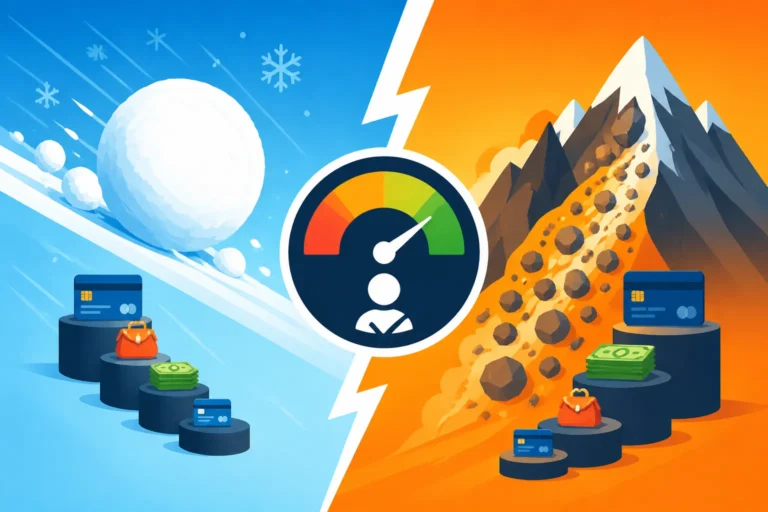
When tackling multiple debts, two popular strategies emerge: the debt avalanche and the debt snowball. While the snowball method focuses on psychological wins by paying off the smallest balances first, the debt avalanche is mathematically superior for speed and minimizing the total interest paid. Given your six-month timeline, speed is your absolute priority, making the debt avalanche the clear winner.
With the debt avalanche method, you prioritize paying down the credit card with the highest interest rate first, while making minimum payments on all your other cards. Once that highest-interest card is completely paid off, you take the money you were paying on it and add it to the payment of the next card with the highest interest rate. This creates a snowball of payments (hence the hybrid thinking) that rapidly reduces your overall interest burden and accelerates your debt repayment. This aggressive approach is explained in more detail in our guide on the Debt Snowball vs Debt Avalanche: Which Is Better?.
Here’s a simplified example of how you might apply it:
| Card | Balance | Interest Rate (APR) | Minimum Payment | Avalanche Payment Allocation |
|---|---|---|---|---|
| Card A | $7,000 | 24.99% | $140 | Extra $2,360 + $140 = $2,500 |
| Card B | $5,000 | 21.99% | $100 | $100 |
| Card C | $3,000 | 19.99% | $60 | $60 |
| Total | $15,000 | $300 | $2,660 (plus interest) |
This table assumes you are finding approximately $2,660 (plus actual interest for the month) each month to throw at the debt. The extra $2,360 on Card A is on top of its minimum payment.
Boosting Your Income and Cutting Expenses Drastically
Finding the necessary funds for such aggressive repayment often requires a dual approach: increasing your income and drastically cutting your expenses. You'll likely need to do both.
On the income side, consider temporary side hustles. Could you drive for a ride-share service like Uber or Lyft for 15-20 hours a week? Deliver food with DoorDash or Grubhub? Freelance your skills in writing, graphic design, or web development? Even selling unused items around your house on platforms like eBay, Facebook Marketplace, or local consignment shops can provide a quick influx of cash. Look at every single asset you have, from your time to your possessions, as potential fuel for your debt repayment fire. This isn't about long-term career changes, but rather about maximizing your earning potential for these six crucial months.
For expenses, it’s time to go through your budget with a fine-tooth comb. Every single line item needs to be scrutinized.
- Food: Ditch restaurants, takeout, and even most processed convenience foods. Meal prep with inexpensive staples like rice, beans, and seasonal vegetables. Pack your lunch every day.
- Entertainment: Cancel streaming services, gym memberships (if you can exercise at home or outdoors), and put a moratorium on concerts, movies, and expensive social outings. Look for free or low-cost activities.
- Transportation: Carpool, bike, or use public transport if possible. Consolidate errands to save gas.
- Subscriptions: Audit all your recurring subscriptions – many people find they're paying for services they barely use. Cancel them.
- Housing: While not always feasible in six months, consider if a temporary, cheaper living arrangement is an option, or if you could rent out a spare room. Even reducing utility usage diligently can save a few dollars.
The goal is to free up every possible dollar. It might feel uncomfortable, but remember, it’s temporary, and the freedom you gain will be immense.
Utilizing Balance Transfers and Personal Loans
Sometimes, the best offense is a good defense, and in debt repayment, that often means reducing your interest rate. A balance transfer credit card or a debt consolidation personal loan can be powerful tools if used wisely.
A Balance Transfer Cards: How They Work moves your existing high-interest credit card debt onto a new card, often offering an introductory 0% APR period for 12 to 18 months. If you can qualify for a card with a 0% APR for at least six months (or longer, giving you a buffer), this could save you hundreds, if not thousands, in interest, allowing every dollar you pay to go directly to the principal. However, be aware of balance transfer fees (typically 3-5% of the transferred amount) and ensure you can realistically pay off the entire $15,000 before the 0% APR period expires. If you don't, you'll be hit with the card's standard, often high, APR on the remaining balance. And, crucially, do not use the new card for any new purchases during this period.
Alternatively, a debt consolidation personal loan can roll all your credit card balances into one single loan with a fixed interest rate and a predictable monthly payment. Often, personal loan interest rates are lower than credit card APRs, especially if you have decent credit. This simplifies your payments and can reduce your overall interest cost. Lenders like Marcus by Goldman Sachs or LightStream are known for competitive personal loan rates for those with strong credit profiles. Shop around to compare rates and terms. Just like with a balance transfer, the key is to ensure the new loan’s interest rate genuinely saves you money and that you don't accumulate new credit card debt while paying off the loan.
Tactical Steps to Stay on Track
Aggressive repayment requires more than just a plan; it demands consistent action, unwavering discipline, and smart decision-making throughout the entire six months.
Negotiating with Creditors
Don't be afraid to pick up the phone and talk to your credit card companies. Seriously. Many people shy away from this, but you might be surprised at the options available, especially if you explain your commitment to paying down the debt quickly. You could call and ask for a lower interest rate, even temporarily. Explain your financial situation and your goal to pay off the $15,000 in six months. While they aren't obligated to help, many creditors prefer to work with customers rather than risk a default.
Some credit card companies also offer hardship programs or payment plans. These aren't ideal if your goal is rapid repayment, as they might involve closing the account or reporting a "settled" status, but they are options if you hit an unexpected snag. For your aggressive timeline, a lower interest rate is the most valuable negotiation point. Every percentage point you can drop saves you money and helps your payments go further against the principal.
Automating Payments and Tracking Progress
Consistency is non-negotiable for this sprint. Set up automatic payments for at least the minimum amounts on all your cards (if you have multiple and are using the avalanche method) or for your consolidated loan. This ensures you never miss a payment, which would not only incur late fees but also damage your credit score. For the extra, aggressive payments, it's often best to manually pay them a few days after your minimum has cleared, directly targeting the principal of your highest-interest debt.
Tracking your progress is also incredibly motivating. Create a visual tracker – a spreadsheet, a chart on your wall, even an app – where you can see your balances dropping each month. Seeing that $15,000 steadily decrease to $12,000, then $9,000, and so on, provides powerful psychological boosts that help you stay disciplined. This is key to maintaining momentum when the sacrifices feel heavy. You can use tools like Mint or YNAB (You Need a Budget) to help categorize spending and track debt payments in real-time.
Avoiding New Debt and Building an Emergency Fund
This is absolutely critical: while you're fiercely paying down $15,000, you must commit to not incurring any new credit card debt. Cut up your credit cards or put them away in a safe place, or even freeze them in a block of ice if that helps you avoid the temptation to use them. Every new purchase on credit undermines your progress and makes your goal exponentially harder.
Once your debt is completely paid off, or even as you get closer to the finish line, start shifting your focus to building an emergency fund. Aim for at least $1,000 to start, and then work towards 3-6 months' worth of living expenses. Having this buffer prevents you from falling back into debt if an unexpected expense arises, like a car repair or a medical bill. It’s a vital step in securing your long-term financial health and ensuring all your hard work wasn't just a temporary fix.
The Role of Credit-Building Tools
While your primary focus is debt elimination, it's worth noting how other tools can support your overall financial well-being, especially if your credit has taken a hit during a previous period of financial struggle. Once you're making good progress and have a handle on your debt, you might want to strengthen your credit profile for the future. For instance, a credit builder loan, offered by companies like Credit Strong, can be a beneficial tool.
A credit builder loan isn't about getting immediate cash; it's about making regular payments on a small loan that’s held in a savings account until you've paid it off. These on-time payments are reported to the credit bureaus, helping to build a positive payment history and improve your credit mix, two key factors that affect your credit score. It's not a direct debt repayment solution for your existing $15,000, but it can be a smart move after you've significantly reduced or eliminated your high-interest debt, or if you had a thin credit file to begin with and want to accelerate your credit building. This kind of tool can help solidify the positive habits you're forming. Our article on Credit Builder Loans Explained (Self, Kikoff & More) delves into this concept further.
The Impact on Your Credit Score and Future Financial Health
Successfully paying off $15,000 in credit card debt in six months isn't just about freeing up cash flow; it has profound positive implications for your credit score and your entire financial future.
How Rapid Repayment Affects Your Score
Your credit score is heavily influenced by your payment history and credit utilization. By aggressively paying off $15,000, you'll see positive changes in both areas.
- Payment History (35% of your FICO score): Consistently making large, on-time payments for six months will create a strong record of responsible behavior. This positive payment history is the single most important factor in your credit score.
- Credit Utilization (30% of your FICO score): As your balances drop from $15,000 to zero, your credit utilization ratio will plummet. This ratio compares the amount of credit you're using to your total available credit. When you have $15,000 in debt on, say, $20,000 of available credit, your utilization is 75%, which is very high and detrimental to your score. Bringing that down to 0% will cause a significant, positive jump in your credit score. Our guide on Credit Utilization: The Complete Guide explains this in detail.
- Amounts Owed (still related to utilization): Paying down debt shows you're managing your obligations effectively.
You might see your credit score increase by 50, 100, or even more points within these six months, depending on where you started. Imagine going from a "fair" or "good" score to a "very good" or even "excellent" one in half a year! This improved score will unlock better interest rates on future loans (mortgages, car loans), lower insurance premiums, and access to premium credit cards with better rewards. Understanding how credit scores work and what affects your credit score is key to appreciating these changes.
Life After Debt: Maintaining Momentum and Building Wealth
Once that final payment is made and the $15,000 is gone, take a moment to celebrate your incredible accomplishment. You worked hard, made sacrifices, and achieved an ambitious goal. But don't let that momentum fade! This is just the beginning of your journey to financial strength.
Here’s how to maintain that momentum:
- Continue Budgeting: Don't abandon your budget. Instead, reallocate the money you were using for debt payments towards new financial goals.
- Build Your Emergency Fund: As mentioned, this is paramount. Aim to save at least 3-6 months of living expenses in an easily accessible, separate savings account.
- Invest for the Future: Once your emergency fund is solid, start directing those freed-up funds towards investments, retirement accounts (like a 401k or IRA), or other long-term wealth-building vehicles.
- Use Credit Responsibly: If you kept your credit cards, use them sparingly and pay the statement balance in full every single month to avoid interest. This demonstrates ongoing responsible credit management and continues to build your credit score. Avoid using more than 10-20% of your available credit on any given card, even if you plan to pay it off.
- Set New Financial Goals: Whether it’s saving for a down payment on a house, a child’s education, or early retirement, having clear, compelling goals will help you maintain your financial discipline. Paying off $15,000 in six months proves you have the capability to achieve major financial milestones.
This period of aggressive debt repayment is more than just eliminating a balance; it's a bootcamp for your financial habits. The discipline, budgeting skills, and financial literacy you gain will serve you for a lifetime, paving the way for a truly secure and prosperous future. For those still working on tackling debt, our comprehensive guide on How to Pay Off Credit Card Debt Fast provides even more strategies.
Disclaimer
The information provided in this guide is for general educational and informational purposes only, and does not constitute financial, legal, or professional advice. While we strive to provide accurate and up-to-date information, individual financial situations vary, and it is recommended to consult with a qualified financial advisor or credit counselor for personalized advice tailored to your specific circumstances. Engaging in aggressive debt repayment strategies requires significant commitment and may involve risks; readers should carefully consider their financial capacity and seek expert guidance before making any financial decisions.