Does Maxing One Card but Not Others Hurt You?
You've got a few credit cards in your wallet, and for the most part, you're doing a fantastic job keeping those balances under control. But then, sometimes life throws a curveball, or you have a big, unavoidable expense, and suddenly one of your cards is looking a little – or a lot – heavier than the others. The natural question that pops into your head is, "If I max out just this one card, but keep my other cards nearly empty, will it really hurt my credit score?" It's a valid concern, and one that trips up many of us. This guide will walk you through exactly how your credit score handles uneven utilization and what you can do about it.
Understanding Credit Utilization: The Two Sides of the Coin
Credit utilization is a huge piece of your credit score, making up about 30% of your FICO score. It’s essentially how much of your available credit you’re actually using. But it’s not just a single, overarching number; credit scoring models look at this metric from two important angles: your overall utilization across all your cards and your individual utilization on each separate card.
Overall Utilization: The Big Picture
When we talk about credit utilization, most people immediately think of their total debt divided by their total credit limits. For instance, if you have three credit cards with a combined limit of $10,000, and you owe $2,000 across all of them, your overall credit utilization would be 20%. This is generally considered a good number. Lenders see that you’re responsible and not over-reliant on credit. Experts often suggest keeping your overall utilization below 30% for a healthy credit score, but even lower, like under 10%, is usually ideal for the best scores.
The scoring models are definitely weighing this total amount heavily. A lower overall utilization signals less risk to potential lenders, suggesting you have plenty of room to borrow if needed, but you're choosing not to. This is why many people focus intently on their total debt-to-limit ratio, often moving balances around to achieve that low overall percentage. It’s a smart move, but it’s only half the story. To really get a handle on this, understanding your Credit Utilization: The Complete Guide is crucial.
Individual Card Utilization: The Closer Look
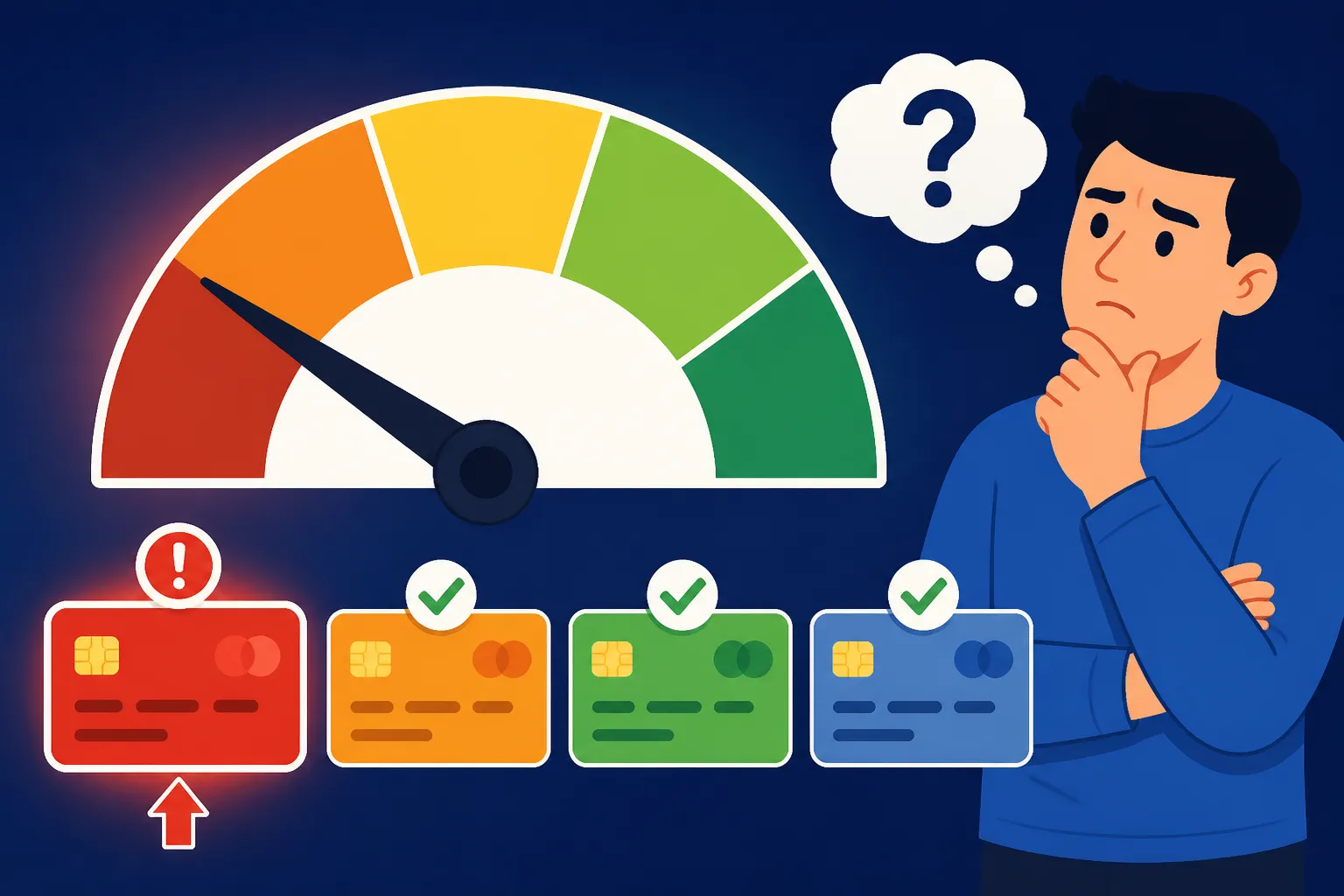
This is where the "maxing one card but not others" question truly comes into play. While your overall utilization is critical, credit scoring models also scrutinize the utilization on each individual credit card account. Imagine you have that same $10,000 total credit limit across three cards:
- Card A: $5,000 limit, $4,900 balance (98% utilization)
- Card B: $2,500 limit, $50 balance (2% utilization)
- Card C: $2,500 limit, $50 balance (2% utilization)
In this scenario, your overall utilization would still be low ($4,900 + $50 + $50 = $5,000 owed on $10,000 available, so 50% utilization). Now, 50% is higher than the recommended 30%, but it's still far from an ideal 98% on a single card. Even if your overall utilization was, say, 20%, if one card was maxed, it would still be a red flag.
Lenders and credit scoring algorithms view a maxed-out card as a sign of potential financial distress or over-extension, even if your other cards are pristine. It suggests that you might be relying too heavily on that one credit line, or perhaps that you're struggling to manage your finances across the board. This individual card utilization is just as important, if not more so, for certain scoring models and lenders, because it reveals a concentrated risk that a low overall percentage might otherwise mask.
The Direct Impact of a Maxed-Out Card on Your Score
So, to answer the burning question: yes, maxing out one credit card, even if your other cards have low balances, will hurt your credit score. It's not just about the aggregate; the specific details matter. The credit bureaus—Equifax, Experian, and TransUnion—receive data from lenders that includes not just your total balances, but also the balance and credit limit for each individual account.
FICO and VantageScore Models: What They See
Both the widely used FICO and VantageScore models incorporate individual card utilization into their calculations. While the exact weighting isn't publicly disclosed (it's proprietary, after all), a high balance on a single card is a recognized negative factor.
- FICO Scores: These scores are particularly sensitive to credit utilization. FICO considers both your overall utilization ratio and your utilization on individual revolving accounts. If one card is at or near its limit, it can significantly drag down your score, even if your other cards are perfectly managed. This signals a higher risk of default to the FICO algorithm, which is designed to predict how likely you are to miss payments in the future. Many lenders still heavily rely on FICO scores for lending decisions, from mortgages to personal loans. You can learn more about How Credit Scores Work: The Complete Guide.
- VantageScore: VantageScore models also take into account individual card utilization, though their methodology might differ slightly from FICO. They too are looking for signs of financial stress, and a maxed-out card is a clear indicator. VantageScore often emphasizes trends in credit behavior, so if one card suddenly shoots up in balance and stays there, it will likely be viewed negatively.
The bottom line is that neither major scoring model will simply average out your good cards with your bad card. They look at the granular data. This is one of the What Affects Your Credit Score? The 5 Factors that can really sting if you're not careful.
Perceived Risk: Why Lenders Get Spooked
Think about it from a lender's perspective. If you apply for a new loan or credit card, they pull your credit report and see that one of your accounts is nearly maxed out. Even if your other accounts are fine, that maxed-out card represents a higher immediate risk. It suggests:
- Financial Strain: You might be struggling to make ends meet, relying on credit to cover daily expenses.
- Over-reliance on Credit: You've used up nearly all the credit available on one line, which could be a precursor to using up all your credit everywhere.
- Higher Probability of Default: Statistics show that consumers who max out credit cards are statistically more likely to miss payments or default compared to those who maintain low balances.
This perceived risk can lead to a few unpleasant outcomes: you might be denied new credit, offered less favorable terms (like higher interest rates), or even see your existing credit limits reduced. Lenders want to see a pattern of responsible credit use across all your accounts, not just a few.
Practical Strategies to Avoid Maxing Out a Single Card
It’s easy to get into a situation where one card takes the brunt of your spending. Life happens, big purchases come up, or sometimes it's simply the card you use for rewards. But with a bit of strategy, you can minimize the impact or avoid maxing out a single card altogether.
Spreading Out Balances Smartly
If you know you're going to make a large purchase, or if you already have a high balance on one card, consider using other cards with available credit, assuming you have the discipline to pay them all off. The goal is to keep all your individual card utilization ratios low.
For example, instead of putting a $3,000 appliance purchase on your credit card with a $3,500 limit, consider splitting the cost between that card and another one with a $2,000 limit, putting $1,500 on each. This way, neither card looks "maxed." If you're looking for ways to manage existing high balances, a balance transfer card might be an option, but do your research on Is a Balance Transfer Worth It? first. The key is to avoid letting any single card's utilization creep above that 30% mark, and ideally, keep it even lower.
Paying Down High Balances Proactively
The most effective way to address a maxed-out card is to pay it down. If you have extra cash, prioritize the card with the highest utilization. Even if it's not your highest interest rate card (that would be the debt avalanche method), focusing on lowering that utilization percentage can provide a quick boost to your credit score. Remember, credit utilization has no memory, so as soon as your reported balance drops, your score can improve.
For those struggling to chip away at significant debt, getting a handle on How to Pay Off Credit Card Debt Fast is essential. Even small, consistent payments beyond the minimum can make a big difference over time. If you're disciplined, you could also consider a debt consolidation loan, which would move your high credit card balance into a single installment loan, instantly dropping your credit card utilization. Companies like Credit Strong offer credit builder loans, which, while not direct debt consolidation, can help you build a positive payment history and diversify your credit mix, making your overall financial picture look stronger even if you're working on paying down that one card.
Seeking Credit Limit Increases Cautiously
A higher credit limit automatically lowers your utilization if your balance stays the same. For example, if you have a $1,000 balance on a $2,000 limit card, your utilization is 50%. If your limit is increased to $4,000, that same $1,000 balance becomes 25% utilization. This can be a great way to improve your score, but it comes with a significant caveat: you must have the discipline not to spend the new, available credit. If you get a limit increase and then spend up to that new limit, you'll be right back where you started, potentially worse off.
Before requesting an increase, check if your issuer performs a hard inquiry for such requests, as a hard inquiry can temporarily ding your score. Many card issuers, especially if you have a good payment history, will periodically offer automatic credit limit increases without a hard pull. Sometimes it's better to wait for those. If you’re wondering if this is the right move for you, our guide on Should You Ask for a Credit Limit Increase? offers more insights.
The Long-Term Consequences and How to Recover
While the immediate dip in your credit score from a maxed-out card is concerning, there are also longer-term consequences that can impact your financial well-being. Understanding these can motivate you to keep all your credit utilization in check.
Higher Interest Costs and Debt Traps
A maxed-out credit card often means you're carrying a high balance, which in turn means you're paying a lot in interest. Credit card interest rates can be quite high, sometimes 20% or even higher. If you're only making minimum payments on a maxed-out card, a significant portion of that payment goes straight to interest, barely touching the principal. This can create a debt trap, making it incredibly difficult to pay off the card and free up your credit limit.
Consider a credit card with a $5,000 limit and a 25% APR. If you max it out and only make the typical 1-2% minimum payment, it could take you years, even decades, to pay it off, costing you thousands in interest. This cycle not only keeps your utilization high, but it also drains your financial resources, making it harder to save or invest for other goals. Sometimes, a credit builder loan, like those from Credit Strong, can offer a structured savings component while building credit, which might give you an alternative avenue to save while slowly paying down that higher-interest card.
Rebuilding Your Credit After a Maxed Card
The good news is that credit utilization is one of the most dynamic factors in your credit score. Unlike negative marks like late payments, which stay on your report for years, a high utilization ratio will improve as soon as your lender reports a lower balance to the credit bureaus.
Here's a straightforward recovery plan:
- Prioritize Payment: Focus aggressively on paying down that maxed-out card. If you can pay it down to under 30% utilization, you should see a noticeable improvement in your score fairly quickly. Our article on How to Lower Your Credit Utilization Fast has some excellent tips.
- Maintain Payments on Other Accounts: Don't neglect your other cards. Keep making all payments on time to avoid further damage to your payment history, which is the biggest factor in your credit score.
- Monitor Your Score: Use free credit monitoring services to track your progress. As you pay down the balance, you'll see your score start to rebound.
- Consider a Credit Builder Product: If you're struggling to get traditional credit or need to establish a more diverse credit history to offset high credit card utilization, products like a Credit Strong credit builder loan can be a strategic move. These loans typically help you save money while reporting positive payments to all three major credit bureaus, strengthening your overall credit profile.
The table below illustrates how different utilization scenarios, especially on a single card, can impact your credit profile.
| Scenario | Overall Utilization | Card 1 Utilization | Card 2 Utilization | General Score Impact |
|---|---|---|---|---|
| Ideal | 5% ($100/$2000) | 5% ($50/$1000) | 5% ($50/$1000) | Excellent |
| Good | 20% ($400/$2000) | 20% ($200/$1000) | 20% ($200/$1000) | Good to Very Good |
| Acceptable | 29% ($580/$2000) | 29% ($290/$1000) | 29% ($290/$1000) | Fair to Good |
| One Card Maxed, Others Low | 55% ($1100/$2000) | 95% ($950/$1000) | 15% ($150/$1000) | Significant Negative |
| All Cards High | 80% ($1600/$2000) | 80% ($800/$1000) | 80% ($800/$1000) | Very Negative |
As you can see, the "one card maxed, others low" scenario, despite potentially having an "acceptable" overall utilization in some extreme cases (though often it pushes overall up), still incurs a "Significant Negative" impact due to that single high utilization ratio. Knowing this should empower you to make smarter choices about how you spread your spending and attack your debt. Improving your credit score takes time and consistent effort, but focusing on utilization can often yield faster results than other credit-building activities.
Disclaimer
The information provided in this article is for general educational purposes only and should not be considered financial or legal advice. Always consult with a qualified financial professional for advice tailored to your specific situation.