How to Pay Off $20,000 in Credit Card Debt in 18 Months
Feeling suffocated by credit card statements and wondering how you'll ever dig yourself out? You're definitely not alone. Many people find themselves in a tough spot with credit card debt, and facing a balance of $20,000 can feel like scaling a mountain. But here's the good news: with a solid plan and consistent effort, paying off $20,000 in credit card debt within 18 months is absolutely achievable. This guide will walk you through the practical steps, strategies, and mindset shifts you'll need to conquer your debt and reclaim your financial freedom.
Understanding the Landscape of Your Debt
Before you can tackle a problem, you need to understand it inside and out. When it comes to credit card debt, this means knowing exactly what you owe, to whom, and at what cost. Diving into the details might feel intimidating, but it's the most critical first step towards creating an effective payoff plan.
Calculating Your Monthly Payment Target
The first thing to wrap your head around is the sheer number. You're aiming to pay off $20,000 in 18 months. Let's do some quick, basic math without interest for a moment: $20,000 divided by 18 months comes out to approximately $1,111.11 per month. Now, that's just the principal. Realistically, credit card interest rates can be incredibly high, easily ranging from 18% to 29% APR, or even more. This interest can add hundreds, if not thousands, of dollars to your total repayment amount if not managed aggressively.
To truly hit your 18-month goal, you'll need to pay more than just the principal payment each month, especially on cards with higher interest rates. The faster you reduce the principal, the less interest accrues over time. This aggressive payment strategy is what makes the 18-month timeline realistic, otherwise, interest alone could derail your progress. It means every extra dollar you can throw at your debt will significantly shorten your timeline and save you money in the long run.
Gathering All Your Account Details
The next crucial step is to get hyper-specific about each and every credit card you owe money on. This isn't just about the total $20,000; it's about breaking down that big number into manageable pieces. Grab your most recent statements, or log into your online accounts, and jot down the following for each card:
- Creditor Name: Who do you owe? (e.g., Visa, Mastercard, store card)
- Current Balance: The exact amount you currently owe on that specific card.
- Interest Rate (APR): This is vital. Identify which cards are costing you the most in interest.
- Minimum Monthly Payment: What is the absolute lowest amount you must pay to avoid late fees and negative marks on your credit report?
- Due Date: Keep track of when each payment is due to avoid any mishaps.
Once you have this information laid out, perhaps in a simple spreadsheet or even just on a piece of paper, you'll have a clear snapshot of your debt landscape. This transparency will be your superpower as you devise your attack plan. It also helps you understand How Credit Card Debt Affects Your Credit Score and how managing it effectively can lead to improvements.
Crafting Your Attack Plan: Debt Reduction Strategies
Now that you have a clear picture of your debt, it's time to choose your weapon. There are several proven strategies for paying down debt, each with its own advantages. The key is to pick the one that best suits your personality and stick with it.
The Debt Avalanche Method
The debt avalanche method is a financially savvy approach that prioritizes saving money on interest. Here’s how it works: you make minimum payments on all of your credit cards except for the one with the highest interest rate. On that highest-APR card, you throw every extra dollar you can find. Once that card is paid off entirely, you take the money you were paying on it (minimum payment + extra payments) and add it to the minimum payment of the card with the next highest interest rate. You continue this snowballing effect until all your debts are gone.
Pros of the Debt Avalanche: This method saves you the most money in the long run because you eliminate the most expensive debt first. It's purely logical and minimizes the total interest you'll pay over the 18 months. If your goal is to be as efficient as possible with your money, this is generally the way to go. You’re essentially cutting off the highest cost first, which can really add up when you're dealing with high-interest credit cards. Understanding Credit Card APR and Interest Explained can further highlight the financial benefits of this method.
Cons of the Debt Avalanche: The main drawback is psychological. If your highest-interest debt also happens to be a large balance, it might take a while to see that first account completely paid off. This lack of immediate "wins" can sometimes be discouraging, making it harder to stay motivated. However, if you're disciplined and focused on the financial benefits, this method is highly effective for paying off $20,000 in 18 months efficiently.
The Debt Snowball Method
The debt snowball method is all about building momentum and celebrating small victories. With this approach, you make minimum payments on all your credit cards except for the one with the smallest balance. You direct all your extra money toward paying off that smallest debt. Once that card is gone, you take the money you were paying on it (minimum payment + extra payments) and add it to the minimum payment of the card with the next smallest balance. You repeat this process, rolling the payments from one paid-off card to the next, until all your credit card debt is erased.
Pros of the Debt Snowball: The biggest advantage here is the psychological boost you get from quickly paying off smaller debts. Seeing those balances hit zero can be incredibly motivating and help you stay committed to your plan, especially when facing a substantial total like $20,000. It provides tangible proof that your hard work is paying off, which can be invaluable over an 18-month journey. For many, this emotional win helps them stick with the plan.
Cons of the Debt Snowball: While highly motivating, the debt snowball method might cost you more in interest over time compared to the avalanche method, especially if your smallest debts also have lower interest rates. You might end up paying off a low-interest card quickly while a high-interest, larger balance continues to accrue significant interest. For a deep dive into comparing these two, you might want to read Debt Snowball vs Debt Avalanche: Which Is Better?.
Exploring Balance Transfers and Consolidation Loans
Sometimes, the best offense is a good defense. If you have good credit, a balance transfer credit card or a debt consolidation loan could be powerful tools in your arsenal. These options aim to reduce the interest you're paying, making your monthly payments go further towards the principal.
Balance Transfer Cards: These cards allow you to move high-interest balances from multiple credit cards onto a single card, often with a promotional 0% APR for an introductory period (e.g., 12, 18, or even 21 months). This can be a game-changer because every dollar you pay during that introductory period goes straight to the principal, not interest. However, be mindful of balance transfer fees (typically 3-5% of the transferred amount) and ensure you can pay off the balance before the promotional period ends and the regular, often high, APR kicks in. Make sure to understand Balance Transfer Cards: How They Work before committing.
Debt Consolidation Loans: A personal loan taken out to pay off multiple credit cards can also simplify your payments and potentially secure a lower, fixed interest rate. Instead of juggling several credit card payments at varying APRs, you'd have one loan payment at a predictable rate. This can be easier to manage and motivate you to stick to your 18-month plan. The key here is to qualify for a loan with a lower interest rate than your current credit card rates. Lenders look for a decent credit score and a stable income for these types of loans. If your credit isn't stellar, you might explore options like building your credit first. Products from companies like Credit Strong offer credit builder loans that report your payments to credit bureaus, which could potentially improve your score over time and make you eligible for better consolidation options down the line.
Here's a quick comparison of the two main strategies:
| Feature | Debt Avalanche Method | Debt Snowball Method |
|---|---|---|
| Focus | Highest interest rate first | Smallest balance first |
| Cost Savings | Maximizes savings on interest | May cost more in interest over time |
| Motivation | Less immediate "wins," relies on discipline | Frequent "wins" from paying off small debts |
| Efficiency | Most mathematically efficient | High psychological efficiency |
| Best For | Individuals highly disciplined and cost-conscious | Individuals needing motivation and quick wins |
It's also worth noting the difference between Debt Consolidation vs Credit Repair: What's the Difference? when considering your options. While consolidation focuses on combining and streamlining debt, credit repair focuses on improving your overall credit health.
Supercharging Your Payments: Finding Extra Cash
To pay off $20,000 in just 18 months, you're going to need to do more than just make minimum payments. That means finding extra money in your budget to throw at your debt each month. This is where the rubber meets the road, and it often requires a two-pronged approach: cutting expenses and increasing income.
Budgeting for Aggressive Debt Paydown
Creating a strict, detailed budget is non-negotiable for this goal. It's not about deprivation, but about intentional spending. Start by tracking every dollar you spend for a month to see where your money actually goes. You might be surprised. Once you have this data, categorize your expenses into "needs" (housing, utilities, food, transportation) and "wants" (dining out, entertainment, subscriptions, new clothes).
Now, get ruthless with your "wants." Every dollar that isn't absolutely essential needs to be redirected to debt. Can you cancel a streaming service? Cook more meals at home? Limit impulse purchases? Even small cuts can add up to significant savings when combined. For example, if you typically spend $100 a week on dining out, cutting that in half frees up an extra $200 a month. That's a huge boost to your debt payments. This intentional approach helps you understand How to Pay Off Credit Card Debt With a Tight Budget.
Think about subscriptions you no longer use, gym memberships you rarely attend, or even negotiating lower rates on things like your internet or car insurance. Every little bit counts. This might be a temporary sacrifice, but the freedom from $20,000 in debt will be well worth it. You should also regularly check How to Check Your Credit Score for Free to see how your efforts are impacting your financial health.
Boosting Your Income Streams
Sometimes, there's only so much you can cut from your budget without feeling truly deprived. That's when it's time to explore increasing your income. Even a few hundred extra dollars a month can make a huge difference in hitting your 18-month target. Consider the following:
- Side Hustles: The gig economy offers countless opportunities. Can you drive for a ride-sharing service, deliver food, freelance your skills (writing, graphic design, web development), or offer pet-sitting services? Even a few hours a week can generate significant additional income. Sites like Upwork or Fiverr can connect you with clients if you have marketable skills.
- Selling Unused Items: Look around your home. Do you have old electronics, clothes, furniture, or collectibles gathering dust? Platforms like eBay, Facebook Marketplace, or local consignment shops can turn those unused items into cash. A decluttered home and less debt is a win-win!
- Asking for a Raise: If you're employed, evaluate your performance and contributions. If you haven't had a raise in a while and you're consistently exceeding expectations, prepare a case and ask your boss for one. The worst they can say is no, and you might be pleasantly surprised.
- Temp Work or Overtime: If your current job offers overtime, consider picking up extra shifts, even temporarily. Similarly, exploring temporary assignments through staffing agencies could provide a short-term income boost.
Remember, this isn't forever. This is an 18-month sprint to financial freedom. Any extra income you generate should be immediately directed to your debt, not absorbed into your regular spending. Utilizing credit builder accounts, such as those from Credit Strong, could also indirectly boost your income potential down the line by improving your credit score, which can open doors to better loan rates or even lower insurance premiums in the future.
Maintaining Momentum and Avoiding Pitfalls
Paying off a large amount of debt quickly requires not just a plan, but also resilience and a proactive approach to potential roadblocks. It's a marathon, not a sprint, even when compressed into 18 months.
Preventing New Debt Accumulation
One of the biggest pitfalls when aggressively paying down existing credit card debt is falling back into old habits and accumulating new debt. This can feel like taking two steps forward and one step back, or even worse. To avoid this, consider these strategies:
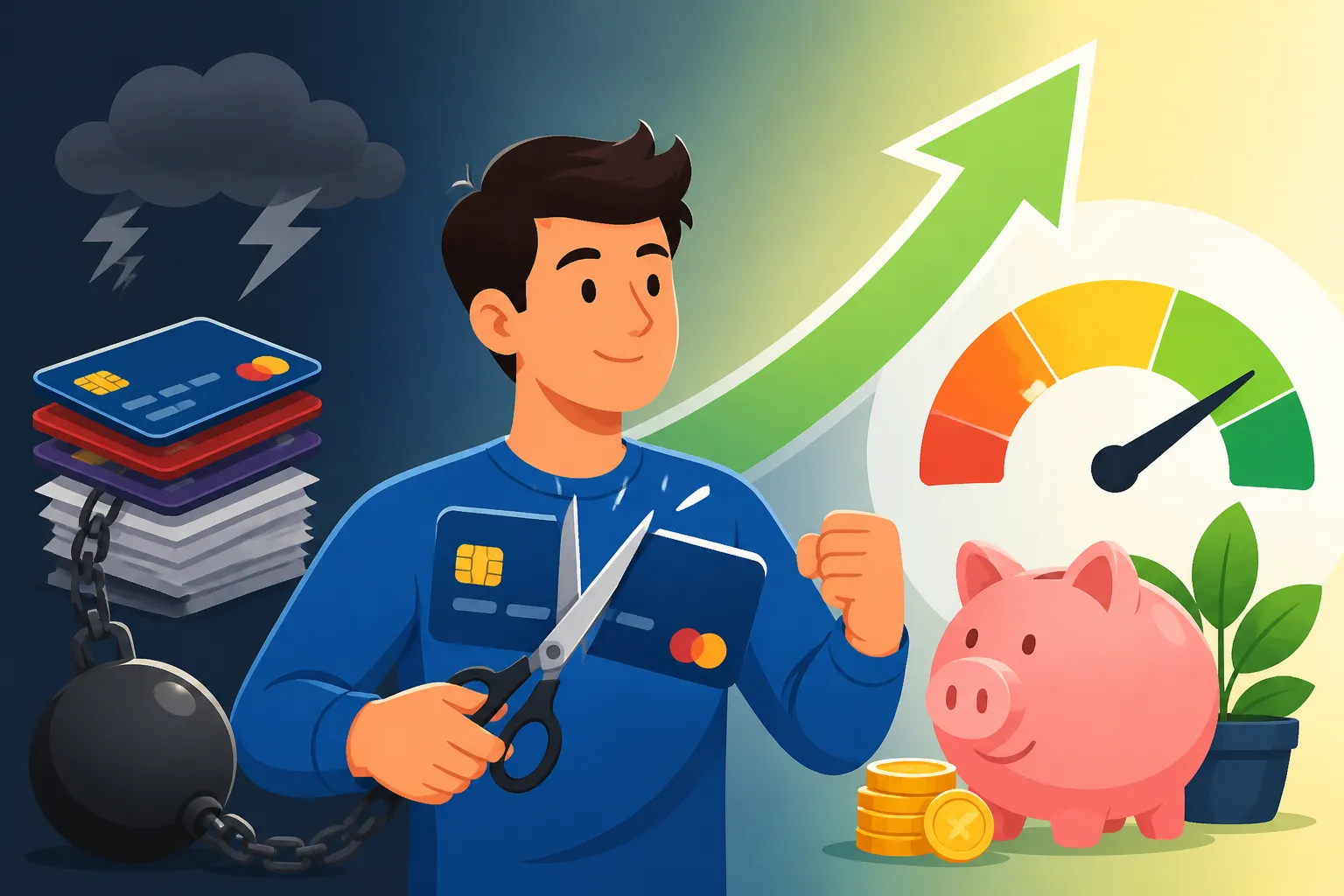
- Put Credit Cards Away: Literally. Freeze them in a block of ice, put them in a safe, or even temporarily close some accounts if you trust yourself not to reopen them immediately. The goal is to make it inconvenient to use them for impulse purchases.
- Cash-Only Diet: For certain spending categories like discretionary purchases or groceries, try using only cash. When the cash is gone, it's gone. This forces a hard stop on spending.
- Identify Triggers: What situations or emotions lead you to use credit cards? Is it stress shopping, boredom, or keeping up with others? Recognize these triggers and develop healthier coping mechanisms. Maybe it's going for a walk, calling a friend, or starting a new hobby instead of hitting the online shopping cart.
- Emergency Fund: While you're aggressively paying down debt, it's crucial to have a small emergency fund (even $1,000-$2,000) set aside. This prevents you from relying on credit cards when unexpected expenses pop up, like a car repair or a sudden medical bill. This buffer can be the difference between staying on track and sliding back into debt. Learning How to Use a Credit Card to Build and Keep Good Credit for essential purchases after this period is also important.
Monitoring Progress and Staying Motivated
Consistency is key, but it's hard to stay consistent if you don't see the impact of your efforts. Regularly monitoring your progress can provide the motivation you need to keep going.
- Track Everything: Create a simple visual tracker (a spreadsheet, a chart on the wall, or an app) to see your debt balances decrease. Seeing the numbers shrink is incredibly powerful. Update it weekly or monthly.
- Celebrate Milestones: Did you pay off your first card? Knock $5,000 off the total? Reach the halfway point? Acknowledge these wins! Your celebrations don't have to be expensive; a special home-cooked meal, a movie night, or a small, non-material reward can be enough to keep your spirits high. This positive reinforcement is critical during a challenging journey.
- Find an Accountability Partner: Share your goal with a trusted friend or family member. Having someone to check in with, celebrate with, or even just vent to, can make a huge difference. You might also want to explore How to Raise Your Credit Score (Step-by-Step) to see how your efforts are being reflected.
- Revisit Your "Why": Why do you want to be debt-free? Is it for a new home, to reduce stress, or to save for retirement? Keep that "why" front and center. Write it down, put it on your fridge, and remind yourself of the future you're building. This personal connection to your goal is a powerful motivator.
When to Seek Professional Help
Even with the best intentions and a solid plan, sometimes the debt feels too overwhelming to tackle alone, or you might hit unexpected roadblocks. There's no shame in seeking professional help; it can be the smartest move you make.
- Credit Counseling Agencies: Non-profit credit counseling agencies, such as the National Foundation for Credit Counseling (NFCC), can offer invaluable assistance. They can help you create a personalized budget, negotiate with creditors, and even set up a Debt Management Plan (DMP). In a DMP, you make one monthly payment to the agency, which then distributes it to your creditors, often at reduced interest rates. This can significantly simplify your repayment and make your 18-month goal more attainable.
- Financial Therapists: If you find that your debt issues are tied to emotional spending, anxiety, or other psychological factors, a financial therapist can help you address the root causes of your financial behavior.
- Legal Advice: In extreme cases, such as harassment from debt collectors or if you're considering bankruptcy, consulting with an attorney specializing in consumer law is crucial. Knowing How to Freeze Debt Collector Contact Cease & Desist can be a powerful tool if you're dealing with aggressive collection tactics.
Remember, these professionals are there to help you, not judge you. Reaching out shows strength and a commitment to solving your financial challenges. While you're getting your financial house in order, consider looking into tools like Credit Strong for credit builder loans, which can not only help improve your credit score but also establish a positive payment history, making future financial endeavors smoother. Ultimately, the journey to becoming debt-free in 18 months, especially with a significant amount like $20,000, is a testament to your determination and careful planning.
Disclaimer
This article is for general informational purposes only and does not constitute professional advice. Laws, prices and regulations vary by location and change over time. Consult a qualified professional for guidance on your specific situation.