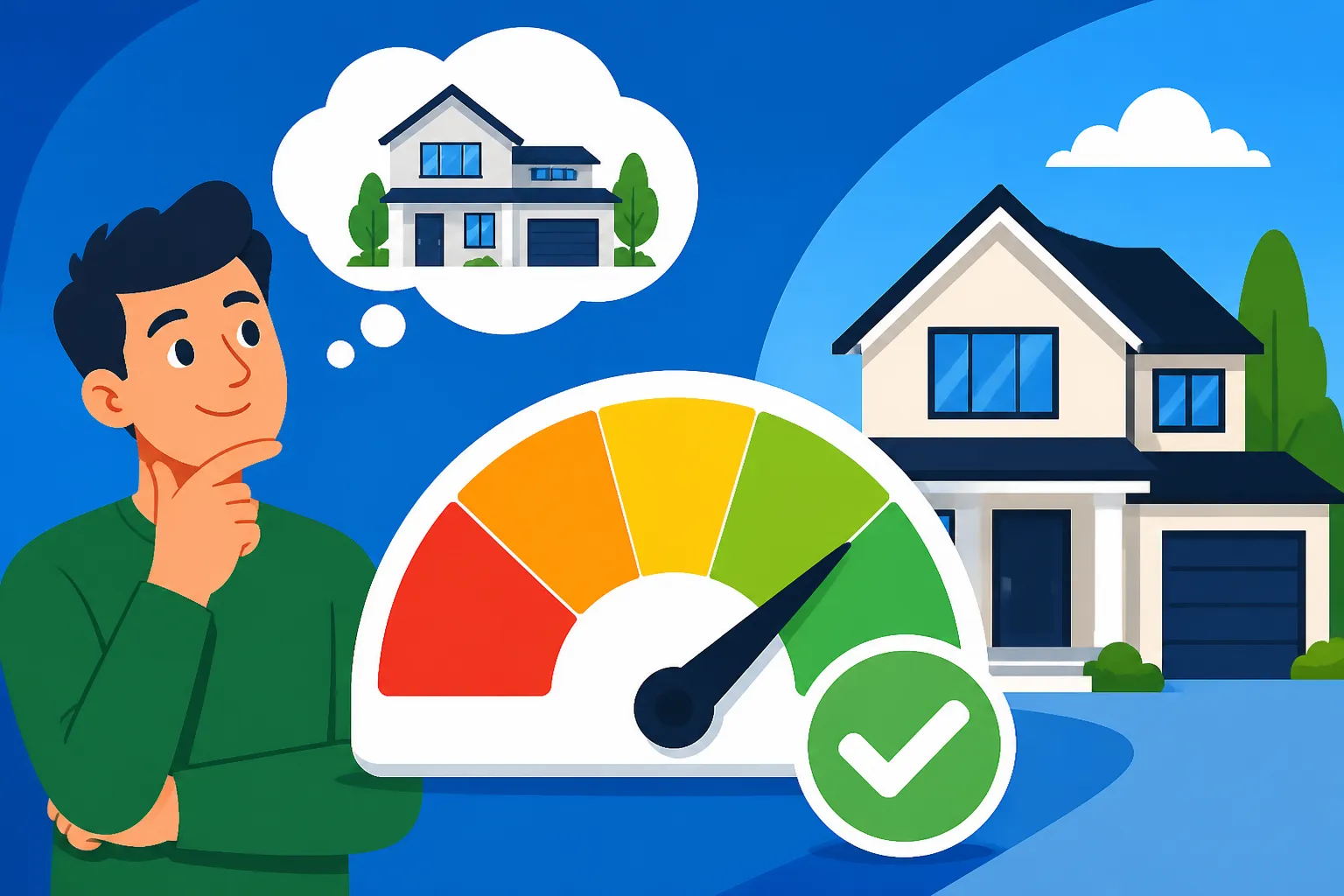
What Can You Get With a 620 Credit Score? (Buy a House)
It’s a truly frustrating moment when you check your credit score, see a number like 620, and wonder if your dream of owning a home is suddenly out of reach. Many folks feel a knot in their stomach, thinking a less-than-perfect score means a permanent lockout from the housing market. But take a deep breath; a 620 credit score doesn't automatically close the door on homeownership. This guide will walk you through what you can realistically expect when buying a house with a 620 credit score and what steps you can take to make that dream a reality.
Understanding Your 620 Credit Score
When you see that 620 number, it’s natural to feel a mix of emotions. Is it good? Is it bad? What does it really mean in the grand scheme of things? Let's break down where a 620 credit score typically stands and what might be contributing to it.
Where a 620 Score Sits on the Spectrum
A 620 credit score usually falls into the "Fair" category for most widely used scoring models like FICO and VantageScore. While it's certainly not in the "Excellent" or "Very Good" range, it's also a significant step up from "Poor" or "Very Poor." Think of it as being in the middle of the road. Lenders often view scores in this range as showing some credit history, but perhaps with a few bumps along the way, or maybe not a very long credit history yet.
For example, a FICO score scale generally looks something like this:
- Exceptional: 800-850
- Very Good: 740-799
- Good: 670-739
- Fair: 580-669
- Poor: 300-579
As you can see, a 620 is comfortably within that "Fair" range. This means you’re not likely to get the absolute best interest rates or the most lenient terms available, but you're also not completely shut out from borrowing. It often means you'll have fewer options and potentially higher costs compared to someone with a score in the "Good" or "Very Good" category. Lenders see a 620 and think, "Okay, there's some risk here, but it's manageable if other factors align."
The Factors Influencing Your 620 Score
Your credit score isn't just a random number; it's a snapshot created from various pieces of information on your credit report. If you're sitting at a 620, it's likely a combination of these factors is at play.
The five main components that make up your FICO score are:
- Payment History (35%): This is the biggest piece of the pie. A 620 often suggests you might have a few late payments on your record, or maybe even a collection account. Even one missed payment can have a significant impact on your score, especially if it's recent.
- Credit Utilization (30%): This refers to how much of your available credit you're actually using. If you have, say, a $10,000 credit limit across all your cards and you consistently carry balances close to that limit (e.g., $7,000-$8,000), your credit utilization is high. Keeping this ratio below 30% is generally recommended for a good score. A 620 might indicate you're utilizing a higher percentage of your available credit.
- Length of Credit History (15%): This looks at how long your credit accounts have been open. If you're newer to credit, or if you've closed older accounts, your average age of accounts might be pulling your score down.
- Credit Mix (10%): Lenders like to see that you can handle different types of credit responsibly, such as a mix of revolving credit (credit cards) and installment loans (car loans, student loans). If your credit profile is heavily skewed to one type, it might not be as strong.
- New Credit (10%): Opening several new credit accounts in a short period can temporarily lower your score because it looks like you might be taking on too much debt. Each hard inquiry associated with a new application can also ding your score a few points.
Understanding these factors is crucial because it helps you identify why your score is 620 and, more importantly, what specific actions you can take to improve it. It's not about magic; it's about addressing these core components.
Homeownership with a 620 Credit Score: The Reality
So, you have a 620 credit score and you're dreaming of a white picket fence (or at least a place of your own). The good news is that buying a house with a 620 credit score is possible. The not-so-good news is that it might come with some caveats. You'll likely have fewer options than someone with a higher score, and the terms of your loan might not be as favorable.
Navigating Mortgage Options for a 620 Score
Not all mortgages are created equal, especially when it comes to credit score requirements. With a 620 score, certain loan types become more accessible, while others might be a bit more challenging.
FHA Loans: A Common Path
For many first-time homebuyers or those with lower credit scores, an FHA (Federal Housing Administration) loan is often the most accessible option. The FHA doesn't directly lend money; instead, it insures loans made by approved lenders. This insurance protects the lender if you default, making them more willing to take on borrowers with less-than-perfect credit.
- Credit Requirements: The FHA minimum credit score requirement is actually 500 for a 10% down payment and 580 for a 3.5% down payment. So, your 620 score puts you above both of those minimums. This is great news!
- What to Expect: While a 620 is above the FHA minimum, individual lenders can (and often do) set their own higher minimums, called "overlays." Some FHA lenders might prefer a 640 or 660 score. However, many reputable lenders, including some larger banks and dedicated mortgage companies, will work with a 620 score. You might still face a slightly higher interest rate than someone with an excellent score, but it's generally competitive for your credit tier. You will also need to pay for Mortgage Insurance Premiums (MIP), which includes both an upfront premium and an annual premium, for the life of the loan or until you refinance to a conventional loan with sufficient equity.
VA Loans: A Lifeline for Veterans
If you're a veteran, active-duty service member, or eligible surviving spouse, a VA loan is another fantastic option. These loans are backed by the U.S. Department of Veterans Affairs and offer incredible benefits, including no down payment and no private mortgage insurance.
- Credit Requirements: The VA does not set a minimum credit score. Instead, they require lenders to assess your "creditworthiness." While there's no official floor, most VA-approved lenders look for a credit score of at least 620, or sometimes 640. So, your 620 puts you right in the sweet spot for many VA lenders.
- What to Expect: With a 620, you should have a good chance of qualifying for a VA loan, assuming you meet the service requirements and have a stable income. The interest rates are typically very competitive, often better than FHA loans for comparable credit scores. The biggest advantage here is the potential for 0% down, which can significantly reduce the upfront cash you need to buy a home.
Conventional Loans: A Tougher Climb
Conventional loans are not government-insured or guaranteed. They adhere to guidelines set by Fannie Mae and Freddie Mac. While they offer more flexibility in some areas (like potentially avoiding mortgage insurance with a 20% down payment), their credit score requirements are generally higher.
- Credit Requirements: Most conventional lenders prefer a minimum credit score of 620, but this is truly the bottom end of their acceptable range. Many will look for 640, 660, or even 680 and above to offer favorable terms.
- What to Expect: With a 620, qualifying for a conventional loan might be more challenging. If you do qualify, you'll likely face a higher interest rate and stricter requirements for your debt-to-income ratio (DTI) and down payment. You'll almost certainly need to pay for Private Mortgage Insurance (PMI) if your down payment is less than 20% of the home's purchase price. This PMI adds to your monthly housing expense, although unlike FHA's MIP, it can typically be canceled once you reach 20% equity in your home.
The Impact of a 620 Score on Loan Terms
The reality is that your credit score directly influences the terms of your mortgage. A 620 score tells lenders you might be a slightly higher risk, and they compensate for that risk in a few ways.
- Higher Interest Rates: This is perhaps the most significant impact. Lenders offer better interest rates to borrowers with higher credit scores because they are seen as less likely to default. With a 620, you can expect to pay a higher interest rate compared to someone with a 700+ score. Over the life of a 15 or 30-year mortgage, even a half-percentage point higher interest rate can mean tens of thousands of dollars in additional costs. For example, on a $300,000 loan, a 0.5% higher interest rate could add over $50,000 in interest payments over 30 years.
- Increased Down Payment Requirements: While FHA and VA loans offer low or no down payment options, conventional loans might demand a larger down payment from borrowers with a 620 score to offset the perceived risk. Instead of a typical 3% or 5% down, you might be asked for 10% or more. This means you need more cash upfront, which can be a hurdle for many potential homebuyers.
- Private Mortgage Insurance (PMI) or Mortgage Insurance Premium (MIP): As mentioned, if you get a conventional loan with less than 20% down, you'll pay PMI. For FHA loans, you'll pay MIP. These are extra monthly costs that protect the lender, not you. With a lower credit score, the cost of this insurance might be slightly higher, adding another layer to your monthly expenses.
- Stricter Underwriting: Lenders might scrutinize other aspects of your financial situation more closely. They’ll dig deeper into your income stability, your employment history, and your debt-to-income ratio to ensure you can truly afford the monthly payments. You might also need to provide more documentation than a borrower with an excellent score.
Here's a quick comparison of what you might encounter with a 620 credit score across different mortgage types:
| Mortgage Type | Minimum Credit Score (General) | Down Payment (Typical for 620) | Mortgage Insurance | Interest Rate (Relative to High Score) | Ease of Approval with 620 |
|---|---|---|---|---|---|
| FHA Loan | 580 (for 3.5% down) | 3.5% or more | Required (MIP) | Moderate-High | Good |
| VA Loan | No official minimum (Lender discretion) | 0% (if eligible) | No | Low-Moderate | Good (for eligible veterans) |
| Conventional | 620 | 5-20% (often higher than FHA) | Required if <20% down (PMI) | High | Challenging |
It's clear that while possible, a 620 score means you’ll need to be savvy about your loan options and prepared for potentially less favorable terms. This table really highlights why it’s worth exploring all avenues and weighing the pros and cons of each.
Strategies to Strengthen Your Home Buying Position with a 620 Score
Even if you’re able to qualify for a mortgage with a 620 credit score, it’s always a good idea to work on improving that score and strengthening your overall financial profile. A higher score means better loan terms, saving you a significant amount of money over the long haul. Plus, it just gives you more confidence and options.
Practical Steps to Improve Your Credit Score
Improving your credit score isn't an overnight fix, but consistent effort can yield great results. Here are some actionable steps you can take to move that 620 into the "Good" range and beyond.
Prioritize On-Time Payments
This is the bedrock of good credit. Payment history makes up 35% of your FICO score, so consistent, on-time payments are paramount. If you have a 620 score, there's a good chance you've had a late payment or two in the past. Your goal now is to establish a flawless payment record moving forward.
- Set up reminders: Use calendar alerts, payment apps, or automatic payments to ensure you never miss a due date. Even being a day late can hurt.
- Pay at least the minimum: Always pay at least the minimum amount due on all your credit accounts. Ideally, pay more, but hitting the minimum by the due date is critical.
- Catch up on delinquent accounts: If you have any accounts that are 30, 60, or 90 days past due, get them current as quickly as possible. The longer an account is delinquent, the more damage it does to your score.
Reduce Your Credit Utilization
Your credit utilization ratio (how much credit you use vs. how much you have available) accounts for 30% of your score. Keeping this number low is one of the fastest ways to see an improvement.
- Pay down balances: Focus on paying down your credit card balances, especially on cards that are close to their limit. Aim to keep your total credit utilization below 30% – meaning if you have a total of $10,000 in credit limits, try to keep your combined balances under $3,000. Even better, aiming for under 10% can give your score a significant boost.
- Don't close old accounts (if they have good history): While it might seem counterintuitive, closing an old credit card account can actually hurt your utilization ratio by reducing your total available credit. It also shortens your average length of credit history.
- Consider a credit limit increase (carefully): If you're responsible with your spending, asking for a credit limit increase on an existing card could lower your utilization ratio without you having to pay down debt, as long as you don't then spend up to the new limit. However, this might result in a hard inquiry, so weigh the pros and cons.
Address Negative Items on Your Credit Report
A 620 score might mean there are negative marks on your credit report, like collections, charge-offs, or even erroneous information. Taking proactive steps can help. You'll want to learn How to Remove Negative Items From Your Credit Report.
- Dispute errors: Carefully review your credit reports from all three major bureaus (Equifax, Experian, and TransUnion) for inaccuracies. If you find something that's incorrect, such as an account that isn't yours or a late payment reported erroneously, dispute it immediately. This process can significantly help you. If you need a guide, look into How to Dispute Credit Report Errors (Step-by-Step).
- Negotiate collections or charge-offs: If you have legitimate collection accounts, consider negotiating with the debt collector. Sometimes, you can agree to pay a portion of the debt in exchange for its removal from your credit report (often called a "pay for delete" scenario, though not all collectors agree to this). You'll want to know How to Remove Collections From Your Credit Report. For late payments, a goodwill letter might work for removing older marks. Check out How to Remove Late Payments From Your Credit Report.
- Debt validation: If you're unsure about the legitimacy of a collection, you can request debt validation. This asks the collector to prove that you owe the debt and that they have the legal right to collect it.
Build New, Positive Credit History
If your 620 is partly due to a thin credit file or a short credit history, strategically adding new credit can help.
- Secured Credit Cards: These cards require a cash deposit, which typically becomes your credit limit. They're an excellent way to demonstrate responsible credit use without much risk to the lender. As you use it and pay on time, it builds positive history. For more details, explore Secured Credit Cards: How They Build Credit.
- Credit Builder Loans: These are specifically designed to help people establish or rebuild credit. You make payments into a savings account, and once the loan is paid off, you receive the money. The payments are reported to credit bureaus. Companies like Credit Strong offer these types of loans, providing a structured way to build a positive payment history and diversify your credit mix.
- Become an Authorized User: If a trusted family member with excellent credit is willing, becoming an authorized user on one of their credit cards can add their positive payment history to your report. Just make sure they are very responsible with their credit.
- Report Rent Payments: Some services allow you to report your rent payments to credit bureaus, which can help build your payment history.
The key is consistency. Building a good credit score takes time and discipline, but every positive action contributes to your goal. For a broader overview of improving your score, consider our guide on How to Raise Your Credit Score (Step-by-Step).
Beyond the Credit Score: Other Factors Lenders Consider
While your credit score is a major piece of the puzzle, it's not the only thing mortgage lenders look at. Even with a 620 score, you can strengthen your overall application by focusing on other aspects of your financial health.
Your Debt-to-Income Ratio (DTI)
Lenders want to see that you have enough income to comfortably cover your new mortgage payment along with your existing debts. Your DTI is calculated by dividing your total monthly debt payments by your gross monthly income. Most lenders prefer a DTI of 43% or lower, though some loan types (like FHA) might allow for slightly higher DTIs in certain circumstances.
- Action Plan: Work on reducing your monthly debt obligations by paying off small loans or credit card balances. Increasing your income can also help lower your DTI.
Stable Employment and Income
Lenders prefer to see a consistent work history, typically two years in the same job or industry. This reassures them that you have a stable source of income to make your mortgage payments.
- Action Plan: If you've recently changed jobs, be prepared to explain the circumstances. Provide clear documentation of your income, including pay stubs, W-2s, and tax returns.
Savings for Down Payment and Closing Costs
Even if you qualify for a low or no down payment loan (like FHA or VA), you’ll still need funds for closing costs, which can range from 2% to 5% of the loan amount. Having a substantial savings cushion shows financial responsibility.
- Action Plan: Start saving aggressively. Every dollar you can put towards a down payment not only reduces your loan amount but also demonstrates your commitment and financial stability. Look for down payment assistance programs in your area, as these can help bridge the gap.
Financial Reserves
Lenders also like to see that you have some "reserves" – money left in savings after your down payment and closing costs are paid. This indicates you can handle unexpected expenses or a temporary disruption in income without defaulting on your mortgage. Typically, they look for enough to cover 2-3 months of mortgage payments.
- Action Plan: Prioritize building an emergency fund. This not only makes you a more attractive borrower but also provides crucial financial security for you and your family as homeowners.
By focusing on these additional factors, you can present a much stronger application to lenders, even with a 620 credit score. It shows them you're a responsible borrower who is prepared for the financial commitment of homeownership.
Disclaimer
Please remember that the information provided in this article is for educational purposes only and should not be considered financial or legal advice. Mortgage lending standards and credit score requirements can change, and individual circumstances vary. Always consult with a qualified financial advisor, credit counselor, or mortgage professional to discuss your specific situation and make informed decisions.