How to Freeze Your Credit in Arkansas
It's an unsettling feeling, isn't it? That nagging worry that someone out there could be using your good name, your identity, to open credit accounts, rack up debt, and leave you holding the bag. In today's digital world, data breaches are unfortunately common, and protecting your financial life requires proactive steps. This comprehensive guide will walk you through exactly how to place a credit freeze in Arkansas, providing peace of mind and a crucial layer of defense against identity theft.
Understanding What a Credit Freeze Truly Is
Before we dive into the specifics of how to freeze your credit in Arkansas, let's clear up exactly what a credit freeze is and why it's such a powerful tool. Think of your credit report as a vault containing your financial history. Lenders and creditors need to access this vault to see if you're a trustworthy borrower when you apply for a new loan or credit card. A credit freeze, officially known as a security freeze, essentially locks that vault shut. It prevents anyone, including you, from opening new credit in your name until you temporarily "thaw" or permanently lift the freeze.
This is fundamentally different from simply monitoring your credit, which tells you after something has happened. A freeze is a preventative measure, stopping the bad guys in their tracks before they can do damage. It's a bit like putting a concrete barrier in front of your house after noticing a rise in burglaries, rather than just installing a security camera that records them breaking in.
The Alarming Rise of Identity Theft
The unfortunate reality is that identity theft is a pervasive threat. Every year, millions of Americans fall victim to fraudsters who steal personal information through various means, from sophisticated data breaches at major companies to simple phishing scams. In Arkansas, like everywhere else, consumers are constantly targeted. These criminals then use stolen Social Security numbers, dates of birth, and addresses to apply for new credit cards, personal loans, or even mortgages.
When they succeed, these fraudulent accounts appear on your credit report, damaging your credit score and making it incredibly difficult for you to secure legitimate credit for years to come. Imagine trying to buy a house or a car only to find out your credit is in shambles because of a debt you never incurred. It's a nightmare scenario, and a credit freeze is one of the most effective ways to prevent it from ever happening.
How a Credit Freeze Works Its Magic
When you initiate a credit freeze, you're instructing the three major credit bureaus – Equifax, Experian, and TransUnion – to restrict access to your credit file. If a lender tries to pull your credit report while a freeze is in place, they won't be able to access it, and thus, won't approve any new credit in your name. This doesn't affect your existing accounts; you can still use your current credit cards and loans as usual. It's purely about blocking new credit applications.
This mechanism is crucial because most instances of identity theft involve opening new lines of credit. By making this impossible, you severely limit a fraudster's ability to capitalize on your stolen information. It’s a profound shift from reactive to proactive credit protection. If you're serious about safeguarding your financial future, understanding How to Freeze Your Credit (All 3 Bureaus) is an essential step.
Navigating Arkansas-Specifics for Credit Freezes
While the process for placing a credit freeze is largely standardized across the country due to federal law, it's always good to understand any local nuances. For residents of the Natural State, the good news is that federal regulations have made the process straightforward and, most importantly, free.
Legal Protections in Arkansas
Arkansas, like all other states, operates under the federal Economic Growth, Regulatory Relief, and Consumer Protection Act of 2018. This landmark legislation made credit freezes free for everyone and streamlined the process significantly. Before this federal law, states often had their own varying fees and procedures, making it a bit of a patchwork.
However, the federal law now ensures that:
- You can place and lift a credit freeze for free.
- The credit bureaus must implement a freeze within three business days of your request.
- They must lift or temporarily thaw a freeze within one hour of your request.
- You are given a unique personal identification number (PIN) when you place a freeze, which you'll need to lift or thaw it. Keep this PIN safe!
So, while Arkansas has its own consumer protection laws, the process for initiating a credit freeze is primarily governed by these federal mandates, which apply uniformly whether you're in Little Rock or Fayetteville.
Cost and Duration of a Credit Freeze
As mentioned, placing and lifting a credit freeze is completely free for all consumers, thanks to federal law. There are no hidden fees or charges from the credit bureaus. This removes a significant barrier that might have prevented people from taking this important step in the past.
Once you place a credit freeze, it remains active indefinitely unless you choose to lift or remove it. This "set it and forget it" aspect is incredibly convenient. You don't have to worry about reapplying annually or paying renewal fees. It stays locked down until you decide to open it up. This long-term protection is one of the biggest advantages of a credit freeze over other security measures.
Who Needs to Be Notified: The Big Three
To effectively freeze your credit, you need to contact each of the three major credit reporting agencies individually:
- Equifax
- Experian
- TransUnion
It's crucial to freeze your credit with all three bureaus. If you only freeze with one or two, a fraudster could simply apply for credit with a lender that pulls reports from the unfrozen bureau, rendering your efforts ineffective. Think of it like locking two doors but leaving the third one wide open; it defeats the purpose.
Each bureau will require you to submit your request directly to them. There isn't a single "master" freeze application that covers all three. We'll detail how to contact each one in the next section.
Your Step-by-Step Guide to Freezing Credit in Arkansas
Ready to take control and secure your credit file? Here’s a detailed, step-by-step breakdown of how to place a credit freeze with Equifax, Experian, and TransUnion. This process is the same whether you're in Texarkana or Jonesboro.
1. Contacting Each Credit Bureau
You have a few options for initiating a freeze with each bureau: online, by phone, or by mail. The online method is generally the fastest and most convenient.
Equifax
- Online: Visit the Equifax Security Freeze page on their official website. You'll typically need to create an account or verify your identity.
- Phone: Call 1-800-685-1111.
- Mail: You can send a written request to Equifax, P.O. Box 105788, Atlanta, GA 30348-5788. Include your full name, current and previous addresses, date of birth, Social Security number, and a copy of a government-issued identification card (like your driver's license) and a utility bill or bank statement with your current address.
Experian
- Online: Go to the Experian Security Freeze Center on their website.
- Phone: Call 1-888-397-3742.
- Mail: Send your request to Experian Security Freeze, P.O. Box 9554, Allen, TX 75013. Provide the same personal information and identification documents as you would for Equifax.
TransUnion
- Online: Navigate to the TransUnion Fraud & Identity Theft Prevention page on their website.
- Phone: Call 1-888-909-8872.
- Mail: Mail your request to TransUnion, P.O. Box 160, Woodlyn, PA 19094. Again, include your identifying information and copies of relevant documents.
It's a good idea to keep a record of the date and time you submitted your freeze request for each bureau, along with any confirmation numbers you receive.
2. Information You'll Need Ready
When you contact the bureaus, whether online or by phone, they will ask for specific personal information to verify your identity. Having these details handy will make the process much smoother:
- Full Legal Name: Your first, middle, and last name.
- Current Address: And any addresses from the past two to five years.
- Date of Birth: To confirm your identity.
- Social Security Number: This is the primary identifier.
- Answers to Security Questions: These are typically questions based on your credit history, like previous addresses or loans you've held, to ensure it's really you.
If you're opting for the mail-in method, you'll also need to include copies of documents to prove your identity and address. These typically include:
- A copy of a government-issued identification (e.g., driver's license, state ID card, passport).
- A copy of a utility bill, bank statement, or insurance statement showing your current address.
3. Understanding the PIN or Password
Once your freeze is successfully placed, each bureau will provide you with a unique Personal Identification Number (PIN) or a password. This PIN is critical. You will need it to temporarily lift (thaw) or permanently remove your credit freeze in the future.
Treat your PIN like a physical key to your credit vault. Store it in a secure place where you won't lose it but where it's not easily accessible to others. Don't save it on your phone notes or an easily hackable cloud document. Consider a secure password manager or a physical safe. Losing this PIN can make it much more challenging, though not impossible, to manage your freeze later on. Each bureau will have its own system for recovering a lost PIN, which usually involves additional identity verification steps.
Managing Your Credit Freeze: Thaws and Lifts
A credit freeze is designed for long-term protection, but life happens! You'll eventually need to apply for new credit, whether it's a car loan, a mortgage, or even a new cell phone plan. When that time comes, you'll need to temporarily "thaw" or lift your credit freeze. Don't worry, it's just as easy as placing it.
Temporarily Lifting the Freeze for Specific Lenders
This is often the most practical option. Instead of fully unfreezing your credit, you can lift the freeze for a specific period (e.g., 7 days) or even for a specific company. When you know which lender will be pulling your credit, you can provide the credit bureau(s) with that lender's name and request a temporary lift.
Here's how it generally works:
- Identify the Bureau(s): Find out which credit bureau the lender intends to use. Sometimes they use all three, sometimes just one. You can ask the lender directly.
- Contact the Bureau(s): Go to the website or call the phone number of the relevant credit bureau(s).
- Provide Your PIN: You'll need the unique PIN they gave you when you placed the freeze.
- Specify Details: You can choose to lift the freeze for:
- A specific period (e.g., "thaw for 5 days").
- A specific third-party user or company.
- All inquiries (a full thaw).
The federal law mandates that bureaus must lift the freeze within one hour if you make the request online or by phone. This quick turnaround makes applying for credit much less stressful. To learn more about this, check out our guide on How to Unfreeze Your Credit Temporarily.
Setting a Date-Range Thaw
Another convenient option is to set a date-range thaw. This means you tell the credit bureau to lift the freeze for a specific period, say from June 1st to June 7th. During this window, any legitimate lender can access your credit report. After the specified date, the freeze automatically reinstates itself. This is particularly useful if you anticipate needing to apply for credit multiple times within a short window, like when shopping for a mortgage with several lenders.
Again, you'll use your PIN and log into your account on each bureau's website or call their respective phone numbers to set this up. It offers flexibility without compromising long-term security.
Permanently Removing the Freeze
If for some reason you decide you no longer want or need a credit freeze, you can also permanently remove it. This would fully open up your credit file for any inquiries, much like it was before you initiated the freeze.
The process is similar to temporarily lifting:
- Contact Each Bureau: You'll need to make a separate request to Equifax, Experian, and TransUnion.
- Provide Your PIN: You'll need your unique PIN for verification.
- Request Permanent Removal: Clearly state that you wish to permanently remove the security freeze.
Once removed, your credit file will be fully accessible. Remember, if you later decide you want the protection again, you'll have to go through the entire process of placing a new freeze. For this reason, many people prefer to keep their freeze active and only lift it temporarily when needed.
Credit Freeze vs. Other Security Measures
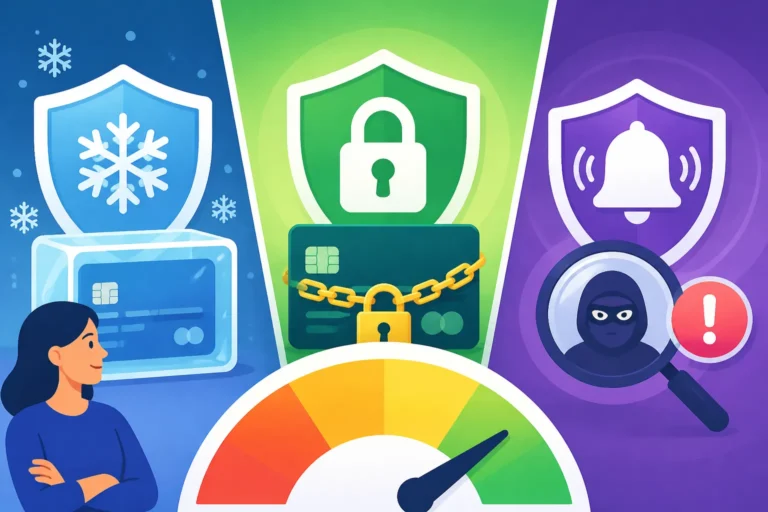
Sometimes, the terms "credit freeze," "credit lock," and "fraud alert" are used interchangeably, but they are distinctly different and offer varying levels of protection. Understanding these differences will help you make the best decisions for your financial security. For a deeper dive into the distinctions, you might want to read Credit Freeze vs Credit Lock vs Fraud Alert.
Credit Locks Explained
A credit lock is similar to a credit freeze in that it restricts access to your credit report. However, credit locks are typically offered as a paid service by the credit bureaus, often through their credit monitoring products. While a freeze is mandated by federal law and is free, a lock is a proprietary product.
Key differences:
- Cost: Locks usually come with a monthly fee, whereas freezes are free.
- Convenience: Locks are often managed through a smartphone app, making them incredibly easy to toggle on and off. You can lock and unlock your credit with a tap.
- Legal Protections: Freezes have specific legal mandates for implementation and lifting times (3 days to freeze, 1 hour to unfreeze). Locks, being a product, might not have the same strict legal timelines.
For many, the convenience of a credit lock is appealing, but the free, legally-backed protection of a credit freeze often makes it the more secure and cost-effective choice.
Fraud Alerts as a Complement
A fraud alert is another layer of protection, but it works differently than a freeze or lock. When you place a fraud alert, lenders are required to take extra steps to verify your identity before extending credit. This usually means they have to call you at a phone number you provide to confirm that you are indeed the one applying for credit.
Key aspects of fraud alerts:
- Placing it with one bureau: If you place a fraud alert with one of the three major credit bureaus, that bureau is required to notify the other two.
- Duration: Initial fraud alerts last for one year and can be renewed. If you're a victim of identity theft, you can place an extended fraud alert, which lasts for seven years.
- Less restrictive: It doesn't prevent access to your report; it just flags it for extra scrutiny. This means a determined fraudster might still slip through, whereas a freeze would completely block them.
A fraud alert is a good measure, especially if you suspect you've been a victim of attempted fraud, but it doesn't offer the ironclad protection of a credit freeze. Many experts recommend placing a fraud alert in addition to a credit freeze, especially after a data breach, to provide maximum security.
Maintaining Good Credit Habits While Frozen
Just because your credit file is frozen doesn't mean you should ignore your credit health! A credit freeze is about preventing new fraudulent accounts; it doesn't protect existing ones or relieve you of the responsibility of managing your current financial obligations.
Monitoring Existing Accounts
Even with a freeze in place, it's vital to regularly review your existing credit card statements, bank accounts, and other financial records. Fraudsters could still try to use your existing card numbers for unauthorized purchases or access your bank accounts if they gain access to that information.
- Set up alerts: Many banks and credit card companies offer text or email alerts for transactions above a certain amount or for international purchases.
- Check statements meticulously: Look for any unfamiliar charges, no matter how small.
- Review your Credit Reports: Even with a freeze, you're entitled to free copies of your credit report from AnnualCreditReport.com every 12 months. Review them for any discrepancies, even if no new accounts are showing up. You might uncover old errors or incorrect personal information that needs to be addressed, such as when you might need to Dispute Errors on Your Credit Report.
Building Credit with a Freeze
A common misconception is that a credit freeze will halt your credit-building efforts. Not true! You can absolutely continue to build and improve your credit while a freeze is active, as long as you're not trying to open new accounts.
For instance, if you're working to How to Build Credit From Scratch (2026 Guide) or boost an existing score, factors like payment history and credit utilization on your current accounts are still being reported to the bureaus and influencing your score. Making on-time payments, keeping your credit utilization low, and maintaining a healthy mix of credit will still contribute positively to your credit score. Tools like a secured credit card or a credit builder loan can still help you establish a positive payment history, and services like Credit Strong are designed to help you do just that. They report your responsible behavior to the credit bureaus, even with a freeze in place, as long as you're not opening a new line of credit at the moment you're trying to establish the initial connection. Just remember to temporarily lift the freeze if Credit Strong or any other service needs to perform a hard inquiry (though many credit builder products are designed to avoid this).
It's all about responsible financial behavior with your current accounts. The freeze only blocks new credit inquiries, which can actually be a good thing for those who are trying to resist the urge to open too many new credit lines and accidentally lower their score. Keeping an eye on What Affects Your Credit Score? The 5 Factors remains crucial.
| Feature | Credit Freeze | Credit Lock | Fraud Alert |
|---|---|---|---|
| Purpose | Stops access to credit report for new credit | Stops access to credit report for new credit | Requires identity verification for new credit |
| Cost | Free (Federal Law) | Often fee-based (paid product) | Free (Federal Law) |
| Legal Basis | Federal Law (2018 Economic Growth Act) | Bureau's proprietary service | Federal Law (FACTA) |
| Control | By consumer with PIN | Often via mobile app | By consumer, triggers notification to others |
| Duration | Indefinite until lifted | Toggled on/off as desired | 1 year (initial) or 7 years (extended) |
| Lifting Time | 1 hour (phone/online), 3 days (mail) | Instant (usually via app) | No "lifting," it's a verification process |
| Effect on Score | None | None | None |
| New Credit | Blocks new credit applications | Blocks new credit applications | Requires extra verification for new credit |
| Existing Credit | No impact on existing accounts | No impact on existing accounts | No impact on existing accounts |
Disclaimer
The information provided in this guide is for general informational purposes only and does not constitute financial, legal, or credit advice. While we strive to keep the information accurate and up-to-date, laws and procedures can change. It is always recommended to consult with a qualified financial advisor or legal professional for advice tailored to your specific situation. Contact the individual credit bureaus directly for the most current and specific instructions regarding credit freezes.