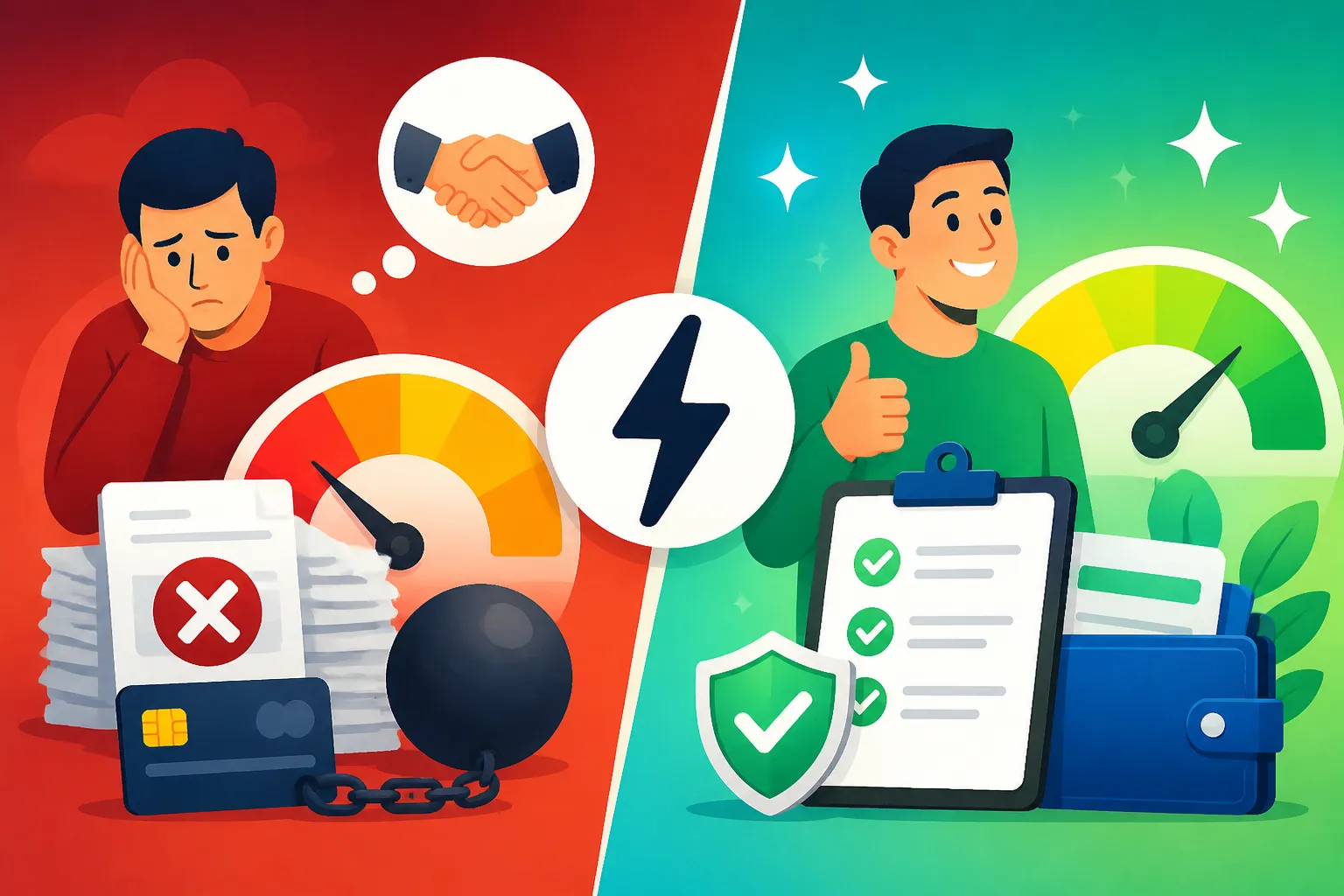
Debt Settlement vs Credit Repair: What’s the Difference?
It's incredibly frustrating when you're grappling with debt and negative items on your credit report, only to feel lost in a sea of confusing financial terms. Many people use "debt settlement" and "credit repair" interchangeably, or aren't sure which path is right for their unique situation. This comprehensive guide is here to untangle the differences between these two distinct strategies, helping you understand what each entails, its potential impacts, and when it might be the most appropriate course of action for your financial health.
Understanding Debt Settlement
When you're facing a mountain of debt, the idea of paying less than you owe sounds like a dream. That's precisely what debt settlement aims to achieve, but it's crucial to understand the full picture before considering it. This isn't a quick fix without consequences; it's a serious financial maneuver.
What Debt Settlement Actually Is
At its core, debt settlement is a negotiation process where you or a company on your behalf tries to convince your creditors or debt collectors to accept a lower amount than what you actually owe to fully satisfy a debt. This typically happens with unsecured debts, which are loans not backed by collateral. Think credit card balances, personal loans, and often medical bills. Mortgage debt or auto loans, for example, are usually off the table for settlement because they are secured by your home or vehicle.
The way it usually works is that you stop making payments directly to your creditors and instead, deposit money into a special savings account managed by a debt settlement company. As this fund grows, the settlement company reaches out to your creditors, aiming to negotiate a lump-sum payment that's significantly less than your original balance. This process can take a significant amount of time, often ranging from several months to a few years, during which your original debts go unpaid. It's a high-stakes strategy that can offer relief but comes with substantial drawbacks.
The Pros of Debt Settlement
While debt settlement is a drastic measure, it does offer some compelling advantages for individuals in dire financial straits. The most obvious benefit is the potential to pay less than the total amount you owe. Imagine you have $15,000 in credit card debt; a successful settlement might mean you only pay $7,500 or $9,000, freeing up a significant portion of your income that would otherwise be tied up in monthly payments. This can be a huge psychological and financial relief, especially if you're struggling to keep up with minimum payments.
Another upside is the potential to become debt-free faster than if you were to continue making minimum payments or even following a debt management plan. By reducing the total amount owed, the timeline for repayment shortens considerably once a settlement is reached. For many, this quicker exit from overwhelming debt can feel like a lifeline, preventing the need to file for bankruptcy, which has even more severe and long-lasting consequences on your credit and financial future. It's a path for those who are truly drowning and see no other way out.
The Cons and Risks of Debt Settlement
Now, let's talk about the significant downsides, because debt settlement is not a decision to be taken lightly. The primary risk is the severe damage it inflicts on your credit score. When you enter a debt settlement program, you are typically advised to stop making payments to your creditors. This immediately leads to missed payments, late payment marks, and eventually charge-offs on your credit report. Each of these negative entries can drop your credit score significantly – sometimes by over a hundred points for a single late payment. Accounts that are settled will also likely be reported as "settled for less than the full amount" or "paid-settled," which is still a negative mark that stays on your report for up to seven years. If you're wondering, "Why Did My Credit Score Drop? Common Reasons?", defaulting on payments during settlement is a major one.
Beyond the credit score devastation, there are other serious considerations. The forgiven portion of your debt – the amount you didn't pay – might be considered taxable income by the IRS. So, if you settle a $10,000 debt for $6,000, the $4,000 you didn't pay could be added to your income for that year, potentially leading to an unexpected tax bill. Moreover, during the negotiation period, creditors and debt collectors can become more aggressive in their collection efforts, potentially even suing you for the unpaid balance. If you're exploring this option, you might find our guide on How to Negotiate With Debt Collectors helpful, but be aware that their tactics can be intense. Lastly, debt settlement companies often charge hefty fees, sometimes a percentage of the settled debt or a flat fee, which can eat into your savings and make the overall process more expensive than anticipated. There's also no guarantee that all your creditors will agree to settle, leaving you with some debts potentially still unresolved.
Deciphering Credit Repair
In stark contrast to debt settlement, credit repair doesn't aim to reduce your debt. Instead, its focus is entirely on the accuracy and completeness of the information on your credit reports. It’s about ensuring that your financial history, as presented to lenders, is fair and truthful.
What Credit Repair Truly Means
Credit repair is the process of reviewing your credit reports (from Equifax, Experian, and TransUnion) for inaccuracies, errors, or unverifiable information, and then formally disputing those items with the credit bureaus and creditors. The goal isn't to erase legitimate debt, but to ensure that only accurate, verifiable, and timely information appears on your report. For instance, if you paid a bill on time but it's showing as late, that's an error that can be disputed. If a collection account appears that isn't yours, that's also something credit repair addresses.
This right to an accurate credit report is protected by federal laws like the Fair Credit Reporting Act (FCRA). You have the right to challenge any information you believe to be incorrect or unverifiable. This can be a DIY effort, where you send dispute letters yourself, or you can hire a professional credit repair company to handle the process on your behalf. These companies specialize in navigating the complex dispute procedures and communicating with creditors and bureaus. Our comprehensive guide, How to Repair Your Credit: The Complete Guide (2026), provides a deep dive into this process.
The Goals and Benefits of Credit Repair
The primary objective of credit repair is to improve your credit score by removing negative items that shouldn't be there. Every inaccurate late payment, collection, charge-off, or even an incorrect public record like a bankruptcy can drag your score down. By successfully disputing and removing these errors, your credit score can gradually rise. A higher credit score opens doors to better financial opportunities that were previously out of reach.
Imagine being approved for a mortgage with a lower interest rate, qualifying for a car loan with more favorable terms, or even getting approved for premium credit cards with attractive rewards. These are tangible benefits of a healthier credit score. Beyond just approvals, a good credit score means you pay less over the life of your loans and credit cards. It's about optimizing your financial future by presenting the most accurate and positive version of your financial history to potential lenders. For many, simply knowing that their report is fair and accurate is a significant benefit, providing peace of mind and a stronger foundation for financial planning. If you're just starting, knowing How to Dispute Credit Report Errors (Step-by-Step) is a fantastic first step.
Challenges and Considerations in Credit Repair
While credit repair offers significant benefits, it's not without its challenges. One of the biggest hurdles is that it can be a time-consuming process. Credit bureaus have a legal obligation to investigate disputes, usually within 30 days (sometimes 45 days if you send additional information after filing). However, disputing multiple items across all three bureaus can mean a lengthy back-and-forth, requiring persistence and careful record-keeping. It's not a magic wand that instantly erases all negative items; it's a diligent process focused on accuracy.
Furthermore, credit repair can only address inaccurate, incomplete, or unverifiable information. It cannot remove legitimate, correctly reported negative items, such as a late payment you genuinely made late, or a collection account that is indeed yours and accurately reported. Many people mistakenly believe credit repair can wipe out all their financial mistakes. This leads to unrealistic expectations. Also, the industry has unfortunately attracted some less-than-reputable actors, so it's vital to be cautious. Learning How to Spot a Credit Repair Scam can protect you from falling victim to promises that sound too good to be true. Remember, credit repair is about fairness and accuracy, not a workaround for responsible debt management.
Key Differences: Debt Settlement vs. Credit Repair
Understanding the individual aspects of debt settlement and credit repair is important, but truly grasping their distinction comes from a direct comparison of their core purposes and impacts. They are tools for different jobs, each with its own set of trade-offs.
Fundamental Objectives
The most fundamental difference lies in what each strategy aims to achieve. Debt settlement's objective is to reduce the actual dollar amount you owe to creditors. It's about finding relief from the immediate burden of overwhelming debt. The negotiations are focused on the balance itself, trying to pay a portion and have the rest forgiven. This is a debt-focused solution, designed to help you shed liabilities that are unmanageable and unsustainable given your current financial situation. It's a reactive measure for severe debt problems, often considered when other options, like debt consolidation or a repayment plan, are no longer viable.
Credit repair, on the other hand, has a completely different mission: to improve the accuracy and health of your credit report and, by extension, your credit score. It doesn't touch the underlying debt amount. Instead, it scrutinizes what is reported about your debt and payment history. The goal is to correct any errors, outdated information, or items that cannot be verified by the reporting entities. It's a credit-report-focused strategy, aimed at enhancing your financial reputation for future borrowing, rather than directly alleviating current debt obligations. It's about getting your financial story told correctly.
Impact on Credit Score
This is perhaps the most significant practical distinction for many people. Debt settlement typically results in an immediate and severe negative impact on your credit score. As discussed, the process usually involves intentionally defaulting on payments, leading to a cascade of negative marks like late payments, charge-offs, and accounts being marked as "settled for less." These marks remain on your credit report for up to seven years from the date of the original delinquency, making it difficult to obtain new credit, loans, or even rent an apartment at favorable terms during that period. It's a short-term debt relief that comes with a long-term credit penalty.
Credit repair, conversely, aims for a gradual, positive impact on your credit score. By successfully disputing and removing inaccurate negative items, your score can begin to recover. For example, if you remove an incorrectly reported collection account, that's a direct improvement. The more inaccuracies you clear, the better your credit profile becomes, leading to a higher score over time. Unlike debt settlement, credit repair itself doesn't inherently harm your score; its success lies in correcting errors, which is always beneficial. While the process of disputing doesn't automatically raise your score overnight, removing problematic entries clears the path for improvement based on your accurate, positive payment history. Our guide on Does Disputing Hurt Your Credit Score? goes into more detail.
Who Benefits Most
Understanding who stands to gain from each strategy can help clarify which path might be right for you. Debt settlement is generally best suited for individuals who are overwhelmed by unsecured debt and have genuinely exhausted all other repayment options. This means you might have multiple credit cards maxed out, personal loans you can't service, and your minimum payments consume a disproportionate amount of your income. If you're on the verge of bankruptcy and possess (or can save) a lump sum of money, or are willing to accept a substantial hit to your credit score for the sake of immediate debt relief, then debt settlement might be a viable, albeit painful, option. It's for those facing a severe debt crisis who need to drastically reduce their principal balance. If you’re struggling with overwhelming credit card balances, our article on How to Get Out of Credit Card Debt (Step-by-Step) offers various strategies.
Credit repair, by contrast, primarily benefits those who believe their credit report contains errors, or who simply want to improve their credit score by ensuring its accuracy. This could be someone who had a rough patch in the past, leading to a few legitimate late payments, but whose current financial habits are solid. It's also for individuals looking to qualify for better interest rates on a mortgage, car loan, or new credit card, or even just to gain approval. If you're not in immediate danger of defaulting on all your debts but see opportunities to refine your credit profile, credit repair is the better, less damaging route. It's a proactive measure for optimizing your financial standing, not a last resort for debt avoidance.
When to Choose Which Path
Deciding between debt settlement and credit repair boils down to your current financial situation, your debt load, your immediate goals, and your tolerance for credit score impact. There's no one-size-fits-all answer, but understanding the scenarios where each shines can guide your decision.
When Debt Settlement Might Be the Right Choice
Debt settlement is a serious tool for serious problems. It's typically considered when you are facing overwhelming, unsecured debt that you simply cannot manage, even with careful budgeting or consolidation efforts. We're talking about situations where you might have tens of thousands of dollars in credit card debt, personal loans, or medical bills – often $10,000 or more – and you're consistently falling behind on payments, or know you're about to. If your income is insufficient to cover even minimum payments across all your debts, and you’re staring down the barrel of potential bankruptcy, debt settlement could be a less damaging alternative.
Another key factor is having access to a lump sum of money or the ability to save one relatively quickly. Creditors are often more willing to settle if they know they can receive a significant portion of the debt in one go, rather than waiting for smaller, inconsistent payments. Perhaps you received a bonus, an inheritance, or have accessible savings. If you've explored other options like a debt management plan with a credit counseling agency or a personal loan for debt consolidation, and they haven't worked or aren't available to you, then settlement might be on the table. Crucially, you must be prepared for the significant, negative hit to your credit score that will last for years. It's a trade-off: immediate relief from an unmanageable debt burden for a severely damaged credit profile. For those who need to get out of debt fast, but at a cost, our article on How to Pay Off Credit Card Debt Fast might offer additional perspectives, but settlement is a very specific, high-impact approach.
When Credit Repair Is Your Best Bet
Credit repair is the healthier, more sustainable option for a broader range of financial situations. It's your best bet if you suspect there are errors, inaccuracies, or outdated information on your credit reports. Even a single incorrectly reported late payment or a collection account that isn't yours can significantly depress your score, and credit repair is designed to address these specific issues. You might have made a few financial missteps in the past, leading to some legitimate negative marks, but now you’re back on track and want to improve your score from, say, "fair" to "good" or "excellent." This could involve removing inaccurate hard inquiries or incorrect charge-offs.
If your primary goal is to improve your credit score to access better financial products – like a lower interest rate on a mortgage, a more affordable car loan, or a competitive interest rate on a new credit card – then credit repair is the way to go. You’re not necessarily drowning in insurmountable debt; instead, you’re looking to optimize your financial standing for future opportunities. The process is slower than settlement, but it builds a stronger foundation without the severe credit damage. It empowers you by ensuring your financial history is accurately represented, leading to long-term benefits. If your focus is squarely on enhancing your credit standing, exploring How to Raise Your Credit Score (Step-by-Step) will give you a clear roadmap.
Can You Do Both? The Interplay Between Them
It might seem counterintuitive to consider both debt settlement and credit repair, given their different impacts. However, in certain strategic scenarios, they can indeed be sequential steps in a long-term financial recovery plan.
The Sequencing: Repair After Settlement
While you wouldn't typically undertake debt settlement and credit repair simultaneously for the same debt, it's very common for people to engage in credit repair after they have successfully settled their debts. The logic here is straightforward: first, you tackle the immediate, overwhelming debt burden through settlement, accepting the inevitable credit score damage. Once the dust settles and those accounts are closed (even if "settled for less"), your next focus can pivot to mitigating the damage and improving your credit profile over time.
When you settle a debt, the account will be updated on your credit report to reflect that status. It won't disappear, and it will still show a negative mark for "settled for less." However, credit repair can then come into play to ensure that this settled account is reported accurately. For instance, if the original creditor or debt collector continues to report late payments after the settlement date, or if the balance is still showing as outstanding when it should be settled, these are inaccuracies that can be disputed. You can't remove the settled mark itself if it's accurate, but you can ensure no further errors compound the existing damage. Our article on How to Fix Your Credit After Debt Settlement offers detailed steps on this crucial recovery phase. It's a marathon, not a sprint, but ensuring reporting accuracy is a key step towards eventual recovery.
The Role of Credit Building After Challenges
After facing significant financial challenges, whether it was through debt settlement, a period of missed payments, or even bankruptcy, simply clearing up old accounts isn't enough. To truly rebuild your financial standing, you need to actively cultivate new, positive credit. This is where credit building strategies become absolutely essential, creating a fresh layer of positive payment history on top of your existing report.
One of the most effective ways to build credit is through secured credit cards, where you put down a deposit that acts as your credit limit. Another increasingly popular option is a credit builder loan. These loans work a bit differently: the money you borrow is held in an account while you make payments, and you receive the funds only after the loan is paid in full. This helps you build a positive payment history without immediate access to a large sum of money, mitigating risk. Companies like Credit Strong offer these types of credit builder loans, which report your payments to all three major credit bureaus, helping to establish a positive payment history. This consistent, on-time payment behavior is precisely what FICO and VantageScore models look for to signal responsible credit use. For a deeper understanding of these tools, check out our guide on Credit Builder Loans Explained (Self, Kikoff & More) and How to Build Credit From Scratch (2026 Guide). By layering new, positive credit accounts and demonstrating consistent financial responsibility, you can gradually overshadow past negative entries and pave the way for a much healthier credit future.
| Feature | Debt Settlement | Credit Repair |
|---|---|---|
| Primary Goal | Reduce the total amount of debt owed | Improve credit report accuracy and boost credit score |
| Focus | Reducing the principal balance of debt | Removing inaccurate, incomplete, or unverifiable items |
| Debt Type | Primarily unsecured debt (credit cards, personal loans) | All types of reported debt/accounts |
| Credit Impact | Immediate, severe negative impact (late payments, charge-offs, "settled for less" remarks) | Gradual positive impact as inaccurate items are removed |
| Duration of Negative Impact | Up to 7 years from original delinquency date | As long as inaccurate items remain, then improves over time after removal |
| Cost | Potential tax implications on forgiven debt, company fees | Company fees (if professional service is used), postage (for DIY) |
| Creditor Response | May continue aggressive collection; no guarantee of settlement | Must investigate disputes; may verify or delete disputed items |
| When to Use | Overwhelmed by debt, facing bankruptcy, have lump sum | Suspect errors on report, need to improve score for better rates |
Disclaimer
The information provided in this guide is for general informational purposes only and does not constitute financial, legal, or credit advice. Every individual's financial situation is unique, and decisions about debt settlement or credit repair should be made in consultation with a qualified financial advisor, credit counselor, or legal professional. Engaging in debt settlement can have significant negative consequences on your credit score and future financial opportunities. Credit repair addresses reporting accuracy and does not guarantee the removal of legitimately reported items.