What Can You Get With a 580 Credit Score? (Buy a House)
It can be incredibly disheartening to look at your credit score, see a number like 580, and then wonder if your dreams of homeownership are completely out of reach. Many folks in this situation feel a heavy sense of defeat, thinking the door to buying a house is slammed shut. But here's the thing: while a 580 credit score certainly presents challenges, it doesn't automatically disqualify you from purchasing a home. This comprehensive guide will explore the real possibilities and hurdles of buying a house with a 580 credit score, walking you through the mortgage options available and what you can do to strengthen your position.
Understanding Your 580 Credit Score and Its Impact
A 580 credit score falls squarely into the "Fair" category, according to most scoring models like FICO. This isn't where most lenders prefer to see you, especially for significant loans like mortgages. It signals to them that you might carry a higher risk of defaulting on your payments compared to someone with a higher score. This perception of risk directly translates into how lenders approach your application, influencing everything from the types of loans you qualify for to the interest rates you'll be offered.
What "Fair" Really Means for Lenders
When a lender sees a 580 credit score, they're not necessarily saying you're irresponsible; they're seeing a history that suggests a higher likelihood of past financial struggles. This could be anything from a few late payments, a collection account, or perhaps a limited credit history that doesn't give them much to go on. For them, it's about mitigating their risk. They use these scores to predict future payment behavior, and a 580 score indicates a higher probability of missing payments down the line. It's a tough reality, but understanding their perspective helps you prepare for the types of questions and requirements you'll encounter.
The Real-World Consequences of a Lower Score
The most immediate consequence of a 580 credit score when seeking a mortgage is often limited access to the most favorable loan products. Conventional loans, which are typically seen as the "gold standard" with attractive interest rates and terms, usually require a minimum credit score of 620, and often prefer 670 or higher. This means you'll likely be looking at government-backed loans that are specifically designed to help borrowers with less-than-perfect credit. Beyond that, even if you do qualify, the terms of the loan will probably be less appealing. You might face higher interest rates, which can add tens of thousands of dollars to the total cost of your home over the life of the loan. You'll also likely be subject to more stringent underwriting processes and may need to meet additional requirements to offset the credit risk.
Navigating Mortgage Options with a 580 Score
While a conventional loan might be a tough sell with a 580 credit score, there are still avenues available. Government-insured loans, primarily those backed by the Federal Housing Administration (FHA), are often the best bet for individuals in your position. It's crucial to understand the specifics of each to see which might be the right fit for you.
FHA Loans: Your Most Likely Path to Homeownership
FHA loans are insured by the Federal Housing Administration and are a beacon of hope for many homebuyers with lower credit scores. The great news is that FHA guidelines allow for credit scores as low as 500 for some applicants, though a 580 credit score opens the door to more favorable down payment options.
With a 580 score, you may qualify for an FHA loan with a down payment as low as 3.5%. This is a huge advantage compared to the typical 20% down payment often associated with conventional loans. However, it's not just about the score. Lenders look at the whole picture. They'll scrutinize your payment history for the last 12-24 months, looking for consistency. If you have a recent history of late payments, even if your score is 580, it could still be a sticking point. You'll also need to meet specific debt-to-income (DTI) ratio requirements, which means your monthly debt payments shouldn't consume too much of your gross monthly income. Currently, the FHA generally prefers a DTI ratio of no more than 43%, though some lenders might go higher with compensating factors.
It's also important to remember that FHA loans come with mandatory mortgage insurance premiums (MIP). There's an upfront MIP that's typically financed into the loan, and then annual MIP payments that are usually paid monthly as part of your mortgage payment. These premiums protect the lender in case you default and add to your overall monthly housing cost. While they make FHA loans more accessible, they do make them more expensive in the long run compared to conventional loans without private mortgage insurance (PMI).
VA Loans: A Lifeline for Veterans and Service Members
If you or your spouse are a veteran, active-duty service member, or eligible surviving spouse, a VA loan is an incredible option, and often, the best option available. VA loans are backed by the U.S. Department of Veterans Affairs and boast some of the most generous terms in the mortgage market. The truly remarkable thing about VA loans is that they typically do not require a down payment. Yes, 0% down!
Even better, the VA does not set a minimum credit score requirement. Instead, it's up to individual lenders to establish their own "overlay" requirements. Many lenders will approve VA loans with scores in the low 600s, but some might be willing to go down to 580, or even slightly lower, especially if other aspects of your financial profile are strong. Lenders will be looking at your overall financial stability, your debt-to-income ratio, and your residual income (how much money you have left after paying major expenses). Your Certificate of Eligibility (COE) is also crucial for proving your eligibility for the VA benefit. If you qualify for a VA loan, it can be a fantastic way to achieve homeownership with a 580 score, as the lack of a down payment and no mortgage insurance (though there is a funding fee) can significantly reduce your upfront and ongoing costs.
USDA Loans: Rural Opportunities
For those looking to buy a home in a designated rural area, a USDA loan might be another viable option. These loans, backed by the U.S. Department of Agriculture, are designed to promote homeownership in rural communities and also offer 0% down payment options.
Like VA loans, the USDA doesn't set a hard minimum credit score. However, lenders typically look for a score of 640 or higher for streamlined processing. With a 580 score, your application would likely undergo a manual underwriting process, meaning a human underwriter would meticulously review your entire financial history, not just rely on an automated credit check. This requires a very strong payment history in recent years, a low debt-to-income ratio, and stable employment. The property you intend to buy must also be in an eligible rural area and you must meet income limitations for the specific area. This can be a niche but powerful option if you meet all the criteria.
The Conventional Loan Challenge
With a 580 credit score, securing a conventional loan is exceedingly difficult, bordering on impossible for most lenders. Conventional mortgages are not government-insured, so lenders take on more risk directly. They rely heavily on your credit score as a primary indicator of that risk. Most conventional lenders look for a minimum FICO score of 620, but even at that level, you'll likely face higher interest rates and potentially stricter down payment requirements. To qualify for the most competitive rates and terms on a conventional loan, a credit score of 740 or higher is generally desired. While a 580 score might not completely rule out a small number of non-QM (non-qualified mortgage) lenders, these loans often come with significantly higher interest rates, fees, and less favorable terms, making them a less desirable route for most homebuyers.
Strategies to Improve Your Credit for Homeownership
While it's possible to buy a house with a 580 credit score using FHA or VA loans, improving your credit will open up more options and likely save you a significant amount of money over the life of your mortgage. Think of it as investing in your financial future.
Attacking Negative Items on Your Credit Report
One of the quickest ways to improve your credit score is to address any negative items that might be dragging it down. This includes late payments, collections, charge-offs, or even errors. Start by requesting your free credit report from AnnualCreditReport.com. You'll want to get a copy from all three major bureaus: Equifax, Experian, and TransUnion. Once you have them, meticulously review each report for inaccuracies. If you find any, dispute them immediately. You can learn more about How to Dispute Credit Report Errors Step-by-Step to guide you through the process.
For legitimate negative items, consider options like sending a goodwill letter for late payments or negotiating a "pay for delete" for collection accounts. For example, if you had a medical bill that went to collections a couple of years ago, reaching out to the collection agency to settle the debt and requesting they remove it from your report can make a difference. It's often a negotiation, but it can be very effective. Removing a collection from your report can lead to a noticeable bump in your score.
Paying Down Existing Debts
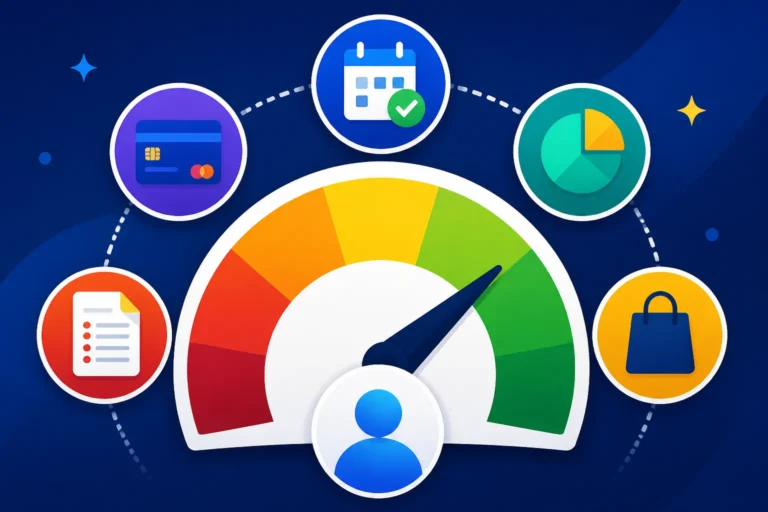
High credit utilization is a huge score killer. This refers to how much of your available credit you're using. Ideally, you want to keep your credit utilization below 30%, and ideally even lower, around 10% for the best scores. If you have credit cards that are near their limits, focusing on paying those down should be a top priority. Not only does it reduce your overall debt, but it immediately signals to credit scoring models that you're managing your credit more responsibly.
Even paying off a small balance on a credit card can show an improvement quickly, especially if it brings your utilization ratio down significantly on that particular card. This also improves your debt-to-income ratio, which, as mentioned earlier, is a critical factor for mortgage lenders. Prioritize high-interest debts first to save money on interest charges while you pay them down.
Building Positive Payment History
This one sounds obvious, but it's the foundation of good credit: pay all your bills on time, every single time. Payment history makes up the largest portion of your FICO score (35%), so consistently making on-time payments to all your creditors – credit cards, loans, even utility bills if they report – is paramount. If you struggle with remembering due dates, set up automatic payments or calendar reminders. A single late payment can drop your score significantly, and it can take time to recover from.
Consider tools designed to help build credit, like a secured credit card or a credit builder loan. A secured credit card requires a deposit, which acts as your credit limit, making it easier to get approved. Use it responsibly for small purchases and pay it off in full every month. A credit builder loan, like those offered by Credit Strong (also known as Self, or other similar services), works differently. You make payments into an account that’s reported to the credit bureaus, and then at the end of the term, you get access to the funds you saved. Both methods are excellent ways to establish a positive payment history and diversify your credit mix without taking on risky debt. They act as positive trade lines, demonstrating responsible financial behavior over time.
Beyond the Credit Score: Other Factors Lenders Consider
While your 580 credit score is a major factor, it's just one piece of the puzzle. Mortgage lenders look at your entire financial profile to assess your ability to repay a loan. Strengthening these other areas can help offset a lower credit score.
Your Debt-to-Income (DTI) Ratio
Your DTI ratio is a critical metric that lenders use to evaluate your borrowing risk. It's the percentage of your gross monthly income that goes towards paying your recurring monthly debts. Lenders generally prefer a DTI ratio below 43%, though some FHA and VA programs may allow for slightly higher ratios with strong compensating factors.
To calculate your DTI, add up all your monthly debt payments (credit card minimums, car loans, student loans, personal loans, child support, etc.) and divide that sum by your gross monthly income (before taxes and deductions). For example, if your gross monthly income is $4,000 and your total monthly debt payments are $1,000, your DTI is 25% ($1,000 / $4,000). A lower DTI indicates you have more disposable income to put towards a mortgage payment, making you a less risky borrower. If your DTI is high, focusing on paying down debts (as discussed in the credit improvement section) is a great way to tackle both your credit score and your DTI simultaneously.
Stable Employment and Income History
Lenders want to see stability. A steady employment history, typically for at least two years in the same field or with the same employer, demonstrates your ability to consistently earn income and make mortgage payments. They'll ask for pay stubs, W-2s, and potentially tax returns to verify your income. If you've recently changed jobs or are self-employed, the underwriting process might be more rigorous. For self-employed individuals, lenders often require two years of tax returns to average out your income. Demonstrating a consistent, reliable income stream is vital, as it directly impacts your ability to make those monthly payments.
Savings and Down Payment
Having a substantial down payment can significantly bolster your mortgage application, especially with a lower credit score. A larger down payment reduces the amount you need to borrow, which decreases the lender's risk. For FHA loans, a 3.5% down payment is the minimum with a 580 score. However, putting down more – say, 5% or even 10% – can make your application look much stronger. It shows the lender you have skin in the game and a disciplined approach to saving.
Furthermore, lenders also look for cash reserves. These are funds you have saved after your down payment and closing costs, which can cover several months of mortgage payments. Having three to six months of mortgage payments in reserve provides a safety net and reassures lenders of your financial resilience, especially if unforeseen circumstances arise. This shows you're prepared for the responsibilities of homeownership.
Here's a quick comparison of common mortgage types and their typical requirements:
| Mortgage Type | Minimum Credit Score (Typical) | Down Payment (Typical) | Mortgage Insurance | Best For |
|---|---|---|---|---|
| Conventional | 620-670+ (often 740+ for best rates) | 3-20%+ | PMI (removable) | Borrowers with strong credit, larger down payments |
| FHA | 500 (580 for 3.5% down) | 3.5% | MIP (non-removable for most) | Borrowers with lower credit, smaller down payments |
| VA | No minimum (lender-specific, often 580-620) | 0% | No (VA Funding Fee) | Eligible Veterans, Service Members, Surviving Spouses |
| USDA | No minimum (lender-specific, often 640 for streamlined) | 0% | Annual Fee | Low-to-moderate income in designated rural areas |
The Next Steps for Your Homeownership Journey
So, you have a 580 credit score, and buying a house, particularly through an FHA loan, is absolutely within the realm of possibility. But what's your game plan from here? It's not just about getting approved; it's about setting yourself up for success and securing the best possible terms.
Find a Lender Experienced with FHA and Low Scores
Not all lenders are created equal, and some specialize in working with borrowers who have lower credit scores or who are seeking FHA, VA, or USDA loans. Seek out mortgage brokers or banks that explicitly advertise their expertise in these government-backed programs. They will be much more understanding of your situation and better equipped to guide you through the process. A good lender won't just tell you "no"; they'll tell you why and what you can do to get to "yes." Don't be afraid to shop around and get pre-approvals from a few different lenders to compare offers. This process might involve a few hard inquiries on your credit, but multiple inquiries for the same type of loan within a short period (typically 14-45 days) are often grouped as a single inquiry by credit scoring models, so don't let that deter you. If you need to raise your score quickly, consider resources like How to Raise Your Credit Score From 580 to 650.
Consider a Credit Repair Journey
While some of your credit issues might be relatively recent, others might be older and more entrenched. If you've got a lot of negative marks, especially collections or old charge-offs, it might be wise to embark on a dedicated credit repair journey before seriously applying for a mortgage. This doesn't mean you need to hire an expensive credit repair company, although some people find that helpful. You can often do a lot of it yourself. Removing negative items from your credit report can significantly boost your score and make you a more attractive borrower. Understanding How to Remove Collections From Your Credit Report or How to Remove Negative Items From Your Credit Report could be crucial steps. Remember, the higher your credit score, the better your interest rate, and that can save you a fortune over 15 or 30 years. Even a 50-point increase could make a difference in your monthly payment.
Be Patient and Persistent
Homeownership is a marathon, not a sprint, especially when you're starting with a credit score that presents some hurdles. Be prepared for a more thorough underwriting process and potentially longer approval times. Don't get discouraged if your first application isn't immediately approved. Take the feedback from lenders seriously, work on the areas they highlight for improvement, and reapply when you've strengthened your financial profile. Maybe you need to pay down a particular credit card, or perhaps you need a few more months of on-time payments to demonstrate consistency. Every step you take to improve your financial health brings you closer to getting those house keys. Tools like Credit Strong can be instrumental in this journey by helping you establish new, positive credit lines that report to all three bureaus, showing consistent on-time payments and contributing to your credit mix over time.
Ultimately, buying a house with a 580 credit score is challenging, but definitely not impossible. It requires a strategic approach, diligence in improving your financial standing, and perhaps a bit of patience. But the dream of owning your own home is absolutely worth the effort.
Disclaimer
This article is for general informational purposes only and does not constitute professional advice. Laws, prices and regulations vary by location and change over time. Consult a qualified professional for guidance on your specific situation.