Why Did My Credit Score Drop After High Utilization?
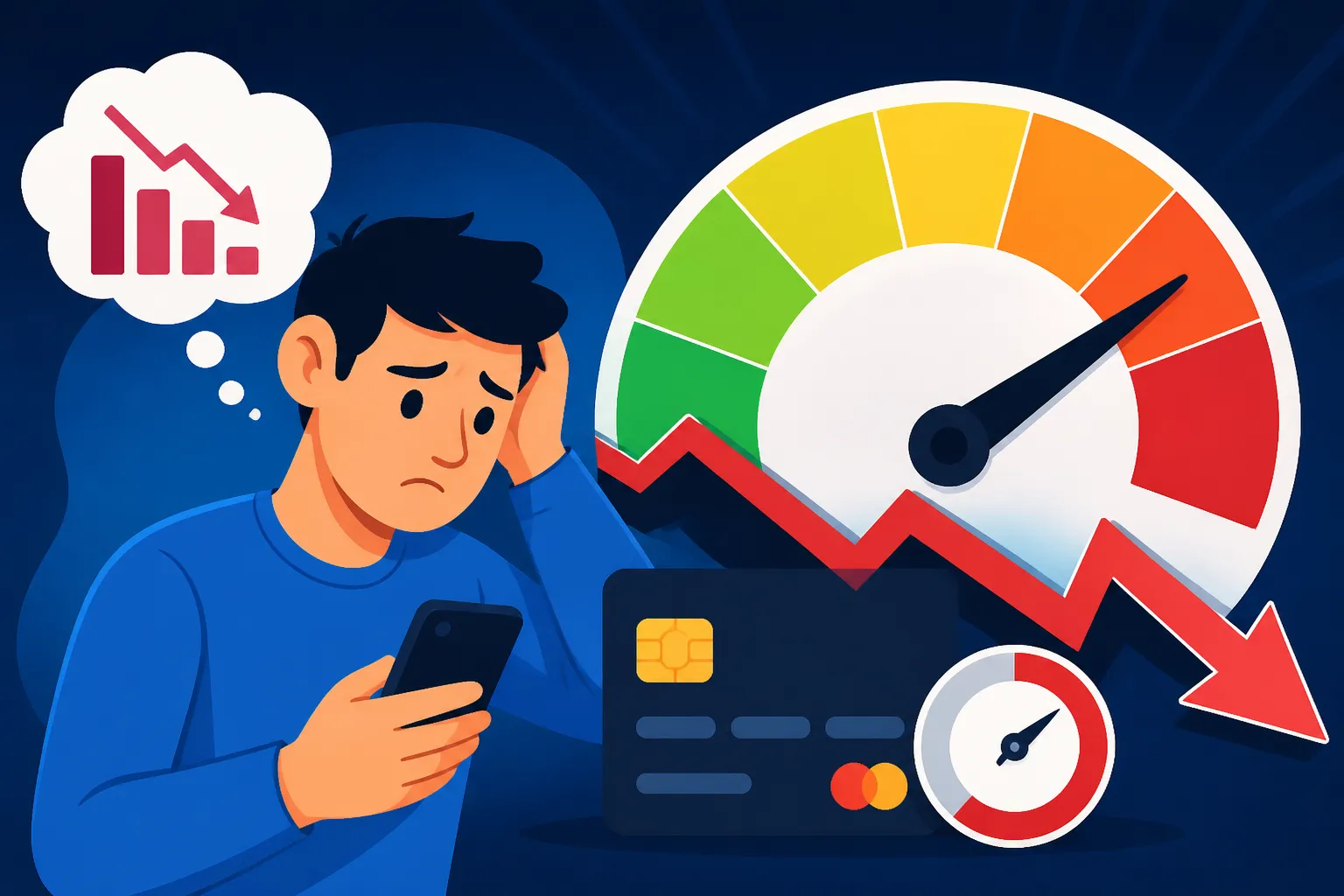
It’s a truly disheartening feeling, isn't it? You've been diligently making payments, perhaps even thinking you're doing everything right, and then you check your credit score only to see it plummet. Often, this unwelcome surprise comes right after you've used a significant portion of your available credit, leaving you wondering, "Why did my credit score drop after high utilization?" This guide is here to shed light on exactly that common frustration, explain the intricate relationship between your credit usage and your score, and arm you with actionable strategies to recover and protect your financial standing.
Understanding the Power of Credit Utilization
Before we dive into why high utilization hurts, let's get clear on what it actually is. Credit utilization, sometimes called your credit utilization ratio, is simply the amount of credit you're currently using compared to the total amount of credit available to you across all your credit accounts. It's often expressed as a percentage. For example, if you have one credit card with a $5,000 limit and you have a $2,000 balance on it, your utilization for that card is 40%. If you have multiple cards, the credit bureaus look at both your utilization on individual cards and your overall utilization across all your accounts.
This factor is incredibly powerful in determining your credit score, making up a whopping 30% of your FICO Score. Think about that for a moment – it's almost as important as your payment history, which is 35%. This isn't just a minor detail; it's a major player in your credit health. Lenders see high utilization as a red flag because it suggests that you might be over-reliant on credit, struggling financially, or potentially at a higher risk of not being able to pay back your debts. It doesn't matter if you always pay on time; if you're consistently maxing out your cards, your score will suffer.
Why Your Utilization Ratio Matters So Much
The credit scoring models are designed to predict your likelihood of paying back debt. When they see someone using a large chunk of their available credit, it signals potential financial strain. It's a forward-looking indicator for lenders. Even if you're just putting a big purchase on your card and plan to pay it off next month, the snapshot that hits your credit report might catch that high balance, causing an immediate dip.
It’s not necessarily about whether you can pay it off, but what your report looks like to a potential lender. Imagine you’re trying to get a new loan or a mortgage; a lender seeing high utilization might offer you less favorable terms, or even deny your application, because they perceive you as a greater risk. This is why keeping an eye on your utilization is crucial, not just for your score, but for your financial opportunities down the road.
How High Utilization Directly Impacts Your Credit Score
When you spend a lot on your credit cards, especially nearing your credit limits, the credit bureaus (Equifax, Experian, and TransUnion) take notice. Credit card issuers typically report your statement balance to the credit bureaus once a month, usually shortly after your statement closing date. If your balance is high on that reporting date, that's the number the bureaus see and factor into your credit score calculation.
Even if you pay off the entire balance before the due date, if the high balance was reported, your score will still take a hit. For instance, let's say your credit card statement closes on the 15th of the month, and you usually pay your bill on the 25th. If you make a $3,000 purchase on a card with a $4,000 limit on the 10th, and that balance is still showing when the statement closes on the 15th, your credit report will reflect a 75% utilization for that card. That's a huge number in the eyes of the scoring models, and your score will likely drop significantly. It can feel unfair, especially if you had every intention of paying it off. This is one of the tricky parts about managing your credit; the timing of your payments relative to your statement closing date matters a lot.
The Thresholds and Their Consequences
Credit scoring models have various thresholds for utilization that trigger different levels of impact on your score. While there's no hard and fast rule set in stone for everyone, general guidelines exist:
- Under 10% utilization: This is generally considered excellent. It shows you use credit responsibly and don't rely heavily on it.
- 10% to 30% utilization: This is still considered good. Most experts recommend keeping your overall utilization within this range.
- 30% to 50% utilization: Your score will likely start to decline in this range. It indicates you're using a moderate to high amount of your available credit.
- Over 50% utilization: This is where you'll see significant drops in your credit score. Lenders view this as a high-risk indicator.
- Near 100% or maxed out: Expect a severe drop. This suggests financial distress and a high likelihood of defaulting on payments.
Let's look at a quick example. Sarah has two credit cards. Card A has a $5,000 limit and a $1,000 balance (20% utilization). Card B has a $3,000 limit and a $500 balance (16.7% utilization). Her overall utilization is ($1,000 + $500) / ($5,000 + $3,000) = $1,500 / $8,000 = 18.75%. This is a healthy number, and her score reflects good management.
Now, imagine Sarah needs to replace her broken refrigerator and puts a $4,000 charge on Card A. If this reports while her balance is still $4,000, Card A's utilization jumps to 80%. Her overall utilization becomes ($4,000 + $500) / $8,000 = $4,500 / $8,000 = 56.25%. Even if she pays it down to $1,000 next month, that snapshot of 56.25% will likely cause a noticeable drop in her credit score. This vividly illustrates How Many Points Does High Utilization Cost You? and why it's so critical to understand.
Strategies to Recover from a Credit Score Drop Due to High Utilization
The good news is that credit utilization has no memory. Unlike a late payment or a bankruptcy, which can stick around for years, a high utilization ratio only impacts your score based on the most recently reported information. Once you pay down your balances and a lower utilization is reported, your score should rebound relatively quickly. Here’s how you can take action.
Paying Down Your Balances Strategically
The most direct way to fix a high utilization problem is to pay down your credit card balances. Focus on the cards that have the highest utilization percentages first, rather than necessarily the highest dollar amounts. For instance, a $1,000 balance on a $2,000 limit card (50% utilization) is hurting you more than a $2,000 balance on a $10,000 limit card (20% utilization). If possible, try to pay balances down before your statement closing date, which is when most issuers report to the credit bureaus. This proactive approach can help you lower the reported balance immediately.
If you have multiple cards and can't pay them all down significantly at once, consider the "debt avalanche" or "debt snowball" methods. The debt avalanche method focuses on paying off the card with the highest interest rate first, saving you money in the long run. The debt snowball method prioritizes paying off the smallest balance first, giving you psychological wins that can keep you motivated. Both are effective in reducing overall debt and, consequently, your utilization. You can read more about How to Pay Off Credit Card Debt Fast to find the best approach for you.
Making Multiple Payments Per Month
Since credit card companies typically report your balance once a month (usually your statement balance), you can "game the system" a little by making payments more frequently. Instead of just one large payment after your statement closes, consider making a payment in the middle of your billing cycle and then another smaller payment before or on your due date.
For example, if your statement closes on the 15th, and you've used $2,000 of your $5,000 limit by the 5th, you could pay $1,500 by the 10th. Then, when your statement closes on the 15th, only a $500 balance will be reported (10% utilization!), even if your actual spending for the month was higher. This strategy can significantly lower your reported utilization and help your score rebound quicker, effectively showing the bureaus a healthier snapshot of your credit usage. This is a powerful technique for How to Lower Your Credit Utilization Fast.
Considering a Credit Limit Increase
Another way to lower your utilization ratio is to increase your total available credit. If your credit is in decent shape otherwise, you could consider requesting a credit limit increase on an existing card. If approved, and you don't increase your spending, your utilization ratio will automatically decrease. For instance, if you have a $1,000 balance on a $2,000 limit (50% utilization), and your limit is increased to $4,000, your utilization immediately drops to $1,000/$4,000 = 25%.
However, proceed with caution here. Requesting a credit limit increase can sometimes result in a hard inquiry on your credit report, which could cause a small, temporary dip in your score. More importantly, only pursue this if you are confident you won't be tempted to spend more just because you have more available credit. The goal is to lower your ratio, not to enable more debt. Always remember that Does a Credit Limit Increase Hurt Your Score? might depend on the specific lender and your credit profile.
Exploring Credit Builder Tools
If getting a traditional credit limit increase isn't an option, or if you're looking for other ways to improve your credit profile, credit builder products can be really helpful. These are designed specifically to help people establish or improve their credit by reporting positive payment history to the credit bureaus.
For example, a secured credit card requires a cash deposit that becomes your credit limit. You use it like a regular credit card, and your on-time payments are reported. This helps build a positive payment history and can provide an additional line of credit to potentially lower your overall utilization, especially if you keep the balance low. Another option is a credit builder loan. With a credit builder loan, the money you borrow is held in a locked savings account while you make payments. Once the loan is paid off, you receive the money, and all your on-time payments are reported. Products like a Credit Strong credit builder account are excellent examples of how this works. You get a structured way to build credit and responsible payment history without needing to manage typical credit card spending. By consistently paying on time with these tools, you are building a stronger credit foundation while simultaneously addressing any utilization issues from other accounts by expanding your overall credit.
Preventing Future Credit Score Drops from High Utilization
It's one thing to recover from a high utilization hit, but it's even better to avoid it in the first place. Proactive credit management is key to maintaining a healthy credit score.
Monitor Your Credit Reports Regularly
Regularly checking your credit reports is one of the best defenses against credit score surprises. You can get your free credit reports from AnnualCreditReport.com once a year from each of the three major bureaus. By reviewing them, you can track your balances, credit limits, and utilization ratios as they are reported. This gives you insight into what lenders are seeing and allows you to catch any high utilization spikes or even errors before they cause significant damage to your score. Knowing How to Get Your Free Credit Report is the first step in this process.
Set Up Account Alerts
Many credit card issuers offer free account alerts. You can often set up notifications for when your balance reaches a certain percentage of your limit, when a payment is due, or even when your payment posts. These alerts can be incredibly useful reminders to keep your spending in check and make timely payments, preventing you from accidentally running up a high balance that gets reported. Knowing your statement closing date and setting a reminder a few days beforehand to check your balance can also be a game-changer.
Maintain a Healthy Credit Mix
While credit utilization primarily refers to revolving credit (like credit cards), having a good mix of credit accounts can also play a small role in your overall score, making up 10% of your FICO score. This includes both revolving credit and installment loans (like car loans or mortgages). A diverse credit portfolio can demonstrate to lenders that you can responsibly manage different types of debt.
If you’re working to improve your credit, and focusing on utilization, considering a secured loan like those offered by Credit Strong, or even a modest personal loan, could add an installment loan to your mix. This could help broaden your credit profile without immediately impacting your credit utilization on revolving accounts. When used responsibly, these tools contribute positively to your credit history, which is fundamental to How to Build Credit From Scratch (2026 Guide).
The "Under 30% Rule" and Beyond
The golden rule often cited is to keep your credit utilization under 30%. This means if your total available credit is $10,000, try to keep your collective balances below $3,000. While this is a good general guideline, aiming for even lower, say under 10%, can put you in an even stronger position for an excellent score. This is a critical piece of the puzzle of What Affects Your Credit Score? The 5 Factors.
It's not just about your overall utilization either; remember that individual card utilization matters too. Try not to let any single card get too close to its limit, even if your overall utilization is low.
Here’s a simplified look at how different utilization percentages might generally impact your credit:
| Credit Utilization Ratio | General Impact on Credit Score | Lender Perception |
|---|---|---|
| 0% – 9% | Excellent | Very Low Risk |
| 10% – 29% | Good | Low Risk |
| 30% – 49% | Fair to Moderate | Moderate Risk |
| 50% – 74% | Poor to Significant Drop | High Risk |
| 75% – 100% | Very Poor / Severe Drop | Very High Risk |
Keep in mind these are general guidelines. Your specific score movement will depend on all other factors in your credit report, such as your payment history, age of accounts, and credit mix. Still, this table clearly illustrates why seeing a credit score drop after high utilization is a common and impactful experience. Consistently maintaining low utilization is a cornerstone of a healthy credit score, alongside always making your payments on time. You can learn more about How Credit Scores Work: The Complete Guide to understand all the factors involved.
Ultimately, navigating the world of credit scores and utilization can feel like a tricky dance, but with the right knowledge and consistent effort, you absolutely can keep your score healthy and rebound from any temporary dips. Products like the Credit Strong credit builder account are just one of many tools at your disposal to help you on your journey toward solid credit.
Disclaimer
The information provided in this guide is for general educational purposes only and should not be considered financial advice. Credit situations are highly individual, and it is recommended to consult with a qualified financial advisor for personalized guidance. While we strive to provide accurate and up-to-date information, credit scoring models and regulations can change.