What Is the Average Credit Score in America?
It's easy to feel adrift in the vast ocean of personal finance, especially when you're wondering if your credit score is "good enough" or if you're falling behind. Many folks check their score, see a number, and immediately think, "Is this average? Am I okay?" This guide is here to shed light on what the average credit score in America truly looks like, why it matters, and how you can use this knowledge to strengthen your financial standing.
Understanding the National Average Credit Score
When we talk about an "average" credit score, it's not just a single, static number. It's a snapshot, a benchmark that helps us understand where most Americans stand financially in terms of creditworthiness. However, "average" doesn't necessarily mean "good" or "ideal." It's merely the middle ground, and depending on your financial goals, you might aim significantly higher or acknowledge that even being at the average requires consistent effort.
The Latest FICO and VantageScore Averages
The two primary credit scoring models used in the U.S. are FICO Score and VantageScore. While they both evaluate your creditworthiness, they use slightly different methodologies and scales, which means their reported averages can differ a bit.
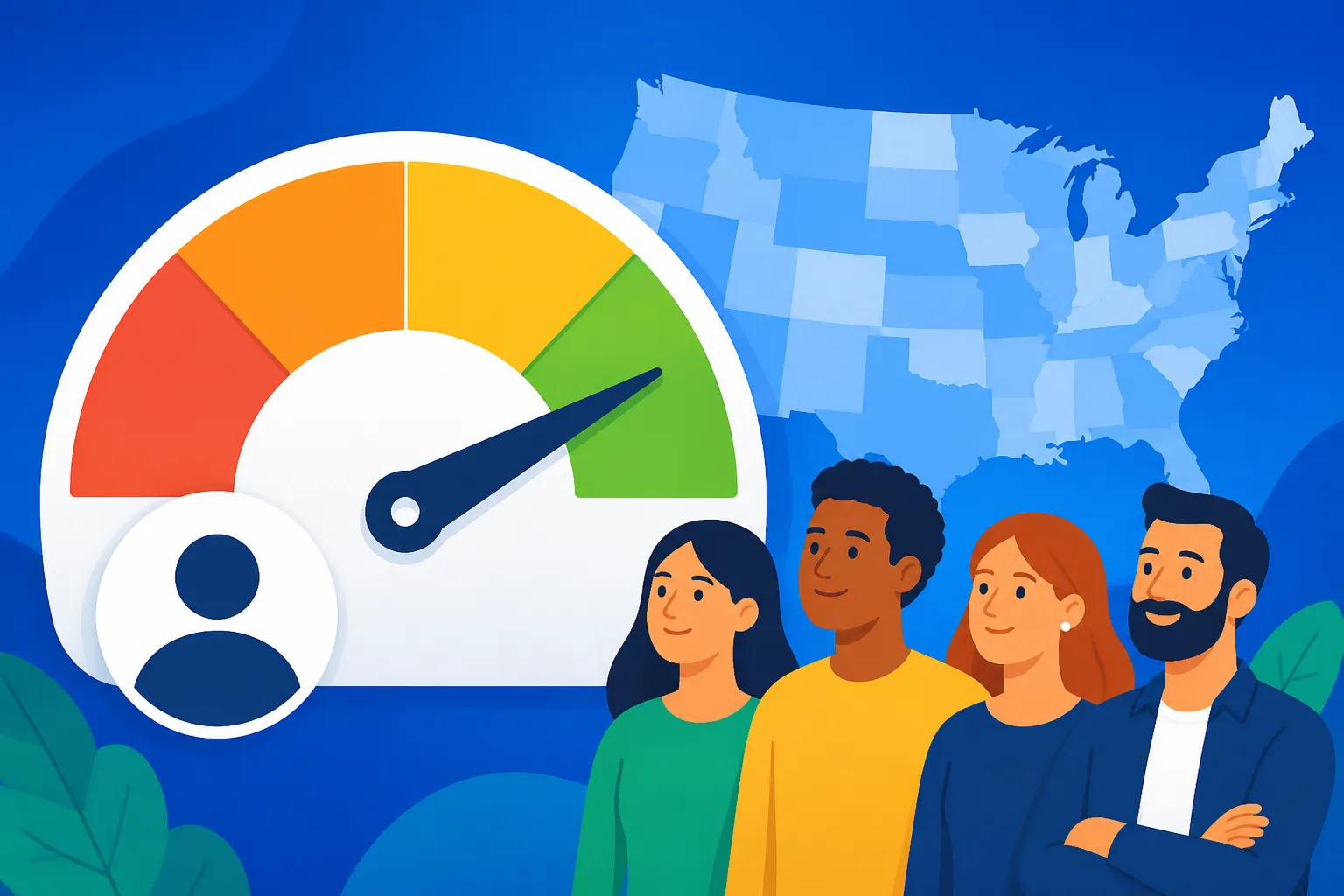
Currently, the national average FICO Score 8, which is the most widely used version, hovers around 718. This number has seen a gradual increase over recent years, a testament to Americans collectively improving their credit habits, especially through the challenges of recent economic shifts. On the other hand, the average VantageScore 3.0, another popular model, tends to be a bit lower, often in the range of 690 to 700. While these numbers might seem close, even a few points can make a difference in how lenders perceive you. It's crucial to remember that these are just averages, and millions of people fall both above and below these figures. Understanding these nuances is the first step in truly knowing where you stand.
Why "Average" Isn't Always "Good" or "Bad"
Here’s a common trap many people fall into: seeing the national average and thinking, "Okay, I'm at 718, so I'm good!" But "average" doesn't equate to "optimal" for everyone. For instance, while a 718 FICO Score is generally considered "good," it might not unlock the absolute best interest rates on a mortgage or car loan. Lenders often reserve their most favorable terms for those with scores in the "very good" (740-799) or "excellent" (800-850) ranges.
Conversely, if your score is a bit below average, say 680, it doesn't automatically mean your credit is "bad." You might still qualify for loans and credit cards, though perhaps with slightly higher interest rates or less generous terms. The true measure of a "good" or "bad" score is how well it aligns with your personal financial goals. Are you trying to buy a house, refinance a loan, or just get your first credit card? Your definition of "good" will change based on what you're trying to achieve, and sometimes, average is simply a stepping stone to something better.
Factors That Influence Your Credit Score
Your credit score isn't just a random number; it's a dynamic reflection of your financial behavior, compiled from the information on your credit reports. Understanding the individual components that make up your score is absolutely critical, whether you're trying to maintain an average score or climb into the excellent range. Lenders use these factors to assess your risk, so knowing what they're looking at can help you strategically manage your credit.
Payment History: The Biggest Piece of the Pie
Hands down, your payment history is the most influential factor, accounting for roughly 35% of your FICO Score. This component looks at whether you've paid your bills on time, every time. A single late payment can significantly ding your score, and the impact can be more severe the higher your starting score. Imagine you're sailing along with an excellent credit score, and then a payment slips through the cracks. That one misstep could drop your score by tens of points, sometimes even more.
This category considers all your credit accounts, including credit cards, mortgages, car loans, and student loans. Things like bankruptcies, foreclosures, collections, and charge-offs are major red flags that will devastate your payment history and, by extension, your score. If you have any negative marks like these, focusing on getting them removed or at least understanding How to Remove Negative Items From Your Credit Report is paramount. Consistent on-time payments, month after month, year after year, are the bedrock of a strong credit profile.
Credit Utilization: How Much You Owe Versus Your Available Credit
Coming in at about 30% of your FICO Score, credit utilization is a close second in importance. This factor measures how much of your available credit you're actually using. For example, if you have a credit card with a $10,000 limit and a balance of $3,000, your utilization is 30%. The general rule of thumb is to keep your overall credit utilization below 30% across all your credit cards. However, aiming for even lower, like below 10%, is often recommended for those striving for top-tier scores.
High credit utilization signals to lenders that you might be over-reliant on credit or struggling financially, even if you make your payments on time. This is why you'll often hear advice about paying down your balances. Even if you can afford to pay the minimum, strategizing to reduce your balances can quickly impact this part of your score. For a deeper dive, check out our guide on Credit Utilization: The Complete Guide. Maintaining a low utilization rate demonstrates responsible credit management and can significantly boost your score.
Length of Credit History, New Credit, and Credit Mix
These three factors make up the remaining 35% of your FICO Score, and while individually smaller, they collectively play a vital role.
- Length of Credit History (15%): This looks at how long your credit accounts have been open, including the age of your oldest account, your newest account, and the average age of all your accounts. A longer credit history generally bodes well for your score, as it provides more data for lenders to assess your reliability. This is why you often see older individuals having higher average scores; they've simply had more time to build a solid track record. It also underscores why closing old credit cards, even if unused, can sometimes be detrimental, as it shortens your average credit age.
- New Credit (10%): This factor considers how many new credit accounts you've opened recently and the number of hard inquiries on your report. Each time you apply for new credit, a "hard inquiry" is typically placed on your report, which can cause a small, temporary dip in your score. Too many inquiries in a short period can make you appear risky to lenders. While opening new credit can be part of How to Build Credit From Scratch (2026 Guide), it's important to do so strategically.
- Credit Mix (10%): This refers to the different types of credit accounts you have, such as revolving credit (credit cards) and installment loans (mortgages, car loans, student loans). A healthy mix demonstrates that you can responsibly manage various forms of credit. However, you shouldn't open accounts solely to diversify your mix; rather, it's something that typically evolves naturally as your financial needs change over time.
All these factors combine to paint a comprehensive picture of your credit health, which is why it's so important to understand What Affects Your Credit Score? The 5 Factors.
Different Scoring Models and Their Averages
It can be confusing to see different credit scores reported by various apps or services. You might check your score on one platform and see a 700, then another shows 685, and a third claims 720. This discrepancy is perfectly normal and largely due to the existence of multiple credit scoring models, primarily FICO and VantageScore, and even different versions within those models. Each model calculates your score using slightly different algorithms and data weighting, leading to variations in the "average" score you might encounter.
FICO Score vs. VantageScore Explained
The two dominant credit scoring models in the United States are FICO Score and VantageScore. While both aim to predict how likely you are to repay debt, they have distinct characteristics.
FICO Scores, developed by the Fair Isaac Corporation, are the most widely used scores by lenders, with some estimates suggesting over 90% of top lenders use a FICO Score in their decision-making. There isn't just one FICO Score; there are many versions (e.g., FICO Score 8, FICO Score 9, FICO Auto Score, FICO Bankcard Score) tailored for different lending products. The most commonly cited average, as we discussed, is for FICO Score 8. FICO places a strong emphasis on payment history and credit utilization, requiring at least six months of credit history for a score to be generated.
VantageScores were developed collaboratively by the three major credit bureaus – Equifax, Experian, and TransUnion – as a competitor to FICO. The most common version is VantageScore 3.0, and newer versions like 4.0 are also in use. A key difference with VantageScore is that it can generate a score with as little as one month of credit history, making it potentially more accessible for those new to credit. While VantageScore also heavily weighs payment history and utilization, it sometimes gives more weight to recent credit activity compared to older FICO models. This is a fundamental difference in FICO Score vs VantageScore: What's the Difference?, and it explains why average scores can differ between them.
Why Your Score Varies Across Bureaus and Models
The reason your score can vary even further is that there are three main credit bureaus—Experian, Equifax, and TransUnion—and each maintains its own version of your credit report. Lenders don't always report to all three bureaus, or they might report at different times. So, the data held by Experian might be slightly different from what Equifax has, which in turn might differ from TransUnion.
When a scoring model like FICO or VantageScore pulls data, it's pulling from one of these three bureau reports. Therefore, a FICO Score calculated using data from Experian might be different from a FICO Score calculated using data from TransUnion, simply because the underlying data itself varies. This isn't a problem or an error; it's just how the system works. It’s why services that provide "free credit scores" often give you a VantageScore from a single bureau, which might not be the exact FICO Score a mortgage lender uses. To get a comprehensive view, it's a good idea to How to Get Your Free Credit Report from all three bureaus annually and review them carefully.
How Your Average Compares to the National Average
Figuring out how your own credit score stacks up against the national average is a natural curiosity. It provides a useful perspective, but it’s just that – a perspective. Your personal average and the national average are two different beasts, and understanding the factors that cause them to diverge can offer valuable insights into your own financial journey.
Average Credit Scores by Age Group
It's a well-established trend that credit scores generally increase with age. This isn't because older people are inherently "better" with money, but primarily because they've had more time to build a long credit history, demonstrate consistent on-time payments, and often diversify their credit mix with larger loans like mortgages.
Here's a general breakdown of average FICO Scores by age group in the U.S.:
| Age Group | Average FICO Score (Approx.) | Typical Credit Profile |
|---|---|---|
| Under 30 | 660-680 | Shorter credit history, potentially higher utilization |
| 30-39 | 680-700 | Growing credit history, first major loans (car, house) |
| 40-49 | 700-720 | Established credit, potentially higher debt balances |
| 50-59 | 720-740 | Mature credit history, stable payment patterns |
| 60+ | 740-760+ | Longest credit history, often lower debt burden |
These are approximate ranges and can fluctuate. Data from sources like Experian often shows these trends.
As you can see, if you're in your 20s with an average score of 670, you're doing quite well for your age group, even if it's below the overall national average of 718. Conversely, if you're in your 50s with a 690, you might be below the average for your peer group, which could indicate areas for improvement. This demographic breakdown offers a much more realistic comparison than just looking at a single national number.
Geographic Variations Across the U.S.
Just like age, where you live can sometimes correlate with the average credit scores in that region. Factors like economic conditions, cost of living, median income, and even local cultural attitudes towards debt can influence the credit health of a state or city. States with robust economies, lower unemployment rates, and higher average incomes often boast higher average credit scores.
For example, states in the Midwest and Northeast often report higher average FICO Scores. Places like Minnesota, Massachusetts, and Vermont consistently rank among the states with the highest average scores, often in the 730s or even 740s. On the other end of the spectrum, states in the Southern U.S., which may face different economic challenges, sometimes show lower average scores, in the high 600s. These variations highlight that "average" is also a localized concept. If you live in a state with a higher average, a score that's "average" nationally might actually be below average for your immediate community, and vice-versa. Understanding these local nuances can give you a better idea of how your score truly stands in your environment.
How Your Score Stacks Up: Beyond the Numbers
Knowing the national average is one thing, but truly understanding what your personal credit score means for your financial life is another. Your score isn't just a number on a report; it's a key that unlocks (or locks) various financial doors, influencing everything from the interest rate on your next car to whether you can even rent that dream apartment.
Impact on Loans, Interest Rates, and Approvals
This is where your credit score really shows its muscle. Lenders use your score to gauge the risk of lending you money. A higher score generally means you're a lower risk, and they'll reward you with better terms.
- Mortgages: For a home loan, a "good" or "very good" credit score (typically 700+) is often required to get favorable interest rates. If your score is closer to the national average or below, you might still qualify, but you could end up paying thousands, or even tens of thousands, more over the life of the loan due to a higher interest rate.
- Auto Loans: Similar to mortgages, a higher credit score can significantly reduce the interest rate on a car loan. If you have an average score, you might get approved, but expect higher monthly payments than someone with excellent credit.
- Personal Loans and Credit Cards: Lenders evaluate your credit score to determine your eligibility and the interest rates you'll receive. A score near the average might get you approved for standard credit cards, but the best rewards cards or 0% APR offers are usually reserved for those with higher scores. When it comes to personal loans, an average score could mean higher interest rates, which could make the loan less affordable.
Think about it: even a difference of a couple of percentage points on a large loan can translate into substantial savings or extra costs over time. This is why working to improve your credit, even if you're already at the national average, is a smart financial move.
Setting Realistic Goals for Improvement
If your score is at the national average (around 718 FICO) or even a bit below, you might wonder how much you can really improve it. The good news is, there's almost always room for growth! Setting realistic goals is key to a successful credit improvement journey.
Instead of aiming for an overnight leap to 800, consider incremental steps. If you're at 690, a goal of reaching 720 (firmly in the "good" category) within six months might be achievable by focusing on consistent on-time payments and reducing credit card balances. Once you hit that, perhaps aim for 750 next. Each rung up the ladder brings you closer to better financial opportunities. For many, simply moving from "fair" (580-669) to "good" (670-739) can unlock significantly better loan terms. Remember, building good credit is a marathon, not a sprint. Consistency and patience are your best allies. If you're looking for a structured way to start, exploring How to Build Credit From Scratch (2026 Guide) can provide a solid foundation.
Actionable Steps to Improve Your Credit Score
Even if your credit score hovers around the national average, there's always an opportunity to make it stronger. A higher score means better interest rates, easier approvals, and more financial flexibility. It’s not about magic tricks; it’s about consistent, smart financial habits. Let's dig into some practical steps you can take to elevate your credit profile.
Strategies for Payment History and Utilization
These two factors are the heavy hitters when it comes to your credit score, so focusing your efforts here will yield the most significant results.
Firstly, make all your payments on time, every single time. This sounds simple, but life happens. Set up automatic payments for all your bills – credit cards, loans, utilities – a few days before their due dates. This way, even if you forget, your payment is processed. If you've had a late payment, consider writing a What Is a Goodwill Letter and Does It Work? to the creditor to see if they'll remove it. While not guaranteed, it's worth a try. Consistency is key; a long history of on-time payments will gradually outweigh any past mistakes.
Secondly, keep your credit utilization low. As we discussed, aiming for under 30% is good, but under 10% is excellent. This means if you have a total credit limit of $10,000 across all your cards, try to keep your combined balance below $1,000. One effective strategy is to pay down your credit card balances multiple times throughout the month, rather than just once before the due date. This can ensure that a lower balance is reported to the credit bureaus, even if you use your card frequently. If you're struggling with high utilization, prioritize paying off the cards with the highest balances relative to their limits. This directly impacts your credit utilization ratio, which is a key component in your score.
Diversifying Your Credit Mix and Managing Inquiries
While payment history and utilization are paramount, strategically managing your credit mix and new credit inquiries also contributes to a robust score.
Diversifying your credit mix essentially means having a healthy combination of different types of credit accounts, like revolving credit (credit cards) and installment loans (mortgage, auto loan, student loan). This shows lenders you can responsibly handle various forms of debt. However, the golden rule here is never take on debt you don't need just to improve your credit mix. The interest costs will far outweigh any potential score benefits. If you're trying to build credit from scratch or need a boost without taking on traditional loans, consider options like a credit-builder loan. Products from providers like Credit Strong are designed to help you build a positive payment history and a diversified mix without the typical risks, by essentially giving you a loan that's held in a savings account until you pay it off. This helps you establish installment credit.
Managing new credit inquiries means being mindful of how often you apply for new credit. Each application typically results in a hard inquiry on your credit report, which can temporarily drop your score by a few points. These inquiries stay on your report for two years, though their impact lessens over time. It's generally wise to space out your credit applications. Don't apply for multiple credit cards or loans within a short period unless absolutely necessary. If you're shopping for a major loan like a mortgage or car loan, multiple inquiries for the same type of loan within a short window (typically 14-45 days, depending on the scoring model) are often counted as a single inquiry, so bundle your shopping if you can.
Checking Your Credit Report Regularly
This is a non-negotiable step in maintaining and improving your credit score. You are entitled to a free copy of your credit report from each of the three major bureaus (Experian, Equifax, and TransUnion) once every 12 months via AnnualCreditReport.com.
When you receive your reports, don't just glance at them. Read them carefully. Look for any inaccuracies, such as accounts that aren't yours, incorrect balances, or late payments that you know you made on time. Errors are surprisingly common, and even a small mistake can drag down your score. If you find an error, you should dispute it immediately. Our guide on How to Dispute Credit Report Errors (Step-by-Step) walks you through the process. Regular monitoring allows you to catch identity theft early, ensure your personal information is correct, and guarantee that negative items aren't staying on your report longer than they should. Being proactive about your credit report is one of the most powerful things you can do for your financial health. Services like Credit Strong often include credit monitoring as part of their offerings, which can be a convenient way to stay on top of your credit profile.
Disclaimer
This article is for general informational purposes only and does not constitute professional advice. Laws, prices and regulations vary by location and change over time. Consult a qualified professional for guidance on your specific situation.