How to Pay Off $7,000 in Credit Card Debt in 1 Year
Facing down $7,000 in credit card debt can feel like looking up at a mountain. It’s overwhelming, frustrating, and often leaves you wondering if you'll ever truly be free. The good news is, setting a goal to pay off $7,000 in just one year is ambitious, but absolutely achievable with a focused plan and commitment. This guide is here to walk you through a realistic, step-by-step approach to tackle that debt head-on and reclaim your financial peace of mind.
Understanding the $7,000 Debt Challenge
Before we dive into strategies, it’s really important to get a clear picture of what you’re up against. Credit card debt isn't just a number; it's a financial drain that impacts everything from your stress levels to your future financial opportunities. Understanding the mechanics of how it works is the first step toward dismantling it.
The Weight of Credit Card Interest
Credit card companies are incredibly smart about how they structure their interest. It’s not just a flat percentage; it often compounds daily or monthly, meaning you're paying interest on interest. Imagine you have a $7,000 balance with an average interest rate of, say, 20% APR. If you only make the minimum payments, you could end up paying thousands of dollars in interest alone and take years, even decades, to pay off the principal. That $7,000 quickly becomes $8,000, then $9,000, and it feels like you're running on a treadmill that's constantly speeding up. This cycle is precisely what makes credit card debt so insidious and difficult to escape, and why taking proactive steps to pay it off quickly is crucial.
Let's put some numbers to this. If you have $7,000 at 20% APR and you only pay the minimum (let's say 2% of the balance or $25, whichever is greater), your minimum payment starts around $140. But as the balance slowly shrinks, so does that minimum payment, stretching out the repayment period for what feels like forever. You might pay that $7,000 off over 10-15 years, racking up more than $7,000 in interest alone. That's why simply making minimum payments isn't a strategy for liberation; it's a recipe for prolonged financial struggle.
Why 12 Months Is an Ambitious, Achievable Goal
Deciding to pay off $7,000 in a single year means you're committing to an aggressive repayment plan. It's not going to be easy, but it is entirely possible. To pay off $7,000 in 12 months, assuming an average credit card interest rate of 20%, you'd need to pay approximately $645 each month.
| Debt Amount | Interest Rate (APR) | Repayment Period | Estimated Monthly Payment | Total Interest Paid | Total Paid |
|---|---|---|---|---|---|
| $7,000 | 18% | 12 Months | $639 | $670 | $7,670 |
| $7,000 | 20% | 12 Months | $645 | $740 | $7,740 |
| $7,000 | 24% | 12 Months | $657 | $880 | $7,880 |
| $7,000 | 28% | 12 Months | $670 | $1,040 | $8,040 |
As you can see, a payment of around $650 a month is a significant chunk of change for many households. This isn't a small adjustment; it's a full-on financial sprint. This level of commitment often requires a deep dive into your budget, cutting expenses, and potentially finding ways to bring in more income. However, the reward for this intense effort is huge: being completely free of that $7,000 burden in just one year, saving you hundreds, if not thousands, in interest compared to a slower payoff. It gives you a clear finish line and the motivation to cross it.
Crafting Your Personalized Debt Attack Plan
Once you understand the challenge, it’s time to equip yourself with the right tools and strategies. There’s no one-size-fits-all solution, but a combination of popular methods can make your $7,000 payoff goal much more manageable.
Choosing Your Repayment Strategy: Snowball or Avalanche
When you have multiple credit cards or even just one large balance, how you approach payments matters. Two popular methods stand out: the debt snowball and the debt avalanche. Both are incredibly effective, but they cater to different psychological needs.
The debt snowball method focuses on motivation. You list your debts from smallest balance to largest, regardless of interest rate. You make minimum payments on all debts except the smallest one, on which you throw every extra dollar you have. Once that smallest debt is paid off, you take the money you were paying on it (plus its old minimum payment) and add it to the minimum payment of the next smallest debt. This creates a "snowball" effect, where your payments grow larger and larger as you knock out each debt. The satisfaction of paying off those smaller balances quickly provides powerful momentum to keep going. For someone who needs those quick wins to stay motivated on the journey to pay off $7,000 in credit card debt, the snowball method can be a game-changer. You can learn more about how this works in detail by reading our guide on Debt Snowball vs Debt Avalanche: Which Is Better?.
On the other hand, the debt avalanche method is purely mathematical. You list your debts from highest interest rate to lowest. You again make minimum payments on all debts except the one with the highest interest rate, to which you direct all your extra money. Once that highest-interest debt is gone, you move to the next highest. This method saves you the most money in interest over time, as you're attacking the most expensive debt first. If you're a numbers person and want to be as efficient as possible with your money, the debt avalanche is likely the better choice for you. While the $7,000 may be on one card, this strategy applies if you have multiple debts, or if you consider a balance transfer and then need to pay that off.
Exploring Debt Consolidation Options
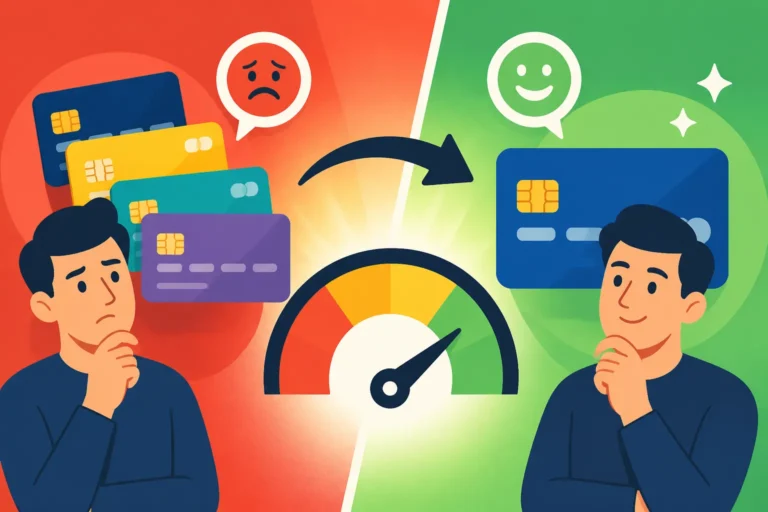
For a $7,000 credit card debt, debt consolidation can be a powerful tool, especially if you're dealing with a high interest rate. The idea is to combine your existing debt into a new loan or card with a lower interest rate, ideally 0% for an introductory period, making your monthly payments more manageable and reducing the total interest you pay.
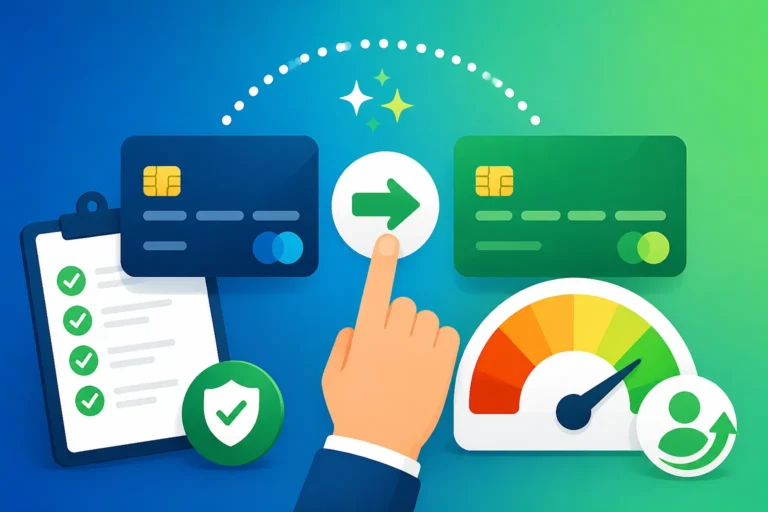
Balance transfer credit cards are a common strategy. Many credit card companies offer introductory 0% APR periods, sometimes lasting 12, 18, or even 21 months, on transferred balances. If you qualify for one of these, you could transfer your $7,000 debt to the new card. This effectively pauses the accumulation of interest for that introductory period, allowing 100% of your payments to go toward the principal. This is an incredible opportunity, but be aware of balance transfer fees (typically 3-5% of the transferred amount) and make sure you can pay off the entire balance before the 0% APR period ends. Otherwise, the remaining balance will be subject to a much higher variable APR. Explore this option further with our detailed article on Balance Transfer Cards: How They Work.
Another option is a personal loan. These loans typically offer fixed interest rates that are often lower than credit card APRs, and they come with a set repayment schedule, usually 1-5 years. A $7,000 personal loan over 12 months would give you a clear, predictable monthly payment at a potentially much lower rate. However, qualifying for a low-interest personal loan usually requires a decent credit score. If your credit score has taken a hit from the debt, your personal loan options might be limited or come with higher interest rates. Always shop around and compare offers from different lenders to find the best terms.
Negotiating with Creditors
Many people don't realize that credit card companies might be willing to work with you, especially if you've been a generally good customer but are now struggling. It never hurts to call your credit card company directly and explain your situation. You can ask if they would consider lowering your interest rate, even temporarily, or if they offer any hardship programs that could reduce your minimum payment or pause interest accumulation for a short period. Be polite, clear about your goal (paying off the debt), and prepared to explain your financial situation. Sometimes, just asking can save you hundreds of dollars in interest. While our article How to Negotiate With Debt Collectors focuses on debt in collections, the principles of communication and asking for assistance can be applied proactively with your current creditor before your account becomes delinquent. Every little bit helps when you're aiming to pay off $7,000 in a year.
Boosting Your Income and Slashing Expenses
Paying off $7,000 in a year is not just about choosing the right strategy; it’s about freeing up a significant amount of cash flow to make those hefty monthly payments. This is where a serious commitment to adjusting your income and expenses comes into play.
Deep Diving into Your Budget
The first step in finding that extra $650 or so per month is to know exactly where every single dollar of your money is going. If you haven't meticulously tracked your spending before, now is the time. Use a budgeting app, a spreadsheet, or even just a notebook to record every expense for at least a month. Categorize everything: housing, utilities, food, transportation, entertainment, subscriptions, miscellaneous. Many people are genuinely shocked when they see how much they spend on small, often unnoticed purchases like daily coffees, streaming services they barely use, or impulse buys.
Once you have a clear picture, identify your "leakage" points – areas where money is consistently draining without adding significant value to your life. For example, if you're spending $150 a month on dining out, cutting that down to $50 would free up $100. If you have multiple subscription services totaling $80, canceling a few could save you $30-$50. Be honest with yourself about what you truly need versus what's a "nice-to-have." This isn't about deprivation for the sake of it, but strategic sacrifices for a greater financial goal.
Uncovering New Income Streams
Sometimes, cutting expenses just isn't enough, or you might have already cut so much that there's nothing left. In these cases, increasing your income becomes essential. Think about how you can leverage your skills, time, or even unused possessions to bring in extra cash.
- Side Hustles: The gig economy offers countless opportunities. Could you drive for a ride-sharing service, deliver food, freelance your writing or design skills, or offer pet-sitting services in your neighborhood? Even an extra $100-$200 a week from a side hustle can make a massive difference, pushing you closer to that $650 monthly payment goal.
- Selling Unused Items: Look around your home. Do you have old electronics, furniture, clothes, or collectibles gathering dust? Platforms like Facebook Marketplace, eBay, Poshmark, or local consignment shops can turn these items into quick cash. A clear-out could easily net you a few hundred dollars, which you can immediately apply to your debt.
- Temporary Part-Time Work: If you have evenings or weekends free, consider picking up a temporary part-time job. Even a few shifts a week at a local retail store or restaurant could add significant funds to your debt repayment efforts. The goal here is short-term sacrifice for long-term gain.
Strategic Spending Reduction
Beyond the initial budget deep dive, commit to ongoing, strategic spending reductions. This means adopting a minimalist mindset for the next 12 months.
- Meal Planning and Cooking at Home: Eating out is a major budget killer. Plan your meals for the week, buy groceries with a list, and cook at home. Packing your lunch for work instead of buying it daily can save you hundreds over a year.
- DIY Everything Possible: Instead of paying for car washes, home repairs you can easily do yourself, or professional services, embrace the DIY approach. Learn a new skill on YouTube and save money.
- Frugal Entertainment: Instead of costly nights out, explore free or low-cost entertainment options. Picnics in the park, library books, free community events, or game nights at home can be just as fun and won't set you back financially.
- "No-Spend" Days or Weeks: Challenge yourself to have "no-spend" days where you don't spend a single dollar outside of essential bills. Or, try a "no-spend" week to see how much you can truly cut back. This isn't sustainable long-term, but it's a powerful exercise for short-term debt busting.
This aggressive approach to both earning and spending might feel uncomfortable at first. You might miss some luxuries or feel like you're constantly saying "no." However, remember the finish line: being debt-free from $7,000 in just one year. That freedom, that peace of mind, is worth every temporary sacrifice.
Staying on Track and Preventing Future Debt
Paying off $7,000 in a year is a huge accomplishment, but the journey doesn't end when the last payment is made. The real victory is staying debt-free and building a healthier financial future. This requires vigilance, new habits, and forward-thinking.
Setting Up Automatic Payments and Tracking Progress
Consistency is king when you're aggressively paying down debt. One of the best ways to ensure you never miss a payment and stay on schedule is to set up automatic payments. Most credit card companies and loan providers allow you to schedule recurring payments directly from your bank account. If you're tackling a balance transfer, make sure your automatic payment is set for the full amount needed to pay off the $7,000 within the 0% introductory period. This not only keeps you on track but also prevents late fees and potential dings to your credit score.
Beyond automation, actively tracking your progress is incredibly motivating. Use a debt payoff tracker app, a spreadsheet, or even print out a visual tracker (like a thermometer you color in as you pay down the balance). Seeing that $7,000 shrink month by month, and watching the total interest you're saving accumulate, provides powerful psychological boosts. Celebrate mini-milestones, like paying off your first $1,000 or hitting the halfway point. These small victories help maintain momentum when the journey feels long. For more tips on maintaining rapid progress, check out our guide on How to Pay Off Credit Card Debt Fast Without Hurting Your Credit.
Building a Buffer: The Emergency Fund
One of the most common reasons people fall back into credit card debt is unexpected expenses. A car repair, a sudden medical bill, or an unforeseen home repair can quickly derail even the best debt repayment plan if you don't have a financial cushion. This is why building a small emergency fund, even while paying off debt, is crucial.
I know, it sounds counterintuitive to save money when you're trying to pay off debt, and our article Should You Pay Off Debt or Save First? delves into this debate. But hear me out: aim to save at least $1,000 in an easily accessible, separate savings account. This isn't for investing; it's purely for emergencies. This "mini-fund" acts as your first line of defense. If your car needs new tires, instead of putting it on a credit card and adding to your debt burden, you can pull from your emergency fund. Once the $7,000 debt is gone, you can then focus aggressively on building this emergency fund to cover 3-6 months of living expenses. This strategic saving helps you avoid taking on new debt for life's inevitable curveballs.
Cultivating Long-Term Financial Health
Successfully paying off $7,000 in a year is a fantastic achievement, but it's just the beginning of a larger journey toward robust financial health. The habits you developed during this intensive payoff period – diligent budgeting, seeking extra income, and mindful spending – are invaluable and should continue.
Think about how you'll use credit cards responsibly going forward. The goal isn't to never use credit cards again, but to use them as tools, not crutches. Always pay your statement balance in full every month to avoid interest. Keep your credit utilization low, ideally below 10%, to positively impact your credit score. Our guide on How to Use a Credit Card to Build and Keep Good Credit offers excellent strategies for this, and understanding Credit Utilization: The Complete Guide will be key to maintaining a healthy score.
Consider diversifying your credit mix. Once your credit card debt is gone, you might look into other types of credit that report positively to the bureaus. For example, some individuals use credit builder loans, like those offered by Credit Strong, to establish a history of on-time payments for a different type of credit. These aren't meant to replace your emergency fund or add new debt, but rather to methodically build a stronger credit profile while you save. If you're truly starting from scratch or need to rebuild, something like this could be a strategic step. Take a look at How to Build Credit From Scratch (2026 Guide) for a comprehensive overview of building a solid credit foundation. The overarching goal is to transform your financial relationship with debt and ensure that the $7,000 payoff is a permanent win, not just a temporary reprieve.
Disclaimer
This article is for general informational purposes only and does not constitute professional advice. Laws, prices and regulations vary by location and change over time. Consult a qualified professional for guidance on your specific situation.