Should You Pay Off Debt or Save First?
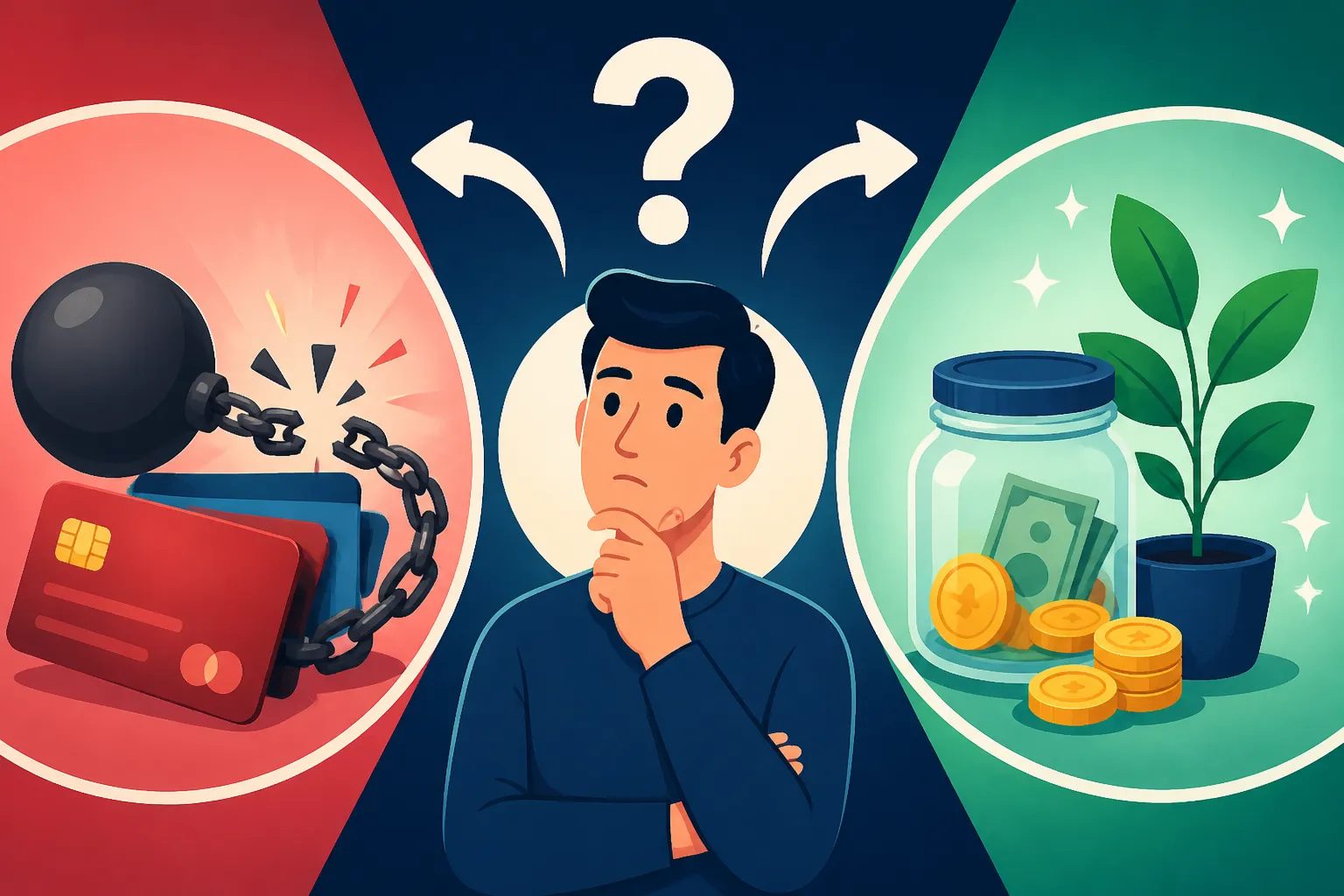
It’s a financial question that keeps so many of us up at night: should you aggressively tackle that mountain of debt, or should you build up a cozy nest egg in your savings account first? This isn't just about numbers on a spreadsheet; it's about peace of mind, future security, and making tough choices with your hard-earned money. If you’re feeling torn between the immediate relief of seeing debt shrink and the security of a growing savings balance, you’re definitely not alone. This guide will walk you through the nuances of this common dilemma, helping you understand both sides and ultimately decide what’s best for your unique financial situation.
Understanding the Core Dilemma
The struggle between paying off debt and saving money is a fundamental one that many people face. On one hand, debt can feel like a heavy anchor, dragging down your financial progress and causing constant stress. On the other hand, a lack of savings can leave you feeling vulnerable to life's unexpected curveballs, from a sudden job loss to an emergency car repair or a medical expense. It's a classic push and pull, and there's no single, universal answer that works for everyone.
The Emotional Weight of Debt and the Comfort of Savings
Let's be real, debt carries a significant emotional burden. High-interest credit card debt can feel like a constant drain, watching your minimum payments barely chip away at the principal while interest charges pile up. The feeling of owing money can lead to anxiety, restrict your spending, and even impact your relationships. There's a profound sense of liberation that comes with being debt-free, a feeling of regaining control over your finances and your future.
Conversely, having money stashed away in savings offers a different kind of peace. It's the comfort of knowing you have a buffer against unforeseen circumstances, a financial parachute if things go wrong. This security allows you to sleep better at night, knowing that a sudden expense won't send you spiraling into more debt. The simple act of watching your savings grow can be incredibly motivating and empowering, creating a sense of forward momentum in your financial life.
Why This Isn't a One-Size-Fits-All Answer
Your financial journey is as unique as you are. What's right for your neighbor, your friend, or even that financial guru on TV might not be the ideal path for you. Factors like your current income, the type and amount of debt you have, your interest rates, your age, your job security, and even your personal tolerance for risk all play a huge role. Someone with stable employment and manageable low-interest debt might approach this differently than someone facing volatile income and overwhelming high-interest credit card balances.
Moreover, your life stage also dictates priorities. A young professional just starting out might prioritize an emergency fund, while someone nearing retirement might focus on maximizing investment returns. There are countless nuances, and recognizing that flexibility is key will help you navigate this decision with greater confidence. Don't feel pressured to follow a rigid script; instead, focus on creating a strategy that aligns with your goals and circumstances.
The Case for Prioritizing Debt Payoff
For many, the most logical first step is to tackle debt. This is especially true when dealing with certain types of debt that can be particularly corrosive to your financial health. Paying off debt can offer both tangible financial benefits and significant psychological relief.
High-Interest Debt: The Silent Killer of Wealth
If you're carrying balances on credit cards, personal loans, or even some medical debts, you're likely paying very high interest rates. Credit card APRs can easily range from 18% to over 25%, meaning a substantial portion of your minimum payment is going straight to interest, not the principal. Imagine trying to fill a bucket with a hole in the bottom – that's what it feels like to only make minimum payments on high-interest debt.
Every dollar you put towards these debts effectively earns you a "return" equal to the interest rate you're avoiding. If your credit card charges 20% interest, paying it down is like getting a guaranteed, risk-free 20% return on your money – a return you'd be hard-pressed to find in most savings or investment accounts. Focusing on these debts first stops the bleeding, freeing up more of your income for future saving and investing. For guidance on getting started, check out our comprehensive article on How to Pay Off Credit Card Debt Fast.
Improving Your Credit Score
Your credit score is a reflection of your financial reliability, and carrying high debt balances, especially on revolving credit like credit cards, can significantly impact it. A major factor in your credit score is your Credit Utilization: The Complete Guide, which is the amount of credit you're using compared to your total available credit. Keeping your utilization high signals to lenders that you might be over-reliant on credit, which can lower your score.
By paying down your credit card balances, you're directly reducing your credit utilization, which can lead to a noticeable bump in your credit score. A higher credit score can translate into lower interest rates on future loans (like a mortgage or car loan), better insurance premiums, and even make it easier to rent an apartment or get approved for new credit. It's a domino effect: pay down debt, utilization drops, score improves, and your financial options expand.
The Psychological Relief
Beyond the numbers, the psychological impact of paying off debt is immense. The constant stress, the feeling of being trapped, the fear of collection calls – these are heavy burdens. Imagine waking up one morning and realizing you don't owe anyone a dime on your credit cards, or that student loan payment is finally gone. That's true freedom.
This relief can spill over into other areas of your life, reducing overall stress, improving mental well-being, and giving you a renewed sense of confidence. It frees up mental energy that was once consumed by worrying about bills, allowing you to focus on other goals and passions. Many find that once they shed the debt, they have a clearer picture of their financial future and are more motivated to pursue savings and investment goals.
The Case for Prioritizing Savings
While aggressively attacking debt has its merits, building up a solid savings foundation is equally, if not more, critical for long-term financial stability. Without savings, you're always one unexpected expense away from falling deeper into debt, potentially undoing all your hard work.
Building an Emergency Fund: Your Financial Safety Net
This is often the first and most important savings goal. An emergency fund is money set aside specifically for unexpected expenses – things like a job loss, a major car repair, an unforeseen medical bill, or a sudden home repair. Without one, these inevitable life events often force people to rely on credit cards, which as we know, can quickly lead to high-interest debt.
Most financial experts recommend having at least three to six months' worth of essential living expenses tucked away in an easily accessible, liquid account (like a high-yield savings account). This fund acts as a buffer, protecting you from financial shocks and preventing new debt from accumulating. Think of it as your personal financial insurance policy. Even if you have some debt, it's often wise to have at least a small starter emergency fund – say, $1,000 – before aggressively paying down anything other than the highest-interest debts. If you're wondering How to Build Credit From Scratch, a stable financial base like an emergency fund often makes it easier.
Long-Term Goals: Investments and Retirement
Beyond immediate emergencies, saving is essential for achieving your long-term dreams. Want to buy a house, start a business, or travel the world? These goals require consistent saving. More critically, saving for retirement is a race against time, where the magic of compound interest plays a huge role. The earlier you start investing, the more time your money has to grow exponentially.
If you delay retirement savings to solely focus on debt payoff, you could miss out on years of compounding growth. This is especially true for younger individuals who have decades until retirement. While paying off debt is important, neglecting long-term investment opportunities can cost you far more in missed gains than the interest you might save on some lower-interest debts. It's about balancing short-term relief with long-term prosperity.
Taking Advantage of Employer Matches (401k)
This is one area where prioritizing saving often makes undeniable financial sense. Many employers offer a matching contribution to your 401(k) or other retirement plans. For example, they might match 50 cents on every dollar you contribute, up to a certain percentage of your salary. This is essentially free money, an immediate 100% or 50% return on your investment, depending on the match structure.
If you don't contribute enough to get the full employer match, you are literally leaving money on the table. In almost all scenarios, contributing enough to capture the full match should be a top priority, even if you have debt. The guaranteed return from an employer match often far outweighs the interest you'd save on most debts (except for extremely high-interest credit card debt). Think of it as an integral part of your compensation package.
Finding the Right Balance: The Hybrid Approach
For many, the most practical and sustainable strategy isn't an "either/or" choice, but a "both/and" approach. A hybrid strategy allows you to build a safety net while systematically reducing your debt load, providing both security and progress.
The "Baby Steps" or "Debt Snowball/Avalanche" Hybrid
Many financial advisors advocate for a phased approach. A common strategy involves building a small starter emergency fund first (e.g., $1,000 or one month's expenses). This modest buffer protects you from immediate emergencies without diverting too much money from debt payoff. Once that’s established, you can then focus intensely on debt.
When it comes to debt, two popular methods are the debt snowball and the debt avalanche. The Debt Snowball vs Debt Avalanche: Which Is Better? article delves into these in detail. The debt snowball focuses on paying off the smallest debt first for psychological wins, while the debt avalanche prioritizes debts with the highest interest rates to save the most money. Regardless of which method you choose, the key is to make minimum payments on all other debts while aggressively attacking one specific debt. Once that debt is gone, you roll that payment amount into the next debt, creating a powerful snowball effect. During this intense debt payoff phase, any additional savings beyond the starter emergency fund might be put on hold, or at least minimized, to maximize debt reduction.
Minimum Payments Plus Targeted Savings
Another hybrid option is to consistently make minimum payments on all your debts, while also allocating a consistent amount towards savings. This approach might feel slower on both fronts, but it ensures you're making progress in both areas. It's particularly useful if you have lower-interest debts, like a car loan or student loans, where the interest rate might be comparable to or even less than what you could earn in a high-yield savings account over time.
For instance, you might decide to put 10% of your discretionary income towards an emergency fund and 20% towards extra debt payments. This balanced approach ensures you're building financial resilience while chipping away at your obligations. It allows you to feel the comfort of a growing savings account while still seeing your debt balances decrease. This strategy can be especially helpful if you're exploring options like a credit builder loan from a provider like Credit Strong, as it allows you to manage existing obligations while also actively building a positive credit history.
Assessing Your Risk Tolerance
Your personal comfort level with risk plays a significant role in this decision. Are you someone who gets immense anxiety from debt, even if it's low-interest? Then perhaps an aggressive debt payoff strategy, even before building up a massive emergency fund, might be better for your mental health. Some people simply cannot focus on saving when debt hangs over their head.
On the other hand, if you're comfortable with a certain level of debt but are extremely risk-averse when it comes to unexpected expenses, then prioritizing a robust emergency fund might be your preferred path. Understanding your own financial psychology is crucial. There's no right or wrong answer when it comes to risk tolerance, only what allows you to feel secure and motivated.
Tools and Strategies to Help You Decide
Making an informed decision requires a clear understanding of your financial landscape. Luckily, there are several practical tools and strategies you can employ to analyze your situation and choose the best path forward.
Calculating Your True Cost of Debt vs. Return on Savings
This is where the numbers really come into play. Take a good look at all your debts: what are the interest rates? Calculate how much interest you're paying each month and over the life of the loan. Then, compare that to the potential returns you could get on your savings or investments. For instance, if your credit card charges 22% APR, but your savings account only yields 0.5% and your investment account averages 7% annually, the math often points towards paying off that high-interest debt first.
A simple calculation can highlight this. Avoiding 22% interest on debt is far more impactful than earning 0.5% in a savings account. Even against a 7% average investment return, the 22% debt is a much larger drain. Use online calculators to project how much interest you'd save by paying off debt faster, and how much your savings could grow over time. This clear numerical comparison can often make the "correct" path glaringly obvious.
Creating a Realistic Budget
You can't make smart financial decisions without knowing where your money is actually going. A budget isn't about restricting yourself; it's about giving every dollar a job. Start by tracking your income and all your expenses for a month or two. This will reveal your true spending habits and show you exactly how much discretionary income you have available to either save or put towards debt. Our guide on How to Use a Credit Card to Build and Keep Good Credit emphasizes the importance of budgeting even when using credit.
Once you have a clear picture, you can allocate funds more intentionally. Maybe you discover you're spending $500 a month on dining out, and you could easily cut that in half, freeing up $250 for your emergency fund or an extra debt payment. A realistic budget empowers you to make conscious choices, rather than letting your money simply disappear. There are many budgeting apps and tools available, like Mint or YNAB, that can help simplify this process.
Seeking Professional Guidance
Sometimes, the best strategy is to admit you need a little help. A certified financial planner or credit counselor can provide an objective perspective on your situation. They can help you analyze your debts, understand your savings potential, and create a personalized plan tailored to your specific goals and risk tolerance. They might also suggest strategies you hadn't considered, such as debt consolidation loans or balance transfers, if appropriate.
Look for non-profit credit counseling agencies, especially if you're overwhelmed by debt. They can often provide free or low-cost advice and help you negotiate with creditors. Just be wary of any "credit repair" services that promise unrealistic results or charge hefty upfront fees, as some can be scams. A reputable professional will help you develop a sustainable plan, not a quick fix. If you're considering a credit builder product, some providers like Credit Strong offer educational resources that complement professional advice.
Making Your Decision and Staying the Course
Once you've weighed your options, crunched the numbers, and perhaps even sought advice, it's time to make a decision. But the journey doesn't end there. Staying consistent and motivated is just as important as the initial choice.
Regular Review and Adjustment
Your financial life isn't static. Income changes, expenses fluctuate, and life throws unexpected curveballs. What might be the perfect strategy today could need adjustment six months from now. Make it a habit to review your budget, debt payoff progress, and savings goals at least quarterly, if not monthly. This allows you to assess if your chosen path is still serving you best.
Did you get a raise? Consider putting half of it towards debt and half towards savings. Did an unexpected expense deplete your emergency fund? Prioritize rebuilding it before aggressively tackling debt again. Flexibility is key. Don't be afraid to pivot your strategy as your circumstances evolve. The most effective financial plans are those that can adapt.
Celebrating Milestones
The journey to financial freedom can feel long and arduous, whether you're paying off debt or building substantial savings. That's why it's so important to celebrate your progress along the way. Did you pay off your first credit card? Hit your initial $1,000 emergency fund goal? Make sure to acknowledge these wins, no matter how small they seem.
These celebrations don't have to be expensive; they can be simple acts like a special meal out, a movie night, or a small treat for yourself. The point is to reinforce positive behavior and keep your motivation high. Seeing tangible progress and celebrating it helps combat financial fatigue and reminds you why you're working so hard. This positive reinforcement is a crucial part of staying on track, especially when you feel like your Credit Score Ranges: Poor to Excellent Explained isn't moving as fast as you'd like.
Staying Motivated
Financial journeys, especially those involving significant debt or savings goals, are marathons, not sprints. There will be days when you feel discouraged, when progress seems slow, or when you're tempted to veer off course. This is normal. The key is to have strategies in place to keep your motivation burning bright.
Remind yourself of your "why." Why are you doing this? Is it to buy a house, retire early, or simply live without the stress of debt? Visualize your goal. Consider finding an accountability partner or joining an online community where you can share your progress and get support. Education is also a powerful motivator; keep reading articles like What Affects Your Credit Score? The 5 Factors to deepen your understanding and reinforce good habits. Consistency, even small consistent actions, will get you to your goal over time. Remember that services like Credit Strong are designed to help you with the building blocks of credit, offering a tangible way to see progress and stay motivated on your path to financial health.
| Factor | Prioritize Debt Payoff (High-Interest) | Prioritize Savings (Emergency Fund) | Hybrid Approach |
|---|---|---|---|
| Financial Goal | Reduce interest payments, improve credit score | Build safety net, avoid new debt | Achieve both, balanced progress |
| Typical Situation | High-interest credit card debt, personal loans | No emergency savings, unstable income | Moderate debt, some savings, stable income |
| Key Benefit | Stops interest accrual, quicker path to debt-free | Prevents falling deeper into debt, peace of mind | Mitigates risk, steady progress |
| Risk | Vulnerable to unexpected emergencies (no fund) | May accrue more interest on existing debt | Slower progress in both areas initially |
| Psychological Impact | Empowering, feeling of freedom | Security, reduced anxiety | Balanced sense of control and progress |
| When It Makes Sense | After a small starter emergency fund is built | Before aggressively tackling any debt | Most common, adaptable for varying situations |
| Credit Score Impact | Positive (lower utilization) | Neutral (unless new debt is incurred) | Positive (balanced improvements) |
| Employer Match (401k) | Might miss out on free money if not contributing | Can contribute to match while building fund | Contribute to match, then allocate remaining |
Disclaimer
This article is for general informational purposes only and does not constitute professional advice. Laws, prices and regulations vary by location and change over time. Consult a qualified professional for guidance on your specific situation.