FICO Score vs VantageScore: What’s the Difference?
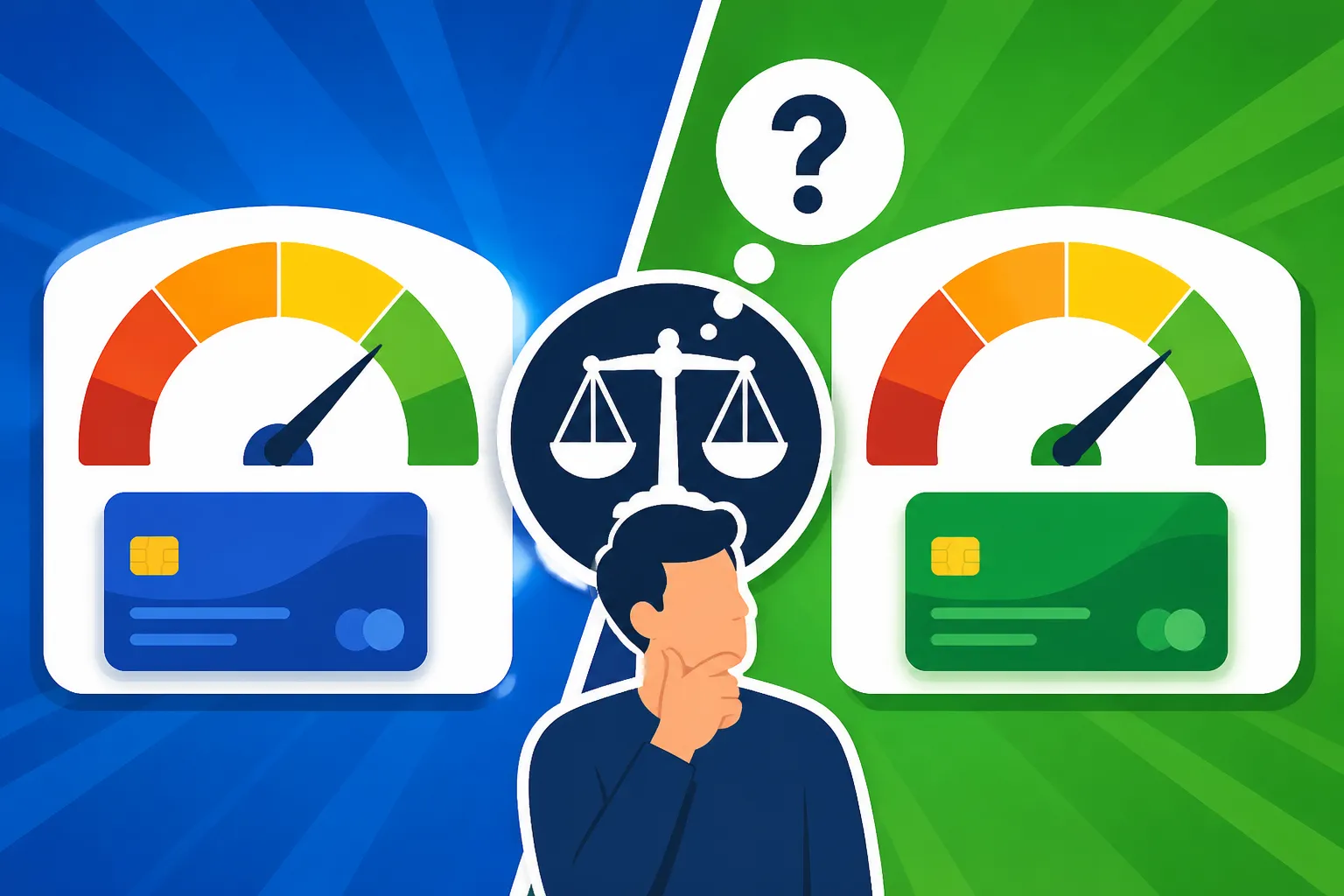
It's incredibly frustrating, isn't it? You check your credit score on one app, and it says 720. Then you log into another, and suddenly it's 690, or even 740! This head-scratching phenomenon of seeing wildly different credit scores across various platforms is a common source of confusion and anxiety. This comprehensive guide is here to unravel that mystery, explaining the fundamental differences between the two primary credit scoring models—FICO Score and VantageScore—and empowering you to understand and improve your financial standing.
Understanding Your Credit Score Landscape
Navigating the world of credit can sometimes feel like trying to solve a puzzle with missing pieces. You know your credit score is important, perhaps even the most important number when it comes to big financial decisions, but the details can be murky. The existence of multiple scores only adds to the complexity, leaving many of us wondering which number truly reflects our creditworthiness.
The Confusion of Multiple Scores
Let's be real, it's not just a little confusing; it can be downright infuriating. You're trying to get a clearer picture of your financial health, perhaps for a new apartment or a car loan, and every source seems to give you a different answer. One lender might pull your FICO Score 8, while another might check your VantageScore 3.0. Even within the FICO family, there are countless versions, tailored for different types of lending. This isn't some conspiracy to keep you in the dark; it's a reflection of how various models interpret your financial data differently, emphasizing certain behaviors over others. The problem isn't that one score is "wrong"; it's that they are all distinct tools designed to assess risk from slightly different angles, and knowing which one is being used can make all the difference.
Imagine trying to measure your height for a driver's license, but one DMV uses meters and another uses feet, and then a third uses an entirely different system that also accounts for your shoe size! That's a bit like what happens with credit scores. Different scoring models, like FICO and VantageScore, each have their own proprietary algorithms and focus areas. They might all be looking at the same raw data from your credit report, but how they crunch those numbers, what weight they assign to each factor, and even the range they use can lead to significant variations in the final three-digit number. It’s no wonder people feel lost trying to make sense of it all.
Why Credit Scores Matter So Much
Beyond the immediate frustration of seeing varying numbers, the reality is that your credit score is a powerful gatekeeper to many aspects of modern life. It’s not just about getting a new credit card; it impacts interest rates on mortgages and car loans, whether you can rent that dream apartment in downtown Portland, the deposit you might need for utilities, and even, in some cases, your ability to secure certain types of employment. A higher credit score means lenders see you as less of a risk, translating into better terms, lower interest rates, and ultimately, saving you thousands of dollars over the lifetime of a loan. Conversely, a lower score can mean higher costs, fewer options, and a tougher road financially.
Consider a scenario: you're looking to buy your first home. A "good" credit score, typically in the high 600s or 700s, could qualify you for a conventional loan with a favorable interest rate. However, if your score is hovering in the mid-500s, you might only qualify for an FHA loan, which has more lenient credit requirements but often comes with mandatory mortgage insurance premiums for the life of the loan. This seemingly small difference in interest points or insurance can add hundreds of dollars to your monthly payment and tens of thousands over 30 years. Your credit score isn't just a number; it's a financial lever that controls access and cost across your entire economic existence.
Diving Deep into the FICO Score
When most people talk about "their credit score," they're usually referring to a FICO Score. FICO, short for Fair Isaac Corporation, has been around for a long time and has become the industry standard. Understanding its intricacies is crucial to truly mastering your credit.
FICO's History and Dominance
FICO burst onto the scene in 1989 and quickly revolutionized the lending industry. Before FICO, lenders often relied on subjective judgment calls, which could lead to bias and inconsistent decisions. FICO introduced a standardized, objective way to assess credit risk, allowing for faster approvals and more equitable lending practices. Today, FICO Scores are used in over 90% of lending decisions in the United States, from mortgages and auto loans to credit cards and personal loans. Its widespread adoption means that when you apply for significant credit, it's highly probable that a FICO Score will be pulled and scrutinized by the lender.
This long history and market penetration mean that FICO has established itself as the gold standard. Its models have been refined over decades, incorporating vast amounts of consumer data to predict the likelihood of a borrower defaulting on their debts. The predictive power of FICO scores is why lenders trust them so implicitly. If you're wondering What Is a FICO Score and How Is It Calculated?, this is the model that usually carries the most weight, making it especially important to focus your efforts on improving the factors it prioritizes. For instance, maintaining a good payment history and managing your credit utilization are paramount for FICO.
The Five Pillars of FICO Calculation
FICO Scores are calculated based on five main categories, each weighted differently, to create a comprehensive picture of your credit behavior. Understanding these categories is the roadmap to improving your score.
-
Payment History (35%): This is the biggest piece of the pie. Timely payments on all your accounts are absolutely critical. Late payments, missed payments, collections, charge-offs, and bankruptcies can devastate this portion of your score. Even a single 30-day late payment can cause a significant drop, sometimes by dozens of points, and its impact can linger for years. This is why establishing a consistent track record of on-time payments is the single most effective way to build and maintain a strong FICO Score. Setting up auto-pay for all your bills can be a lifesaver here.
-
Amounts Owed (30%): This category looks at how much debt you have compared to your available credit, known as credit utilization. Keeping your credit card balances low relative to your credit limits is paramount. A good rule of thumb is to keep your overall utilization below 30%, and ideally even lower, like under 10%, for the best scores. High utilization signals that you might be over-reliant on credit, which increases perceived risk. This category also considers the number of accounts with balances, the amount owed on installment loans, and the proportion of installment loan amounts still owed.
-
Length of Credit History (15%): The longer your credit accounts have been open and active, the better. This factor considers the age of your oldest account, the age of your newest account, and the average age of all your accounts. A lengthy history with responsible usage demonstrates stability and experience with credit. Closing old accounts, especially those with no annual fees, can sometimes shorten your average credit age and negatively impact this factor, so think carefully before doing so. Patience truly is a virtue in this aspect of credit building.
-
New Credit (10%): This category looks at how often you apply for new credit and how many new accounts you've recently opened. While opening new accounts can sometimes be beneficial for your credit mix in the long run, too many new accounts or hard inquiries in a short period can signal higher risk. Each hard inquiry from a loan or credit card application can cause a small, temporary dip in your score, typically lasting a few months. It's wise to only apply for credit when you genuinely need it.
-
Credit Mix (10%): FICO likes to see a healthy blend of different types of credit, such as revolving credit (credit cards) and installment loans (mortgages, auto loans, student loans). Demonstrating that you can responsibly manage various forms of credit shows a diversified financial skillset. However, this factor is less important than payment history or amounts owed. It's not advisable to take out unnecessary loans just to improve your credit mix. The best approach is to let your credit mix evolve naturally as you make major purchases or take on different types of debt as needed.
Different FICO Versions and Their Impact
It's not just "a" FICO Score; there are many. FICO continually develops new versions (FICO 8, FICO 9, FICO 10, FICO Auto Score, FICO Bankcard Score, etc.) to keep up with evolving consumer behavior and lending needs. Each version might weigh the five categories slightly differently, or use updated algorithms to be more predictive. For example, FICO 8 is the most widely used version, but FICO 9 gives less weight to paid collection accounts. Specific industry-tailored scores, like FICO Auto Scores, might place a stronger emphasis on your history with car loans.
This proliferation of scores means that the "score" you check on a free credit monitoring service might not be the exact score a specific lender uses. For instance, while your general FICO 8 might be 720, an auto lender might pull your FICO Auto Score 2, which could be 700 or 730 depending on how your past car payments influence that particular model. This is one of the key reasons why your scores can seem so different. It's crucial not to get too hung up on one specific number, but rather to focus on the underlying behaviors that improve all versions of your FICO Score. Improving your Payment History: Why It's 35% of Your Score will always be the most impactful action, regardless of the specific FICO version.
Exploring the VantageScore Model
While FICO has dominated the credit scoring landscape for decades, VantageScore has emerged as a significant player, offering an alternative perspective on creditworthiness. Understanding this model is equally important, especially since many free credit services now provide VantageScores.
The Rise of VantageScore and Its Genesis
VantageScore was developed in 2006 by the three major credit bureaus themselves—Experian, Equifax, and TransUnion. Their goal was to create a more consistent and easily understood scoring model that could be applied across all three bureaus, and also to provide a score for consumers who might have "thin credit files" – meaning very little credit history. This was a direct response to some criticisms that FICO models often struggled to score individuals with limited credit data, effectively locking many out of the credit system. VantageScore aims to be more inclusive, which is why it's often the score you'll see on consumer-facing websites.
The development of VantageScore also reflected a desire among the bureaus to offer a competitive alternative in the credit scoring market. By combining their vast data resources and expertise, they created a model that could stand alongside FICO, providing lenders with another tool for risk assessment. While not as universally adopted as FICO by lenders, VantageScore has gained significant traction, especially with consumer credit monitoring services and some smaller lenders. Its methodologies have evolved over time, with VantageScore 3.0 and VantageScore 4.0 being the most prominent versions today, each offering subtle refinements in how credit factors are weighed and interpreted.
Key Factors in VantageScore Calculation
Like FICO, VantageScore evaluates your credit report data, but it uses slightly different weighting and terminology for its categories. The primary factors include:
-
Payment History: Just like FICO, this is incredibly important. On-time payments demonstrate reliability. Late payments, especially severe ones, will negatively impact your VantageScore significantly. This category is foundational to both scoring models. Ensuring you never miss a payment is the golden rule, whether you're aiming for a strong FICO or VantageScore.
-
Credit Utilization: How much of your available credit you're using. Keeping this percentage low is beneficial. VantageScore, similar to FICO, views high utilization as a red flag, indicating a potential struggle to manage debt. Regularly paying down balances before your statement date is a smart strategy for both models.
-
Balances and Depth of Credit: This looks at your total amount of debt across all accounts and the types of accounts you have. A diverse mix of credit, like revolving credit and installment loans, is seen positively, much like FICO's credit mix. Managing your overall debt burden is key.
-
Age of Credit History: The longer your history of responsible credit use, the better. This includes the age of your oldest account and the average age of all your accounts. A seasoned credit file indicates stability.
-
Recent Credit Behavior: How recently you've opened new accounts or had hard inquiries. Opening too many new accounts in a short period can be detrimental, indicating a sudden need for credit or higher risk.
These factors are assessed differently across various versions of VantageScore, but the core principles remain. VantageScore 4.0, for instance, places a greater emphasis on "trends" in your credit data, looking at whether your balances are increasing or decreasing over time, rather than just a snapshot at one moment. This "trended data" approach aims to provide a more dynamic view of your financial habits. Understanding these nuances helps explain Why Is My Credit Score Different on Different Sites? and prepares you for the specific insights each model offers.
VantageScore's Approach to Thin Files
One of the most notable differences and a key selling point for VantageScore is its ability to score individuals with "thin credit files." Traditionally, FICO models required a credit account to be open for at least six months and have activity reported within the last six months to generate a score. This often left young adults, new immigrants, or those who primarily use debit cards without a score, making it difficult to access credit. VantageScore changed this by allowing a score to be generated with just one month of credit history and one active account.
This inclusivity is a huge advantage for many who are just starting their credit journey. For example, a young person who opens their first secured credit card or a Credit Strong credit builder loan could potentially get a VantageScore much faster than a FICO Score. This allows them to begin building a credit history sooner, opening doors to renting an apartment or getting a cell phone contract without a significant deposit. It’s a valuable tool for those looking to establish their financial footprint and bridge the gap to qualifying for more traditional credit products. If you're wondering how to build credit from scratch, VantageScore offers a quicker path to getting a score on the board.
Head-to-Head Comparison: FICO vs. VantageScore
Now that we've delved into each model individually, let's put them side-by-side to highlight their similarities and, more importantly, their crucial differences. This comparison will help solidify your understanding of why you see varying numbers and which score might be more relevant for your immediate needs.
Similarities in Core Principles
Despite their differences, FICO and VantageScore share a fundamental agreement on what constitutes responsible credit behavior. Both models emphasize:
- Payment History: This is the undisputed champion for both. Paying your bills on time, every time, is the single most important action you can take to foster a good score, regardless of the model. Both FICO and VantageScore will severely penalize late payments, defaults, and collections.
- Credit Utilization: Keeping your credit card balances low relative to your available credit is a key factor in both. High utilization indicates higher risk across the board. The advice to keep utilization below 30% (or even 10%) applies equally to both scoring systems.
- Length of Credit History: A longer history of responsible credit use is beneficial for both FICO and VantageScore. It demonstrates stability and experience. Both models reward consistency and penalize too many new accounts in a short period.
- Credit Mix: Having a healthy mix of revolving and installment credit is a positive for both. It shows you can manage different types of debt responsibly. However, neither model suggests you should take on unnecessary debt just to diversify your credit mix.
These shared principles mean that good credit habits will generally lead to good scores across both models. If you focus on paying on time, keeping balances low, and avoiding unnecessary new credit, you'll be building a strong foundation for both your FICO and VantageScores. You can learn more about these core factors in our guide on What Affects Your Credit Score? The 5 Factors.
Divergent Weighting of Credit Factors
While the fundamental factors are the same, the weight each model assigns to them can differ, leading to variations in your actual score. This is where a large part of the "score confusion" comes from.
FICO's traditional weighting, as discussed earlier, puts Payment History at 35% and Amounts Owed at 30%, making these two factors account for a dominant 65% of your score. Length of Credit History, New Credit, and Credit Mix make up the remaining 35%. This precise weighting has been a hallmark of FICO's consistent approach.
VantageScore, on the other hand, describes its factors using categories that, while similar, have slightly different emphasis. While they don't provide exact percentages like FICO, their published guidance suggests:
- Extremely Influential: Total credit usage, capacity, and balances (similar to FICO's Amounts Owed/Utilization).
- Highly Influential: Credit mix and experience (a blend of FICO's Length of Credit History and Credit Mix).
- Moderately Influential: Payment history (this is still very important, but VantageScore suggests its impact might be slightly less than FICO's relative to other factors, especially for certain newer versions).
- Less Influential: Recent credit behavior and inquiries.
This difference in emphasis means that certain actions might have a slightly different impact on one score versus the other. For instance, VantageScore 3.0 and 4.0 are often considered more forgiving of older, paid collection accounts than some FICO versions. They also place more weight on "trended data," looking at whether your balances are going up or down over time, rather than just the snapshot that many FICO models use. This dynamic view can be beneficial if you're actively paying down debt.
How Scoring Ranges Compare
Both FICO and VantageScore use a 300-850 point scale. However, the exact thresholds for what constitutes "Excellent," "Good," "Fair," or "Poor" can sometimes vary slightly, contributing to perceived differences in your credit health. For example, while a 740 might be considered an "Excellent" FICO Score by some lenders, a VantageScore of 740 might fall into a slightly different category definition on another platform.
The important thing to remember is that higher is always better. While the exact numerical threshold might shift a few points between models or even between different FICO versions, the general tiers of credit quality remain consistent. A score in the 700s or 800s will almost always be considered excellent, regardless of the model. Scores below 600 will consistently be seen as high-risk. So, instead of obsessing over whether you have a 720 FICO or a 715 VantageScore, focus on keeping your score firmly in the "good" or "excellent" range, which will serve you well across all lenders and scoring models. You can dive deeper into these ranges in our guide Credit Score Ranges: Poor to Excellent Explained.
To help clarify, here’s a table summarizing the key differences:
| Feature | FICO Score | VantageScore |
|---|---|---|
| Developer | Fair Isaac Corporation | Experian, Equifax, TransUnion |
| Launch Year | 1989 | 2006 |
| Prevalence | Used in 90%+ of lending decisions | Often used by consumer sites, some lenders |
| Scoring Range | 300-850 | 300-850 |
| Primary Focus | Risk assessment for lenders | Consistency across bureaus, consumer access |
| Thin File Capability | Generally requires 6 months history & activity | Can score with just 1 month history & 1 account |
| Payment History Weight | Most influential (35%) | Highly influential |
| Utilization Weight | Highly influential (30%) | Extremely influential |
| Trended Data | Less emphasized in older versions | Stronger emphasis in newer versions (4.0) |
| Impact of Paid Collections | Can still negatively impact | Less impactful in newer versions |
| Number of Versions | Many (FICO 8, 9, 10, industry-specific, etc.) | Fewer (VantageScore 3.0, 4.0) |
Why Your Scores Seem Different Everywhere You Look
Okay, so now you know there are two main players, FICO and VantageScore, and that each has different versions. But even that doesn't fully explain why your score can jump around so much. There are still a few more layers to this credit score onion.
Data Reporting Discrepancies Among Bureaus
This is a big one. You have three main credit bureaus: Equifax, Experian, and TransUnion. While they all aim to collect the same information, it's not always identical across the board. A creditor might report to two bureaus but not the third, or they might report at different times, causing slight delays in updates. Sometimes, an error might creep into one report but not the others.
Think of it like three different reporters covering the same event. They'll mostly have the same facts, but their stories might differ slightly in detail or emphasis, and one might get a quote that the others miss. Because FICO and VantageScore models pull their data from these individual credit reports, any difference in the underlying data will naturally lead to a different score. So, your FICO Score calculated from your Equifax report might be different from your FICO Score calculated from your Experian report, simply because the data they're looking at isn't precisely the same. This is why it's so important to How to Get All 3 Credit Reports for Free and check them regularly for consistency and accuracy. If you notice glaring discrepancies, you'll want to address them.
The Impact of Different Scoring Versions
We touched on this briefly, but it's worth reiterating. Even if all three bureaus had identical data, the version of the FICO or VantageScore model being used can change the outcome. Lenders often have preferences. A mortgage lender might use an older, more established FICO model like FICO 2, 4, or 5 (sometimes called "mortgage scores"), while a credit card company might use FICO 8 or FICO 9. Similarly, a free credit monitoring app might show you a VantageScore 3.0, while another might show VantageScore 4.0.
Each version has been tweaked to predict risk for specific types of loans or to incorporate newer data trends. These adjustments, even minor ones, can result in a different score. It's like comparing different editions of a textbook; the core information is there, but some chapters might be updated, and certain topics might be emphasized more than others. This isn't necessarily a bad thing, as it allows lenders to get a highly targeted view of your creditworthiness for the specific product you're applying for, but it certainly contributes to the mosaic of numbers you might encounter. This is also why Credit Karma vs Your Real Credit Report often shows different numbers; Credit Karma typically uses VantageScore, while many lenders use FICO.
When Each Score is Most Likely to Be Used
Knowing which score is likely to be pulled for different types of credit can help you anticipate what to expect.
- Mortgages: For mortgages, Fannie Mae and Freddie Mac, the government-sponsored enterprises that buy most home loans, require lenders to use older FICO versions: FICO Score 2 (Experian), FICO Score 5 (Equifax), and FICO Score 4 (TransUnion). So, if you're buying a house, these specific FICO scores are what will truly matter.
- Auto Loans: Many auto lenders use FICO Auto Scores, which are specialized FICO versions that weigh auto-related credit history more heavily.
- Credit Cards and Personal Loans: Most credit card issuers and personal loan providers use a more recent FICO Score, most commonly FICO Score 8, but FICO 9 and 10 are also gaining traction.
- Consumer Credit Monitoring: Free credit score services and apps like Credit Karma, Credit Sesame, and WalletHub often provide VantageScores (typically 3.0 or 4.0). This is because VantageScore was designed in part for direct-to-consumer access and offers a consistent experience across the three bureaus, making it easier for these platforms to implement. Some services, like Experian's own tools, will provide FICO Scores, but often it's FICO 8 or a similar general-purpose score.
Understanding these preferences helps you prioritize where to focus your attention when evaluating your scores. If you're planning to buy a house, for example, it's the older FICO mortgage scores that you'll want to keep an eye on, as these are the ones that will dictate your loan eligibility and interest rates.
Practical Steps to Improve Both Your FICO and VantageScore
Given that both FICO and VantageScore share core principles, the good news is that the strategies for improving them largely overlap. By focusing on fundamental, responsible credit habits, you'll see positive movement across all your scores.
Prioritizing Fundamental Credit Habits
This is the bedrock of good credit, regardless of the scoring model.
-
Pay Your Bills On Time, Every Time: This cannot be stressed enough. How Long Does a Late Payment Stay on Your Credit Report? — up to seven years, and its negative impact is significant. Set up automatic payments, use calendar reminders, or dedicate a specific day each month to handle all your bills. Even one 30-day late payment can cause a substantial drop in your score. Consistency is the most powerful tool in your credit building arsenal.
-
Keep Credit Utilization Low: Aim to keep your credit card balances well below 30% of your available credit, both on individual cards and across all your cards combined. Ideally, keeping it under 10% is even better for top scores. If you have a credit card with a $5,000 limit, try to keep your balance under $1,500, and even better, under $500. This shows lenders that you're not maxing out your cards and are a responsible borrower. Paying down balances often, even multiple times a month, can help keep reported utilization low, as creditors typically report your balance once a month.
-
Maintain a Long Credit History: The longer your accounts have been open and in good standing, the better. Don't close old credit card accounts, especially those with no annual fees, even if you don't use them frequently. An older account contributes positively to the average age of your credit history, which is a factor in both FICO and VantageScore. If you do use older cards, make a small purchase every few months and pay it off immediately to keep the account active.
-
Limit New Credit Applications: Only apply for credit when you genuinely need it. Each hard inquiry can temporarily ding your score for a few months. Spreading out your applications and not applying for multiple lines of credit in a short period helps your score recover and prevents you from appearing as a risky borrower seeking too much credit too quickly.
-
Diversify Your Credit Mix (Responsibly): Over time, having a mix of revolving credit (credit cards) and installment loans (mortgages, auto loans, student loans) can positively impact your score. However, never take out a loan you don't need just to diversify your credit mix. The negative impact of unnecessary debt far outweighs any potential benefit to your score from a diverse mix. This is a factor that naturally improves as you reach different life stages and make larger purchases.
Addressing Specific Negative Items
Sometimes, it's not just about building good habits, but also about actively mitigating past mistakes or erroneous entries.
-
Dispute Errors: One of the most important things you can do is regularly check your credit reports from all three bureaus (Equifax, Experian, TransUnion) through AnnualCreditReport.com. If you find any inaccuracies—whether it's an incorrect late payment, an account you don't recognize, or a wrong balance—dispute it immediately. The Fair Credit Reporting Act (FCRA) gives you the right to an accurate credit report, and bureaus are legally obligated to investigate disputes. Removing even one error can significantly boost your score. Our guide on How to Dispute Credit Report Errors Step-by-Step can walk you through the process.
-
Deal with Collections and Charge-Offs: Negative marks like collections and charge-offs can severely damage your credit. While they typically stay on your report for seven years, you can sometimes negotiate with collection agencies. A "pay for delete" agreement, where the collection agency agrees to remove the item from your credit report in exchange for payment, is a powerful tool, though not always guaranteed. If you have older collections, understanding the Statute of Limitations on Debt in California (or your specific state) is crucial, as paying an old debt can sometimes restart the clock on its reporting.
-
Goodwill Letters for Late Payments: For isolated late payments, especially if you have an otherwise stellar payment history, you might try sending a goodwill letter to the original creditor. This letter politely asks them to remove the late payment from your credit report as a gesture of goodwill. While there's no guarantee, it can sometimes work, particularly if you've been a long-time, reliable customer. You can find templates and tips in our Goodwill Letter for Late Payments Template + Tips guide.
Leveraging Credit Building Tools
For those starting with little or no credit history, or those actively rebuilding, specialized tools can accelerate the process.
-
Secured Credit Cards: These cards require a security deposit, which typically acts as your credit limit. They are an excellent way to demonstrate responsible credit use without significant risk to the lender. Many people use them as a stepping stone to unsecured cards. The key is to use them regularly for small purchases and pay the balance in full and on time every month. Check out our guide on Secured Credit Cards: How They Build Credit.
-
Credit Builder Loans: Services like Credit Strong offer credit builder loans. With these, the loan amount is held in a locked savings account while you make monthly payments. Once the loan is paid off, you receive the money. The payments are reported to the credit bureaus, building a positive payment history. This is a fantastic way to establish credit and save money simultaneously, especially if you're struggling to get approved for traditional credit products.
-
Authorized User Status: Becoming an authorized user on a trusted family member's credit card can allow you to benefit from their positive payment history and long credit age, provided they use the card responsibly. This can significantly boost your score quickly, but choose wisely, as their negative actions could also impact you. Learn more about Does Being an Authorized User Build Credit?.
-
Rent Reporting Services: Services like Experian Boost or similar rent reporting platforms allow your on-time rent payments to be reported to credit bureaus. Since rent isn't traditionally reported, this can add positive payment history to your credit file, especially benefiting those with thin files or lower scores.
By combining these proactive strategies—good fundamental habits, addressing negative items, and leveraging credit-building tools—you can systematically improve your credit health across both FICO and VantageScore models, leading to better financial opportunities down the road.
Demystifying Common Credit Score Myths
The world of credit is rife with myths and misinformation that can lead people down the wrong path, often costing them valuable points or financial opportunities. Let's bust a few of the most persistent ones.
Does Checking Your Score Hurt It?
This is perhaps the most common credit score myth, and it causes a lot of unnecessary anxiety. The answer is generally NO, checking your own credit score does not hurt it. When you access your score through a free credit monitoring service, your bank, or even directly from the credit bureaus, it typically results in a "soft inquiry." Soft inquiries are visible only to you and sometimes to the company that pulled it, but they are not visible to lenders and do not affect your credit score in any way.
The only time checking your credit can hurt it is when a lender performs a "hard inquiry" as part of a credit application process (e.g., for a new credit card, loan, or mortgage). Hard inquiries indicate that you are seeking new credit and can cause a small, temporary dip in your score (usually 1-5 points) for a few months, remaining on your report for up to two years. The key takeaway is: monitor your credit as often as you like; it’s a smart financial habit and will never harm your score. In fact, checking your score regularly helps you spot errors or signs of identity theft quickly. If you want to know more, check out our guide on Does Checking Your Own Credit Score Hurt It?.
Is Carrying a Balance Good?
Another pervasive myth is the idea that you need to carry a balance on your credit card from month to month to improve your credit score. Many people believe that paying off your credit card in full makes you seem like you don't "need" credit, or that creditors won't report your activity positively. This is absolutely false and can be an expensive misconception.
Carrying a balance from month to month means you're paying interest on that balance, which is essentially throwing money away. You don't get extra credit score points for paying interest. What credit scoring models do reward is responsible use of credit, which includes keeping your credit utilization low and paying your bills on time. When you pay your statement balance in full every month, the credit card company still reports your activity, showing that you used credit and then paid it off responsibly. This is the ideal scenario for both your wallet and your credit score. Your goal should always be to pay your statement balance in full by the due date to avoid interest charges and maximize your credit score's potential.
Disclaimer
The information provided in this article is for general informational purposes only and does not constitute financial, legal, or credit advice. While we strive to provide accurate and up-to-date information, credit scoring models and regulations can change. Always consult with a qualified financial professional or credit counselor for advice tailored to your specific situation.