Credit Karma Review: Is It Accurate for Credit Monitoring?
One of the biggest frustrations many of us face when trying to get a handle on our financial health is knowing where we truly stand with our credit. You log into a free credit monitoring service, see a score, then apply for a loan somewhere else only to be told a completely different number. It’s enough to make you throw your hands up in exasperation! This guide aims to clear up the confusion surrounding Credit Karma’s accuracy, helping you understand what it offers and how to interpret the information it provides for your financial journey.
What Credit Karma Brings to Your Financial Table
Credit Karma burst onto the scene promising free credit scores and reports, and for many, it was the first time they could easily access this crucial information without paying a dime. Before Credit Karma, getting a peek at your credit data often meant paying for a service or waiting for your annual free reports. It truly democratized access to personal credit information, which was a huge win for consumers. However, what it offers, and how it delivers that information, is key to understanding its "accuracy."
Free Credit Scores and Reports
At its core, Credit Karma provides you with credit scores and reports from two of the three major credit bureaus: TransUnion and Equifax. Experian scores are not available through Credit Karma. This is a crucial distinction right off the bat. When you check your scores and reports on Credit Karma, you’re getting a snapshot of your credit health as reported by these two specific bureaus. They typically update your scores and reports weekly, allowing you to track changes relatively frequently.
These aren't just generic scores; they provide you with your VantageScore 3.0. This particular scoring model is a joint venture by all three credit bureaus, designed to be a competitor to the widely used FICO Score. So, while you're seeing a real credit score, it's one of many types of scores out there. The accompanying credit reports offer a detailed look at the accounts, payment history, and inquiries that make up those scores, pulling directly from TransUnion and Equifax. This free access is invaluable for anyone trying to stay on top of their credit, whether they're just starting to build credit from scratch or working to improve a damaged score.
Monitoring and Alerts
Beyond just showing you your scores, Credit Karma offers continuous credit monitoring. This means it keeps an eye on your TransUnion and Equifax credit files and sends you alerts when significant changes occur. Did a new account pop up that you don't recognize? Did a late payment get reported? Did an inquiry appear? Credit Karma aims to notify you quickly, which can be incredibly helpful for spotting potential errors or even signs of identity theft. These alerts can be a lifesaver, allowing you to react quickly if something suspicious appears on your report.
Think of it as having a friendly neighborhood watch for your credit file. While it won't prevent issues from happening, it gives you an early warning system. For example, if you see a new hard inquiry that you didn't authorize, you can immediately investigate it. Understanding what is a soft inquiry vs a hard inquiry can help you differentiate between routine checks and those that might indicate something amiss. These alerts can make the difference in catching an issue early, rather than discovering it months later when it's already caused significant damage to your credit profile.
Financial Product Recommendations
Credit Karma isn't just a charitable venture; it's a business, and it generates revenue by providing personalized recommendations for financial products. Based on your credit profile, it will suggest credit cards, personal loans, auto loans, and even insurance policies that you might qualify for. These recommendations are tailored using the data from your credit reports, aiming to match you with products that fit your current credit standing. For instance, if you have fair credit, it might suggest secured credit cards or credit builder loans like those offered by Credit Strong, which are designed to help you improve your score.
While these recommendations can be genuinely useful for finding new financial opportunities, it's important to remember their purpose: they are advertisements. Always do your own research before applying for any product, regardless of how highly recommended it might be. Consider the terms, fees, and whether the product truly aligns with your financial goals. Sometimes, a seemingly good offer might come with a high annual fee or interest rate that doesn't make sense for your situation.
Understanding FICO vs. VantageScore
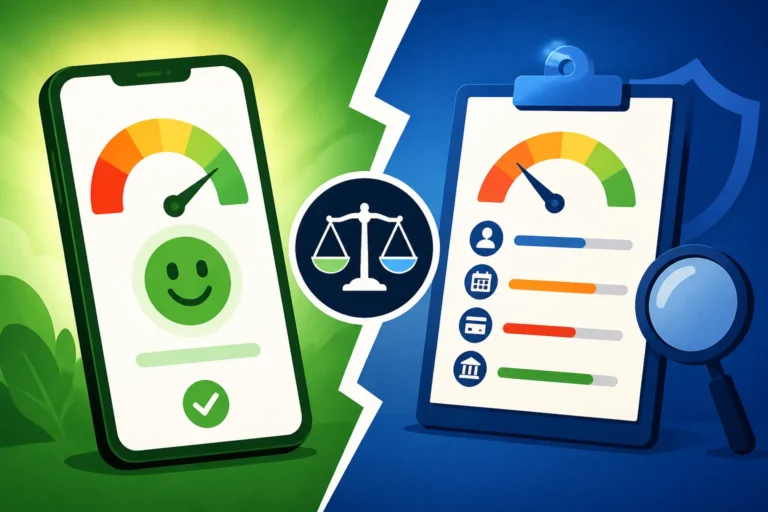
This is where the rubber meets the road when people talk about Credit Karma's "accuracy." The biggest source of confusion isn't that Credit Karma's scores are "wrong," but that they often differ from the scores other lenders use. This discrepancy primarily stems from the fact that there are multiple credit scoring models, and not all lenders use the same one.
The VantageScore Model
Credit Karma exclusively uses the VantageScore 3.0 model. This model was developed by the three major credit bureaus—Equifax, Experian, and TransUnion—as a competitor to the long-dominant FICO Score. VantageScore models calculate your credit score based on similar factors to FICO, such as payment history, credit utilization, length of credit history, and types of credit. However, the exact weighting of these factors can differ, leading to a different score.
One of the key differences of VantageScore 3.0 is its ability to score consumers with shorter credit histories. This can be particularly beneficial for those who are just starting to build credit from scratch or immigrants who are new to the U.S. financial system. It requires less credit history than older FICO models, making it easier for a broader range of people to get a scorable credit profile. So, if you're new to credit, your VantageScore might appear higher or more established than a FICO score would, simply because it's designed to be more inclusive for thin credit files.
Why FICO is the Industry Standard
Despite the presence of VantageScore, the FICO Score remains the most widely used credit scoring model by lenders for things like mortgages, auto loans, and many credit cards. The vast majority of lending decisions, approximately 90% according to FICO, are still made using one of their many scoring models. FICO has been around much longer, since the late 1980s, and has established itself as the benchmark for credit risk assessment.
There isn't just one "FICO Score" either. There are dozens of different FICO versions, including industry-specific scores (like FICO Auto Scores or FICO Bankcard Scores) and different generations (like FICO Score 8, FICO Score 9, and the newer FICO Score 10). Each version might place slightly different emphasis on certain aspects of your credit history, leading to variations even among FICO scores. This is why you might get different FICO scores from different lenders, depending on which version they're using for their specific lending product. This complex landscape is one of the main reasons why your Credit Karma score might not match the score a car dealership or mortgage lender pulls.
The Impact of Different Scoring Models
The primary impact of using different scoring models is simply that you'll see different numbers. A 700 on VantageScore might translate to a 680 or 720 on a FICO Score, depending on the specifics of your credit profile and the FICO model being used. This isn't because one is "right" and the other is "wrong"; it's because they're using different algorithms to arrive at their conclusions. It's like comparing apples and oranges, even though both are fruit.
For everyday credit monitoring, understanding the trend of your score on Credit Karma is often more important than the exact number. If your VantageScore is consistently going up on Credit Karma, it's a strong indicator that your FICO Scores are likely also improving. Conversely, a significant drop on Credit Karma usually signals a negative event that will likely impact all your credit scores. The goal isn't necessarily to hit a specific number on Credit Karma, but rather to use it as a tool to ensure your credit health is generally moving in the right direction. It gives you a consistent way to track progress and identify issues.
Is Credit Karma Accurate for Credit Monitoring?
When we talk about "accuracy" in credit monitoring, it’s really about whether the information presented reflects what's actually in your credit files and if the scores are predictive of your creditworthiness. In this context, Credit Karma is indeed accurate in what it claims to provide.
The Data Sources
Credit Karma directly pulls data from TransUnion and Equifax. This means the underlying information—your accounts, payment history, balances, credit limits, and inquiries—comes straight from the credit bureaus themselves. So, the details within the credit reports provided by Credit Karma are accurate reflections of what TransUnion and Equifax have on file for you. If there's an error on your Credit Karma report, it's because that error exists on the actual TransUnion or Equifax credit report, not because Credit Karma has somehow fabricated it.
This direct data feed is what makes Credit Karma a powerful tool for How to Read Your Credit Report (2026 Guide) and identifying potential issues. You can clearly see if accounts are being reported correctly, if balances are up-to-date, and if there are any unfamiliar entries. If you find something inaccurate, like an old address or an account that isn't yours, you'll need to know How to Dispute Errors on Your Credit Report directly with the respective credit bureau.
Real-Time vs. Snapshot
Credit Karma provides a frequently updated snapshot of your credit profile. It doesn't update in true "real-time" down to the second, but it does refresh your scores and reports generally once a week. This frequency is more than sufficient for most people to monitor their credit effectively. Traditional credit reports, like those you can get annually from AnnualCreditReport.com, are often only available once a year per bureau, making Credit Karma's weekly updates feel almost instantaneous by comparison.
The weekly refresh allows you to see how your actions, like paying down a credit card balance or opening a new account, are impacting your score and report in relatively short order. While it might take a billing cycle for changes to appear, once reported by your creditors to the bureaus, Credit Karma will pick it up quickly. This near real-time view is what makes it so useful for active credit management, helping you track your progress on how to raise your credit score.
User Experience and Perceived Accuracy
Many users, myself included, have found Credit Karma to be incredibly valuable for its user-friendly interface and clear presentation of complex credit information. The site breaks down the factors affecting your score, highlights areas for improvement, and offers personalized insights. This transparency helps demystify credit for a lot of people who might otherwise feel overwhelmed.
However, the perceived accuracy often comes back to the FICO vs. VantageScore debate. When a user sees a 720 score on Credit Karma but gets denied a loan because their FICO score was 680, they naturally feel that Credit Karma was "inaccurate." It wasn't inaccurate in reporting a VantageScore 720; it was just reporting a different type of score than the lender used. The key is to understand that Credit Karma offers a specific type of accuracy for specific types of scores from specific bureaus. For credit monitoring and understanding the general direction of your credit health, it's largely accurate and highly effective.
The Limitations and What to Keep in Mind
While Credit Karma is an excellent tool for many, it's essential to understand its limitations to avoid misunderstandings and make the most of what it offers. No single credit tool can give you every piece of information you might need, and Credit Karma is no exception.
The "Soft Pull" Nature
Accessing your credit score and report through Credit Karma is always considered a "soft pull" or "soft inquiry." This is a huge benefit because soft inquiries do not impact your credit score. Lenders typically use hard inquiries when you apply for new credit, and these can temporarily lower your score by a few points. The ability to check your credit as often as you like without any negative impact is one of Credit Karma's most valuable features. This is a common concern people have, so it’s good to know that checking your own credit score won't hurt it.
The opposite is true for a hard inquiry. If you're applying for a mortgage or a new credit card, the lender will perform a hard pull. These inquiries show up on your credit report for two years and can slightly ding your score. Credit Karma gives you the freedom to check your standing without worrying about those hard hits, making it a great place to regularly monitor your profile, which is why How Often Should You Check Your Credit Report? is a question many wisely ask.
The Bureau Discrepancy
As mentioned, Credit Karma only provides data from TransUnion and Equifax. It does not provide your Experian credit report or score. This is a significant limitation because Experian is one of the three major credit bureaus, and many lenders rely heavily on their data. You might have information on your Experian report that isn't on your TransUnion or Equifax reports, or vice-versa. For instance, a particular collection account might only be reported to Experian, or an inquiry might only show up there.
This means that while Credit Karma gives you a good picture, it’s not a complete one. To truly know everything that's being reported about you across the board, you would need to also check your Experian report. The best way to get all three reports for free, once a year, is through AnnualCreditReport.com. It's crucial to understand that The 3 Credit Bureaus: Equifax, Experian & TransUnion often have slightly different information, and you should ideally review all three periodically. This is also why many people find their scores are different on different sites.
Promotional Nature of Recommendations
While Credit Karma's product recommendations can be helpful, it’s vital to approach them with a discerning eye. Credit Karma gets paid when you click on and successfully apply for a product through their platform. This is a legitimate business model, but it means their recommendations are, at their heart, advertisements. The products promoted are often those with which Credit Karma has a partnership, not necessarily every single best-in-class product available on the market for your specific situation.
Always use Credit Karma's recommendations as a starting point for your own research. Don't blindly apply for the first card or loan they suggest. Compare interest rates, fees, rewards, and terms with other options. Look at the full picture. For instance, while Credit Strong might be recommended as a good credit builder loan, always compare its terms with other credit builder options to ensure it's the best fit for your personal financial goals. For example, if you are looking for specific ways to improve your score, you might want to consider Credit Builder Loans Explained (Self, Kikoff & More) in more depth before committing.
How to Get the Most Out of Credit Karma
Despite these considerations, Credit Karma remains an incredibly valuable resource if you know how to use it effectively. It's a powerful tool for education, monitoring, and proactive credit management.
Cross-Referencing Your Information
Since Credit Karma doesn't show you your Experian report, and since different scoring models yield different numbers, it's wise to cross-reference the information you get. Think of Credit Karma as one piece of your overall credit puzzle. You can get your official credit reports from all three bureaus annually for free via AnnualCreditReport.com. Take the time to compare your TransUnion and Equifax reports on Credit Karma with the official reports from those bureaus, and then also review your Experian report separately. This helps you identify any discrepancies between the bureaus.
For example, if you're trying to remove negative items from your credit report, you'll need to know exactly which bureau is reporting the item. Credit Karma can help you spot these issues quickly, but you might need to go directly to the bureau to dispute them officially. Understanding What's on Your Credit Report? Explained will enable you to meticulously compare entries. This proactive approach ensures that all your credit information is accurate and up-to-date, minimizing potential issues when you apply for significant credit like a mortgage or car loan.
Utilizing the Tools for Improvement
Credit Karma offers more than just scores and reports; it provides a suite of tools and educational resources designed to help you improve your credit. Take advantage of these! They explain What Affects Your Credit Score? The 5 Factors, offer simulations to show how certain actions might impact your score, and suggest steps you can take to boost your creditworthiness. For example, you can use the platform to understand how credit utilization affects your score and experiment with hypothetical scenarios to see how paying down debt might impact your numbers.
The "Credit Factors" section, in particular, breaks down your credit health into digestible components like payment history, credit utilization, and average age of accounts. By focusing on these areas, you can develop a targeted strategy to improve your score. If you're struggling with a thin credit file, Credit Karma might suggest options like secured credit cards or even credit builder loans from companies like Credit Strong, which can help you establish a positive payment history. Remember, consistent positive habits are key to building and maintaining a strong credit profile.
When to Seek Official Reports
While Credit Karma is fantastic for ongoing monitoring, there are specific times when you should always seek out official, direct credit reports and FICO scores. When you're making a major financial application—like applying for a mortgage, a significant auto loan, or a large personal loan—it's prudent to get your actual FICO scores, ideally the ones specific to the type of loan you're seeking. Many banks and credit unions will provide your FICO Score for free to their customers, or you can purchase them directly from FICO.
Understanding How to Get Your Free Credit Report from AnnualCreditReport.com is also crucial for a comprehensive yearly review of all three bureaus, ensuring no stone is left unturned. This is because lenders use a variety of FICO scores, and knowing where you stand on the exact score they'll use can prevent unpleasant surprises. Think of Credit Karma as your daily check-up and official FICO scores as your pre-op exam before major financial surgery. Both are important, but they serve different purposes. For more in-depth understanding, check out FICO Score vs VantageScore: What's the Difference?.
Ultimately, Credit Karma is a remarkably useful and "accurate" tool for what it sets out to do: provide free, frequently updated VantageScores and credit reports from TransUnion and Equifax, along with helpful monitoring and educational content. Its "accuracy" is not in guaranteeing an exact match to every FICO score a lender might pull, but in reliably reflecting the data it receives from the bureaus and applying the VantageScore model consistently. By understanding its strengths and limitations, you can leverage Credit Karma to be a powerful ally in your financial journey, helping you to stay informed and proactive about your credit health. It's a valuable starting point for anyone looking to understand and improve their credit, making the path toward financial wellness a little clearer and a lot more accessible.
Disclaimer
The information provided in this article is for educational and informational purposes only and does not constitute financial or legal advice. Credit scores and reports can be complex, and individual situations may vary. Always consult with a qualified financial advisor or credit counselor for personalized advice tailored to your specific circumstances.