How to Pay Off $3,000 in Credit Card Debt in 6 Months
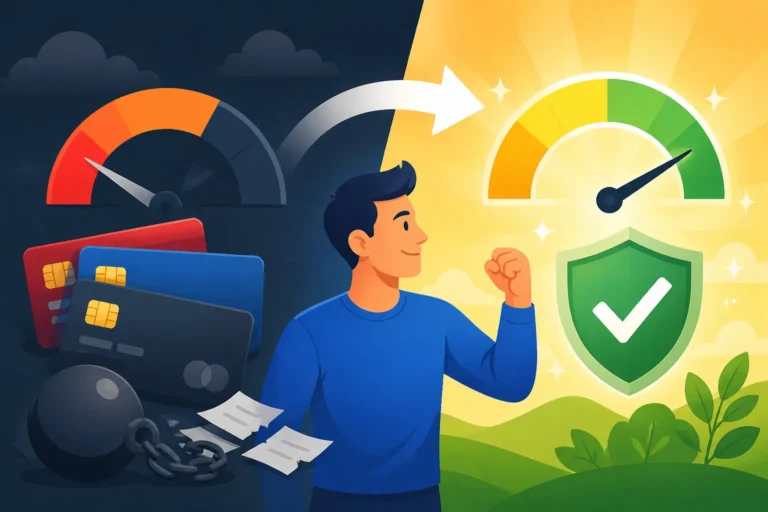
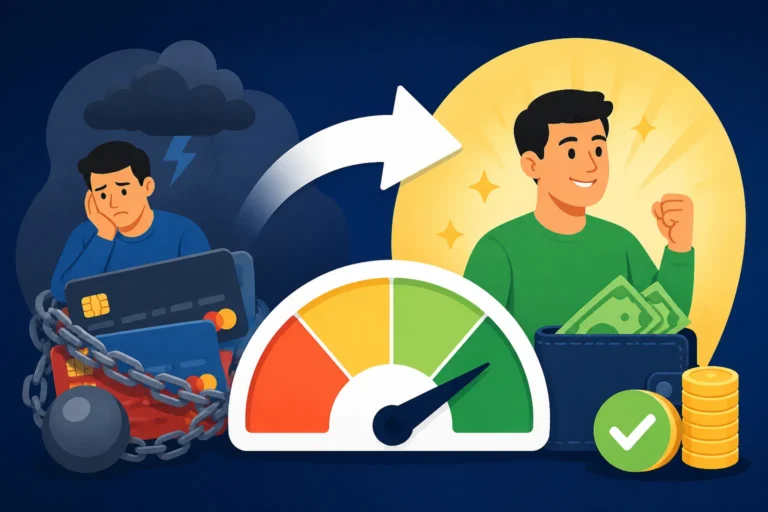
Facing $3,000 in credit card debt can feel like a heavy weight, especially when you're determined to get rid of it quickly, like in just six months. The constant worry about interest growing and the feeling of being stuck can be incredibly frustrating. This guide is here to give you a clear, actionable roadmap to conquer that $3,000 debt within half a year, helping you understand the process, tackle your spending, and set yourself up for lasting financial freedom.
The Reality of Your $3,000 Debt and the 6-Month Challenge
Let's be real: $3,000 isn't a small amount of money for most people, and aiming to pay it off in just six months means you're going to need a focused, disciplined approach. It’s absolutely achievable, but it requires understanding the enemy (that interest!) and being honest about your financial habits.
Calculating the True Cost of Your Debt
Credit card debt isn't just the principal amount you owe; it's the principal plus the interest that accrues every single day. If you're only making minimum payments, you're barely scratching the surface of the principal, and a huge chunk of your payment is going straight to interest. This is how people get trapped in a cycle that feels impossible to break.
Imagine you have a $3,000 balance on a card with a typical 18% Annual Percentage Rate (APR). If you were only paying the minimum, which is often just 1-3% of your balance (or a flat $25-$35), you might pay $45-$90 a month. Of that, roughly $45 would be going to interest alone in the first month. This means very little of your hard-earned money is actually reducing the principal, prolonging your debt, and costing you significantly more in the long run. To truly pay off $3,000 in six months, you're going to need to pay significantly more than the minimum – roughly $500 each month, assuming an 18% APR and a bit extra to clear residual interest. This kind of aggressive payment strategy is exactly what you need to break free from the interest trap.
Getting Honest About Your Spending Habits
Before you can tackle the debt, you need to understand where your money is actually going. This isn't about shaming yourself; it's about gaining clarity and control. Many of us have "phantom expenses" – those small, recurring charges or impulse buys that we don't even register but collectively drain our bank accounts.
Start by tracking every single dollar you spend for a week or two. Use an app, a spreadsheet, or even just a notebook. Be meticulous. You might be surprised to see how much you spend on daily coffees, streaming services you barely use, or lunches out. Once you have a clear picture, you can identify areas where you can realistically cut back. This might mean pausing subscriptions, cooking more meals at home, bringing your lunch to work, or finding cheaper alternatives for entertainment. Every dollar saved can be a dollar put towards your debt, and in this 6-month sprint, every dollar counts. It's tough, but remember, these are temporary adjustments for a massive win.
Devising Your 6-Month Payment Strategy
Once you understand the true cost of your debt and where your money is going, it's time to create a solid plan. A clear strategy will keep you motivated and on track, turning that daunting $3,000 goal into manageable monthly targets.
Crunching the Numbers: How Much to Pay Each Month
To pay off $3,000 in six months, you're looking at an average principal payment of $500 per month. However, you can't forget about interest. As we saw, with an 18% APR, your initial interest payment might be around $45. This means your actual payment needs to be closer to $500 plus that interest amount. As your principal balance decreases, the interest portion of your payment will also go down, allowing more of your fixed $500+ payment to attack the principal.
Let's lay out a hypothetical payment schedule assuming an 18% APR to give you a clearer picture. Keep in mind, this is an estimate, and your actual interest may vary slightly depending on your card's specific terms and when you make payments.
| Month | Starting Balance | Monthly Payment | Interest Paid (approx.) | Principal Paid | Ending Balance |
|---|---|---|---|---|---|
| 1 | $3,000 | $545 | $45 | $500 | $2,500 |
| 2 | $2,500 | $537.50 | $37.50 | $500 | $2,000 |
| 3 | $2,000 | $530 | $30 | $500 | $1,500 |
| 4 | $1,500 | $522.50 | $22.50 | $500 | $1,000 |
| 5 | $1,000 | $515 | $15 | $500 | $500 |
| 6 | $500 | $507.50* | $7.50 | $500 | $0 |
*Note: The "Monthly Payment" column represents the minimum payment needed to pay off $500 principal plus the estimated interest. To simplify, many people aim for a consistent, slightly higher payment (e.g., $550-$600) to ensure they cover interest and accelerate principal reduction.
As you can see, maintaining a consistent payment of at least $500-$550 per month, if not more, is critical. This schedule clearly demonstrates that every payment reduces the interest you'll owe next month, making your efforts more effective over time. If you can squeeze out even more, you'll reach your goal even faster! For more strategies on rapid debt reduction, check out our guide on How to Pay Off Credit Card Debt Fast.
Choosing Your Debt Payoff Method
If your $3,000 debt is spread across multiple credit cards, you'll need to decide on a payoff strategy. The two most popular methods are the debt snowball and the debt avalanche. Both have their merits, and the best one for you depends on your personality and how you stay motivated.
The debt snowball method involves paying off your smallest debt first, regardless of its interest rate, while making minimum payments on all other debts. Once the smallest debt is paid off, you take the money you were paying on that debt and "snowball" it into the next smallest debt, continuing until all debts are gone. This method is fantastic for psychological wins; seeing those smaller debts disappear quickly can provide a huge boost of motivation to keep going, which can be invaluable during a short, intense payoff period like six months.
The debt avalanche method, on the other hand, prioritizes paying off the debt with the highest interest rate first, while making minimum payments on all other debts. Once the highest-interest debt is gone, you move to the next highest. This method saves you the most money on interest over time, making it the most mathematically efficient. Given your tight 6-month timeline, saving every dollar on interest is important, so the debt avalanche could be very effective. However, if your highest-interest debt is also your largest, it might take longer to see that first debt disappear, which some people find demotivating. To dive deeper into these strategies, you can read our comparison: Debt Snowball vs Debt Avalanche: Which Is Better?.
Considering Balance Transfers and Personal Loans
Sometimes, consolidating your debt can be a smart move, especially if you can get a lower interest rate. For $3,000, a balance transfer credit card or a small personal loan could be options, but they come with their own set of considerations.
A balance transfer credit card allows you to move your existing credit card debt to a new card, often with an introductory 0% APR for a specific period (e.g., 12-21 months). If you can secure a card with a long 0% APR period and pay off the full $3,000 within that time, you could avoid paying any interest at all. This would make your $500/month payment go entirely towards the principal. However, be aware of balance transfer fees, which are typically 3-5% of the transferred amount. For a $3,000 transfer, a 3% fee would cost you $90. Also, ensure you can actually pay it off before the promotional period ends, or you'll be hit with potentially high deferred interest. Learn more about how they work with our article on Balance Transfer Cards: How They Work.
A personal loan could also be an option, offering a fixed interest rate and fixed monthly payments over a set term. If you qualify for a personal loan with an interest rate significantly lower than your current credit card APR, it could save you money and simplify your payments. However, applying for a new loan typically results in a hard inquiry on your credit report, which can temporarily ding your credit score. You'll also need a decent credit score to qualify for favorable rates. For $3,000, some lenders might offer quick approval, but always compare the total cost, including any origination fees, against your current credit card interest.
Supercharging Your Debt Repayment and Staying on Track
Paying off $3,000 in six months is an aggressive goal, and to hit it, you'll likely need to do more than just budget. This means finding ways to increase your income and being relentlessly disciplined with your expenses.
Boosting Your Income Streams
To free up that $500+ each month for debt repayment, a two-pronged attack is often most effective: cutting expenses and increasing income. Even temporary income boosts can make a huge difference in a 6-month window.
Consider taking on a temporary side hustle. This could be anything from delivering food with services like DoorDash or Uber Eats, freelancing your skills (writing, graphic design, web design) on platforms like Upwork or Fiverr, or even pet-sitting or dog-walking in your neighborhood. Think about what skills you have or what services are in demand. Selling items you no longer need around your house on platforms like Facebook Marketplace, eBay, or local consignment shops can also quickly generate a few hundred dollars. That old bike gathering dust in the garage or designer clothes you haven't worn in years could be your ticket to an extra payment. The goal is to funnel every extra dollar directly to your debt, turning it into principal reduction.
Aggressive Budgeting and Expense Reduction
Beyond identifying your "phantom expenses," it's time to get really serious about where your money goes. This might mean temporary sacrifices, but remember, it's only for six months. Think of it as a financial boot camp.
Here are some ideas for aggressive expense reduction:
- "No-Spend" Days or Weeks: Challenge yourself to spend zero money on non-essentials for a few days or even a full week. You might be surprised how much you save.
- Meal Prep Like a Pro: Planning all your meals and cooking at home dramatically cuts down on takeout and grocery impulse buys. Pack your lunch every single day.
- Negotiate Bills: Call your internet, cable, or even insurance providers to see if you can get a better rate or bundle. Many companies offer retention deals if you simply ask.
- Cut Entertainment: Pause streaming services, opt for free activities (parks, libraries), and temporarily avoid going out for expensive dinners or drinks.
- Transportation Hacks: Carpool, walk, bike, or use public transport more often to reduce gas costs.
These aren't permanent lifestyle changes unless you want them to be, but they are powerful tools for a short-term, high-impact debt payoff. The more money you can free up, the faster you'll reach your $3,000 goal. To get even more ideas, check out our detailed guide on How to Pay Off Credit Card Debt Fast.
The Power of Consistent Payments and Avoiding New Debt
Consistency is king when it comes to debt repayment. Once you've set your monthly payment target (e.g., $550), stick to it like glue. Automate your payments if possible, setting up transfers from your checking account to your credit card a few days before the due date.
Another powerful tip: if your budget allows, consider making bi-weekly payments. Instead of one $550 payment per month, you could make two $275 payments every two weeks. This doesn't necessarily mean you pay more overall, but because you're paying down the principal more frequently, you reduce the average daily balance that interest is calculated on. This can shave a few dollars off your total interest paid, and every little bit helps in your 6-month sprint.
Crucially, do not add new debt during these six months. This sounds obvious, but it's easy to slip up. Avoid using the credit card you're trying to pay off. If necessary, put the card in a drawer, or even freeze it (literally, in a block of ice!) to remove the temptation. The goal is a net reduction of your debt, not a treadmill where you pay some off only to charge it back up. Understanding How to Use a Credit Card to Build and Keep Good Credit after you've paid off your debt is key to preventing a repeat scenario.
Life After Debt: Building a Stronger Financial Future
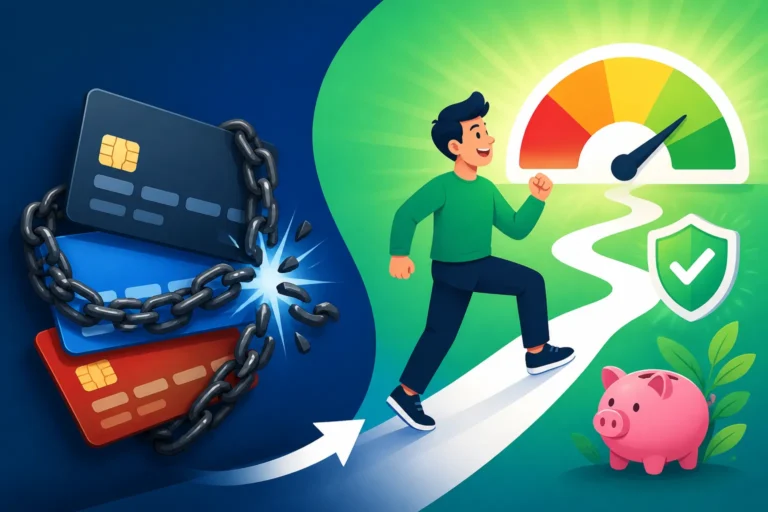
Congratulations! Once you've paid off that $3,000 in six months, it's a huge accomplishment. But the journey doesn't end there. This is a perfect opportunity to solidify your financial habits and build a more resilient future.
Maintaining Good Credit Health
Paying off your credit card debt will positively impact your credit score, especially by reducing your credit utilization. Credit utilization is the amount of credit you're using compared to your total available credit, and it's a major factor in your score. Keeping your utilization low (ideally below 30%, but below 10% is even better) signals to lenders that you manage credit responsibly. Now that your $3,000 debt is gone, your utilization ratio will drop significantly.
Continue to practice responsible credit habits. If you decide to keep the credit card open (which is often advisable for your credit history length, assuming no annual fee and you trust yourself not to overspend), use it sparingly for small, planned purchases that you can pay off in full every month. This demonstrates active, responsible use without accruing interest. To fully grasp this concept, take a look at our guide on Credit Utilization: The Complete Guide and What Is a Good Credit Utilization Ratio?.
Building an Emergency Fund
One of the most common reasons people fall into credit card debt is an unexpected expense. A car repair, a medical bill, or a temporary job loss can quickly send you scrambling for funds, often leading back to high-interest credit cards.
Now that your $3,000 debt is gone, redirect the money you were using for payments into an emergency fund. Start small, aiming for $500 to $1,000 to cover minor emergencies. Then, work towards building three to six months' worth of essential living expenses. This fund acts as a financial safety net, allowing you to handle life's curveballs without resorting to debt. For some, the question of Should You Pay Off Debt or Save First? can be a tricky one, but once the high-interest debt is gone, saving should become a top priority.
Exploring Credit Building Tools
Even after paying off debt, continuously building and diversifying your credit profile is a smart move. If your credit history is still relatively thin or you're looking to strengthen it further, various tools can help.
Secured credit cards are a common starting point, requiring a cash deposit that often acts as your credit limit. This minimizes risk for lenders and allows you to build positive payment history.
Credit builder loans are another excellent option. These are designed specifically to help you build credit by demonstrating consistent payments. With a product like Credit Strong, for instance, you take out a small loan, but the money is held in a savings account or CD while you make monthly payments. Once the loan is paid off, you get access to the funds, and your positive payment history is reported to the credit bureaus. This can be a fantastic way to diversify your credit mix and continue demonstrating responsible financial habits, especially after aggressively paying down revolving debt. It helps build payment history and can boost your overall credit profile without accumulating new debt. Learn more about these options in Credit Builder Loans Explained (Self, Kikoff & More). These tools help you establish a solid foundation, which is crucial for things like getting good rates on mortgages or car loans down the road. You can also explore How to Build Credit From Scratch (2026 Guide) for a complete overview.
Regular Credit Monitoring
Finally, make it a habit to regularly check your credit reports and scores. You're entitled to a free copy of your credit report from each of the three major bureaus (Equifax, Experian, and TransUnion) once every 12 months through AnnualCreditReport.com. Reviewing these reports helps you spot errors or fraudulent activity that could negatively impact your score. Many credit card companies and financial apps also offer free credit score monitoring services, like what you might find with Credit Karma or your bank's own tools. While these scores might differ from the FICO scores lenders typically use, they provide a good general idea of your credit health. Keeping an eye on your reports helps you protect the hard work you put into paying off your debt. To start, read How to Check Your Credit Score for Free.
Disclaimer
The information provided in this article is for general educational purposes only and should not be considered financial or legal advice. Credit and debt situations are highly individual, and it is recommended to consult with a qualified financial advisor for personalized guidance tailored to your specific circumstances. Interest rate calculations are estimates and actual results may vary.