How to Prove an Account Isn’t Yours
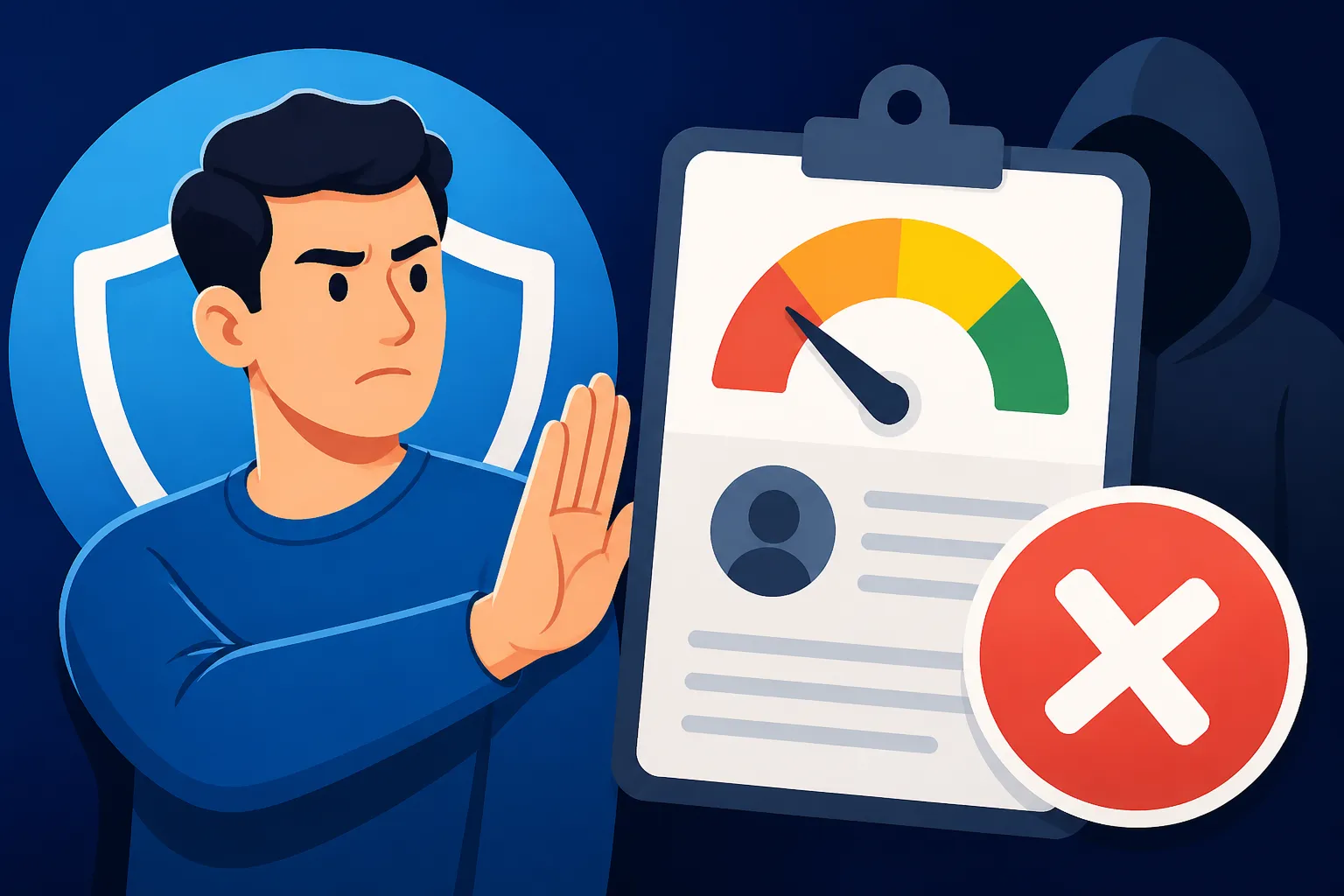
Finding an account on your credit report that you don't recognize can be incredibly unsettling, feeling like a punch to the gut. It immediately raises questions, fears about identity theft, and worries about how it's dragging down your hard-earned credit score. This guide is here to walk you through exactly how to prove that an account isn't yours, providing clear, actionable steps to get it removed and protect your financial future.
Understanding Why Unfamiliar Accounts Appear
It’s easy to jump to the worst conclusion when you see something fishy on your credit report, and for good reason. Identity theft is rampant, but sometimes, an unfamiliar account can stem from less malicious, though still frustrating, origins. Understanding the different possibilities is the first step in tackling the problem.
Common Reasons for Unfamiliar Accounts
There are a few main culprits behind those mystery entries on your credit report. Knowing which category your situation falls into can help you tailor your approach.
First and foremost is identity theft. This is often the most frightening scenario, where someone has used your personal information—your Social Security number, name, address, or date of birth—to open new credit accounts, take out loans, or make unauthorized purchases in your name. You might see credit cards, personal loans, utility accounts, or even cell phone contracts that you absolutely did not apply for or authorize. The fraudsters open these accounts, max them out, and then disappear, leaving you to deal with the fallout. If you suspect identity theft, acting quickly is crucial. You'll want to review your credit reports carefully for any other discrepancies, as identity thieves rarely stop at just one account.
Another common reason is a reporting error by a creditor or one of the credit bureaus themselves. Mistakes happen more often than you might think. A lender might accidentally report an account belonging to someone with a similar name, or they might mix up account numbers. Sometimes, an old, legitimate debt might be sold to a new collection agency, which then re-reports it with a new "open date" or slightly different details, making it appear unfamiliar or even "new" when it's really an old issue that should be falling off your report soon. This is why checking your reports from Equifax, Experian, and TransUnion regularly is so important. You might also find accounts where you were an authorized user on someone else's card, and while technically yours, it might not be one you actively manage or remember.
Lastly, sometimes an old debt that has passed its statute of limitations for collection might be "re-aged" or resurface. While the statute of limitations means they can't sue you for the debt, the account itself can still be reported on your credit file for a period, typically seven years from the date of the first delinquency. If a debt collector tries to extend this timeline by incorrectly reporting a new date of last activity, it can make an old, legitimate debt appear current and unfamiliar, which is illegal. This scenario highlights the importance of understanding how long items stay on your credit report.
The Impact on Your Credit Score
An unfamiliar account, especially a negative one, can wreak absolute havoc on your credit score, often without you even realizing it until it's too late. Your credit score is calculated based on several factors, and negative items like late payments, collections, or charge-offs from an account that isn't yours can severely damage almost all of them.
For example, payment history makes up 35% of your FICO score. If a fraudulent account accumulates late payments or defaults, each missed payment will drag your score down significantly. This is particularly frustrating because you had no control over it. Similarly, credit utilization, which accounts for 30% of your score, can be impacted if a stolen credit card is maxed out. Even if it's not your debt, it will appear as if your available credit is being heavily used, signaling risk to other lenders and potentially lowering your score by many points. Hard inquiries from fraudulent applications can also knock a few points off, though their impact is usually less severe than actual negative accounts.
The average age of your credit accounts is another factor. If a new, fraudulent account appears and then quickly defaults, it can lower your overall credit age and look like a red flag. Lenders see numerous new, problematic accounts as a sign of financial instability or high risk. Ultimately, these negative entries can make it incredibly difficult to secure new loans, rent an apartment, or even get certain jobs, trapping you in a cycle of frustration and denial for opportunities you rightfully deserve. It's not just about the numbers; it's about the opportunities you lose.
Gathering Evidence That an Account Isn't Yours
When you discover an account on your credit report that you know doesn't belong to you, the feeling of alarm is perfectly normal. But don't despair – you can absolutely do something about it. The key is to approach the situation with a clear head and a methodical process of gathering ironclad evidence. This isn't just about saying "it's not mine"; it's about proving it with facts.
Checking Your Credit Reports Meticulously
Your credit reports are the battleground, and you need to know every inch of it. The first, and most critical, step is to pull all three of your credit reports from Equifax, Experian, and TransUnion. Yes, all three. The Federal Trade Commission mandates that you are entitled to a free credit report from each bureau once every 12 months via AnnualCreditReport.com site Review: Is It Accurate for Credit Monitoring?. Don't rely solely on Credit Karma or other free services for official disputes, as they often use VantageScore and provide simplified reports. You need the full, detailed reports directly from the bureaus themselves.
Once you have them, it’s time to play detective. Don't just glance at the summaries. Go line by line. Look for:
- Account Names and Numbers: Does the creditor name ring any bells? If not, note it down.
- Account Open Dates: Does this date align with any legitimate accounts you opened? Fraudulent accounts often have recent open dates that you won't recognize.
- Account Balances and Payment History: See if there are any delinquencies, charge-offs, or high balances. These are immediate red flags.
- Your Personal Information: Check for incorrect addresses, names, or even employers. Sometimes, identity thieves will subtly alter information to make it harder for you to spot. An old address on your credit report could be a sign someone else is trying to use it.
- Hard Inquiries: Unfamiliar hard inquiries can indicate someone tried to open credit in your name. If you see one you don't recognize, it might be tied to the fraudulent account. This is a separate but related issue; learning How to Remove Hard Inquiries From Your Credit Report is a good skill.
Compare information across all three reports. It's common for details to vary slightly, or for an account to appear on one report but not another. This variation itself can be part of your evidence.
Documenting Your Case
Once you've identified the problematic account, documentation becomes your best friend. You need a paper trail for everything you do and every piece of information you gather.
- Create a detailed log: Note down the date and time of every phone call, who you spoke with, what was discussed, and any reference numbers provided. Keep copies of all correspondence.
- Gather supporting documents: This could include bank statements, utility bills, or pay stubs that prove you were not at the address listed on the fraudulent account or that you were working elsewhere during the account's alleged opening. If the account is a credit card, for instance, and you have proof you were out of the country on the date of a major purchase, that's powerful evidence.
- File an Identity Theft Report with the FTC: If you suspect identity theft, this is a crucial step. Visit IdentityTheft.gov to report the theft. The Federal Trade Commission will provide you with an official Identity Theft Report and a recovery plan. This report is invaluable because it proves to creditors and credit bureaus that you are a victim of identity theft, which offers you certain protections under the law.
- File a police report: While not always strictly necessary for every error, if you have strong evidence of identity theft, filing a police report with your local law enforcement agency can add significant weight to your case. Obtain a copy of this report for your records. Local police departments, like the LAPD in Los Angeles or the NYPD in New York, are accustomed to taking these reports.
Remember, the more evidence you have that directly contradicts the existence or accuracy of the unfamiliar account, the stronger your position will be when you initiate a dispute.
Contacting the Creditor Directly
Sometimes, a direct conversation can clear things up faster than going straight to the credit bureaus, especially if it’s a simple reporting error rather than full-blown identity theft. This step is usually taken after you’ve thoroughly reviewed your credit reports and gathered your documentation.
Locate the contact information for the creditor or collection agency reporting the account. This information should be on your credit report. Reach out to them by phone or, even better, by certified mail, return receipt requested, so you have proof they received your communication.
When you contact them, clearly state that you do not recognize the account and believe it is either fraudulent or a reporting error. Provide them with the account number listed on your credit report. Do not admit any responsibility for the debt or offer to pay anything. Your goal is simply to get information and state your position. Ask them to verify the debt and send you all documentation they have to support their claim that the account belongs to you. This is where debt validation comes into play. If they can't provide sufficient proof, they are often required to remove the item from your credit report. If you suspect identity theft, explain that and provide them with your FTC Identity Theft Report number and a copy of the report. Many creditors have dedicated fraud departments that can investigate. Brands like Capital One or Chase, for example, have robust customer service departments that can help with these kinds of investigations.
Be polite but firm, and keep detailed notes of every interaction, including the name of the representative you spoke with and the date. If they confirm it's an error or fraud, request that they remove the account from all three credit bureaus immediately and send you written confirmation of this action. This direct approach can sometimes resolve the issue before you even need to formally dispute it with the credit bureaus, saving you time and stress.
The Step-by-Step Dispute Process
Once you've done your homework and collected all your evidence, it's time to formally dispute the account. This is where the rubber meets the road, and a systematic approach will ensure you maximize your chances of success.
Notifying the Credit Bureaus
The Fair Credit Reporting Act (FCRA) gives you the legal right to dispute inaccurate information on your credit report directly with the credit bureaus. This is a powerful tool, and it's essential to use it effectively.
You need to dispute the account with each credit bureau that is reporting it: Equifax, Experian, and TransUnion. You can dispute online, by mail, or by phone, but generally, disputing by mail (certified mail, return receipt requested) is often recommended as it provides a clear paper trail.
Here's what to include in your dispute letter:
- Your identifying information: Full name, address, Social Security number, and date of birth.
- A clear statement: Explicitly state that the account in question is not yours, or is fraudulent, or is inaccurately reported.
- Account details: Provide the name of the creditor and the account number as it appears on your credit report.
- Supporting documentation: This is where all your hard work gathering evidence pays off. Attach copies (never send originals) of your FTC Identity Theft Report, police report (if applicable), any correspondence with the creditor, and anything else that proves the account isn't yours. If you've been monitoring your credit with a service like Experian or TransUnion's own monitoring tools, any alerts you received could also be relevant.
- A request for deletion: Clearly ask the bureau to investigate the item and remove it from your credit report.
Each bureau typically has 30 days (or 45 days if you provided additional information during the dispute period) to investigate your claim. They will contact the creditor, who then has to verify the debt. If the creditor cannot verify it, or if they confirm it's fraudulent, the bureau must remove the item from your report. It's also vital to understand How to Dispute With Equifax, Experian, and TransUnion as each bureau has its own specific procedures, though the general principles are the same. For instance, Equifax allows online disputes through their dedicated portal, but many still prefer the mail option for tracking.
Following Up and Monitoring
Sending off your dispute letter isn't the end of the journey; it's just the beginning. You need to remain vigilant and proactive.
Within a few weeks, you should receive a confirmation from the credit bureau that they have received your dispute and are investigating. They usually provide a reference or tracking number. Make sure to keep this handy. Once the investigation is complete, which typically takes 30-45 days, the bureau will send you the results.
If the investigation finds in your favor, the inaccurate or fraudulent account will be removed from your credit report. Request updated copies of your credit reports from all three bureaus to confirm that the item has indeed been deleted. This is critical because sometimes an item might be removed from one report but linger on another.
What happens if the bureau states the account has been verified and won't be removed? Don't give up hope! This can be incredibly frustrating, but it's not uncommon. You have a few options. First, you can try disputing again, perhaps with additional evidence or a slightly different angle. You can also add a "consumer statement" to your credit report, which is a short explanation (usually 100 words or less) that lenders will see when they pull your report, clarifying your side of the story. This is useful if you are unable to get the item completely removed. Knowing What Happens After You File a Credit Dispute? will help you prepare for these possible outcomes. If the item is truly a case of identity theft and the bureaus are unresponsive, you might consider reaching out to the Consumer Financial Protection Bureau (CFPB) or seeking legal counsel.
Legal Protections for Identity Theft Victims
The law is on your side when it comes to identity theft and inaccurate credit reporting. Knowing your rights can empower you during this often stressful process.
The primary legal shield is the Fair Credit Reporting Act (FCRA). This federal law governs how credit bureaus collect, use, and distribute your information. It mandates that credit reporting agencies must ensure maximum possible accuracy of the information they collect and report. Crucially, the FCRA gives you the right to dispute inaccurate or incomplete information, and it requires the bureaus to investigate your dispute free of charge within a specific timeframe (usually 30-45 days). If an item is found to be inaccurate, incomplete, or unverifiable, it must be removed. The FCRA also gives you the right to request a credit freeze and fraud alert, which are critical identity theft prevention tools.
Another important law is the Fair and Accurate Credit Transactions Act (FACT Act), which amended the FCRA. This act provides for things like free annual credit reports and the right to place fraud alerts. For victims of identity theft, it streamlines the process of placing extended fraud alerts (which last for seven years) and requires creditors to provide you with documents related to fraudulent accounts opened in your name.
If you are a victim of identity theft, the Identity Theft and Assumption Deterrence Act makes identity theft a federal crime. Your FTC Identity Theft Report is crucial here because it allows you to get copies of documents related to the fraudulent accounts without having to subpoena them, aiding your dispute and recovery efforts. These legal protections are designed to protect consumers from the harm caused by inaccurate reporting and identity theft, providing a framework for you to fight back and restore your credit.
Here's a quick reference table outlining the steps:
| Step | Action | Key Documents/Tools | Timeline |
|---|---|---|---|
| 1. Identify the Problem | Obtain and review all three credit reports from AnnualCreditReport.com. Pinpoint the unfamiliar account. | Equifax, Experian, TransUnion reports | Immediately |
| 2. Gather Evidence | Document details of the unfamiliar account. File FTC Identity Theft Report (if applicable). File police report (if applicable). | Account details, FTC report, police report, personal records (e.g., utility bills) | Ongoing, as soon as identity theft is suspected |
| 3. Contact Creditor (Optional) | Reach out to the creditor directly to clarify or request validation of the debt. | Certified mail receipts, call logs, debt validation request | Varies, typically a few weeks to hear back |
| 4. Dispute with Bureaus | Send a formal dispute letter (certified mail) to each bureau reporting the account. Include all evidence. | Dispute letter, copies of supporting evidence, certified mail receipt | Bureaus have 30-45 days to investigate. |
| 5. Follow Up & Monitor | Track the dispute progress. Review updated credit reports. If denied, consider next steps (consumer statement, legal). | Dispute tracking numbers, updated credit reports, consumer statement | Ongoing monitoring, especially in the 30-45 day investigation period and afterward. |
Proactive Steps to Prevent Future Issues
After successfully removing an unauthorized account from your credit report, you'll likely feel a huge sense of relief. But the journey isn't over. The best defense against future headaches is a strong offense, meaning taking proactive steps to safeguard your credit and personal information.
Regular Credit Monitoring and Freezes
One of the most powerful tools in your arsenal is vigilant credit monitoring. Don't wait for a loan denial to discover a problem; keep an eye on your credit reports constantly. Many credit card companies and financial institutions offer free credit monitoring services, which can alert you to new accounts opened in your name, hard inquiries, or significant changes to your credit file. For instance, services like Credit Karma or Experian often provide alerts when something new appears on your report. This immediate notification can be the difference between catching fraud early and dealing with a massive cleanup later.
Beyond monitoring, consider implementing a credit freeze. This is arguably the strongest protection against identity theft. A credit freeze restricts access to your credit report, preventing potential lenders from pulling your report to open new lines of credit. If no one can access your report, it becomes much harder for identity thieves to open new accounts in your name. You need to place a freeze with each of the three major credit bureaus individually: Equifax, Experian, and TransUnion. The good news is that placing and lifting a credit freeze is now free by federal law. If you need to apply for credit yourself, you can temporarily lift or "thaw" the freeze for a specific period or for a specific creditor. Learning How to Freeze Your Credit (All 3 Bureaus) is an essential skill for modern financial self-defense.
Another option, though less restrictive than a freeze, is a fraud alert. A fraud alert advises lenders to take extra steps to verify your identity before extending credit. While not as foolproof as a freeze, it adds an extra layer of protection, especially if you suspect you've been a victim of identity theft.
Securing Personal Information
Protecting your personal information is paramount in preventing future unauthorized accounts. In today's digital age, your data is constantly at risk.
Start with your online habits. Use strong, unique passwords for all your online accounts, especially those related to banking and credit. A password manager can be incredibly helpful here. Enable two-factor authentication (2FA) wherever possible, which requires a second form of verification (like a code sent to your phone) in addition to your password. Be wary of phishing scams—emails or texts that try to trick you into revealing personal information by impersonating legitimate companies. Always double-check the sender and never click on suspicious links. Secure your home Wi-Fi network with a strong password.
Offline, be just as diligent. Shred documents containing sensitive information (like old bank statements or pre-approved credit offers) before throwing them out. Don't carry your Social Security card in your wallet. Be cautious about sharing personal details over the phone unless you initiated the call and are certain of who you're speaking with. When making online purchases, ensure the website uses "https://" in the URL, indicating a secure connection. Regularly check your bank and credit card statements for any unauthorized transactions. These habits might seem small, but collectively, they create a robust defense against identity theft.
Building and Maintaining a Strong Credit Profile
While removing negative items is crucial, actively building and maintaining a positive credit profile can also help you recover and protect yourself. A strong credit score makes you a more attractive borrower and can sometimes give you more leverage if an error occurs.
Focus on the fundamentals: always pay your bills on time, keep your credit utilization low (ideally below 30% of your available credit), and avoid opening too many new accounts at once. Having a mix of credit types, like a credit card and a loan, can also be beneficial as your credit history matures. For those looking to establish or rebuild their credit, tools like secured credit cards or credit builder loans can be excellent stepping stones. For example, a credit builder account like Credit Strong can help you establish a positive payment history and build your credit mix by reporting your on-time payments to all three major credit bureaus. This type of product provides a loan held in a savings account, and once the loan is paid off, the funds are released to you, along with a newly established credit history. Over time, these consistent positive actions can help solidify your credit and demonstrate to lenders that you are a responsible borrower. A solid credit history acts as a buffer, making your overall financial health more resilient even if minor issues arise.
Disclaimer
The information provided in this guide is for general informational purposes only and does not constitute financial, legal, or professional advice. Always consult with a qualified financial advisor or legal professional for advice tailored to your specific situation. Credit Knocks is not responsible for any actions taken based on the information provided herein.