Why Did My Credit Score Drop After Opening a New Card?
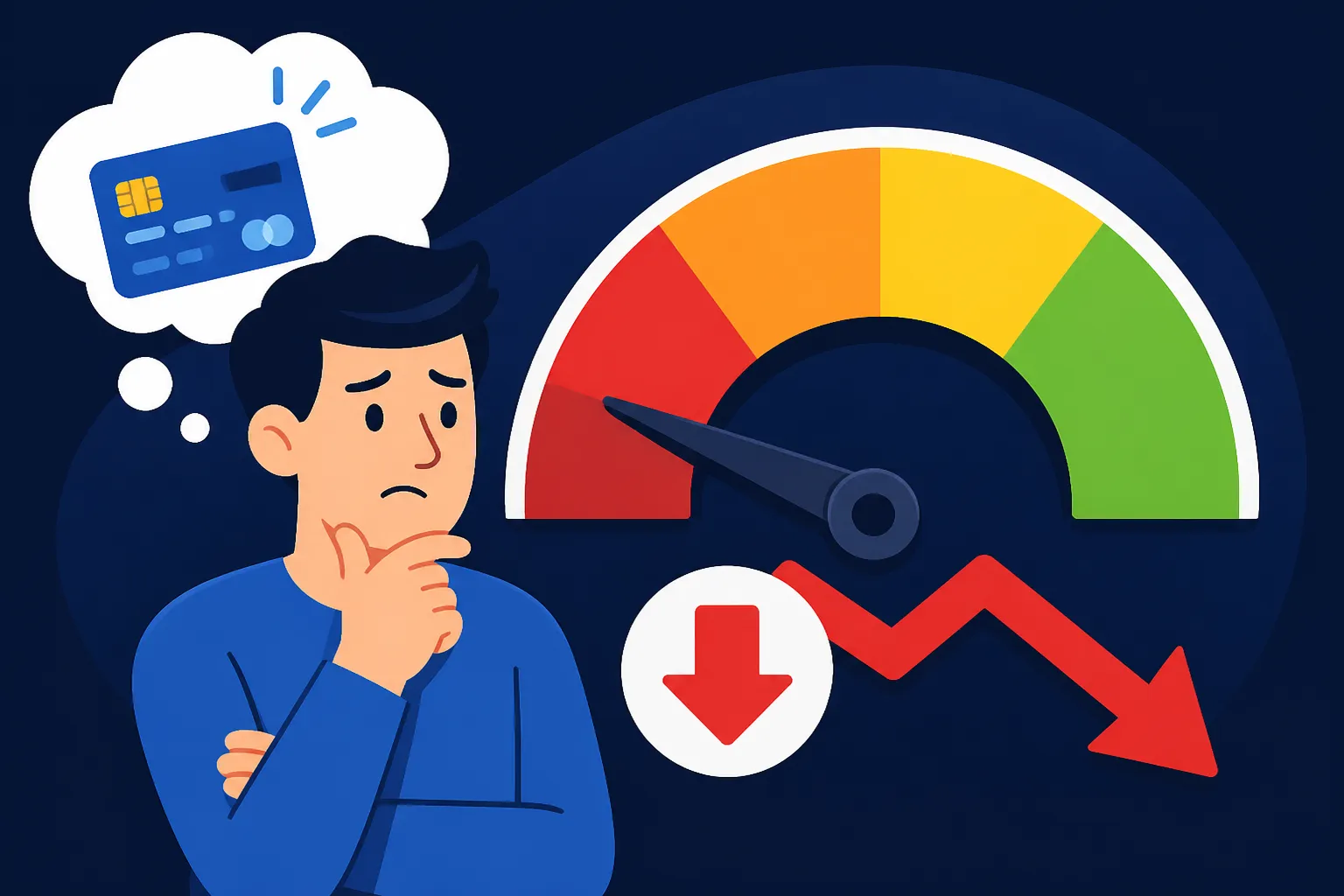
It’s a scenario many of us have faced, and it can be incredibly frustrating: you finally decide to take a proactive step to build or improve your credit by opening a new credit card, only to check your score a month or two later and see that it’s dropped. It feels counterintuitive, right? You did what you thought was right, and now your credit score is worse off. This guide is here to shed light on exactly why this common dip happens, what factors are at play, and why, in the long run, opening a new card is often a smart move despite the initial setback.
The Immediate Impact: Why Your Score Takes a Dip Right Away
When you open a new credit card, your credit report and score don't just magically update with good news. There are immediate, often temporary, factors that cause an initial dip. It's like taking two steps back to take three steps forward – a necessary part of the journey toward a stronger credit profile.
The Hard Inquiry: A Temporary Blip
One of the very first things that happens when you apply for a new credit card is a hard inquiry. This is when a lender, with your permission, pulls your credit report to assess your creditworthiness. Think of it as a formal check-up. Each hard inquiry gets noted on your credit report and can cause your score to drop by a few points, typically between 2 to 5 points. It's usually a small dip, but if you've been monitoring your score closely, it’s definitely noticeable.
Why does it happen? Lenders see multiple hard inquiries in a short period as a sign of increased risk. It might suggest you’re desperate for credit or taking on more debt than you can handle, even if that's not your intention. However, the good news is that these inquiries typically only impact your score for about a year, and they completely fall off your report after two years. So, while it's an immediate, undeniable cause for a drop, it's not a permanent mark against you. Understanding what affects your credit score is key to navigating these changes.
It’s important to distinguish this from a "soft inquiry," which happens when you check your own credit score or a lender pre-approves you for an offer. Soft inquiries have absolutely no impact on your credit score, so you can check your credit as often as you like without worry. When you’re wondering how many points is a hard inquiry worth, remember it’s usually minimal and temporary.
Average Age of Accounts: A New Baby in the Family
Another significant factor contributing to an initial credit score drop after opening a new card is the impact on your average age of accounts. Credit scoring models, like FICO and VantageScore, consider the length of your credit history. A longer history generally demonstrates more experience and reliability. When you open a brand-new credit card, it essentially brings down the average age of all your existing credit accounts.
Imagine you have two credit cards, one 10 years old and one 5 years old. Your average age of accounts is 7.5 years. Now, you open a third card, which is 0 years old. Suddenly, your average drops to 5 years ([10 + 5 + 0] / 3 = 5). This reduction in your average credit age can ding your score, especially if you don't have a very long credit history to begin with. If you're someone who is just starting to establish credit, or only has a couple of years under your belt, this effect can be more pronounced.
For instance, if you’re working on how to build credit from scratch, your first few accounts will heavily influence this average. While it seems counterintuitive to be penalized for expanding your credit profile, the scoring models are simply reflecting the fact that a newer account represents less established history. Over time, as this new card ages, it will become a positive factor, contributing to a longer and more robust credit history.
The Utilization Paradox: How a New Card Can Seem to Hurt
Beyond the immediate inquiry and age impacts, your credit utilization ratio plays a massive role in your credit score. This is where a new card can cause some serious confusion, making it seem like your responsible behavior is being punished.
Credit Limit vs. Spending: The Initial Juggle
Credit utilization refers to the amount of credit you're using compared to your total available credit. For example, if you have a credit card with a $1,000 limit and you've spent $300, your utilization for that card is 30%. Most experts recommend keeping your overall credit utilization below 30%, and ideally even lower, like under 10%, for the best scores.
When you open a new credit card, especially one with a relatively low initial credit limit (which is common for new accounts or for those with limited credit history), it's easy to accidentally trigger high utilization. Let's say your new card has a $500 limit. If you use it to make a couple of essential purchases totaling $200 before your first statement closes, your utilization on that specific card is already 40% ($200/$500). Even if your overall utilization across all cards remains low, a high utilization on a single card can negatively impact your score.
This is a subtle but critical point to understand when analyzing why did my credit score drop after opening a new card. You might think you're being responsible by only spending a little, but a "little" on a small limit can be a high percentage. This is particularly true if you haven't yet received your first statement and paid it off. Even with good intentions, the timing of reporting can make your score temporarily dip.
Statement Dates: Understanding When Your Usage is Reported
Here’s another nuance that often trips people up: your credit card company reports your balance to the credit bureaus on your statement closing date, not necessarily the day you pay your bill. This means that if you make purchases on your new card, and then pay them off after your statement closes but before your due date, the credit bureaus will still see the higher balance from your statement.
Let's say your statement closes on the 15th of the month, and your payment is due on the 10th of the next month. You make a $300 purchase on a $1,000 limit card on the 10th. Your statement closes on the 15th, reporting a $300 balance. You pay it off completely on the 1st of the next month, well before the due date. The credit bureaus, however, received the $300 balance report on the 15th. This momentarily shows a 30% utilization, which can lead to a score drop.
To mitigate this, some people practice "paying twice a month" or paying their balance down significantly before their statement closing date. This ensures that a lower, or even zero, balance is reported to the credit bureaus, keeping your utilization looking fantastic. If you want to dive deeper into this, checking out how credit utilization works can provide more context. Companies like Credit Strong, which offer credit builder loans, emphasize consistent, on-time payments, and understanding these reporting cycles can further enhance those positive habits.
Beyond the Dip: The Long-Term Benefits of a New Account
While the initial drop in your credit score can be disheartening, remember that a new credit card, when managed responsibly, is a powerful tool for long-term credit health. The temporary setback is just that—temporary—and the benefits far outweigh the initial dip.
Building a Fuller Credit History Over Time
The longer you maintain an open credit account in good standing, the more positively it impacts your credit score. A new credit card is an opportunity to add to your credit age over time. As months and years pass, this new account will mature, contributing to a longer average age of accounts and demonstrating a consistent history of responsible borrowing. This is a crucial aspect of building a robust credit profile.
Think of your credit report as a resume for lenders. A new credit card, initially, is like adding a new, short-term job to your work history. It might initially lower your average tenure at previous jobs, but as you stay at that "new job," it strengthens your overall experience. Eventually, that new card will become one of your oldest accounts, boosting your credit score significantly. This is why financial advisors often recommend keeping old, paid-off accounts open, especially if they have no annual fee. Over time, this account will become a positive contributor to your score and will be a key component in how to raise your credit score.
Diversifying Your Credit Mix and Boosting Available Credit
Credit scoring models consider your "credit mix," which is the variety of credit accounts you have. Having a mix of revolving credit (like credit cards) and installment loans (like car loans or mortgages) can signal to lenders that you can handle different types of debt responsibly. A new credit card adds another revolving account to your mix, potentially improving this factor over time.
Perhaps even more importantly, a new credit card adds to your total available credit. Even if your initial limit is modest, it increases the denominator in your credit utilization ratio calculation. Let's say you had one card with a $2,000 limit and used $500 (25% utilization). If you open a new card with a $1,000 limit and keep it mostly unused (say, $50 used), your total available credit jumps to $3,000, and your total used credit is $550. Your new overall utilization is now roughly 18% ($550/$3,000), which is better than your previous 25%. This is a huge benefit for your score, provided you don't actually spend more on the new card. This increased available credit is a primary reason why opening new accounts, when done strategically, is excellent for your credit score in the long run. Even credit builder loans from providers like Credit Strong can help diversify your credit mix by adding an installment loan to your report.
When the Drop Isn't Just the New Card: Other Contributing Factors
While opening a new card is a common cause for a temporary dip, it's also important to rule out other potential issues that might be simultaneously impacting your score. Sometimes, the new card is just the visible tip of an iceberg of other credit challenges. To truly understand why your credit score dropped, you need to look at the whole picture.
Pre-Existing Credit Challenges
If your credit score dropped more significantly than the typical 2-5 points from a hard inquiry, or if it continues to decline even after a few months, it might not solely be due to the new card. Other pre-existing credit challenges could be at play, or new issues might have emerged. For instance, a recent late payment on an existing account is a massive hit to your credit score and will overshadow any minor impacts from a new card. Even if you've been diligent with your new card, a slip-up on an older account can send your score plummeting.
Similarly, if you already have high credit card balances across all your cards, opening a new card might just be adding to an already precarious situation. If your overall credit utilization was already high before opening the new card, and then you incurred more debt on the new one, this could exacerbate the negative impact. Make sure to check your credit report regularly to ensure all your payments are being reported on time and that no other negative items, like collections or bankruptcies, have appeared. Understanding why did my credit score drop for other reasons can help you address all potential issues.
The Silent Saboteurs: Errors on Your Credit Report
One of the most insidious reasons for a credit score drop that has absolutely nothing to do with your new card—or even your spending habits—is an error on your credit report. Credit bureaus are massive data repositories, and mistakes can happen. It's not uncommon for incorrect information to appear, such as a late payment that was actually on time, an account that isn't yours, or even an incorrect balance. These errors can drag down your score without you even realizing it.
If you notice a significant or persistent drop in your score after opening a new card, and you've otherwise been managing your finances perfectly, it's absolutely crucial to get a copy of your full credit report from all three major bureaus (Equifax, Experian, and TransUnion). You can do this for free once a year at AnnualCreditReport.com. Scrutinize every detail. Look for accounts you don't recognize, payment histories that seem off, or personal information that's incorrect. If you find an error, you should immediately learn how to dispute credit report errors. This proactive step can protect your score from unwarranted damage and is a key part of maintaining good credit health. Reading your credit report carefully is your first line of defense against these silent saboteurs.
Navigating the Credit Score Landscape After a New Card
So, you've opened a new card, your score dipped, and now you understand why. What do you do moving forward? It's all about strategic management and patience. The initial drop is almost always temporary, and with good habits, your score will rebound and ultimately climb higher than it was before.
Strategies to Mitigate the Initial Drop
Even though some dip is inevitable, there are steps you can take to minimize its impact and speed up your recovery. First and foremost, be extremely mindful of your credit utilization on the new card. Try to keep the reported balance as low as possible, ideally below 10%, by making payments throughout the month or paying off the balance before your statement closing date. This helps keep that crucial credit utilization ratio in check, which is the most impactful factor on short-term score changes.
Secondly, continue to manage all your other existing accounts perfectly. Don't let a focus on the new card distract you from making all other payments on time. A single late payment on an older account will cause far more damage than any hard inquiry or average age adjustment from a new card. Consistency across all your credit lines is paramount.
Thirdly, avoid applying for more new credit in the near future. Multiple hard inquiries in a short period can signal higher risk to lenders and cause further, more significant score drops. Give your credit profile time to adjust to the new account, allowing the hard inquiry to age and your average account age to stabilize before considering any additional credit applications.
Long-Term Mindset: Patience and Consistency are Key
Credit building and repair are marathons, not sprints. While it can be frustrating to see your score drop after what feels like a positive step, maintaining a long-term perspective is crucial. The temporary dip is a small price to pay for the benefits a responsibly managed new credit card will bring to your credit file over the years. This new card will eventually contribute to a longer credit history, improve your credit mix, and increase your total available credit, all of which are positive factors for your score.
Think of it as an investment in your financial future. That new card, if you use it lightly and pay it off in full and on time every single month, will become a cornerstone of an excellent credit score. It will eventually help you qualify for better interest rates on loans, secure favorable terms on mortgages, and even make renting an apartment easier. If you're looking for other ways to responsibly build your credit over the long haul, exploring credit builder loans explained can offer additional avenues, often complementing credit cards.
Here’s a quick overview of how a new credit card impacts different aspects of your credit score, both immediately and over time:
| Credit Score Factor | Immediate Impact (Initial Months) | Long-Term Impact (6+ Months) |
|---|---|---|
| Payment History | No direct change (unless you miss a payment) | Positive with consistent on-time payments |
| Credit Utilization | Potential temporary increase (if not managed) | Potential decrease in overall utilization |
| Length of Credit History | Temporary decrease in average age of accounts | Positive, as new account ages and lengthens history |
| Credit Mix | Slight positive (adds new account type) | Stronger positive if it diversifies existing mix |
| New Credit/Hard Inquiries | Negative (small score dip for 1 year) | Diminishes over time, falls off report after 2 years |
The Power of Monitoring and Learning
After opening a new credit card, don't just set it and forget it. Actively monitor your credit score and credit report. Many credit card companies and financial services offer free credit score monitoring tools. These can give you insights into changes and help you understand how your actions are affecting your score. Seeing the score rebound after a few months of diligent payments can be incredibly validating and motivating.
Remember, every credit journey is unique, but the principles of responsible credit management are universal. Opening a new credit card is a powerful step towards a stronger financial future, even if it comes with a minor, temporary setback. Embrace the learning experience, stay disciplined, and watch your score climb.
Disclaimer
This article is for general informational purposes only and does not constitute professional advice. Laws, prices and regulations vary by location and change over time. Consult a qualified professional for guidance on your specific situation.