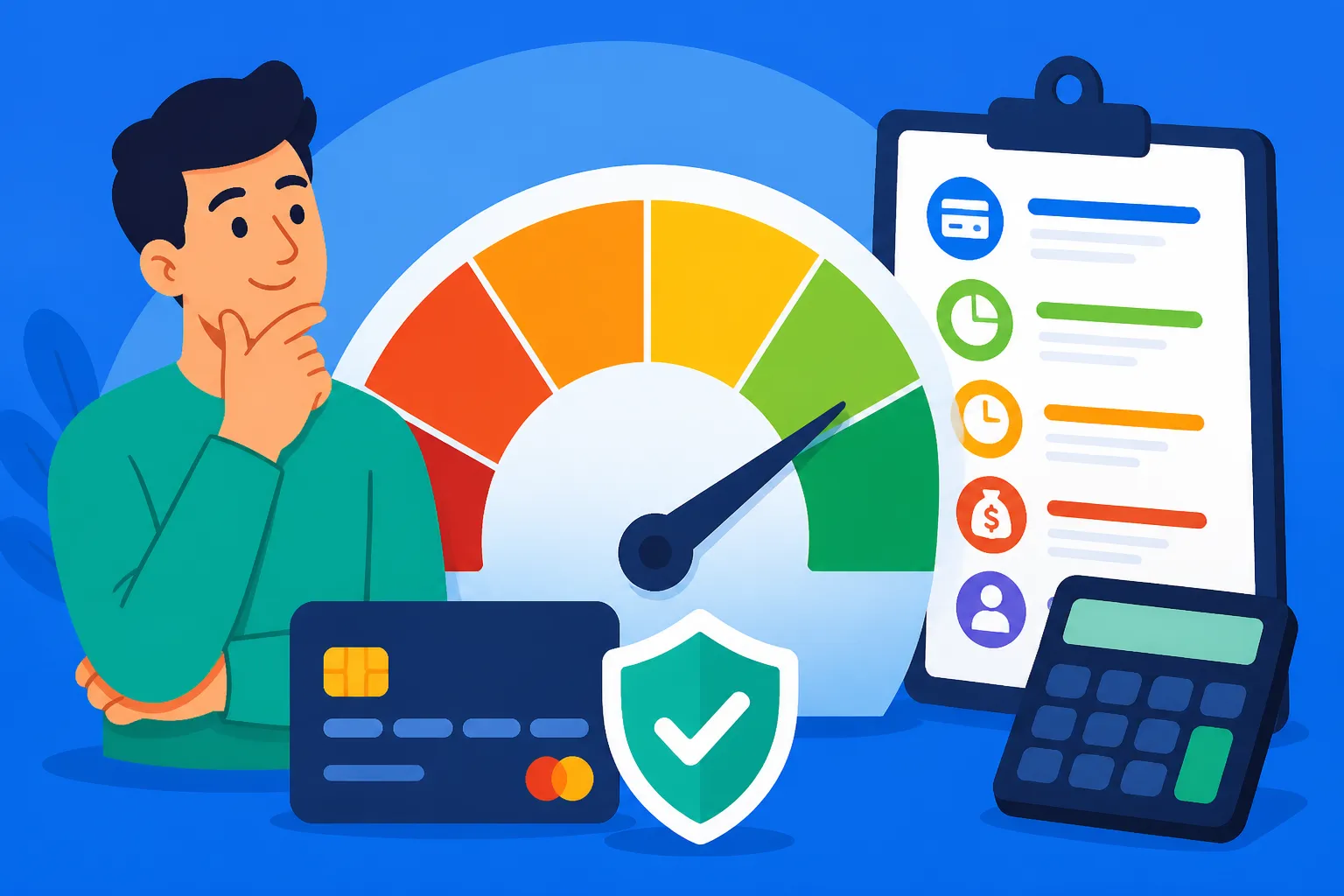
What Is a FICO Score and How Is It Calculated?
It can feel like your financial life is governed by an invisible number, a mysterious score that lenders, landlords, and even insurance companies seem to consult before making big decisions about you. This number, often the FICO Score, holds immense power, but many people don't truly understand what it is or how it's actually calculated, leading to frustration and confusion. This comprehensive guide is here to pull back the curtain, explaining what a FICO Score is, how it's determined, and how you can take control of it.
Demystifying the FICO Score: What It Really Is
Imagine trying to get approved for a loan, a mortgage, or even just a new credit card, and someone tells you, "Your FICO score isn't quite where we need it to be." It can feel like a punch to the gut, leaving you wondering what this magical number even is and why it seems to dictate so much. The truth is, the FICO Score isn't magic; it's a sophisticated, data-driven calculation designed to predict how likely you are to pay your bills on time. Understanding it is the first step toward improving it.
The Origin Story of FICO
The FICO Score was first introduced in 1989 by the Fair Isaac Corporation, which is where the "FICO" name comes from. Before FICO, lenders often used their own, sometimes subjective, methods to assess credit risk. This led to inconsistencies and, in some cases, potential bias. FICO was designed to standardize this process, providing a consistent, objective, and statistically-driven measure of creditworthiness that lenders could rely on. It quickly became, and remains, the dominant credit scoring model in the United States, used in over 90% of lending decisions. This means that when a lender pulls your credit, they're almost certainly looking at a FICO Score, even if they don't explicitly say "FICO."
Why FICO Dominates the Lending Landscape
The reason FICO scores are so prevalent is simple: they work. Lenders need a reliable way to assess risk quickly and fairly, and FICO provides that. It's not just about getting approved; it's also about the interest rates and terms you're offered. A higher FICO Score typically means you're seen as a lower risk, which translates to better interest rates on everything from mortgages to car loans, saving you thousands of dollars over the lifetime of those debts. For instance, a person with a FICO Score of 760 will likely qualify for significantly better mortgage rates than someone with a 650 score, even if both are approved. This financial impact is why understanding your FICO score and how to improve it is so critical for your financial well-being.
The Five Pillars of FICO: How Your Score Is Built
Your FICO Score isn't just a random number; it's a complex formula based on five main categories of information found in your credit reports. Each category carries a different weight, emphasizing certain behaviors more than others. Think of it like a recipe for your financial reliability, where some ingredients are more crucial than others for the final outcome.
Payment History: The Unsung Hero of Your Score
This is by far the most important factor, making up about 35% of your FICO Score. It's essentially a report card on whether you've paid your bills on time. Every single payment, whether it's on a credit card, a mortgage, a car loan, or even student loans, gets recorded. A history of consistent, on-time payments demonstrates responsibility and reliability to lenders, which is exactly what they want to see.
A single late payment can have a significant, negative impact on your score, especially if it's 30, 60, or even 90 days past due. The older and more frequent the late payments, the more severe the damage. Even if you're struggling, making at least the minimum payment on time is paramount. If you've been hit with a late payment, you might be wondering, "How Long Does a Late Payment Stay on Your Credit Report?" Generally, they stick around for seven years, though their impact lessens over time. Seriously, prioritize paying on time above almost everything else when it comes to your credit.
Amounts Owed Credit Utilization: A Delicate Balancing Act
The second most influential factor, accounting for about 30% of your FICO Score, is the amount of debt you currently owe, particularly in relation to your available credit. This is often referred to as credit utilization. It's not just about the total amount; it's about the percentage of your credit limit you're using. If you have a credit card with a $10,000 limit and you've used $9,000 of it, your utilization is 90%, which is very high. Lenders see high utilization as a sign that you might be over-reliant on credit or potentially in financial distress.
Ideally, you want to keep your overall credit utilization below 30% across all your revolving accounts. Even better, aiming for under 10% can significantly boost your score. This applies to individual cards as well. If you have a card with a $500 limit, try to keep its balance under $150. Many people wonder, "Does Maxing One Card but Not Others Hurt You?" And the answer is yes, because both individual card utilization and overall utilization are considered. Learning How to Lower Your Credit Utilization Fast is one of the quickest ways to see a positive change in your FICO Score.
Length of Credit History: Time is Money Literally
This factor makes up about 15% of your FICO Score and looks at how long you've had credit accounts open, how long specific accounts have been active, and how recently you've used them. A longer credit history with positive activity generally signals stability and experience to lenders. They want to see that you've managed credit responsibly over an extended period, not just for a few months.
This is why you'll often hear advice about not closing your oldest credit cards, even if you don't use them much. Closing an old account can reduce the average age of your credit accounts, which could negatively impact this portion of your score. Building credit takes time, and there are no real shortcuts to instantly aging your accounts. This is where patience really pays off in your financial journey. For those just starting out, understanding How to Build Credit From Scratch is essential, as establishing a long, positive history is key.
New Credit: The Double-Edged Sword of Applications
Representing about 10% of your FICO Score, this category considers how many new credit accounts you've recently opened and the number of hard inquiries on your credit report. While opening new credit might seem like a good way to expand your financial options, doing it too frequently in a short period can signal risk to lenders. They might worry you're desperate for credit or taking on more debt than you can handle.
Each time you apply for new credit – be it a loan or a credit card – a "hard inquiry" is typically placed on your credit report. A few hard inquiries here and there are fine, but a flurry of them can cause a temporary dip in your FICO Score. It's generally advised to only apply for new credit when you genuinely need it and to space out your applications. This doesn't apply to checking your own credit, which results in a "soft inquiry" and doesn't affect your score. Understanding How Long Does a Hard Inquiry Stay on Your Credit Report? can help you time your applications more strategically.
Credit Mix: A Well-Rounded Financial Portfolio
This final category accounts for about 10% of your FICO Score and looks at the different types of credit you manage. Having a healthy mix of both revolving credit (like credit cards) and installment loans (like mortgages, car loans, or student loans) can be a positive sign. It demonstrates that you can responsibly handle various forms of debt.
However, this doesn't mean you should go out and take on debt you don't need just to improve your credit mix. It's more about showing diversity as you naturally acquire different types of loans over your financial life. For individuals seeking to broaden their credit mix responsibly, especially if they have a limited history, products like those offered by Credit Strong can be beneficial. They often provide credit builder loans, which are a type of installment loan designed to help users establish a payment history and diversify their credit profile without requiring a large upfront sum or excellent credit to start. It's a structured way to add an installment account to your mix.
Deeper Dive into FICO Score Calculation
While we understand the five main categories, the exact science behind how FICO weighs and combines these factors is a proprietary secret. However, we can still explore how the underlying algorithms operate and why different versions of FICO exist, impacting your score in subtle ways.
The Algorithmic Magic Behind the Scenes
The FICO scoring algorithm uses predictive analytics to assess risk. It analyzes thousands of past credit files to identify patterns of behavior that correlate with future payment defaults. For example, it might have learned that people with consistently high credit card balances and recent late payments are statistically more likely to miss future payments than someone with low balances and a perfect payment history. The system doesn't just look at isolated incidents; it considers the interplay between all the different factors.
This means a single late payment might not decimate an otherwise stellar credit history, but combined with high utilization and several new accounts, it could have a much more pronounced negative effect. The algorithm is constantly being refined, learning from new data to make its predictions even more accurate. This sophistication is why it's so hard to game the system; consistent, responsible financial behavior over time is the true path to a high FICO Score.
The Impact of Different FICO Versions
It's crucial to understand that there isn't just one FICO Score. FICO has developed numerous versions of its scoring model over the years, each designed for slightly different purposes or to be more predictive with newer data. You might encounter FICO Score 8, FICO Score 9, FICO Score 10, or even industry-specific scores like FICO Auto Score or FICO Bankcard Score. These versions can lead to slightly different scores for the same individual.
The most commonly used version by general lenders is often FICO Score 8, but newer versions like FICO Score 9 and 10 are gaining traction. These newer models might treat things like paid collections or medical collections differently, often being a bit more forgiving. So, if you check your score on one platform and it's 720, and on another it's 735, it's very likely due to them pulling different versions of the FICO algorithm, or even different credit reports. This discrepancy is a common frustration, and it's why understanding Why Is My Credit Score Different on Different Sites? is so important for managing expectations.
Common Misconceptions About FICO Scores
The world of credit scores is rife with myths and misunderstandings. These can lead people down the wrong path, making choices that they think will help their score but actually do the opposite. Let's clear up some of the most persistent confusions, particularly regarding how FICO measures creditworthiness.
Debunking Credit Score Myths
One pervasive myth is that carrying a small balance on your credit card helps your score. Many people believe that showing you use your credit and pay interest is good. This is absolutely false. FICO models actually prefer a 0% utilization rate, meaning you pay off your balance in full every month. The best practice is to pay your statement balance in full by the due date to avoid interest and maintain a low utilization.
Another common misconception is that checking your own credit score hurts it. This is not true. Checking your own score, often referred to as a "soft inquiry," has no impact whatsoever on your FICO Score. Lenders might use soft inquiries for pre-approvals, but these also don't affect your score. You can check your score as often as you like without fear. In fact, regular monitoring is encouraged to keep an eye on your financial health and catch any potential errors. If you're wondering, "Does Checking Your Own Credit Score Hurt It?", rest assured, the answer is a resounding no.
The Difference Between FICO and Other Scores VantageScore
While FICO scores dominate, they're not the only credit scores out there. The most notable alternative is VantageScore, developed jointly by the three major credit bureaus (Equifax, Experian, and TransUnion) to compete with FICO. VantageScores use a slightly different methodology and weighting for the various factors, which is why your VantageScore might be different from your FICO Score.
| Credit Score Model | Primary Creator | Percentage of Market Use | Key Differentiators | Common Versions |
|---|---|---|---|---|
| FICO Score | Fair Isaac Corporation | Over 90% in lending decisions | More emphasis on older accounts, typically requires 6 months of history | FICO 8, FICO 9, FICO 10, industry-specific scores |
| VantageScore | Equifax, Experian, TransUnion | Growing, often used by free credit monitoring services | Can score consumers with less than 6 months of history, treats trended data differently | VantageScore 3.0, VantageScore 4.0 |
VantageScore 3.0, for example, can score consumers with as little as one month of credit history, making it more accessible for those just starting out. It also treats certain types of inquiries and collections differently than FICO. While many free credit monitoring services, like Credit Karma or Credit Sesame, often provide VantageScores, it's important to remember that most lenders still primarily use FICO Scores for major decisions. So, while VantageScores can give you a good general idea of your credit health, your FICO Score is usually the one that counts most when you apply for a loan. You can learn more by checking out FICO Score vs VantageScore: What's the Difference?.
Practical Steps to Improve Your FICO Score
Improving your FICO Score isn't an overnight process, but it's entirely achievable with consistent effort and smart financial habits. It boils down to understanding the five key factors and actively working to optimize each one. Even small changes can lead to significant gains over time.
Strategies for Boosting Your Payment History
The most impactful thing you can do for your FICO Score is to simply pay all your bills on time, every time. Set up automatic payments for all your credit accounts to avoid missing due dates. If you're prone to forgetting, calendar reminders or linking payments to your checking account directly can be lifesavers. Even if you can only afford the minimum payment, make sure it's on time. A single 30-day late payment can drop an excellent score by dozens of points.
If you already have a late payment on your report, don't despair. Its impact lessens over time. You could also try writing a goodwill letter to your creditor, especially if it was an isolated incident and you've been a good customer otherwise. While there's no guarantee, some creditors might agree to remove it as a gesture of goodwill. Consistently making future payments on time is the ultimate strategy for demonstrating reliability and mitigating past mistakes. This is a core component of How to Raise Your Credit Score.
Managing Your Credit Utilization Effectively
To improve your credit utilization, focus on two main strategies: paying down your balances and, where appropriate, increasing your credit limits. As discussed, keeping your balances below 30% of your total available credit is crucial. If you have multiple credit cards, concentrate on paying down the one with the highest balance or highest utilization first. If you use a credit builder tool like Credit Strong, ensure you're making those payments on time and maximizing the positive impact on your credit history and utilization.
Another strategy, if you have excellent payment history, is to request a credit limit increase. A higher limit, assuming you don't increase your spending, will automatically lower your utilization ratio. However, be mindful that requesting a limit increase might result in a hard inquiry, so only do it if you're confident you'll be approved and you have a solid payment record. For those deep in debt, options like a balance transfer card could offer a temporary reprieve with 0% APR, allowing you to pay down debt faster without interest accruing, thereby reducing your utilization quickly.
Building a Stronger Credit Profile Over Time
Building a strong credit profile involves a combination of patience and strategic action. Maintain a diverse credit mix, but don't open accounts just for the sake of it. If you have few accounts, consider a secured credit card or a credit builder loan. A secured card, like those offered by Capital One or Discover, requires a deposit, but it reports to the credit bureaus just like a regular credit card, helping you establish payment history and utilization. Services like Credit Strong offer credit builder loans, which can also be an excellent way to add an installment loan to your mix and demonstrate consistent payments.
Remember, the length of your credit history also matters, so keep your oldest accounts open and active, even if you only use them for a small, recurring charge and pay them off monthly. Avoid opening too many new accounts in a short period, as this can lead to multiple hard inquiries and lower the average age of your accounts. Consistency is truly the name of the game when it comes to long-term credit building. Over time, these habits will lead to an improved FICO Score, opening up better financial opportunities.
Disclaimer
The information provided in this guide is for general informational purposes only and does not constitute financial or legal advice. Credit scores and their calculations can be complex and may vary based on individual circumstances and different scoring models. It is recommended to consult with a qualified financial advisor for personalized advice.