How to Pay Off $18,000 in Credit Card Debt
Feeling the weight of $18,000 in credit card debt can feel like carrying a heavy backpack uphill, making every financial step a struggle. It's a common burden that steals peace of mind and makes future goals seem impossible. But here's the good news: you absolutely can conquer this debt, and this guide is going to walk you through a realistic, step-by-step path to pay off that $18,000, regain control, and start building a brighter financial future.
Understanding the Landscape of Your $18,000 Debt
Before you can tackle such a significant amount of credit card debt, it's essential to truly understand what you're up against. This isn't just about a number; it's about dissecting the beast into manageable parts so you can formulate an effective strategy.
The Emotional and Financial Weight of High Debt
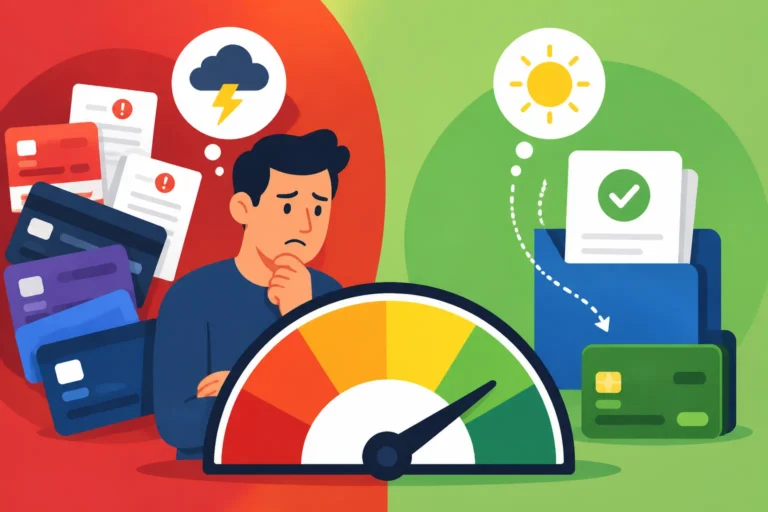
Having $18,000 hanging over your head isn't just a financial problem; it's a huge emotional burden. Many people dealing with this level of debt report feeling constant stress, anxiety, and even shame. You might find yourself avoiding phone calls from unknown numbers, dreading the mail, or losing sleep worrying about how you'll make ends meet. It can feel incredibly isolating, like you're the only one struggling this much, but trust me, you're not alone.
Financially, this debt acts like a heavy anchor, pulling down your ability to save, invest, or reach other important milestones. Imagine you're a young couple, say, Alex and Jamie, dreaming of buying their first home in three years. With $18,000 in credit card debt, their debt-to-income ratio might be too high, their credit score could be suffering, and all the money they're pouring into high-interest payments isn't going towards a down payment. This debt isn't just a temporary inconvenience; it's actively delaying their dreams and putting a significant strain on their relationship. It impacts everything from your ability to get a competitive car loan rate to even renting an apartment.
Deconstructing Your Debt: Where is it Hiding?
To effectively fight your debt, you need to know exactly what you're fighting. This means gathering all the critical details for every single credit card you owe money on. We're talking balances, interest rates (APR), minimum payments, and even the statement closing dates. Why are these details so important? Because an informed strategy is a powerful strategy.
For instance, you might have balances across several cards: perhaps a higher-interest store card from Target or Macy's, a general-purpose Visa or Mastercard with a slightly lower rate, and maybe even a premium card like the Chase Sapphire Preferred Card that you used for a big expense. Each of these accounts will have different terms, and understanding those differences is key to prioritizing. A card with a 25% APR is costing you a lot more each month than one with 15% APR, even if the balance is lower.
Take a moment to list everything out. This can be a tough step, staring those numbers in the face, but it's absolutely crucial. Once you have a clear picture, you can identify which debts are draining your wallet the most and which ones might offer quick wins. This process helps you transition from feeling overwhelmed by a single large sum to viewing it as a series of smaller, more manageable challenges.
Here’s an example of how you might break down your $18,000 debt:
| Creditor (Card Type) | Current Balance | Interest Rate (APR) | Minimum Payment |
|---|---|---|---|
| Store Card (e.g., Target) | $2,500 | 29.99% | $75 |
| Major Card 1 (e.g., Visa) | $7,000 | 22.99% | $140 |
| Major Card 2 (e.g., MC) | $4,500 | 19.99% | $90 |
| Personal Loan | $4,000 | 14.50% | $120 |
| Total | $18,000 | $425 |
Knowing these specifics allows you to see how much of your minimum payment is actually going toward the principal versus just covering interest, which for high-interest credit cards, can be a dishearteningly small amount. This granular view is your first weapon in the fight against debt.
Crafting Your Attack Plan: Strategies to Pay Off $18,000
Now that you have a clear picture of your debt, it's time to choose your battle strategy. There are two popular and highly effective methods for tackling multiple debts: the debt snowball and the debt avalanche. Each has its merits, depending on your personality and how you stay motivated.
The Debt Snowball vs. Debt Avalanche Debate
The Debt Snowball Method focuses on psychological wins. With this approach, you list all your debts from the smallest balance to the largest, regardless of the interest rate. You make minimum payments on all debts except for the smallest one, where you throw every extra penny you can find. Once that smallest debt is paid off, you take the money you were paying on it (its minimum payment plus all the extra you were sending) and roll it into the next smallest debt. This creates a "snowball" effect, where your payments grow larger and larger as you pay off each successive debt.
This method is fantastic for people who need quick motivation and a sense of accomplishment to stay on track. Imagine paying off that $2,500 store card in our example relatively quickly. The joy and confidence from seeing a balance hit zero can be incredibly powerful, helping you sustain the effort needed for the larger debts. If you've struggled with debt repayment in the past and found yourself losing steam, the immediate gratification of the debt snowball might be just what you need to keep going. Many people find that even if they pay a little more interest overall, the psychological boost is worth it. For more detailed insights, check out our guide on Debt Snowball vs Debt Avalanche: Which Is Better?.
The Debt Avalanche Method, on the other hand, is all about saving the most money on interest. With this strategy, you list your debts from the highest interest rate to the lowest, regardless of the balance. You make minimum payments on all debts except for the one with the highest interest rate, to which you direct all your additional funds. Once that highest-APR debt is gone, you move on to the next highest interest rate, and so on.
This method is mathematically superior because it minimizes the total amount of interest you'll pay over the life of your debt. If you're disciplined and motivated by financial efficiency, the debt avalanche is often the best choice. For our example table, you'd target the 29.99% store card first, then the 22.99% Visa, and so on. While it might take longer to see the first debt completely disappear, the long-term savings can be substantial, especially with $18,000 spread across cards with varying high APRs. If you have a strong resolve and can stick to a plan without needing constant small victories, the avalanche approach will get you out of debt for less money in the long run.
Powering Up Your Payments: Beyond the Minimums
One of the biggest traps with credit card debt is only making the minimum payments. While it keeps your account in good standing, minimum payments are designed to keep you in debt for as long as possible, maximizing the interest collected by the credit card company. When you only pay the minimum on an $18,000 balance, a huge chunk of that payment goes straight to interest, barely touching your principal. This is why it feels like you're running on a treadmill, getting nowhere.
To truly pay off $18,000 in credit card debt, you must commit to paying more than the minimum. Even an extra $50 or $100 each month can significantly reduce the amount of interest you pay and shave months, even years, off your repayment timeline. Think about it: if your total minimum payments are $425, and you can consistently pay $525, you're attacking the principal with an extra $100 right away. This extra effort will make a noticeable difference and accelerate your journey to debt freedom.
Finding that extra money might seem daunting, but it's often about taking a hard look at your budget and making intentional choices. Start by tracking every dollar you spend for a month. You might be surprised where your money is going. Could you cut back on dining out, subscription services, or daily coffee runs? Could you pick up a small side hustle for a few hours a week? Even selling unused items around your home can provide a lump sum to boost your first few payments. Every dollar you can free up and direct towards your debt is a dollar that works harder for you, rather than for your creditors. This aggressive approach is key if you want to know How to Pay Off Credit Card Debt Fast.
As you work to pay down your balances, you'll also likely improve your credit utilization, which is a major factor in your credit score. Lowering your credit utilization, ideally to below 30% on each card, can give your score a healthy boost. High utilization, on the other hand, can seriously cost you points. Understanding How Many Points Does High Utilization Cost You? can be a powerful motivator to keep those payments high.
Leveraging Financial Tools and Resources
Tackling $18,000 in credit card debt doesn't mean you have to go it alone or rely solely on increasing your monthly payments. There are several financial tools and resources designed to help you streamline your debt, potentially lower your interest rates, and make the repayment process more efficient.
Balance Transfers and Debt Consolidation Loans
One popular strategy for high-interest credit card debt is a balance transfer. This involves moving balances from one or more high-APR credit cards to a new credit card that offers a 0% introductory APR for a set period, often 12 to 21 months. This breathing room, where your payments go entirely towards the principal instead of being eaten up by interest, can be a game-changer when you're facing $18,000 in debt. However, most balance transfer cards charge a fee, typically 3-5% of the transferred amount. For an $18,000 transfer, that's $540 to $900 upfront, which needs to be factored into your plan.
The key to making a balance transfer successful is to pay off as much of the transferred balance as possible before the introductory period ends. If you don't, any remaining balance will typically revert to a much higher standard APR. It's also crucial not to rack up new debt on the old cards once the balances are transferred. For a deep dive into how these work, read our comprehensive guide on Balance Transfer Cards: How They Work. These cards are a fantastic tool, but they require discipline and a solid repayment plan to avoid ending up in a worse situation.
Another powerful option is a debt consolidation loan. This is a personal loan you take out to pay off all your existing credit card debts. The benefit is that you replace multiple credit card payments with one single, fixed monthly payment, often at a lower interest rate than your credit cards. This simplifies your financial life and can save you a significant amount on interest, especially if your credit card APRs are in the high teens or twenties.
However, debt consolidation loans typically require a decent credit score to qualify for the best rates. If your score has taken a hit due to your $18,000 debt, you might not get the most favorable terms. It's important to compare the interest rate of the consolidation loan against the average APR of your credit cards. If the loan's APR isn't significantly lower, it might not be the best solution. We have a great article that compares Debt Consolidation vs Balance Transfer to help you decide which might be a better fit for your situation. Also, be aware that while a debt consolidation loan can be a lifesaver, it does involve a hard inquiry on your credit report, and there are considerations regarding Does Debt Consolidation Hurt Your Credit?.
Exploring Credit Builder Options While Paying Down Debt
It might seem counterintuitive to think about building credit when you're focused on paying off $18,000 in credit card debt, but maintaining or improving your credit health during this period is incredibly important. As your credit utilization goes down with consistent payments, your credit score should naturally begin to improve. However, if your credit history isn't very robust, or if you're concerned about your score dropping further, a credit builder product could be a helpful supplementary tool.
For example, programs like Credit Strong offer credit builder loans that can help you diversify your credit mix and establish a positive payment history, even while you're focused on tackling that $18,000 credit card debt. Unlike a traditional loan where you get the money upfront, with a credit builder loan, you make fixed monthly payments into a savings account, which is then released to you at the end of the loan term. The payments are reported to the major credit bureaus, building a positive payment history. It's a structured way to save money and show responsible financial behavior.
A Credit Strong account, for instance, provides a structured way to save money while simultaneously reporting positive payment activity to the credit bureaus. This can be particularly beneficial if your credit file is "thin" – meaning you don't have a lot of different types of credit accounts. Adding a positive installment loan to your credit mix, alongside your revolving credit cards, can demonstrate a broader range of financial responsibility. You can learn more about how these types of products work in our guide to Credit Builder Loans Explained (Self, Kikoff & More).
If you're worried about your credit score dipping while you're laser-focused on debt repayment, exploring options like Credit Strong can provide a safety net and a path to simultaneously improve your credit. This ensures that as you shed debt, you're also shoring up your credit foundation for future financial opportunities. The goal is to emerge from this debt journey with both a zero balance and a stronger credit profile.
Staying Motivated and Protecting Your Progress
Paying off $18,000 in credit card debt is a marathon, not a sprint. There will be days when it feels overwhelming, and you might get discouraged. That's why building a solid support system and putting safeguards in place is just as important as the repayment strategies themselves.
Preventing Future Debt Accumulation
The absolute worst thing that could happen after all your hard work is to fall back into debt. This means you need to address the underlying habits that led to the $18,000 debt in the first place. A solid budget is your non-negotiable foundation. It's not just about tracking expenses; it's about intentional spending and making sure every dollar has a job. Once you're clear on where your money goes, you can identify areas to cut back and redirect funds towards debt repayment or savings.
Equally important is building an emergency fund. Even a small one, say $1,000, can prevent you from reaching for your credit card when unexpected expenses pop up – a car repair, a dental emergency, or a sudden home repair. Without this safety net, one bump in the road can derail your entire debt payoff plan and send you spiraling back into high-interest borrowing. Think of it as insurance against future debt. Start small, even if it's just $25 a week, and watch it grow. Changing your spending habits from relying on credit to living within your means is crucial for long-term financial health. Learning How to Use a Credit Card to Build and Keep Good Credit is vital to ensure you don't end up in this situation again.
Monitoring Your Credit Score and Report
As you diligently pay down your $18,000 debt, it's incredibly rewarding to see your progress reflected in your credit score and reports. Make it a habit to regularly check your credit reports from Equifax, Experian, and TransUnion. You can get a free copy of your report from each bureau once a year through AnnualCreditReport.com. This isn't just about celebrating your improving score; it's also about vigilance.
Your credit report is a detailed history of your financial accounts. You need to review it carefully for any errors, fraudulent activity, or accounts you don't recognize. Mistakes happen, and a single error could be negatively impacting your score and making your debt journey harder than it needs to be. Identifying and disputing these errors quickly can save you a lot of headache and potentially boost your score. Our guide on How to Read Your Credit Report (2026 Guide) provides a thorough walkthrough of what to look for.
Seeing your credit score improve as your credit utilization drops and your payment history lengthens can be a huge motivator. You can check your credit score for free through many banking apps or services like Credit Karma. Regularly monitoring your score helps you understand What Affects Your Credit Score? The 5 Factors and ensures you’re on the right track. This consistent oversight empowers you to take control, celebrate milestones, and quickly address any issues that might arise.
Disclaimer
This article is for general informational purposes only and does not constitute professional advice. Laws, prices and regulations vary by location and change over time. Consult a qualified professional for guidance on your specific situation.