How to Pay Off $25,000 in Credit Card Debt in 6 Months
Facing down $25,000 in credit card debt can feel like staring up at an insurmountable mountain, especially when you're aiming to conquer it in a swift six months. The sheer weight of those high-interest balances can be suffocating, leaving you wondering if a fast payoff is even remotely possible. This guide is here to tell you that while it's an ambitious goal requiring serious commitment and sacrifice, it can be done, and we'll break down the realistic, actionable steps to get you there.
Understanding the Gravity of Your $25,000 Debt
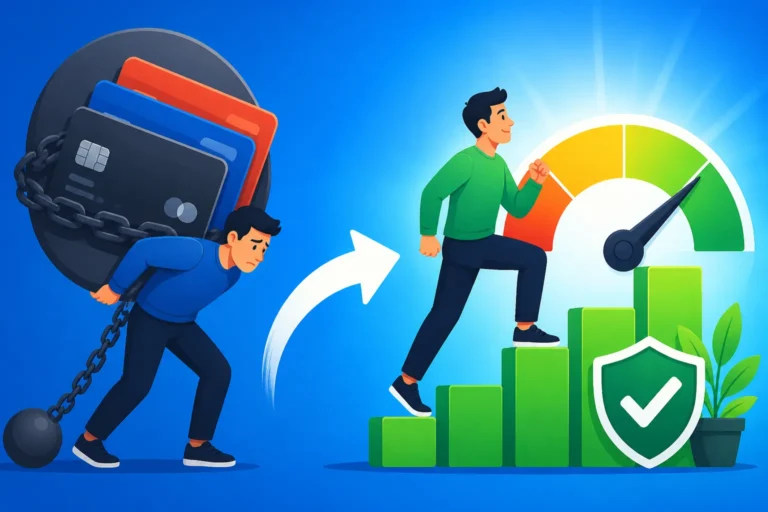
When you have a significant chunk of credit card debt, it’s not just a number on a statement; it’s a financial anchor that can drag down your entire life. The feeling of being overwhelmed is completely valid, and it’s often exacerbated by the nature of credit card interest rates and how they compound over time. Let's delve into why this debt feels so heavy and why tackling it quickly is in your best interest.
Why This Debt Feels So Crushing
The biggest culprit behind the crushing weight of credit card debt is typically the exorbitant interest rates. Unlike a fixed-rate mortgage or car loan, credit card APRs (Annual Percentage Rates) can hover in the high teens, twenties, or even higher. This means that a substantial portion of your minimum monthly payment is often eaten up by interest, barely touching the principal balance. It’s like being on a treadmill – you’re moving, but you’re not really getting anywhere. This cycle can be incredibly frustrating and demoralizing, making the debt seem endless.
Beyond the numbers, there's a significant mental and emotional toll. Living with substantial debt can lead to chronic stress, anxiety, and even affect relationships. The constant worry about making payments, the feeling of being trapped, and the limitations on your financial freedom can truly wear you down. You might be putting off major life goals, like buying a home or starting a family, because this debt looms large. Acknowledging this emotional burden is the first step toward finding the motivation to fight back.
The Urgency of a 6-Month Payoff Goal
Setting an aggressive goal like paying off $25,000 in just six months isn't for the faint of heart, but the urgency behind it is paramount. The faster you eliminate this debt, the less interest you'll accrue. Think about it: every month this debt lingers, you're essentially paying a premium for past purchases. Over six months, with an average credit card APR of, say, 22%, the interest on a $25,000 balance could easily amount to over $2,000 if not paid down aggressively. By committing to a swift payoff, you're saving yourself thousands of dollars that can then be redirected towards your savings, investments, or simply enjoying your life without the shadow of debt.
Furthermore, achieving such a challenging financial milestone can be incredibly empowering. It allows you to regain control of your finances, rebuild your credit health, and set yourself up for future financial stability. Imagine the sense of relief and accomplishment when that last payment clears. It's not just about the money; it's about reclaiming your financial independence and peace of mind. The quicker you act, the less time you give that debt to grow, and the sooner you can start living truly debt-free.
The Brutal Math: Can You Really Pay Off $25,000 in 6 Months?
Let's get down to the brass tacks and look at the numbers. Paying off $25,000 in half a year is a significant undertaking, and it requires a crystal-clear understanding of the math involved. This isn't just about dividing your total debt by six; you also have to factor in the interest that will accumulate during this period.
Calculating Your Monthly Target Payment
To pay off $25,000 in 6 months, you'd need to pay approximately $4,166.67 per month just for the principal. However, this figure doesn't account for interest. Credit card interest is usually calculated daily, meaning the faster you reduce your principal, the less interest you'll pay overall.
Let's assume an average APR of 22% for your credit card debt. Here’s a simplified look at what your minimum monthly payment would realistically need to be if you want to pay it all off within six months, including estimated interest:
| Month | Starting Balance | Estimated Interest Paid (22% APR) | Principal Payment Goal | Total Monthly Payment | Remaining Balance |
|---|---|---|---|---|---|
| 1 | $25,000.00 | $458.33 | $4,166.67 | $4,625.00 | $20,833.33 |
| 2 | $20,833.33 | $381.94 | $4,166.67 | $4,548.61 | $16,666.66 |
| 3 | $16,666.66 | $305.56 | $4,166.67 | $4,472.23 | $12,499.99 |
| 4 | $12,499.99 | $229.17 | $4,166.67 | $4,395.84 | $8,333.32 |
| 5 | $8,333.32 | $152.78 | $4,166.67 | $4,319.45 | $4,166.65 |
| 6 | $4,166.65 | $76.39 | $4,166.65 | $4,243.04 | $0.00 |
| Total | $1,604.17 | $25,000.00 | $26,604.17 |
Note: This table provides an approximation. Actual interest will vary based on your specific card's APR, how quickly payments are processed, and if new charges are made.
As you can see, your actual total monthly payment would need to be closer to $4,200 to $4,600, depending on the month. This requires a substantial portion of your income dedicated solely to debt repayment, leaving little room for error or non-essential spending.
Assessing Your Financial Reality
Before you jump headfirst into this plan, take a brutally honest look at your current financial situation. Can your current income support a monthly payment of over $4,000? Many people simply don't have that much disposable income after essential expenses like rent, utilities, and groceries. This assessment isn't meant to discourage you, but rather to highlight the level of commitment and potential lifestyle changes that will be necessary.
If your current budget doesn't allow for this aggressive payment, you have two primary levers to pull: significantly increasing your income, or drastically cutting your expenses, or a combination of both. You need to map out every dollar coming in and every dollar going out. This means creating a detailed budget, identifying every single discretionary expense, and being prepared to make difficult choices. If your take-home pay is, say, $6,000 a month, dedicating over 70% of it to debt repayment is an extreme measure, but it's the reality of hitting a $25,000 payoff in six months.
Strategies to Free Up Funds for Aggressive Debt Payoff
When you're aiming to pay off $25,000 in just six months, you can't rely on business as usual. This goal demands an overhaul of your spending habits and a proactive approach to boosting your income. You need to find every spare dollar and redirect it towards your debt.
Drastically Cutting Your Expenses
This is where the rubber meets the road. To find upwards of $4,000 per month for debt payments, you'll likely need to slash every non-essential expense from your budget, and then some. This means taking a hard look at where your money goes.
Start by categorizing your expenses into essential and discretionary. Essential expenses include housing, utilities, basic groceries, and transportation to work. Everything else is fair game for cutting. Think about:
- Dining Out and Delivery: This is often one of the biggest budget busters. For six months, plan to cook every single meal at home. Pack your lunch, make your coffee, and resist the temptation of takeout. This alone can save hundreds of dollars a month.
- Entertainment and Subscriptions: Cancel all non-essential streaming services, gym memberships you don't use religiously, and any other subscriptions. Put a pause on concerts, movies, and expensive outings. Look for free or low-cost entertainment like library books, hiking, or potlucks with friends.
- Shopping: Implement a strict no-buy rule for anything that isn't absolutely necessary for survival. This includes new clothes, gadgets, home decor, and impulse buys.
- Transportation: Can you carpool, bike, or use public transport more often? Even small savings on gas or parking can add up. Consider if selling a second car (if you have one) is an option, as the associated costs (insurance, maintenance, payments) can be substantial.
- Negotiate Bills: Call your internet, cable, and even insurance providers to see if you can get a lower rate. Many companies are willing to negotiate to keep you as a customer.
This isn't about minor adjustments; it's about a temporary but drastic shift in lifestyle. Think of it as a financial boot camp. It will be challenging, and you'll likely miss some conveniences, but the short-term pain will lead to significant long-term gains.
Boosting Your Income Quickly and Sustainably
While cutting expenses is crucial, for a target like $25,000 in six months, it's often not enough on its own. You'll likely need to actively increase your income during this period.
- Overtime at Your Current Job: If your employer offers overtime, seize every opportunity. The extra hours, especially at a higher pay rate, can make a huge dent in your debt.
- Side Hustles: The gig economy offers countless ways to earn extra cash. Consider driving for a ride-sharing service, delivering food, freelancing your skills (writing, graphic design, web development), pet-sitting, or tutoring. Even a few hundred extra dollars a week can translate to thousands over six months. Platforms like Upwork, Fiverr, or local community boards can connect you with opportunities.
- Sell Unused Items: Look around your home with a critical eye. Do you have electronics, furniture, clothing, or collectibles you no longer need? Selling these items on platforms like eBay, Facebook Marketplace, or local consignment shops can provide a quick influx of cash. Every dollar goes directly to debt.
- Negotiate a Raise: If you haven't had a raise recently and feel you're due, now might be the time to respectfully ask your employer. Highlight your accomplishments and value to the company. While it might not be a quick fix for the entire six months, it could provide a sustainable increase in income.
- Temporary Second Job: While demanding, picking up a part-time job for six months can dramatically accelerate your payoff. Even a minimum wage job for 20 hours a week can bring in over $1,000 a month before taxes.
The key here is to view all extra income, whether from selling items or working a second job, as "debt-only" money. It doesn't go into your regular spending budget; it goes straight to the highest-interest credit card.
Your Battle Plan: Debt Attack Methods
Once you've freed up significant funds, you need a smart strategy to deploy them against your debt. Simply throwing money at the problem haphazardly won't be as efficient as a targeted approach.
Debt Avalanche vs. Debt Snowball for High Balances
When tackling multiple credit card debts, two popular methods emerge: the debt avalanche and the debt snowball.
- Debt Avalanche: With the debt avalanche method, you list all your debts from the highest interest rate to the lowest. You make minimum payments on all accounts except for the one with the highest interest rate, on which you throw every extra dollar you have. Once that debt is paid off, you take the money you were paying on it (minimum payment + extra payment) and apply it to the next highest interest rate debt. This method saves you the most money in interest over time, which is incredibly crucial when you're dealing with a large sum like $25,000 and high credit card APRs. For an ambitious six-month payoff, the debt avalanche is almost always the financially superior choice.
- Debt Snowball: The debt snowball method prioritizes debts by their balance size, from smallest to largest, regardless of interest rate. You pay minimums on all but the smallest debt, and aggressively pay that one off first. Once it's gone, you roll that payment into the next smallest debt. This method is often recommended for those who need psychological wins to stay motivated, as you get to see debts disappear quickly. However, for $25,000 in credit card debt with typically high interest rates, this method will cost you more in interest.
Given your goal of paying off $25,000 in six months, prioritizing interest savings is paramount. Therefore, the debt avalanche method will be your most effective strategy. Every dollar saved in interest is a dollar that can go directly to reducing your principal faster. If you want to dive deeper into these strategies, you can read our comprehensive guide on Debt Snowball vs Debt Avalanche: Which Is Better?.
Leveraging Balance Transfer Cards
If you have a good to excellent credit score despite your existing debt (perhaps from a period of high spending that hasn't yet heavily impacted your score), a balance transfer credit card could be a powerful tool. These cards often offer an introductory 0% APR for a period, typically 12 to 21 months, on transferred balances. This means every dollar you pay during that introductory period goes directly to the principal, allowing you to make massive progress without accruing new interest.
Here’s how it works: you apply for a new balance transfer card, and if approved, you transfer your existing high-interest credit card balances to it. Be aware that most balance transfers come with a fee, usually 3-5% of the transferred amount. For $25,000, a 3% fee would be $750, which is still significantly less than the thousands you'd pay in interest over six months on a high-APR card.
Crucially, you must pay off the entire transferred balance before the 0% APR period expires. If you don't, any remaining balance will typically revert to a much higher standard APR, sometimes retroactively. Also, avoid making new purchases on the balance transfer card during this period, as new purchases usually accrue interest immediately, even while the transferred balance enjoys 0% APR. This strategy requires discipline and careful planning. To learn more about how these cards work, check out our article on Balance Transfer Cards: How They Work.
Exploring Personal Loans or Debt Consolidation
Another option, again depending on your creditworthiness, is a personal loan for debt consolidation. A personal loan typically comes with a fixed interest rate that is often lower than credit card APRs, and a fixed repayment schedule. This consolidates multiple credit card payments into one, predictable monthly payment, potentially saving you interest and simplifying your finances.
While a personal loan would spread the payments out over a longer period than 6 months (typically 1-5 years), it could lower your monthly interest burden dramatically. If you find that the $4,000+ monthly payment is simply impossible, a personal loan with a lower, more manageable monthly payment (albeit over a longer term) might be a more realistic option to get out from under the crushing credit card interest. However, for a strict 6-month payoff, a personal loan's longer term might not align with your aggressive timeline unless you're committed to paying significantly more than the minimum loan payment each month.
When considering any financial product to help with debt, it's also wise to think about your credit health long-term. Even after paying off this major debt, maintaining a strong credit profile is essential. Tools like a credit builder loan, such as those offered by Credit Strong, can be excellent resources after you've tackled this immediate debt. They help you build positive payment history and diversify your credit mix, which can lead to better rates on future loans and credit cards. While Credit Strong isn't a direct solution for paying off $25,000 in six months, it’s a valuable tool for rebuilding and strengthening your credit score once the immediate crisis is over and you're focusing on long-term financial health.
Staying Motivated and Monitoring Your Progress
Embarking on such an aggressive debt payoff journey requires immense discipline and mental fortitude. There will be days when you feel discouraged or tempted to stray from your plan. That's why building in strategies to stay motivated and rigorously monitoring your progress is just as important as the financial strategies themselves.
Setting Mini-Goals and Celebrating Milestones
The finish line of six months can feel a long way off, and paying thousands each month without visible progress can be draining. Break your $25,000 goal into smaller, more manageable mini-goals. Perhaps your first mini-goal is to pay off $5,000 in the first month, or to completely eliminate one small credit card balance.
Each time you hit a mini-goal, acknowledge it and celebrate, but do so in a way that doesn't derail your progress. Instead of spending money you don't have, celebrate with something free or very low-cost. Maybe it's a special homemade meal, a movie night at home, or an afternoon hike. These small victories will provide the psychological boost you need to keep going, reminding you of the progress you're making and reinforcing your commitment.
Visualizing your progress can also be incredibly powerful. Create a thermometer chart, a countdown calendar, or simply a spreadsheet where you can see the debt balance shrinking month by month. Seeing that number steadily decrease can be a huge motivator.
Regular Budget Reviews and Adjustments
Your initial budget and plan, while well-intentioned, might not be perfect. Life happens, unexpected expenses pop up, and sometimes you simply miscalculated. That's okay! What's critical is to regularly review your budget – at least weekly, if not daily – and make adjustments as needed.
- Weekly Check-ins: At the end of each week, sit down and compare your actual spending to your budgeted spending. Were there any categories where you overspent? Where did the extra money go? Be honest with yourself.
- Recalibrate: If you find you're consistently overspending in one area, figure out why. Can you cut back further elsewhere to compensate? Or do you need to adjust your income-generating efforts?
- Track Your Score and Report: Regularly checking your credit score can show the positive impact of your efforts. As your credit utilization drops and you make on-time, aggressive payments, your score will likely improve, providing another encouraging data point. You can get your credit score for free from various sources, and it's smart to review your credit report for accuracy periodically. Our guides on How to Check Your Credit Score for Free and How to Read Your Credit Report (2026 Guide) can walk you through the process. Remember, checking your own credit score won't hurt it, so make it a regular habit. Also, pulling your free credit report from AnnualCreditReport.com every few months is a good way to ensure everything is accurate and see your progress.
Flexibility is key. This is a tough sprint, not a leisurely jog. Your plan needs to be responsive to your reality. Don't be afraid to tweak your strategy if something isn't working as effectively as you'd hoped.
What Comes Next: Maintaining a Debt-Free Life
Paying off $25,000 in six months is an incredible achievement, but the work doesn't stop there. Once you're debt-free, the next challenge is to stay that way and build a robust financial foundation.
- Build an Emergency Fund: The number one priority after debt repayment should be building a solid emergency fund. Aim for 3-6 months' worth of living expenses. This fund acts as a buffer against unexpected costs, preventing you from falling back into credit card debt when life inevitably throws a curveball.
- Smart Credit Use: You've learned the hard way about the dangers of credit card debt. Now, learn to use credit wisely. Keep your credit utilization low, ideally below 10% on any card, and always pay your statement balance in full every month to avoid interest. This demonstrates responsible financial behavior and keeps your credit score healthy.
- Invest in Your Future: With your high-interest debt gone and an emergency fund in place, you can start directing your hard-earned money towards long-term goals like retirement savings, investments, or a down payment on a home.
- Maintain a Healthy Credit Profile: Even without high-interest debt, maintaining a diverse and positive credit history is vital. If your credit score took a hit during your debt journey, consider tools to help you rebuild. A credit builder loan from a company like Credit Strong can be an excellent way to add another positive payment history to your credit report, demonstrating responsible borrowing and helping improve your credit mix. It’s a proactive step towards ensuring you have strong credit for future needs, like lower interest rates on mortgages or car loans.
The discipline you cultivated during these six months will serve you well for a lifetime of financial health. Congratulations on taking the first step towards true financial freedom!
Disclaimer
The information provided in this article is for general informational purposes only and does not constitute financial, legal, or professional advice. Always consult with a qualified financial advisor or credit counselor before making any significant financial decisions. While every effort has been made to provide accurate and up-to-date information, financial situations and market conditions can change rapidly.