How to Pay Off $7,000 in Credit Card Debt in 18 Months
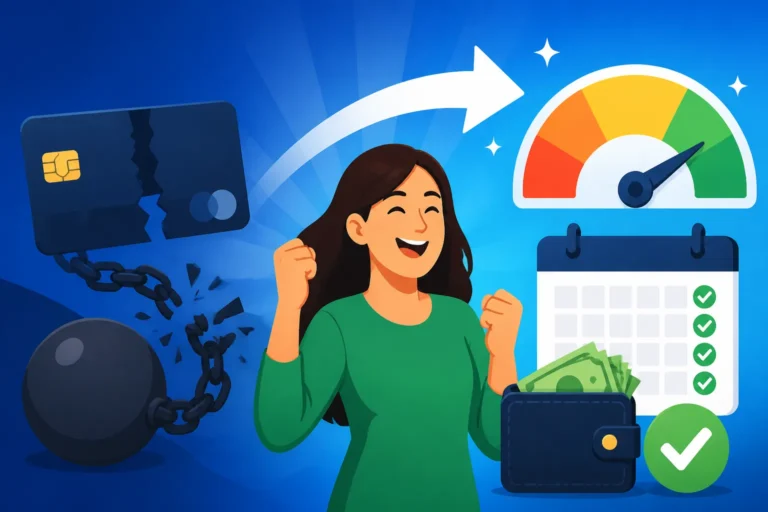
That feeling of looking at your credit card statements, seeing that accumulating balance, and feeling completely overwhelmed is all too common. When you're staring down $7,000 in credit card debt, especially with a goal as specific as paying it off in 18 months, it can feel like a monumental task. But take a deep breath; it's absolutely achievable with a clear strategy and consistent effort. This guide is designed to walk you through a realistic, step-by-step plan to tackle that $7,000 credit card debt, helping you regain control of your finances and credit health within a year and a half.
Understanding Your $7,000 Debt Landscape
Before you can chart a course to freedom, you need to understand the terrain you're navigating. This isn't just about knowing the total number; it's about understanding the details of your debt and how it impacts your finances right now. Many people just see the big number and get paralyzed, but breaking it down makes it much more manageable.
Calculating Your Monthly Payment Goal
The first step in any debt payoff journey is to figure out the numbers. If you want to pay off $7,000 in 18 months, simple division tells you what your minimum payment needs to be before factoring in interest. That's $7,000 / 18 months = approximately $388.89 per month. However, credit card interest is a huge hurdle, and without accounting for it, you'll fall short of your goal. The average credit card APR (Annual Percentage Rate) can range from 18% to over 25%, sometimes even higher. This means a significant portion of your payment will go towards interest, especially at the beginning.
Let's do a quick hypothetical. If your average APR is 20%, and you owe $7,000, your interest for the first month alone could be around $116 (7000 * 0.20 / 12). So, to hit that $388.89 principal payment, your actual monthly payment would need to be closer to $500 ($388.89 + $116). This is why aiming for the absolute minimum calculation is often misleading. Use an online credit card payoff calculator to get a more precise figure for your specific APRs across all your cards. This clarity will give you a real target to aim for, which is crucial for staying motivated and on track.
Assessing Your Current Financial Situation
Honesty is key here. You need a clear picture of your income and expenses. Many people dread looking at their budgets because it reveals uncomfortable truths, but this step is non-negotiable. Gather all your bank statements, credit card bills, and pay stubs from the last 2-3 months. List out every single source of income and every single expense. Don't forget those small, recurring subscriptions or impulse buys. Are you really aware of where every dollar goes?
Once you have everything laid out, categorize your expenses. What's essential (rent, utilities, groceries, transportation) and what's discretionary (dining out, entertainment, shopping, subscriptions)? This exercise will likely reveal areas where you can trim. For example, if you see you're spending $300 a month on eating out, that's a huge opportunity to redirect funds towards your debt. This detailed assessment is the foundation for creating a realistic budget that supports your 18-month payoff goal. It's not about deprivation, but about prioritization. Knowing your numbers also helps you understand How to Pay Off Credit Card Debt When You Can Only Afford Minimums Does your current budget allow for that $500+ monthly payment, or do you need to make some serious adjustments?
Strategic Approaches to Tackle Your Debt
With a clear understanding of your debt and your financial situation, it's time to put strategies into action. There isn't a one-size-fits-all solution, but these proven methods can help you accelerate your payoff. The key is to pick a method and stick with it.
The Debt Snowball vs. Debt Avalanche Method
These are two popular and highly effective strategies for debt repayment, each with its own psychological and financial benefits. The best choice depends on your personality and what motivates you most.
The debt snowball method involves listing your debts from smallest balance to largest, regardless of interest rate. You make minimum payments on all debts except the smallest one, on which you throw every extra dollar you can find. Once that smallest debt is paid off, you take the money you were paying on it (plus the minimum payment) and apply it to the next smallest debt. It creates a "snowball" effect, gaining momentum as each debt is cleared. The psychological wins of quickly eliminating smaller debts can be incredibly motivating, especially if you're someone who needs those quick victories to stay engaged. For example, if you have a $500 balance, a $1,500 balance, and a $5,000 balance, you'd attack the $500 first. Once it's gone, the entire payment you were making on it rolls into the $1,500 debt.
The debt avalanche method, on the other hand, prioritizes debts by interest rate. You list your debts from highest interest rate to lowest. Again, you make minimum payments on all debts except the one with the highest interest rate, to which you apply all your extra funds. This method saves you the most money in interest charges over time because you're attacking the most expensive debt first. While it might take longer to see the first debt disappear compared to the snowball method, the financial savings can be substantial. For our $7,000 goal, this might mean significantly less money paid towards interest over 18 months, which means more of your payments go directly to the principal. To understand more about which might be right for you, consider reading Debt Snowball vs Debt Avalanche: Which Is Better?.
Leveraging Balance Transfers and Personal Loans
If you have good credit, or are working towards it, a balance transfer credit card or a personal loan could be powerful tools. A balance transfer credit card allows you to move high-interest debt from one or more credit cards to a new card, often with an introductory 0% APR period (typically 12-21 months). This can be a game-changer for your $7,000 debt because it means all your payments during that promotional period go directly to the principal, not interest. Imagine making $400 payments for 18 months and seeing the entire $7,200 (if you exceed $7,000 with a fee) go straight to the debt, rather than having a chunk eaten up by interest!
However, be wary of balance transfer fees, which are typically 3-5% of the transferred amount, and make sure you can pay off the balance before the 0% APR period ends, as regular high interest rates will kick in. You can learn more about these cards by checking out Balance Transfer Cards: How They Work. A personal loan is another option. You can take out a fixed-rate, fixed-term loan to pay off your credit cards. This consolidates your debt into a single, often lower, monthly payment with a predictable end date. This can simplify your finances and potentially reduce your overall interest paid. Companies like Discover and Marcus by Goldman Sachs are known for offering personal loans. Just be sure the interest rate on the personal loan is significantly lower than your credit card APRs to make it worthwhile.
Boosting Your Income and Cutting Expenses
Sometimes, no matter how much you shuffle your existing funds, there just isn't enough to meet your aggressive payoff goal. This is when you need to get creative with your income and diligent with your spending.
Boosting your income doesn't always mean getting a new full-time job. Consider side hustles like freelancing, dog walking, driving for a rideshare service, or selling unused items around your house. Every extra dollar you earn and apply directly to your $7,000 debt will significantly shorten your payoff timeline. Think about what skills you have or what goods you no longer need. Could you tutor, offer virtual assistant services, or even pick up some weekend shifts? Remember, this is a temporary sprint towards a goal.
Cutting expenses often feels harder, but it’s where many people find immediate relief. Go back to your budget and look for areas you can drastically reduce, even temporarily. Can you cut subscriptions you barely use? Cook more meals at home instead of dining out? Opt for free entertainment instead of paid activities? Even small changes add up. For instance, canceling a $15 streaming service, bringing coffee from home instead of buying a $5 latte daily, and packing lunches can free up hundreds of dollars each month. These aren't permanent changes, but temporary sacrifices for a huge gain in financial freedom. This focused effort is key to learning How to Pay Off $7,000 in Credit Card Debt in 6 Months, or even in 18 months.
Staying on Track and Maintaining Momentum
Paying off debt, especially a substantial amount like $7,000, is a marathon, not a sprint. Consistency and vigilance are paramount to staying motivated and ensuring you meet your 18-month goal.
Monitoring Your Progress and Credit Score
Regularly tracking your progress is vital for staying motivated. There's nothing quite like seeing that debt balance shrink month after month! Create a visual tracker, whether it's a spreadsheet, a whiteboard, or an app. Update it each time you make a payment. This tangible evidence of your hard work can be a huge morale booster. It reinforces the idea that your efforts are paying off and keeps the finish line in sight.
While you're aggressively paying down debt, it's also a good time to keep an eye on your credit score. As your balances decrease, especially your credit utilization ratio (the amount of credit you're using compared to your total available credit), your credit score should improve. You can check your credit score for free through various apps and services. Seeing your score rise as your debt falls is another powerful motivator. Understanding How Credit Scores Work: The Complete Guide will help you understand these changes. For long-term credit health, consider tools like Credit Strong, which offers credit builder loans designed to establish positive payment history and diversify your credit mix, especially useful if you're trying to build or re-establish credit after paying down debt.
Building an Emergency Fund Even While Paying Debt
This might sound counterintuitive – you're focusing on debt, but now I'm saying save? Yes! A small emergency fund is crucial, even when you're in debt payoff mode. Life happens. Your car might need an unexpected repair, or you could face an unforeseen medical bill. Without an emergency fund, these curveballs often lead right back to relying on credit cards, derailing all your hard work.
Aim to save a small starter emergency fund, perhaps $1,000. This acts as a buffer against life's unexpected expenses. Once you have this cushion, you can confidently direct all extra funds towards your $7,000 credit card debt. Once the debt is gone, you can then pivot to aggressively building a larger emergency fund (3-6 months of living expenses). Think of this mini-fund as your financial bodyguard, protecting your debt payoff journey from external threats.
Avoiding New Debt Pitfalls
One of the biggest risks during debt repayment is falling back into old habits and accumulating new debt. This is especially tempting if you've opened a balance transfer card with a high limit, or if you feel like you're "owed" a treat for your hard work. Resist this urge fiercely! Your focus must remain laser-sharp on eliminating that $7,000.
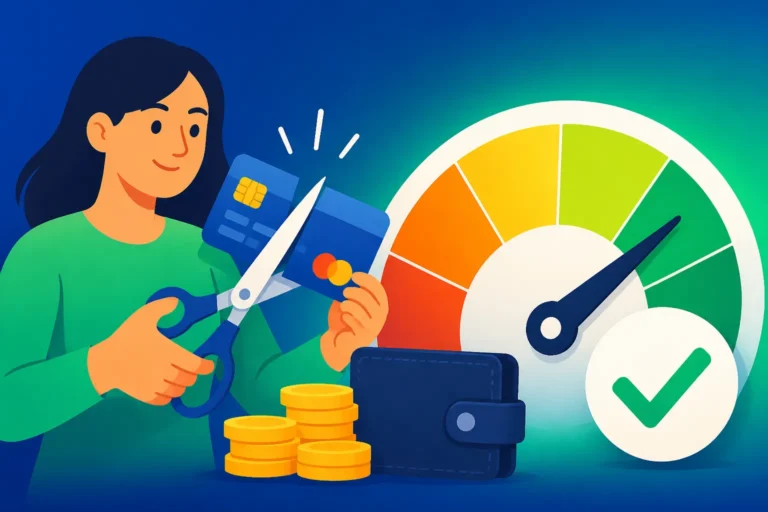
Put away your credit cards, or better yet, cut them up if you trust yourself not to open new ones. Use cash or a debit card for all purchases. Every time you're tempted to buy something unnecessary, remind yourself of your 18-month goal and the freedom you'll feel when that $7,000 is gone. This is a temporary period of discipline that will yield lasting benefits. After you've successfully paid off your debt, you can then revisit how to use credit cards responsibly, perhaps by looking at How to Use a Credit Card to Build and Keep Good Credit.
What to Do If You Can't Meet the 18-Month Goal
Life rarely goes exactly as planned, and sometimes, despite your best efforts, you might find yourself struggling to keep up with your debt payoff plan. It's okay. The important thing is not to give up, but to reassess and seek help.
Negotiating with Creditors
If you're truly struggling to make your payments, don't bury your head in the sand. Reach out to your credit card companies. They might be willing to work with you, especially if you've been a reliable customer in the past. You could ask for a lower interest rate, a temporary deferment of payments, or a payment plan with a reduced minimum. While they aren't obligated to help, many creditors prefer to work with you to get some payment rather than none at all.
Be prepared to explain your situation clearly and calmly. Highlight your commitment to paying off the debt and your past good payment history (if applicable). While negotiating, be realistic about what you can afford. Remember, any agreed-upon changes should be confirmed in writing. For more detailed advice, you can explore How to Negotiate With Debt Collectors, even if you're not at the collections stage, the principles often apply.
Exploring Debt Management Plans
If negotiating with individual creditors doesn't yield results, or if you have multiple high-interest debts that feel insurmountable, a debt management plan (DMP) might be a viable option. DMPs are offered by non-profit credit counseling agencies. In a DMP, the agency works with your creditors to consolidate your monthly payments into one lower, more manageable payment, often with reduced interest rates.
You make one payment to the counseling agency, and they distribute it to your creditors. This can simplify your life and reduce your overall interest burden, making your $7,000 debt much easier to tackle. While there's typically a small monthly fee for the service, the interest savings often far outweigh it. However, it's not a quick fix, and it does require commitment. Be sure to choose a reputable, non-profit agency, like those accredited by the National Foundation for Credit Counseling (NFCC). These plans often take 3-5 years to complete, so they would extend beyond your 18-month goal, but they offer a structured path to becoming debt-free when other options aren't working.
Here’s a quick overview of some strategies:
| Strategy | Description | Pros | Cons | Best For |
|---|---|---|---|---|
| Debt Snowball | Pay smallest debt first, then roll payments to next smallest. | Psychological wins, builds momentum. | May pay more interest over time. | Those needing quick wins for motivation. |
| Debt Avalanche | Pay highest interest debt first, then roll payments to next highest. | Saves most money on interest, financially efficient. | Takes longer to see first debt eliminated, can be less motivating initially. | Those disciplined and focused on saving money. |
| Balance Transfer Card | Move high-interest debt to a new card with 0% APR intro offer. | All payments go to principal during intro period, significant interest savings. | Requires good credit, balance transfer fees, high APR after intro period. | Those with good credit who can pay off debt before intro period ends. |
| Personal Loan | Consolidate debt into one loan with fixed rate and term. | Predictable payments, potentially lower interest, simplified finances. | Requires good credit, potential origination fees. | Those with good credit looking for a single, manageable monthly payment. |
| Debt Management Plan | Non-profit agency negotiates lower rates/payments with creditors. | Lower interest, single monthly payment, structured support. | Requires commitment, usually takes 3-5 years, small monthly fee. | Those struggling with multiple debts and needing structured assistance. |
| Income Boost / Expense Cut | Increase earnings and/or reduce spending to free up more money for debt. | Immediate impact on available funds, puts you in control. | Requires discipline, potential temporary lifestyle changes. | Everyone, as a complementary strategy to any other debt payoff method. |
As you work through your debt, remember that rebuilding your credit is also important for your future financial health. Services like Credit Strong can be excellent tools for establishing a positive payment history through credit-builder loans, which can significantly contribute to your overall credit profile even after your credit card debt is behind you. It's a way to show lenders you're responsible and capable of handling various types of credit.
Paying off $7,000 in credit card debt in 18 months is a challenging but entirely achievable goal. It requires discipline, a clear plan, and a willingness to make temporary sacrifices. By understanding your debt, choosing an effective strategy, staying consistent, and knowing when to ask for help, you can absolutely reach financial freedom and boost your credit score significantly in the process.
Disclaimer
The information provided in this article is for general informational purposes only and does not constitute financial, legal, or professional advice. Always consult with a qualified financial advisor, credit counselor, or legal professional for advice tailored to your specific situation. Debt payoff strategies and credit outcomes can vary based on individual circumstances and market conditions.