How to Pay Off Credit Card Debt While Saving for Emergencies
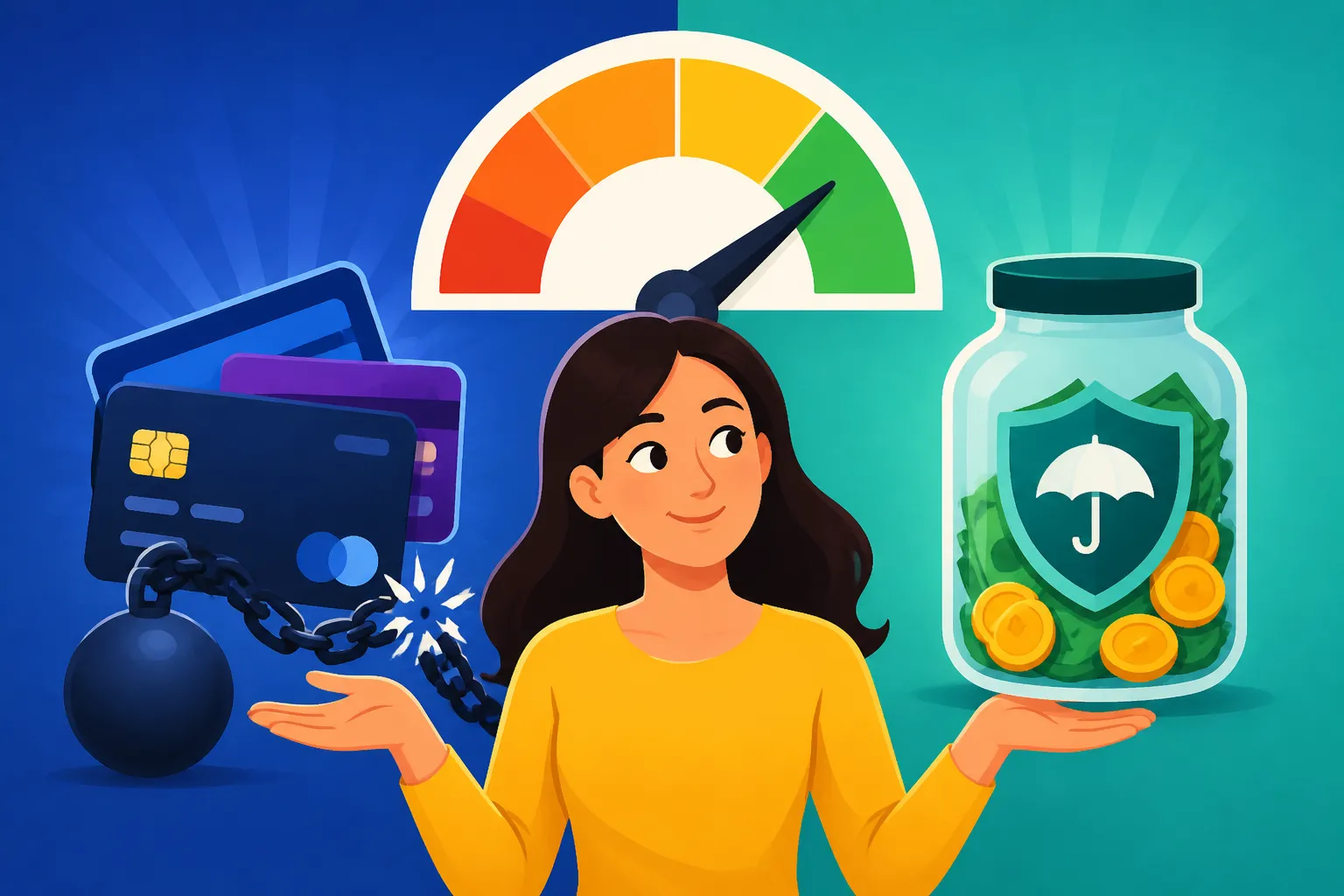
It's a common dilemma, isn't it? You're staring down a mountain of credit card debt, the interest charges feel like a constant drain, and you know you should be building up an emergency fund. But how on earth do you do both at the same time without feeling completely overwhelmed or like you're short-changing one goal for the other? This guide is here to walk you through practical, empathetic strategies to tackle your credit card debt and build a robust emergency savings, offering a realistic path forward that acknowledges the tough choices we all face.
Understanding the Balancing Act: Why Both Matter So Much
Let's be honest, living with credit card debt can feel like constantly bailing water out of a leaky boat. At the same time, not having an emergency fund is like sailing that leaky boat without a life raft. Both situations are precarious, and it's completely natural to feel torn about which one deserves your immediate, undivided attention.
The Immediate Pressure of Credit Card Debt
High-interest credit card debt isn't just a number on a statement; it's a weight that many of us carry daily. Those minimum payments barely scratch the surface of the principal, and a significant portion of what you do pay often goes straight to interest. This cycle can be incredibly frustrating, making you feel like you're running on a treadmill, expending a lot of effort without making significant progress. The emotional toll of debt — the stress, the sleepless nights, the feeling of being trapped — is very real and can impact every aspect of your life. Imagine finally being able to breathe easier, knowing you're systematically chipping away at those balances. That's the power of a focused debt repayment plan.
Furthermore, mounting credit card debt can seriously impact your credit score. A high credit utilization ratio, which is the amount of credit you're using compared to your total available credit, is a major factor that lenders look at. If your utilization is high, it signals to lenders that you might be a higher risk, potentially leading to higher interest rates on future loans or even denials. Understanding How Credit Card Debt Affects Your Credit Score is crucial for appreciating why tackling this debt is so important not just for your wallet, but for your overall financial health.
The Critical Importance of an Emergency Fund
Now, let's talk about that life raft. An emergency fund is your financial buffer against the unexpected curveballs life throws your way. Car troubles, unexpected medical bills, job loss, a leaky roof – these things don't send you a calendar invite. Without savings set aside specifically for these situations, many people find themselves reaching for credit cards again, inadvertently digging themselves deeper into the very debt they're trying to escape. It's a vicious cycle. Having an emergency fund provides a profound sense of peace of mind, knowing that you have a safety net that can prevent a minor hiccup from becoming a major financial crisis.
Think about a hypothetical scenario: you're diligently paying down your credit card with a $500 extra payment each month. Suddenly, your refrigerator breaks down, and it's going to cost $800 to repair or replace. If you don't have an emergency fund, that $800 often goes straight onto another credit card, erasing some of your hard-won progress. This isn't just about money; it's about breaking free from the dependency on debt for unexpected expenses. An emergency fund allows you to handle these situations without derailing your debt payoff journey.
The "Chicken or the Egg" Dilemma
So, which comes first? The emergency fund or debt payoff? This is the classic question that trips up so many people, and frankly, there's no single "right" answer that applies to everyone. Financial gurus sometimes offer rigid advice, but real life is messy. You might feel a strong urge to pay down debt because of high interest rates, only to then worry about what happens if you lose your job. Or you might focus solely on savings, only to see your credit card balances grow due to interest.
The frustration often stems from the feeling that you can't truly commit to both. This "either/or" mentality can be paralyzing. The good news is that it doesn't have to be a zero-sum game. You can, and should, find a way to make progress on both fronts. It’s about creating a balanced, sustainable strategy that reduces immediate financial risk (debt) while building a cushion for future unexpected events (savings). This hybrid approach is often the most realistic and effective for long-term financial stability, preventing you from constantly feeling like you're falling behind.
Strategies for Simultaneous Debt Payoff and Saving
Trying to save for an emergency fund while simultaneously tackling credit card debt can feel like trying to walk a tightrope. It requires balance, focus, and a clear understanding of your financial landscape. The key is to implement a strategy that allows you to make consistent progress on both fronts, even if it feels slower than you'd like on either one individually.
The Hybrid Approach: A Little Bit for Both
Instead of an all-or-nothing approach, many people find success with a hybrid strategy. This means dedicating a portion of your extra funds to debt repayment and another portion to your emergency fund. It's not about making huge leaps in one area; it's about consistent, manageable steps in both. For example, if you find an extra $200 in your budget each month, you might allocate $150 to your highest-interest credit card and $50 to your emergency savings account. This way, you're reducing your debt burden and the interest you pay, while also slowly building a safety net.
This method acknowledges that both debt and lack of savings pose risks, and addressing both simultaneously mitigates those risks. It prevents the psychological burnout that can come from feeling like you're sacrificing one crucial goal entirely for another. You get to see progress on both sides of the ledger, which can be incredibly motivating. Over time, as your emergency fund grows to a comfortable level (say, $1,000 to $2,500 for a starter fund), you can then shift more of your extra funds towards aggressively paying off debt, or vice versa, depending on your comfort level and financial situation.
Creating a Realistic Budget and Tracking Expenses
You can't manage what you don't measure. The first concrete step in any financial plan is to create a realistic budget and diligently track your expenses. Many people roll their eyes at the word "budget," associating it with deprivation, but it's really just a map of where your money is going. Start by listing all your sources of income. Then, meticulously track every single expense for a month. You can use a simple spreadsheet, a notebook, or a budgeting app. Seeing where your money actually goes can be incredibly eye-opening. You might find subscriptions you forgot about, daily coffees adding up, or takeout habits consuming a larger chunk than you realized.
Once you have a clear picture, you can identify areas where you can trim expenses. Could you pack lunch a few times a week? Cut back on streaming services? Re-evaluate your phone plan? Even small adjustments can free up significant amounts of money over time. The goal isn't to live like a hermit, but to make conscious choices about your spending so that you can allocate more towards your debt and savings goals. Tools like YNAB (You Need A Budget) or Mint can connect to your bank accounts and automatically categorize transactions, making tracking much easier. This process also helps you identify How to Lower Your Credit Utilization Fast by showing you where you might be overspending and thus racking up credit card charges.
Prioritizing Debts: High-Interest First or Smallest First with a Twist
When it comes to tackling debt, two popular strategies are the debt avalanche and the debt snowball. The debt avalanche method focuses on paying off debts with the highest interest rates first, which saves you the most money in the long run. The debt snowball method prioritizes paying off the smallest debts first, regardless of interest rate, providing psychological wins that can keep you motivated. Both have their merits, and you can adapt them to include your emergency savings goal.
With a hybrid approach, you could dedicate a fixed amount (say, $100) to your emergency fund each month, and then use the remaining extra funds to follow either the avalanche or snowball method for your credit card debt. For instance, if you choose the avalanche method, after setting aside your emergency savings contribution, you'd direct all additional money to the credit card with the highest APR. Once that's paid off, you roll that payment amount (plus your original extra contribution) into the next highest-interest card. You can learn more about these methods in our guide on Debt Snowball vs Debt Avalanche: Which Is Better?. The "twist" here is that your emergency savings contribution becomes a non-negotiable line item, ensuring you're always building that safety net alongside your debt payoff.
Boosting Your Income to Accelerate Progress
Sometimes, cutting expenses isn't enough, or there's simply not much left to cut. In these cases, boosting your income can be a powerful accelerator for both debt repayment and emergency savings. Even a few hundred extra dollars a month can make a significant difference. Consider side hustles like freelancing, dog walking, tutoring, or delivering food for services like DoorDash or Uber Eats. Many people also find success selling unused items around their home on platforms like Facebook Marketplace, eBay, or Craigslist. That old bike gathering dust in the garage or clothes you haven't worn in years could be a quick source of cash.
The beauty of earning extra income is that you can often designate it entirely for your financial goals, as it's not part of your regular, budgeted income. For instance, you could decide that 75% of all side hustle income goes to debt and 25% goes to your emergency fund. This approach feels less restrictive than trying to squeeze more out of an already tight budget and can provide a faster path to reaching your goals. Every little bit of extra cash earned can reduce the time it takes to become debt-free and build a solid emergency fund.
Building Your Emergency Fund While Tackling Debt
It's not just about finding the money; it's about strategically allocating it to maximize impact. While debt reduction is crucial, having even a small emergency fund protects you from falling back into debt when life throws a curveball.
Setting a Minimum Emergency Fund Goal
Before you even think about aggressive debt payoff, it's wise to establish a starter emergency fund. Most financial experts recommend having at least $1,000 to $2,500 tucked away for immediate, unexpected expenses. This isn't your full, three-to-six-month living expenses emergency fund, but rather a "baby" emergency fund designed to cover those smaller, but still impactful, emergencies like a flat tire, a minor medical co-pay, or a broken appliance. Reaching this initial goal should be a priority, even if it means slowing down your debt repayment slightly for a month or two.
Having this small fund in place acts as your first line of defense. It prevents those smaller emergencies from spiraling into new credit card debt, thereby protecting your progress on debt repayment. Once you hit this initial target, you can then feel more comfortable shifting a larger portion of your extra cash towards your credit card balances, knowing you have some immediate financial breathing room. This staged approach allows for psychological wins and builds confidence that you can manage both priorities.
Automating Your Savings
One of the most effective ways to build any savings, especially an emergency fund, is to automate it. If you wait until the end of the month to see what's "left over," chances are there won't be much. Instead, treat your emergency fund contribution like any other bill. Set up an automatic transfer from your checking account to a separate savings account for your emergency fund on payday. Even a small amount, like $25 or $50 per paycheck, adds up surprisingly quickly over time. The key is to "pay yourself first."
This automation takes the decision-making (and temptation) out of the equation. You won't even see the money in your checking account, so you're less likely to spend it. Consider choosing a high-yield savings account for your emergency fund, which can offer a slightly better return than a traditional savings account. While the interest earned won't be life-changing, it's a nice bonus and keeps your money separate from your everyday spending, making it less likely to be dipped into for non-emergencies.
Some individuals find that using a credit builder loan, such as those offered by Credit Strong, can serve a dual purpose here. These loans are designed to help you build credit by making regular payments, but a portion of your payments often goes into a locked savings account that you can access once the loan is paid off. This acts as a forced savings mechanism, allowing you to build both credit and a small nest egg simultaneously. It's a clever way to kill two birds with one stone, especially if you struggle with traditional savings discipline.
Finding "Hidden" Money for Your Fund
Beyond budgeting and automation, keep an eye out for "hidden" money that can give your emergency fund a significant boost. Tax refunds are a prime example. Instead of viewing your refund as a windfall for discretionary spending, consider directing a portion or even all of it straight into your emergency savings. Similarly, work bonuses, unexpected gifts, or even money earned from selling items you no longer need can be excellent sources for beefing up your fund.
The trick is to be intentional with these extra funds. Before they even hit your main checking account, have a plan for them. By treating these unexpected inflows as opportunities for your emergency fund, you can reach your initial savings goal much faster than relying solely on monthly contributions from your regular income. This proactive approach helps to solidify your financial foundation and gives you momentum.
Keeping Your Emergency Fund Separate and Accessible
It might seem counterintuitive to keep your emergency fund "accessible" when you're trying not to touch it, but there's a balance. Your emergency fund should be in a separate account from your checking account, ideally at a different bank or at least a different account at the same bank, so you're not tempted to spend it on everyday wants. However, it also needs to be easily accessible when a true emergency strikes. You don't want it tied up in an investment that you can't liquidate quickly without penalty.
A regular savings account or a high-yield online savings account is perfect for this. It keeps the money out of sight, out of mind for daily spending, but readily available if you have a medical emergency, a sudden job loss, or a major home repair. The distinction is key: separate to prevent impulse spending, accessible for genuine crises. Regularly reviewing your bank accounts and ensuring proper separation can help you maintain this discipline.
Maintaining Momentum and Staying Motivated
The journey of paying off debt and building savings is a marathon, not a sprint. There will be good months and challenging months. The key to success is staying motivated and adapting your strategy as your circumstances evolve.
Regularly Reviewing Your Progress
One of the most powerful motivators is seeing how far you've come. Set aside time once a month, or at least quarterly, to review your credit card statements, your savings account balance, and your overall budget. Celebrate the small victories: the first credit card you pay off, reaching your $1,000 emergency fund goal, or seeing your credit utilization drop. Tracking your progress can take many forms, from a simple spreadsheet to a visual tracker where you color in squares for every $100 paid off.
This regular review also helps you stay accountable and identify any areas where you might be veering off track. Maybe you overspent one month, or an unexpected expense set you back. Don't beat yourself up; simply acknowledge it and adjust your plan for the next month. Consistent review keeps your financial goals front and center and reminds you why you're putting in all this hard work. You can even check your credit report regularly to see the impact of your efforts, understanding What Affects Your Credit Score? The 5 Factors.
Adjusting Your Plan as Life Happens
Life is unpredictable, and your financial plan needs to be flexible enough to accommodate it. A rigid plan that doesn't allow for bumps in the road is destined to fail. Maybe you get a raise – fantastic! You could then allocate an even larger percentage to debt or savings. Or perhaps you face a temporary reduction in income. In that case, you might need to temporarily pause your extra debt payments and focus solely on maintaining your emergency fund, or even dip into it if absolutely necessary.
The important thing is not to abandon your plan entirely. Instead, adjust it. If you had to use a portion of your emergency fund, make replenishing it your top priority again. If an unforeseen expense delays your debt payoff timeline, accept it and revise your milestones. This adaptability is what makes a financial plan sustainable in the long run. Remember, the goal is progress, not perfection. This flexible mindset also prepares you for the long haul, as discussed in How Long Does Credit Repair Take?.
Leveraging Windfalls Wisely
We all get unexpected injections of cash from time to time—a tax refund, a work bonus, an inheritance, or even a generous gift. These "windfalls" present a fantastic opportunity to accelerate your financial goals. The temptation might be to spend it on something fun, but before you do, pause and consider your debt and emergency fund. If you still have high-interest credit card debt, a large portion of that windfall could go towards making a significant dent in it, saving you a substantial amount in interest over time.
Alternatively, if your emergency fund is still in its early stages, channeling a windfall into savings could rapidly bring you closer to your target. A balanced approach could be to split the windfall – perhaps 50% to debt, 25% to savings, and 25% for a modest treat or something you truly need. The key is to be intentional and strategic, preventing these valuable funds from simply disappearing into everyday spending without making a meaningful impact on your long-term financial health.
Understanding Your Credit Report and Score
As you diligently work on paying down debt and building savings, your credit health will naturally improve. It's incredibly empowering to understand this process by regularly checking your credit report and monitoring your credit score. Your credit report provides a detailed history of your borrowing and repayment habits, and it's where lenders look to assess your creditworthiness. You can access your free credit report from each of the three major bureaus – Equifax, Experian, and TransUnion – once a year. Getting to know How to Read Your Credit Report (2026 Guide) will give you a clear picture of your financial standing.
As you reduce your credit card balances, your credit utilization will decrease, which is a major factor in your credit score calculation. Consistent, on-time payments will also build a strong payment history. All of these actions contribute to a healthier credit score, which in turn can unlock better interest rates on future loans (like a mortgage or car loan), lower insurance premiums, and even make it easier to rent an apartment. Monitoring your score can be a powerful motivator, showing tangible results of your hard work. Knowing How Credit Scores Work: The Complete Guide will demystify the numbers and help you make even smarter financial decisions.
| Strategy Type | Primary Focus | Emergency Fund Action | Debt Payoff Action | Pros | Cons |
|---|---|---|---|---|---|
| Debt First | Aggressive Debt Reduction | Save minimum starter fund ($1,000-$2,500) only. | All extra money goes to high-interest debt. | Saves most on interest; faster debt freedom. | Higher risk if a large emergency strikes before fund is built. |
| Savings First | Full Emergency Fund Building | Focus on 3-6 months' expenses first. | Pay minimums on all debts. | Full financial security for emergencies; less stress. | Accrues more interest on debt during savings phase; slower debt payoff. |
| Hybrid Approach | Balanced Progress | Consistent, smaller monthly contribution. | Remaining extra money towards high-interest/small debt. | Mitigates both risks; psychological wins on both fronts; sustainable. | Slower progress on both individual goals; requires more discipline. |
| Income Boost | Accelerate Both | Allocate a portion of new income to savings. | Allocate a portion of new income to debt. | Fastest way to reach both goals; less reliance on cutting expenses. | Requires extra time/effort to earn additional income. |
Disclaimer
The information provided in this guide is for general informational purposes only and does not constitute financial, legal, or professional advice. Always consult with a qualified financial advisor, credit counselor, or legal professional for advice tailored to your specific situation. Financial situations are unique, and what works for one person may not work for another.