How to Pay Off $6,000 in Credit Card Debt
Finding yourself staring down a $6,000 credit card debt can feel like being trapped in a maze with no clear exit. The interest charges pile up, the minimum payments barely chip away at the principal, and the dream of financial freedom seems further away with every statement. This guide is here to help you break free, offering practical, step-by-step strategies to aggressively tackle that $6,000 balance and put you back on the path to financial stability.
Understanding Your $6,000 Credit Card Debt Landscape
Before you can effectively fight your debt, you need to understand it inside and out. It’s not just a number; it’s a reflection of your past spending, your current financial habits, and a significant barrier to your future goals. Let's peel back the layers and truly grasp what you're up against.
The Psychology of Debt and Why $6,000 Feels Overwhelming
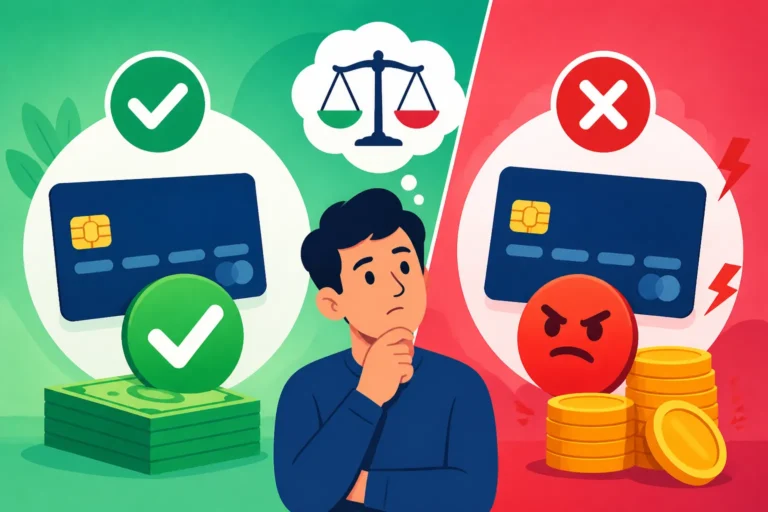
It’s completely normal to feel overwhelmed, stressed, or even a little bit ashamed when you have credit card debt, especially an amount like $6,000. This isn't just a financial burden; it's an emotional one. That feeling of dread when the statement arrives, the constant worry about how you’re going to make ends meet, or the anxiety about a sudden emergency – it all weighs heavily. Many people try to ignore it, hoping it will magically disappear, but that only makes it worse. Acknowledging these feelings is the first step toward taking control, because tackling debt isn't just about math; it's about shifting your mindset and committing to a plan.
The insidious nature of credit card debt lies in its revolving structure and high interest rates. Unlike a fixed loan, where you see a clear end date, credit card debt can feel like a never-ending cycle, particularly if you’re only making minimum payments. This psychological trap can lead to feelings of hopelessness, making it harder to stay motivated. But let me assure you, $6,000 is a manageable amount, and with the right strategy and consistent effort, you absolutely can pay it off. The key is to transform those overwhelming feelings into determination and a structured plan of action.
Gathering the Details: Know Your Numbers
You can't win a battle if you don't know your enemy. Your credit card debt is no different. The very first practical step is to sit down and list out every single detail of your $6,000 debt. Don't just rely on memory or a quick glance at your banking app. Go through your credit card statements, either physical or online, and record the following information for each card:
- Creditor Name: (e.g., Chase, Capital One, Discover)
- Current Balance: The exact amount you owe today.
- Interest Rate (APR): This is crucial. Credit card interest rates can vary wildly, often between 15% and 30% or even higher. Knowing these will inform your payment strategy.
- Minimum Payment Due: The smallest amount you must pay each month to avoid late fees and further damage to your credit.
- Due Date: Mark these on a calendar!
- Credit Limit: This helps you calculate your credit utilization.
Let's say your $6,000 debt is spread across a few cards. It might look something like this:
| Card | Balance | APR | Minimum Payment |
|---|---|---|---|
| Card A (Visa) | $2,500 | 24.99% | $75 |
| Card B (MC) | $1,500 | 18.24% | $45 |
| Card C (Amex) | $2,000 | 21.74% | $60 |
| Total | $6,000 | $180 |
Having this clear overview in a table like this makes the problem tangible and helps you see exactly where your money is going and which debts are costing you the most in interest. This raw data is the foundation for your payment strategy.
Impact of $6,000 Debt on Your Credit Score
Holding $6,000 in credit card debt, especially if it represents a significant portion of your available credit, is almost certainly dragging down your credit score. When we talk about How Credit Scores Work: The Complete Guide, one of the biggest factors is your credit utilization ratio. This is the amount of credit you're using compared to your total available credit. Lenders typically like to see this ratio under 30%, and ideally even lower, like under 10%.
If your $6,000 debt uses, say, 70% or 80% of your total credit limit across all cards, your score will definitely take a hit. This high utilization signals to lenders that you might be over-reliant on credit, which can make you seem like a higher risk. A lower credit score can mean higher interest rates on future loans (like a car or home loan), difficulty getting approved for new credit, or even higher insurance premiums. Paying off this $6,000 debt, therefore, isn't just about freeing up cash; it's also a powerful way to significantly improve your credit health and financial opportunities down the road. Understanding What Affects Your Credit Score? The 5 Factors will help you see how tackling this debt contributes positively to your overall financial well-being.
Strategic Approaches to Tackle Your $6,000 Debt
Now that you've got a clear picture of your debt, it's time to choose your battle plan. There isn't a single "best" way to pay off credit card debt; the most effective method is often the one you can stick with consistently. We'll explore several proven strategies, each with its own benefits.
The Debt Snowball Method
The debt snowball method is a powerful psychological tool for debt repayment, popularized by financial guru Dave Ramsey. Instead of focusing on interest rates, this method prioritizes quick wins to keep your motivation high. Here’s how it works:
- List your debts: Arrange all your debts from the smallest balance to the largest, regardless of interest rate. Using our example from above, if Card B ($1,500) has the smallest balance, it goes first.
- Make minimum payments on all but the smallest: Pay the minimum amount due on every debt except the one with the smallest balance.
- Attack the smallest debt: Throw every extra dollar you can find at the debt with the smallest balance. This is your target.
- Roll over payments: Once that smallest debt is paid off completely (hooray!), you take the money you were paying on it (its minimum payment + any extra you were adding) and add it to the minimum payment of the next smallest debt. You continue this process, "snowballing" your payments until all debts are gone.
The primary benefit of the debt snowball is the momentum it creates. Imagine paying off that first card, seeing a "zero" balance, and knowing that one debt is completely gone! That feeling of accomplishment can be incredibly motivating and help you stay committed through what can be a long process. For a deeper dive into this strategy, check out our guide on Debt Snowball vs Debt Avalanche: Which Is Better?.
The Debt Avalanche Method
For those who are more numerically driven and want to save the most money on interest, the debt avalanche method is typically the more financially efficient choice. This strategy focuses on attacking your most expensive debt first. Here’s how it works:
- List your debts by interest rate: Arrange all your debts from the highest interest rate (APR) to the lowest, regardless of the balance.
- Make minimum payments on all but the highest interest debt: Pay the minimum amount due on every debt except the one with the highest interest rate.
- Attack the highest interest debt: Direct all your extra money towards the debt with the highest interest rate. This is your target because it's costing you the most money over time.
- Roll over payments: Once that highest interest debt is paid off, you take the money you were paying on it (its minimum payment + any extra) and add it to the minimum payment of the next highest interest debt. You continue this until all debts are eliminated.
While the psychological wins might not come as quickly as with the debt snowball, the debt avalanche ensures you pay less in interest over the lifetime of your debt, saving you money in the long run. If your $6,000 is spread across cards with vastly different interest rates, this method could save you hundreds of dollars.
Utilizing Balance Transfers for Lower Interest
A balance transfer credit card can be a game-changer if you have good enough credit to qualify for one. The idea is to move your high-interest $6,000 credit card debt from one or more existing cards onto a new card that offers a 0% introductory APR for a set period, often 12 to 21 months. This gives you a crucial window to pay down a significant portion of your principal without racking up more interest charges.
However, there are a few important considerations:
- Balance Transfer Fees: Most balance transfer cards charge a fee, typically 3% to 5% of the amount transferred. So, transferring $6,000 might cost you $180 to $300 upfront. You need to factor this into your calculations to ensure the savings outweigh the fee.
- Creditworthiness: You generally need a good to excellent credit score to qualify for the best 0% APR balance transfer offers. If your $6,000 debt has already significantly impacted your score, you might not be approved.
- The Deadline: The 0% APR period is temporary. You must have a solid plan to pay off as much of the transferred balance as possible before the introductory rate expires and the regular (often high) APR kicks in. If you don't pay it off in time, you could end up in a worse position.
For many, a successful balance transfer is like hitting the "pause" button on interest, allowing them to make serious progress. Our guide on Balance Transfer Cards: How They Work provides even more detailed insights into making this strategy work for you.
Considering a Personal Loan or Debt Consolidation
Another option for tackling $6,000 in credit card debt is to consolidate it into a personal loan. This is especially appealing if you have multiple credit cards with high interest rates, as it simplifies your payments into one fixed monthly payment with a potentially lower interest rate.
Here's how debt consolidation through a personal loan typically works:
- You apply for a personal loan for the full $6,000 (or whatever your total debt amount is).
- If approved, the loan funds are often sent directly to your bank account, or sometimes directly to your creditors.
- You use these funds to pay off your high-interest credit cards.
- You then have one predictable monthly payment to the personal loan lender, usually with a lower, fixed interest rate and a clear repayment timeline (e.g., 3-5 years).
The benefits include simpler budgeting, a potentially lower interest rate, and a definitive end date for your debt. However, you need to be cautious. You’ll generally need a decent credit score to qualify for favorable personal loan terms. If your credit score is already suffering due to the $6,000 debt, you might only qualify for a personal loan with a high interest rate, which defeats the purpose. Also, make sure you don't fall back into the habit of running up balances on the now-empty credit cards, as this could leave you with even more debt than before. This strategy is an excellent way to consolidate and simplify, but only if you commit to changing your spending habits.
Boosting Your Payment Power and Staying on Track
Having a strategy is one thing; finding the funds to execute it and staying disciplined is another. Successfully paying off $6,000 in credit card debt requires a combination of smart planning and diligent effort to find extra cash and stick to your goals.
Finding Extra Money: Budgeting and Income Generation
To truly accelerate your debt repayment, you need to free up as much money as possible beyond your minimum payments. This often involves a two-pronged approach: cutting expenses and increasing income.
First, let's talk about budgeting. This isn't about deprivation; it's about intentional spending. Take a hard look at where your money is going. Track every dollar for a month or two. You might be surprised by how much goes to discretionary spending like dining out, subscriptions you don't use, or impulse purchases. Could you:
- Cut back on non-essentials? Consider cooking more meals at home, canceling unused streaming services, or finding free entertainment options.
- Negotiate recurring bills? Call your internet, cable, or even insurance providers to see if you can get a better rate.
- Reduce transportation costs? Carpool, use public transport, or combine errands.
Second, consider income generation. Can you find ways to bring in extra cash, even temporarily?
- Side hustles: This could be anything from driving for a ride-share service like Uber or Lyft, delivering food through DoorDash, walking dogs via Rover, freelancing your skills (writing, graphic design, web development), or selling crafts online.
- Sell unused items: Go through your house and list items you no longer need on platforms like eBay, Facebook Marketplace, or local consignment shops. That old guitar, the designer bag you never use, or those unused electronics could contribute significantly to your debt repayment.
Every extra dollar you can find and put towards your $6,000 debt is a dollar that saves you from paying more interest and gets you closer to freedom. For more detailed steps, check out our comprehensive guide on How to Get Out of Credit Card Debt (Step-by-Step).
Negotiating with Creditors
Don't be afraid to pick up the phone and talk to your credit card companies. They'd rather get some payment than none at all, and they might be willing to work with you, especially if you've been a long-time customer with a good payment history (prior to accruing this debt).
What can you negotiate?
- Lower Interest Rate (APR): This is often the most impactful. Even a few percentage points off your APR can save you significant money and help you pay down the principal faster. Explain your situation, express your commitment to paying off the debt, and ask if they can offer a lower rate.
- Temporary Payment Plan: If you're facing a temporary hardship, they might agree to a temporary reduction in your minimum payment or even pause payments for a month or two. Be aware this usually means interest will continue to accrue, and it might be reported to credit bureaus as "account paid as agreed but with reduced payment."
- Waiving a Late Fee: If you've missed a payment for the first time or had an accidental slip-up, they might waive a late fee as a goodwill gesture.
When you call, be polite, clear, and assertive. Have your account numbers and the details of your debt handy. Explain that you're committed to paying off your $6,000 debt but are looking for ways to make it more manageable. Persistence can pay off. Our article on How to Negotiate With Debt Collectors offers valuable tips, even if you're dealing directly with the original creditor.
Building an Emergency Fund (Even While in Debt)
This might sound counterintuitive: why save money when you're trying to pay off debt? However, ignoring an emergency fund while paying down debt is like trying to put out a fire with a leaky bucket. Without a small cash cushion, any unexpected expense—a car repair, a medical bill, a sudden job loss—can derail your debt repayment plan and force you right back into using credit cards, accumulating more debt. This is often how the cycle perpetuates.
Aim to save at least $1,000 (or one month's worth of essential expenses) in an easily accessible, separate savings account as quickly as possible. This "mini emergency fund" acts as a buffer. If your car breaks down and costs $500 to fix, you can pull from your emergency fund instead of adding $500 back onto a credit card. Once you've established this initial fund, you can then direct even more aggressive payments towards your $6,000 credit card debt. Once the credit card debt is gone, you can then focus on building up a larger emergency fund, ideally 3-6 months of living expenses. For more on this critical balance, see our discussion on Should You Pay Off Debt or Save First?.
Leveraging Credit Builder Tools and Accounts
As you work to pay down your $6,000 debt, it's also a good idea to simultaneously focus on improving or maintaining your credit health. One way to do this is by leveraging credit builder tools or accounts, especially if your credit has taken a hit or you have a "thin" credit file. Products like a secured credit card or a credit builder loan can help demonstrate responsible financial behavior while you’re clearing your existing debt.
For example, a credit builder loan, like those offered by Credit Strong, works by lending you money, but instead of getting the cash upfront, it's held in a savings account or CD while you make regular payments. Once the loan is fully paid, you get access to the funds. The key benefit is that your consistent, on-time payments are reported to the major credit bureaus, helping to build positive payment history. This can be particularly useful if your existing credit cards are maxed out, and you want to show diverse credit use. These tools are designed to report your payments to the credit bureaus, building a positive payment history, which is a significant factor in your credit score. As your credit utilization decreases from paying down your $6,000 balance, combining it with new positive reporting from tools like Credit Strong can give your score a significant boost. This proactive approach to managing your financial profile is outlined further in our guide on How to Build Credit From Scratch (2026 Guide). Utilizing these tools responsibly can help offset some of the negative impact your current debt might have had.
Credit Strong offers credit builder loans that specifically focus on reporting positive payment history to all three major credit bureaus. By making small, consistent payments on a Credit Strong account, you’re adding a positive tradeline to your credit report, which can balance out the negative impact of high credit card utilization or past payment issues. It’s a smart way to multi-task: you’re paying down existing debt while actively constructing a stronger credit foundation for the future.
Successfully paying off $6,000 in credit card debt is a marathon, not a sprint. It requires discipline, a well-thought-out strategy, and consistency. By understanding your debt, choosing the right repayment method, finding extra money, and leveraging helpful tools like those from Credit Strong, you can overcome this financial challenge. Remember that every payment, no matter how small, moves you closer to financial freedom and a healthier credit score. Keep at it, and you'll get there. For tips on how to rapidly reduce your usage, read How to Lower Your Credit Utilization Fast. And remember, every dollar you put towards the principal, particularly with high-interest cards, is a dollar that means you'll pay less interest over time. This directly helps improve your Credit Utilization: The Complete Guide, which is a huge factor in your score. Finally, don't forget that Does Paying Off Credit Cards Raise Your Score? The answer is a resounding yes!
Disclaimer
This article is for general informational purposes only and does not constitute professional advice. Laws, prices and regulations vary by location and change over time. Consult a qualified professional for guidance on your specific situation.