How to Pay Off $7,000 in Credit Card Debt
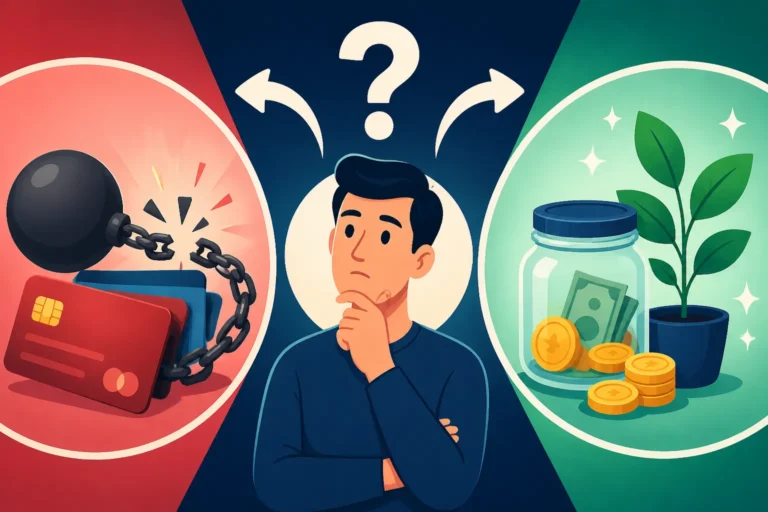
Having $7,000 in credit card debt can feel like a heavy weight dragging you down, making everyday financial decisions stressful and future planning seem impossible. It's a common struggle, and many people find themselves in this exact position, wondering if they'll ever truly be free. This guide is here to walk you through a realistic, step-by-step approach to not only paying off that $7,000 but also building stronger financial habits to prevent future debt woes.
Understanding Your $7,000 Credit Card Debt
Before you can tackle your credit card debt, it’s crucial to understand what you’re up against. This isn't just a number; it's a financial drain that impacts various aspects of your life, from your mental well-being to your ability to secure loans for major life events. Let's break down why this amount can feel so overwhelming and how it's affecting your financial health.
Why $7,000 Feels So Overwhelming
Seven thousand dollars is a significant amount of money for most households, representing potentially months or even years of income for some. It’s not a small grocery bill or a minor repair; it's a sum that can feel insurmountable, especially when you're already living paycheck to paycheck. The sheer size of the number can lead to feelings of hopelessness, stress, and anxiety. You might find yourself avoiding looking at your statements, which only makes the problem worse. This emotional toll is a real part of having debt and acknowledging it is the first step toward finding the motivation to overcome it. It can also create a sense of being trapped, where every dollar earned feels like it's immediately owed elsewhere, leaving little room for saving or personal goals.
How Interest Rates Make It Worse
One of the biggest culprits in making $7,000 debt feel insurmountable is the insidious nature of credit card interest rates. Most credit cards carry Annual Percentage Rates (APRs) that can range from 15% to well over 25%. This means that a substantial portion of your minimum payment isn't even going toward the principal amount you owe; it's just covering the interest that accumulates daily. For example, on a $7,000 balance with a 20% APR, you could be paying over $100 in interest alone each month, even if you’re making your minimum payment. This makes progress feel incredibly slow, almost like you’re running in place. Understanding how credit card APR and interest are calculated is essential to seeing why aggressive repayment strategies are so important. Without a clear plan, these interest charges can turn a $7,000 debt into $8,000, $9,000, or more over time, simply by extending the repayment period.
Impact on Your Credit Score
Your credit card debt, particularly high balances, directly impacts your credit score, primarily through your Credit Utilization: The Complete Guide. Credit utilization is the ratio of your credit card balances to your credit limits, and it’s one of the most critical factors in determining your score. Carrying a $7,000 balance on a card with a $10,000 limit means you have 70% utilization, which is considered very high and can significantly pull down your score. Lenders typically prefer to see utilization below 30%, or even better, below 10%. A lower credit score can then affect your ability to qualify for new loans, mortgages, or even car insurance at favorable rates, creating a ripple effect across your entire financial life. Plus, if you start missing payments due to the debt, that will further damage your Payment History: Why It's 35% of Your Score, which is the most impactful factor of all.
Crafting Your Attack Plan: Strategies to Tackle Debt
Once you understand the enemy, it’s time to formulate a battle plan. There are several proven strategies for paying off credit card debt, each with its own psychological and mathematical advantages. The key is to choose one that resonates with you and stick to it consistently.
The Debt Snowball Method
The debt snowball method is a popular strategy that focuses on psychological wins to keep you motivated. Here’s how it works:
- List all your debts from smallest balance to largest, regardless of interest rate.
- Make minimum payments on all debts except the smallest one.
- Throw every extra dollar you can find at the smallest debt.
- Once the smallest debt is paid off, take the money you were paying on it (minimum payment + extra payment) and add it to the minimum payment of the next smallest debt.
- Continue this process, "snowballing" your payments, until all debts are paid off.
For example, if you have credit card A ($1,000), credit card B ($2,500), and credit card C ($3,500), you'd focus on A first. Once A is gone, you'd combine what you paid on A with the minimum on B, and so on. This method provides quick victories, which can be incredibly motivating, especially when you feel bogged down by a large total debt like $7,000. Many people find that even though it might take a bit longer or cost slightly more in interest than other methods, the psychological boost of seeing debts disappear helps them stick to the plan. You can learn more about this and other methods in our guide to Debt Snowball vs Debt Avalanche: Which Is Better?.
The Debt Avalanche Method
For those who are more mathematically minded and want to save the most money on interest, the debt avalanche method is often preferred. This approach prioritizes the highest interest rate debts first.
- List all your debts from highest interest rate to lowest, regardless of balance.
- Make minimum payments on all debts except the one with the highest interest rate.
- Direct all your extra funds toward the debt with the highest interest rate.
- Once that debt is paid off, take the money you were paying on it and apply it to the debt with the next highest interest rate.
- Continue until all debts are gone.
While you might not see debts disappear as quickly as with the snowball method, the avalanche method is more efficient in terms of total cost. Over time, you’ll pay less in interest because you’re eliminating the most expensive debts first. If you have several credit cards with varying APRs, this method can save you a significant amount of money over the long haul. For a $7,000 debt spread across multiple cards, even a difference of a few percentage points in APR can translate to hundreds of dollars in savings. This strategy is a purely logical one, designed to optimize your financial outcome, though it requires a strong will to stay committed without the frequent small wins of the snowball.
Negotiating with Creditors
Sometimes, direct negotiation with your credit card companies can be a viable path, especially if you're struggling to make even minimum payments. Creditors would rather recover some of the money than none at all, so they might be open to working with you. You could potentially ask for a lower interest rate, a temporary pause in payments (though interest will still accrue), or even a debt settlement where they agree to accept a lower total amount than what you owe.
When you negotiate, be prepared to explain your financial hardship honestly and clearly. Call the customer service number on the back of your card and ask to speak to their hardship department. They might offer programs that aren't widely advertised. Remember that debt settlement can have a negative impact on your credit score, so it's a step to consider carefully, often after exploring other options. However, for some, it might be the only way to avoid bankruptcy. Our article on How to Negotiate With Debt Collectors offers more detailed advice on this process. Just be sure to get any agreements in writing before you commit to anything.
Practical Steps to Increase Your Repayment Power
Paying off $7,000 in credit card debt often requires more than just a smart strategy; it demands finding extra money to throw at the problem. This usually comes down to two main approaches: increasing your income or decreasing your expenses. Let’s explore practical ways to boost your repayment power.
Boosting Your Income Streams
Finding extra cash isn't always easy, but there are often opportunities if you look for them. Consider:
- Part-time work or freelancing: Could you pick up a few extra shifts at your current job, or find a side gig on platforms like Upwork or Fiverr? Maybe you have a skill like writing, graphic design, or web development that you could monetize in your spare time. Even a few hundred extra dollars a month can make a huge difference when applied directly to your debt.
- Selling unused items: Look around your home. Do you have old electronics, furniture, clothes, or collectibles gathering dust? Platforms like eBay, Facebook Marketplace, or local consignment shops can help you turn these items into cash. Think about how much you spent on these items initially and how much closer selling them can get you to debt freedom.
- Driving or delivery services: Services like Uber, Lyft, DoorDash, or Instacart offer flexible ways to earn money on your own schedule. Even working a few hours a week can generate significant extra income that can be directed straight to your credit card balances.
Every extra dollar you earn and apply to your debt is a dollar that won't accrue interest, speeding up your journey to being debt-free. Imagine if you could find an extra $200 per month – that’s $2,400 per year that goes directly to your $7,000 principal, drastically reducing your repayment time and interest paid.
Cutting Unnecessary Expenses
This is often the most challenging but also the most impactful area. A thorough review of your budget can reveal surprising amounts of money you might be spending without realizing it.
- Track your spending: For a month, meticulously track every single dollar you spend. You might be shocked to see where your money actually goes. Apps like Mint or YNAB can help automate this, or even a simple spreadsheet will do. This step is foundational; you can't cut what you don't see.
- Identify "wants" vs. "needs": Be brutally honest with yourself. Do you need that daily coffee, streaming service, or takeout meal? Temporarily cutting back on these non-essentials can free up significant funds. For example, making coffee at home instead of buying a $5 latte five times a week saves $100 a month. That's $1,200 a year that could pay down your debt.
- Look for recurring subscriptions: Many people are still paying for services they no longer use. Review your bank statements for monthly subscriptions to gyms, streaming services, or apps. Cancel anything you don't absolutely need or use regularly.
- Reduce grocery bills: Meal planning, cooking at home more often, and shopping with a list can significantly reduce your food expenses. Avoiding impulse purchases at the checkout counter and opting for store brands over name brands can also add up.
- Reconsider entertainment: Instead of expensive nights out, look for free or low-cost activities. Movie nights at home, picnics in the park, or hiking can be just as enjoyable and much kinder to your wallet. The goal here isn't deprivation forever, but rather a temporary, focused effort to redirect funds towards debt repayment.
Considering Debt Consolidation Options
If you have multiple credit card debts, consolidating them into a single, lower-interest payment can simplify your finances and potentially save you money.
- Balance transfer credit cards: These cards offer a 0% introductory APR for a promotional period (usually 12-21 months). If you can qualify for one, you could transfer your $7,000 balance and pay it down without accruing interest during that period. Be aware of balance transfer fees (typically 3-5% of the transferred amount) and make sure you can pay off the full balance before the promotional period ends, otherwise the regular, often high, APR will kick in. This strategy works best if you are disciplined and committed to paying down the debt quickly. You can read more about Balance Transfer Cards: How They Work.
- Personal loans: A personal loan from a bank or credit union can consolidate your credit card debt into a single loan with a fixed interest rate and a predictable monthly payment. These often have lower interest rates than credit cards, especially if you have a decent credit score. This can make your payments more manageable and provide a clear end date for your debt. However, personal loans still require you to qualify based on your creditworthiness.
- Debt management plans (DMPs): Offered by non-profit credit counseling agencies, DMPs consolidate your debts into one monthly payment, often at reduced interest rates that the agency negotiates with your creditors. While these plans can be very effective, they often require you to close your existing credit card accounts and can show up on your credit report as a "debt management plan," which some lenders view negatively. This is a more formal option compared to a balance transfer or personal loan.
Before committing to any consolidation option, thoroughly compare the total cost, including fees and interest, to your current situation. Ensure the new payment is affordable and that you understand all the terms and conditions.
Utilizing Credit Builder Tools
While your primary focus is paying down debt, it's also a good idea to ensure you're maintaining or improving your credit profile simultaneously. A strong credit profile can open doors to better financial products in the future, including those with lower interest rates should you ever need them again. This is where credit builder tools come into play. Companies like Credit Strong offer specific products designed to help you build a positive payment history, which is crucial for a healthy credit score.
Credit Strong offers credit builder loans, which are essentially secured savings loans. You make fixed monthly payments, and a portion of that payment goes into a locked savings account. Once the loan is paid off, you get access to the savings, and your payments are reported to the major credit bureaus. This consistent, on-time payment history helps improve your credit mix and payment history, two vital components of your credit score. This kind of tool helps you build credit without needing another credit card, and it also forces you into a savings habit, which can be invaluable after you conquer your credit card debt. It's a dual-purpose tool: building credit while also encouraging responsible financial behavior.
Another aspect of utilizing credit builder tools is understanding How to Build Credit From Scratch (2026 Guide) and incorporating those principles even when you have existing debt. The idea is to strategically use tools that report positive activity, offsetting the negative impact of your existing credit card balances.
Staying Motivated and Avoiding Future Debt
Paying off $7,000 in credit card debt is a marathon, not a sprint. Maintaining motivation and establishing healthy financial habits are just as important as the strategies you employ to tackle the debt itself.
Setting Realistic Goals
One of the biggest pitfalls when facing a significant debt like $7,000 is getting discouraged by slow progress. Break down your large goal into smaller, achievable milestones. Instead of just "pay off $7,000," set goals like:
- "Pay off $500 this month."
- "Eliminate Credit Card A by September."
- "Reduce my overall credit utilization to under 50% within three months."
Celebrate these smaller victories! Whether it's treating yourself to a small, free pleasure or simply acknowledging your progress, these celebrations can provide the psychological boost needed to keep going. Seeing your balance shrink, even by a little each month, reinforces the idea that your efforts are paying off. Remember, consistency beats intensity when it comes to debt repayment. It’s also helpful to continually check your progress and see How Long Does Credit Repair Take? as a motivator.
Building an Emergency Fund
One of the primary reasons people fall into credit card debt is a lack of an emergency fund. When unexpected expenses arise – a car repair, a medical bill, a sudden job loss – credit cards often become the default solution. To prevent this cycle from repeating, even while paying off debt, it's crucial to start building a small emergency fund.
Aim for an initial "mini-fund" of $500 to $1,000. This might seem counterintuitive to put money into savings while having debt, but this small buffer can prevent you from reaching for your credit cards the next time life throws a curveball. Once your credit card debt is fully paid off, you can then focus on building a more robust emergency fund, ideally covering 3-6 months of living expenses. Having this safety net provides immense peace of mind and significantly reduces your reliance on high-interest debt.
Developing Healthy Credit Habits
Once you've worked so hard to pay off $7,000 in credit card debt, the last thing you want is to fall back into the same patterns. This is the time to cement healthy credit habits for life.
- Pay your bills on time, every time: This is the single most important factor for your credit score. Set up automatic payments or calendar reminders. A single late payment can significantly damage your score and lead to fees.
- Keep credit utilization low: After paying off your $7,000, strive to keep your credit card balances as close to zero as possible. If you do use your cards, pay the statement balance in full each month to avoid interest and maintain low utilization. A good rule of thumb is to keep your utilization under 10%. Knowing How Much of Your Credit Limit Should You Use? is vital for long-term credit health.
- Avoid unnecessary new debt: Think critically before taking on new loans or opening new credit cards. Ask yourself if it's truly a need or just a want, and if you can genuinely afford the payments without straining your budget.
- Regularly check your credit report: Periodically review your credit reports from Equifax, Experian, and TransUnion for any errors or fraudulent activity. You can get free copies of your reports annually from AnnualCreditReport.com. Catching errors early can prevent them from impacting your score and financial health. Our guide on How to Read Your Credit Report (2026 Guide) can help you navigate this.
By consistently applying these principles, you'll not only pay off your $7,000 debt but also set yourself up for a future of financial stability and peace of mind. Remember, the journey to becoming debt-free and financially confident is a continuous learning process.
Here's a quick comparison of the two main debt repayment methods:
| Feature | Debt Snowball Method | Debt Avalanche Method |
|---|---|---|
| Primary Focus | Psychological motivation, quick wins | Financial efficiency, saving on interest |
| Order of Repayment | Smallest balance first, then next smallest | Highest interest rate first, then next highest APR |
| Total Interest Paid | Potentially more | Generally less |
| Time to Repay | Potentially longer | Generally shorter |
| Motivation Factor | High, due to frequent small debts being eliminated | Can be low initially if high-interest debts are large |
| Best For | Individuals needing consistent encouragement | Individuals disciplined and focused on cost savings |
Disclaimer
The information provided in this guide is for general informational purposes only and does not constitute financial, legal, or professional advice. Always consult with a qualified financial advisor or credit counselor for advice tailored to your specific situation. Debt repayment strategies involve risks, and individual results may vary.